The Gruen Effect (also known as the Gruen Transfer) is a psychological phenomenon in retail architecture and environmental psychology. It describes the moment a consumer enters a shopping space and, overwhelmed by an intentionally disorienting layout and sensory stimuli, loses track of their original shopping goals. This mental shift transitions them from task-oriented shoppers into compliant, impulse-driven buyers.
Overview and Definition
In retail design, the Gruen Transfer marks the exact psychological pivot where a consumer abandons their preconceived list of intentions.[1] Surrounded by a hyper-engineered environment—characterized by complex spatial layouts, bright lighting, ambient music, and a lack of windows or clocks—the shopper experiences a mild sensory overload.[2]
This disorientation creates a feeling of "idealized hyperreality," providing a false sense of safety, calm, and isolation from the outside world.[3] As temporal and spatial awareness fades, the consumer becomes highly susceptible to marketing cues and impulse purchases.[4]
The Irony of Victor Gruen
The phenomenon is named after Victor Gruen, an Austrian architect who pioneered the modern indoor shopping mall. Ironically, Gruen fiercely opposed the manipulative commercial tactics that eventually bore his name.[5]
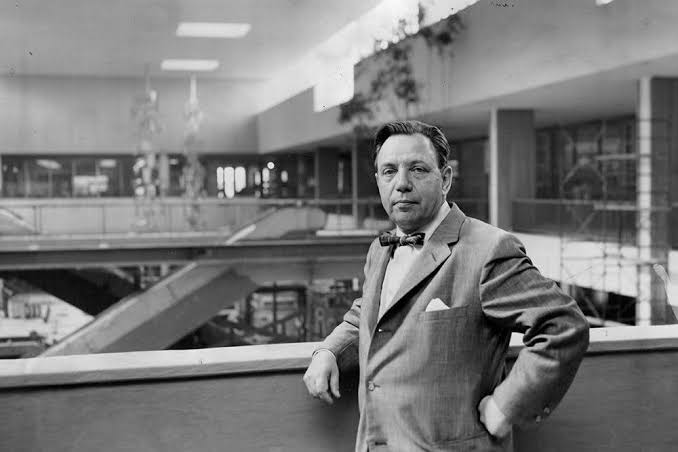
Victor Gruen designed the first fully enclosed, climate-controlled shopping mall—the Southdale Center in Edina, Minnesota, which opened in 1956.[6] Having spent his youth wandering the vibrant public squares and cafes of Vienna, Gruen's original vision was highly utopian. He intended his indoor malls to serve as community hubs for isolated American suburbs, incorporating civic centers, daycares, art, and spaces for social interaction.[7]
However, retail developers stripped away the civic components to maximize commercial profitability, surrounding the complexes with massive parking lots.[8] Gruen was horrified by how his designs were weaponized for pure consumerism.
"I refuse to pay alimony for those bastard developments."[9]
Core Psychological Mechanisms
Modern retailers and mall developers engineer the Gruen Effect using several specific spatial and sensory techniques:
-
Forced Path Layouts (Decompression Zones): Stores often use winding, maze-like paths and segmented areas that eliminate quick exits and remove shortcuts.[10] This forces exposure to adjacent, unrelated product categories, significantly increasing the probability of unplanned purchases.
-
Sensory Overload & Atmosphere: Retailers utilize soft, flattering lighting, ambient background music, and curated fragrances (like fresh baking or distinct perfumes) to alter the consumer's mood and disorient their perception of time.[11]
-
The "Bulla Bulla" Technique: This merchandising strategy involves jumbling high volumes of small, inexpensive items in large dump bins. The appearance of chaotic abundance combined with novelty triggers dopamine release in the brain, presenting the items as irresistible impulse buys.[12]
-
Hyperreality & Disorientation: The removal of natural light and clocks prevents shoppers from anchoring themselves to reality, creating a casino-like environment where time seems to stand still.[13]
Real-World Examples
IKEA
IKEA is widely considered the master of the modern Gruen Effect. The store employs a "fixed-path" layout, meaning customers are funneled through a one-way labyrinth that exposes them to the vast majority of the company's catalog before they can exit.[14] Even the inclusion of the famous IKEA food court plays a psychological role; eating releases dopamine and elevates the customer's mood, combating decision fatigue and keeping them in the store longer, which directly boosts furniture sales.[15]
Supermarkets
Grocery stores utilize a milder form of the Gruen Effect. They routinely change their floor plans and move staple items (like milk and bread) to the furthest corners of the store.[16] This intentional confusion forces consumers to hunt for their intended items, wandering down aisles they would normally bypass, thereby increasing their exposure to highly profitable junk food and impulse goods.[17]
Measuring the Gruen Effect
The Gruen Effect is not just a theory; it is a heavily tracked retail metric. Modern store designers use advanced analytics to measure how effectively their architecture induces the transfer.
Retailers measure the success of the Gruen Effect through specific behavioral data points:
-
Dwell-Time Distribution: Tracking the percentage of shoppers who stay for 20 to 45 minutes on a trip that was intended to be a single-item, 5-minute errand.[18]
-
Zone-to-Zone Flow: Monitoring the physical paths taken by consumers to see if they drift into irrelevant categories.[19]
-
Capture-to-Purchase Ratio: Calculating the ratio of planned tasks versus the final basket size (the number of unplanned impulse buys).[20]
See Also
- affect-vs-effect — Lexical discrimination guide on using affect (verb: to influence consumer behavior) vs. effect (noun: an outcome or psychological phenomenon such as the Gruen Effect).
References
Silvia Lugari / The Gruen Effect: How Architects Use Space to Influence People / dormakaba Blog ↩︎
Scribd / Understanding the Gruen Transfer Effect / Scribd ↩︎
Silvia Lugari / The Gruen Effect: How Architects Use Space to Influence People / dormakaba Blog ↩︎
Silvia Lugari / The Gruen Effect: How Architects Use Space to Influence People / dormakaba Blog ↩︎
Reddit Community / TIL of the Gruen effect / r/todayilearned ↩︎
Scribd / Understanding the Gruen Transfer Effect / Scribd ↩︎
Ariadne / The Gruen Effect: How Retail Layout Slows You Down / Ariadne Analytics ↩︎
Silvia Lugari / The Gruen Effect: How Architects Use Space to Influence People / dormakaba Blog ↩︎
Silvia Lugari / The Gruen Effect: How Architects Use Space to Influence People / dormakaba Blog ↩︎
Scribd / Understanding the Gruen Transfer Effect / Scribd ↩︎
Ariadne / The Gruen Effect: How Retail Layout Slows You Down / Ariadne Analytics ↩︎
Ariadne / The Gruen Effect: How Retail Layout Slows You Down / Ariadne Analytics ↩︎
Ariadne / The Gruen Effect: How Retail Layout Slows You Down / Ariadne Analytics ↩︎