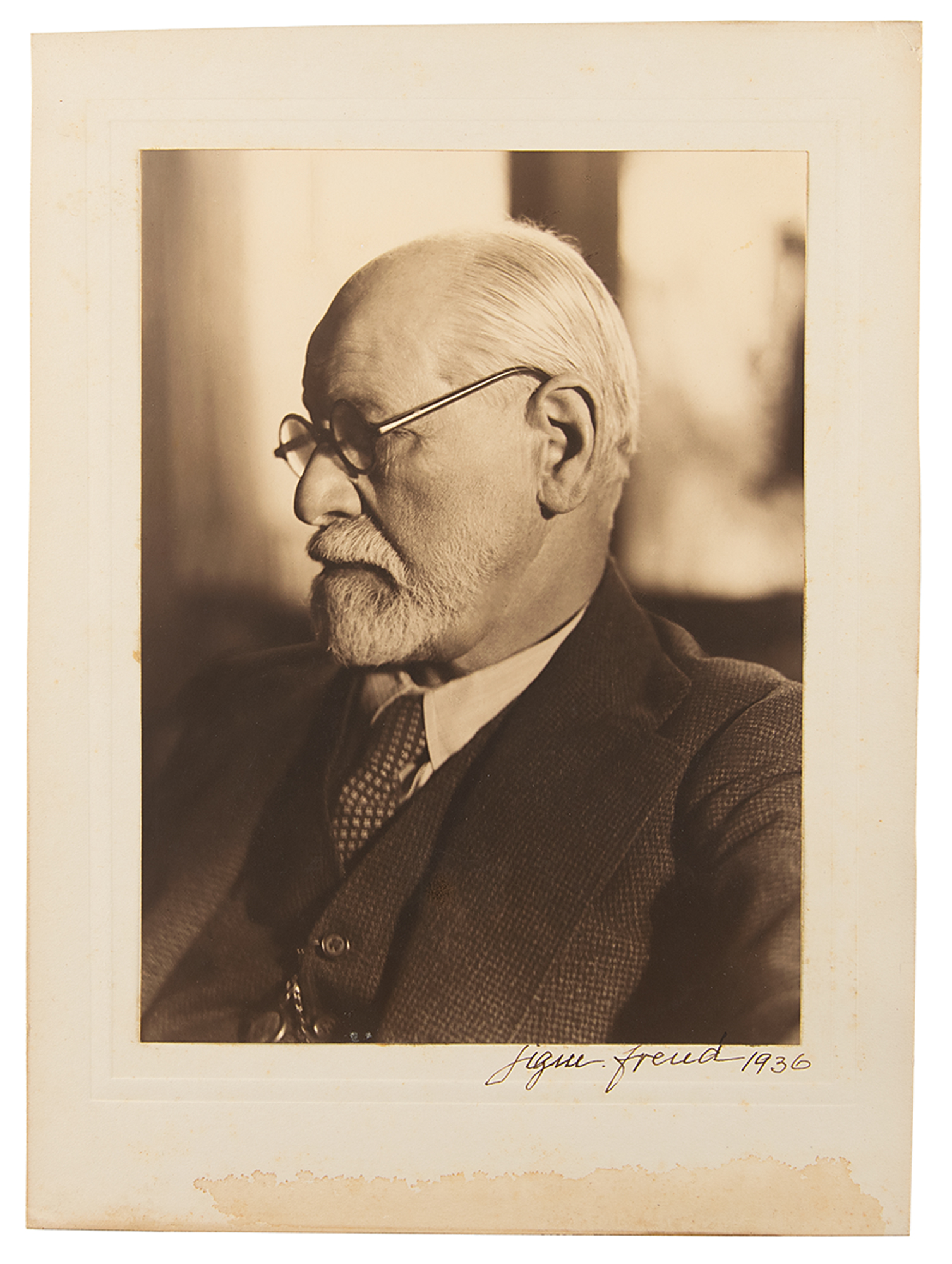
Sigmund Freud (1856–1939)
Sigmund Freud (1856–1939) was an Austrian neurologist and the founder of psychoanalysis, an intellectual paradigm that fundamentally revolutionized psychiatry, continental philosophy, cognitive theory, and 20th-century cultural criticism.[1] Departing from the strict somatic reductionism of 19th-century neuropathology, Freud demonstrated that human cognition, affect, and volition are continually governed by dynamic unconscious processes, repressed infantile conflicts, and instinctual drives (Triebe).[2] His comprehensive metapsychological system encompasses the Topographical and Structural models of the psyche (Id, Ego, Superego), the economic hypothesis of psychic energy (cathexis and anticathexis), the dual-drive dynamic of Eros and Thanatos, the architecture of ego defense mechanisms, and the hermeneutics of dream interpretation (Traumdeutung).[3][4]
1. Epistemological Foundations & Historical Evolution
Sigmund Freud’s development of psychoanalysis represents a methodological transition from laboratory neuroanatomy to clinical depth hermeneutics.[1:1]
                [ Physiological Laboratory of Ernst Brücke (1876–1882) ]
                  (Histology of Nerve Cells, Somatic Reductionism)
                                         │
                                         ▼
                 [ Salpêtrière Clinic under Jean-Martin Charcot (1885) ]
                     (Hysteria, Hypnosis, Ideogenic Pathologies)
                                         │
                                         ▼
                 [ Josef Breuer Collaboration: *Studies on Hysteria* (1895) ]
                    (Anna O. / Bertha Pappenheim, Cathartic \"Talking Cure\")
                                         │
                Theoretical Fracture: The Genesis of Psychoanalysis
                ┌────────────────────────┴────────────────────────┐
                ▼                                                 ▼
     The Seduction Theory (1896)                     Psychic Reality (1897)
  Neurosis rooted in literal adult                Fantasy, Infantile Sexuality,
       sexual trauma/abuse                       Internal Conflict, & Repression
                │                                                 │
                └────────────────────────┬────────────────────────┘
                                         │
                                         ▼
                  [ *The Interpretation of Dreams* (*Traumdeutung*, 1900) ]
                   (Self-Analysis, Oedipus Complex, Primary Process)
                                         │
                                         ▼
                 [ Institutionalization & Intellectual Schisms (1902–1914) ]
               Wednesday Society ──► Vienna Psychoanalytic Society ──► IPA
               Ruptures: Alfred Adler (1911) & Carl Gustav Jung (1913–1914)
                                         │
                                         ▼
                 [ Mature Metapsychology & Cultural Pessimism (1920–1939) ]
                 *Beyond the Pleasure Principle* (1920) ──► Thanatos
                 *The Ego and the Id* (1923) ──► Structural Model
                 *Civilization and Its Discontents* (1930) ──► Cultural Guilt
From Neuroanatomy to the Unconscious Mind
Trained at the University of Vienna under the celebrated physiologist Ernst Wilhelm von Brücke—a staunch proponent of the Helmholtz school of physical medicine—Freud began his scientific career investigating the central nervous system of lower vertebrates, seeking to ground all mental phenomena in neurocellular mechanics.[4:1] However, financial necessity forced Freud into clinical practice at the Vienna General Hospital, where he encountered functional nervous disorders that resisted organic explanation.[1:2]
In 1885, Freud studied at the Salpêtrière Hospital in Paris under the French neurologist Jean-Martin Charcot.[1:3] Charcot's clinical demonstrations of hysteria demonstrated two radical truths:
- Hysterical symptoms (such as functional paralyses, contractures, and somatosensory anesthesias) were not anatomical lesions, but ideogenic—originating in psychological trauma.[2:1]
- Symptoms could be artificially induced and temporarily abolished through hypnotic suggestion, demonstrating that complex mental ideas can operate dynamically outside conscious awareness.[1:4]
Breuer, Anna O., and the Cathartic Method
Returning to Vienna, Freud collaborated with the physician Josef Breuer on the clinical management of "Anna O." (Bertha Pappenheim), a brilliant young woman suffering from visual disturbances, severe cough, and intermittent paralysis.[2:2] Breuer discovered that when Anna O. was guided under light hypnosis to recall the specific emotional memory associated with the first appearance of a symptom, the repressed affect was released through emotional abreaction, and the physical symptom vanished.[2:3] Anna O. famously christened this clinical technique the "talking cure" or "chimney sweeping."[3:1]
In their joint treatise, Studies on Hysteria (Studien über Hysterie, 1895), Breuer and Freud announced the foundational thesis of depth psychology:
"Hysterics suffer mainly from reminiscences."[3:2]
Hysterical symptoms represent blocked, "strangulated affects" that have undergone somatic conversion because the conscious mind found the traumatic memory morally or emotionally intolerable.[2:4]
The Abandonment of the Seduction Theory
In 1896, Freud presented his Seduction Theory (Verführungstheorie), asserting that every neurosis is etiologically caused by literal sexual abuse or seduction suffered during early childhood at the hands of an adult caregiver.[1:5]
However, in a famous letter to his confidant Wilhelm Fliess on September 21, 1897, Freud admitted: "I no longer believe in my neurotica."[1:6] He realized that:
- Psychoanalytic cures were not being achieved simply by unearthing seduction scenes.
- It was statistically implausible that pervasive sexual abuse occurred across all respectable bourgeois Viennese households.
- In the unconscious, there is no definitive criterion of reality to differentiate factual historical truth from unconscious childhood fantasy.[1:7][4:2]
This shift from external historical trauma to internal psychic reality (psychische Realität) marked the authentic birth of psychoanalysis.[4:3] Freud realized that neurotic symptoms are generated not merely by external encounters, but by internal instinctual wishes, unconscious childhood sexual curiosity, and the ego's defenses against its own forbidden impulses.[1:8]
Institutionalization and Theoretical Schisms
In 1902, Freud invited four physicians (Alfred Adler, Wilhelm Stekel, Max Kahane, and Rudolf Reitler) to meet weekly in his waiting room at Berggasse 19, founding the Wednesday Psychological Society, which expanded into the Vienna Psychoanalytic Society in 1908.[1:9] International recognition accelerated following Freud's 1909 lectures at Clark University in Worcester, Massachusetts, alongside his chosen intellectual successor, Carl Gustav Jung.[1:10] In 1910, Freud established the International Psychoanalytical Association (IPA), designating Jung as its first president to prevent psychoanalysis from being marginalized as an exclusively Viennese or Jewish movement.[1:11]
However, profound theoretical rifts soon fractured the movement:
- Alfred Adler (1911): Rejected Freud's biological pansexualism, arguing that psychic life is organized around feelings of inferiority and the compensatory drive for power and social mastery (Individual Psychology).
- Carl Gustav Jung (1913–1914): Desexualized Freud's concept of libido, redefining it as undifferentiated psychic energy, and rejected the reduction of the unconscious to personal repression, positing an archaic, transpersonal collective unconscious populated by universal archetypes (Analytical Psychology).
Freud defended the biological, instinctual core of psychoanalysis uncompromisingly, viewing these departures as defensive flights from the disturbing reality of infantile sexuality and the unconscious.[1:12][4:4]
2. Metapsychology: The Three Points of View
To elevate psychoanalysis beyond clinical phenomenology into a comprehensive scientific philosophy of mind, Freud constructed his Metapsychology (Metapsychologie). Metapsychology investigates mental processes across three indispensable, interrelated axes:[1:13][2:5]
                     [ THE METAPSYCHOLOGICAL COMPASS ]
                                     │
       ┌─────────────────────────────┼─────────────────────────────┐
       ▼                             ▼                             ▼
 [ TOPOGRAPHICAL ]             [ DYNAMIC ]                   [ ECONOMIC ]
 Where does the process        What conflicting forces       How much psychic energy
 occur in psychic space?       are colliding?                is invested or discharged?
 (Conscious, Preconscious,     (Instinctual Drive vs.        (Cathexis, Counter-Cathexis,
  Unconscious)                  Ego Defense)                  Constancy Principle)
- The Dynamic Point of View: Mind is not a static organ, but a perpetual battlefield of opposing mental forces—instinctual drives pressing for discharge colliding with defensive counter-forces erected by the ego and internalized culture.[2:6]
- The Economic Point of View: Mind operates as an energetic apparatus governed by the quantitative distribution, accumulation, and discharge of psychic energy (cathexis or Besetzung). Borrowing Gustav Fechner's Principle of Constancy, Freud maintained that the psychic apparatus strives to keep the quantity of internal excitation as low and constant as possible, discharging tension through pleasure and avoiding unpleasure.[1:14]
- The Topographical / Structural Point of View: Mind is organized into discrete spatial zones (Topographical model) or functional, dynamic agencies (Structural model).[2:7]
3. Models of the Human Mind
Over four decades, Freud formulated two successive structural frameworks to map the cognitive architecture of human subjectivity.[1:15]
     THE TOPOGRAPHICAL MODEL (1900)             THE STRUCTURAL MODEL (1923)
  ┌─────────────────────────────────┐        ┌─────────────────────────────────┐
  │     CONSCIOUS MIND (Bw)         │        │           THE EGO               │
  │  (Sensory awareness, logic)     │        │  (Reality Principle, Executive) │
  ├─────────────────────────────────┤        ├────────────────┬────────────────┤
  │   PRECONSCIOUS MIND (Vbw)       │        │  THE SUPEREGO  │  UNCONSCIOUS   │
  │  (Accessible stored memories)   │        │  (Moral Ideal, │  DEFENSES      │
  ├─────────────────────────────────┤        │   Conscience)  │  (Repression)  │
  │    UNCONSCIOUS MIND (Ubw)       │        ├────────────────┴────────────────┤
  │  (Repressed drives, timeless,   │        │            THE ID               │
  │   primary process mentation)    │        │  (Pleasure Principle, Drives)   │
  └─────────────────────────────────┘        └─────────────────────────────────┘
The Topographical Model (1900)
In Chapter VII of The Interpretation of Dreams, Freud divided mental functioning into three concentric psychological systems:[1:16]
- System Conscious (Bewusst / Bw): The surface layer of the apparatus that receives external perceptual stimuli and internal emotional feelings. It operates according to the Secondary Process: rational, logical, syntax-governed, reality-tested, and bound by linear time.[2:8]
- System Preconscious (Vorbewusst / Vbw): Contains mental traces, memories, and facts that are not currently active in awareness but are readily retrievable through deliberate attention (e.g., telephone numbers, historical dates). It functions as an essential transitional buffer between conscious logic and unconscious drives.[1:17]
- System Unconscious (Unbewusst / Ubw): The vast subterranean reservoir of psychic reality, housing repressed instinctual representations, infantile memories, and taboo desires barred from conscious awareness by dynamic censorship.[2:9] It operates according to the Primary Process:
- Timelessness: Unconscious wishes are exempt from chronological time; infantile desires remain as virulent decades later as when first formed.[1:18]
- Exemption from Mutual Contradiction: Contradictory impulses coexist peacefully without canceling each other out.[2:10]
- Mobility of Cathexes: Psychic energy shifts fluidly across ideas via condensation (Verdichtung) and displacement (Verschiebung).[1:19]
The Structural Model (1923)
By 1920, the Topographical model proved clinically inadequate: Freud realized that the ego's defense mechanisms (such as repression and resistance) operate completely unconsciously. If the unconscious contained both the repressed desires and the agent of repression, "unconscious" could no longer designate a single structural territory.[1:20]
In The Ego and the Id (Das Ich und das Es, 1923), Freud introduced the tripartite structural model:[2:11]
| Structural Agency | German Name | Operating Principle | Origin & Mental Layer | Primary Function & Dynamics |
|---|---|---|---|---|
| The Id | Das Es ("The It") | Pleasure Principle (Lustprinzip) | Innate, present at birth; entirely unconscious. | Primary biological energy reservoir. Seeks immediate tension reduction and instinctual gratification without regard for objective reality, social morality, or logic. |
| The Ego | Das Ich ("The I") | Reality Principle (Realitätsprinzip) | Differentiated from the Id through perceptual contact with external reality. Conscious, preconscious, and unconscious. | The executive agency of the psyche. Evaluates environmental constraints, delays drive gratification, tests reality, and deploys unconscious defense mechanisms to maintain internal equilibrium. |
| The Superego | Das Über-Ich ("The Over-I") | Morality Principle (Moralitätsprinzip) | Internalized parental and cultural authority via the resolution of the Oedipus complex (~age 5). Conscious, preconscious, and unconscious. | Functions as the internal conscience and the repository of the Ego Ideal (Ich-Ideal). Judges the Ego against ethical perfection; enforces discipline through the generation of guilt, shame, and moral anxiety. |
                       [ THE EXTERNAL WORLD ]
                        (Physical Constraints)
                                  │
                                  ▼
                   ┌──────────────────────────────┐
                   │           THE EGO            │
                   │    \"A poor creature owing    │
                   │   service to three masters\" │
                   └──────┬────────────────┬──────┘
                          │                │
             ┌────────────┘                └────────────┐
             ▼                                          ▼
      [ THE ID ]                                 [ THE SUPEREGO ]
 (Insatiable Instinctual                    (Hyper-Rigid Moral Judgments,
   Demands for Pleasure)                      Internalized Cultural Guilt)
"We see this same Ego as a poor creature owing service to three masters and consequently menaced by three dangers: from the external world, from the libido of the Id, and from the severity of the Superego... Driven by the Id, confined by the Superego, repulsed by reality, the Ego struggles to bring about harmony among the forces and influences working in and upon it." — Sigmund Freud, The Ego and the Id (1923)[2:12]
4. Drive Theory (Triebtheorie) & The Dual-Drive Dynamics
Freud posited that all psychological activity is energized by endogenous somatic stimuli termed drives (Triebe). Unlike an animal instinct (Instinkt)—which denotes a rigid, genetically predetermined behavioral circuit—a Trieb is a plastic, variable quantity of psychic demand placed upon the mind by the body.[1:21][4:5]
                             ANATOMY OF A TRIEB (DRIVE)
 ┌──────────────────────┐   ┌──────────────────────┐   ┌──────────────────────┐   ┌──────────────────────┐
 │    1. THE SOURCE     │──►│    2. THE IMPETUS    │──►│      3. THE AIM      │──►│    4. THE OBJECT     │
 │     (*Quelle*)       │   │      (*Drang*)       │   │       (*Ziel*)       │   │      (*Objekt*)      │
 ├──────────────────────┤   ├──────────────────────┤   ├──────────────────────┤   ├──────────────────────┤
 │ Somatic erotogenic   │   │ The quantitative     │   │ Extinction of somatic│   │ The entity through   │
 │ organ or tissue excitation; energy / magnitude  │   │ tension; attainment  │   │ which the aim is     │
 │ biological stimulus. │   │ of driving force.    │   │ of pleasure.         │   │ satisfied; plastic.  │
 └──────────────────────┘   └──────────────────────┘   └──────────────────────┘   └──────────────────────┘
The Evolution of Drive Paradigms
Freud's drive theory underwent two foundational revisions:[1:22]
FIRST DUAL-DRIVE MODEL (1905–1914)              MATURE DUAL-DRIVE MODEL (1920–1939)
┌─────────────────────────────────────┐        ┌─────────────────────────────────────┐
│ EGO DRIVES                          │        │ EROS (The Life Instinct)            │
│ (Self-Preservation, Hunger)         │        │ • Libido, Self-Preservation         │
├─────────────────────────────────────┤  ───►  │ • Cooperation, Synthesis, Binding  │
│ SEXUAL DRIVES                       │        ├─────────────────────────────────────┤
│ (Libido, Species-Preservation)      │        │ THANATOS (The Death Drive)          │
│ • Highly plastic, easily repressed  │        │ • Repetition Compulsion, Nirvana    │
└─────────────────────────────────────┘        │ • Outward: Aggression / Cruelty     │
                                               │ • Inward: Guilt / Self-Destruction  │
                                               └─────────────────────────────────────┘
- The First Dualism (1905–1914): Opposed the Ego Drives (self-preservation, hunger) to the Sexual Drives (libidinal energy seeking sensual pleasure). Neurosis was conceptualized as a civil war where self-preservative ego drives repressed transgressive sexual drives.[1:23]
- The Introduction of Narcissism (1914): In On Narcissism: An Introduction (Zur Einführung des Narzißmus), Freud discovered that the ego itself can be invested with libido.[2:13] He distinguished between:
- Primary Narcissism: The early infantile state where the child's entire libidinal reservoir is invested in its own self before object-cathexes emerge.[2:14]
- Secondary Narcissism: The pathological or defensive withdrawal of libido from external objects back onto the ego (as seen in schizophrenia, hypochondria, and deep melancholia).
- The Mature Dualism (1920 onwards): The horrors of World War I shattered Freud's assumption that human psychology is governed exclusively by the pursuit of pleasure.[4:6]
Beyond the Pleasure Principle (1920) and Thanatos
In Beyond the Pleasure Principle (Jenseits des Lustprinzips, 1920), Freud confronted clinical phenomena that defied the pleasure principle:[4:7]
- Traumatic War Neuroses: Shell-shocked soldiers compulsively relived horrifying battlefield traumas in recurring nightmares, contradicting the thesis that dreams are wish-fulfillments.[4:8]
- The Fort-Da Game: Freud observed his eighteen-month-old grandson Ernst throwing a wooden spool on a string into his cot, shouting "o-o-o-o" (fort / "gone"), and pulling it back with an ecstatic "da" ("there"). The child was compulsively staging the distressing disappearance of his mother to master the trauma actively rather than endure it passively.[4:9]
- Negative Therapeutic Reaction: Neurotic patients who deteriorated whenever therapeutic progress was made, driven by an unconscious, self-sabotaging need for punishment (Strafbedürfnis).
Freud concluded that there exists a psychic principle more primordial than the pleasure principle: the Repetition Compulsion (Wiederholungszwang).[4:10] This led to his radical formulation of Thanatos (The Death Drive):
Freud posited that all organic life carries an innate, conservative drive to return to the peace of an earlier, inorganic state:
"If we are to take it as a truth that knows no exception that everything living dies for internal reasons—becomes inorganic once again—then we shall be compelled to say that 'the aim of all life is death.'" — Sigmund Freud, Beyond the Pleasure Principle (1920)[4:11]
The human psyche is an unceasing battlefield between:
- Eros (The Life Drive): Striving to bind organic matter together, cultivate interpersonal connection, and sustain life.[4:12]
- Thanatos (The Death Drive): Striving to unbind, disintegrate, eliminate all psychic tension (the Nirvana Principle), and return to the silence of the inorganic.[4:13] When turned outward, Thanatos manifests as sadistic cruelty, xenophobia, and war; when turned inward, it manifests as masochism, severe depression, and suicidal guilt.[2:15][4:14]
5. Psychosexual Stages of Development
Freud shocked Victorian Europe by asserting that sexual life does not commence abruptly at puberty, but is present from birth, progressing through a sequence of five distinct psychosexual stages.[1:24][3:3] During each stage, the libido's pleasure-seeking energy is concentrated on a specific anatomical erotogenic zone.[2:16]
                     PSYCHOSEXUAL DEVELOPMENTAL TRAJECTORY

  [ ORAL STAGE ] ────────► [ ANAL STAGE ] ────────► [ PHALLIC STAGE ]
  (0–18 Months)            (18 Months – 3 Years)    (3–6 Years)
  Zone: Mouth              Zone: Anus & Bowel       Zone: Phallus / Clitoris
  Crisis: Weaning          Crisis: Toilet Training  Crisis: Oedipus Complex
  Conflict: Dependency     Conflict: Autonomy       Conflict: Castration Anxiety /
            vs. Frustration          vs. Defiance             Penis Envy
                                                        │
                                                        ▼
  [ GENITAL STAGE ] ◄────────────────────────────── [ LATENCY STAGE ]
  (Puberty – Adulthood)                             (6 Years – Puberty)
  Zone: Adult Genitals                              Zone: Dormant Libido
  Aim: Mutual Relational Intimacy,                  Focus: Socialization, Schooling,
       Integration of Partial Drives                       Intellectual Sublimation
The Stages of Libidinal Organization
- Oral Stage (Birth to 18 months):
- Primary Zone: The mucous membrane of the mouth, lips, and tongue.[3:4]
- Dynamics: Pleasure is derived initially from sucking and incorporation (oral-erotic/receptive), and subsequently from biting and chewing during teething (oral-sadistic).
- Adult Fixation Pathology: Extreme psychological dependency, substance abuse, smoking, bulimia, gullibility, or cynical, biting sarcasm.[2:17]
- Anal Stage (18 months to 3 years):
- Primary Zone: The anus, rectum, and bowel mechanics.[3:5]
- Dynamics: The child discovers sensual pleasure in bowel retention and expulsion. Toilet training represents the individual's first encounter with institutional authority and parental discipline.
- Adult Fixation Pathology:
- Phallic Stage (3 to 6 years):
- Primary Zone: The male penis and female clitoris.[3:7]
- Dynamics: Children become intensely aware of anatomical differences, constructing early sexual theories centered on the presence or absence of the phallus.[1:25] This stage houses the foundational crisis of human subjectivity: the Oedipus Complex.[2:19]
- Latency Stage (6 years to Puberty):
- Genital Stage (Puberty through Adulthood):
- Dynamics: Surge of pubertal hormonal maturation reactivates dormant drives.
- Mature Resolution: The individual unites the pre-genital component drives under genital primacy, directing libido outward toward adult romantic partners, generative productivity, and ethical autonomy.[2:20] Freud summarized mature health as the capacity:
"To love and to work" (Lieben und Arbeiten).[1:27]
The Oedipus Complex and the Crucible of Personality
Freud derived his central clinical paradigm from Sophocles' tragedy Oedipus Rex, asserting that the psychological drama of the phallic stage conditions all subsequent moral, romantic, and social character:[1:28]
                     THE CLASSICAL OEDIPAL TRIANGLE (BOYS)

                            [ THE FATHER ]
                          Internalized Authority
                         /                      \
                        /                        \
    Rivalry, Hostility /                          \ Castration Threat
    & Unconscious Death-Wish                       \ (Kastrationsangst)
                      /                            \
                     ▼                              ▼
             [ THE SON (EGO) ] ──────────────► [ THE MOTHER ]
                                Incestuous Libidinal
                                      Cathexis
- The Boy's Trajectory: The young boy experiences unconscious incestuous sexual longing for his mother and murderous rivalry toward his father.[1:29] Discovering the female anatomical absence of a penis, the boy interprets this as proof that castration is a literal reality and fears his powerful father will castrate him in retribution for his illicit desires (Castration Anxiety / Kastrationsangst). To preserve his phallus, the boy represses his desire for the mother, renounces hostility toward the father, and internalizes the paternal law, identifying with the father. This paternal internalization crystallizes to form the Superego.[2:21]
- The Girl's Trajectory (The Female Oedipus Complex): Freud's model for female development posited that the girl, observing the male penis, feels mutilated and experiences Penis Envy (Penisneid). Holding the mother responsible for sending her into the world inadequately equipped, the girl turns away from the mother and directs her libido toward the father, wishing to receive a child from him as a phallic substitute. Freud recognized that female development was asymmetrical, later describing female psychosexual life as a "dark continent" for psychology.[1:30][5]
6. Ego Defense Mechanisms
Because the conscious Ego is trapped in perpetual tension between the animal demands of the Id, the punitive morality of the Superego, and external reality, it experiences debilitating Signal Anxiety (Signalangst).[2:22] To prevent psychic collapse, the Ego unconsciously mobilizes defense mechanisms to ward off anxiety, disavow conflict, and distort threatening perceptions.[1:31][2:23]
While Freud discovered the primary defenses (most notably repression, sublimation, and projection), his daughter Anna Freud systematically categorized and expanded the taxonomy in The Ego and the Mechanisms of Defense (1936).[1:32]
                       THE EGO DEFENSE SYSTEM
                                 │
     ┌───────────────────────────┴───────────────────────────┐
     ▼                                                       ▼
[ PRIMITIVE / PATHOLOGICAL ]                            [ MATURE / ADAPTIVE ]
Mitigate anxiety by radical falsification               Discharge drive energy without
of internal or external reality.                        distorting reality or generating
• Repression (*Verdrängung*)                            neurotic symptoms.
• Projection (*Projektion*)                             • Sublimation (*Sublimierung*)
• Denial (*Verleugnung*)                                • Conscious Humor (*Der Humor*)
• Reaction Formation (*Reaktionsbildung*)               • Altruism & Suppression
• Splitting & Regression (*Regression*)
| Defense Mechanism | Operational Definition | Unconscious Mechanism | Concrete Clinical / Behavioral Example |
|---|---|---|---|
| Repression (Verdrängung) | The foundational defense; barring unacceptable impulses or traumatic memories from consciousness.[2:24] | Counter-cathexis continuously binds the memory in the dynamic unconscious. | A patient who suffered a catastrophic childhood train derailment has zero conscious memory of the event yet experiences panic attacks near railway stations. |
| Sublimation (Sublimierung) | The only fully healthy defense; redirecting taboo libidinal or aggressive energy into elevated cultural aims.[1:33] | Drive energy is desexualized and channeled toward artistic, intellectual, or civic production. | Channelling unconscious sadistic and aggressive impulses into becoming an exceptionally skilled trauma surgeon or butcher. |
| Projection (Projektion) | Expelling internal disowned impulses and attributing them to external persons or groups.[2:25] | The Ego disavows its own hostile or lustful thoughts, perceiving them as threats coming from outside. | An unfaithful corporate executive who harbors secret adulterous wishes compulsively accuses their spouse of constant betrayal. |
| Reaction Formation (Reaktionsbildung) | Transforming an inadmissible unconscious urge into its diametrical, exaggerated conscious opposite.[2:26] | The Ego builds an excessive moral counter-weight to suppress an underlying forbidden desire. | An individual with deeply repressed sadistic violence becomes an outspoken, militant campaigner against animal research. |
| Displacement (Verschiebung) | Shifting instinctual drive energy from its dangerous original target to a safer, vulnerable substitute.[1:34] | The affective charge is decoupled from the original object and transferred to an adjacent associate. | An employee who is humiliated by their tyrannical boss returns home and violently kicks the family dog. |
| Rationalization (Rationalisierung) | Formulating socially plausible, logical justifications to conceal inadmissible unconscious motives.[2:27] | Secondary process pseudo-logic covers up primary process instinctual drives. | A parent who habitually strikes their child insists they are doing so purely out of "principled character building." |
| Isolation of Affect (Isolierung) | Decoupling the cognitive representation of a traumatic event from its associated emotional agony.[2:28] | Memory remains accessible to consciousness, but its affective cathexis is stripped away. | A soldier recounts the gruesome death of their closest comrade in an icy, robotic tone devoid of sorrow. |
| Undoing (Ungeschehenmachen) | Performing magical motor rituals or verbal formulas to symbolically cancel out a forbidden thought.[2:29] | Archaic, magical animistic thinking where an action undoes past reality. | An obsessional neurotic who harbors an unconscious death-wish against a sibling compulsively washes their hands fifty times. |
| Regression (Regression) | Retreating to a behavioral pattern characteristic of an earlier psychosexual stage under acute stress.[2:30] | Libido retreats to a historical fixation point when modern adult reality becomes unmanageable. | A toilet-trained four-year-old begins wetting the bed and demanding a feeding bottle upon the birth of a newborn sibling. |
| Denial (Verleugnung) | Refusing to register or accept the existence of an overwhelming, traumatic external reality.[2:31] | Sensory awareness of reality is disavowed, blocking conscious recognition. | A terminally ill patient makes expansive business commitments for the next decade, refusing to acknowledge medical scans. |
7. Clinical Praxis and Psychoanalytic Methodology
Freud transformed psychoanalysis from an abstract metapsychology into a concrete clinical praxis designed to uncover the repressed unconscious and dissolve neurotic symptoms.[3:9]
                        THE PSYCHOANALYTIC CHAMBER

     [ THE ANALYST ]                                  [ THE ANALYSAND ]
 (Sitting Out of Sight,                            (Reclining on Couch,
  Evenly-Suspended Attention,                      Practicing Free Association,
  Analyzing Transference)                           Confronting Resistances)
            │                                                 │
            └────────────────────────┬────────────────────────┘
                                     │
                                     ▼
                      [ THE ROYAL ROAD: DREAMS ]
                      (Deciphering Dream-Work:
              Condensation, Displacement, Plasticity)
                                     │
                                     ▼
                      [ WORKING THROUGH (DURCHARBEITEN) ]
             (Dissolving Transference Neurosis, Reality Testing)
                                     │
                                     ▼
                      [ CLINICAL CURE / RESOLUTION ]
                     \"Where Id was, there Ego shall be\"
                       (*Wo Es war, soll Ich werden*)
The Fundamental Rule: Free Association
Abandoning hypnosis and the pressure technique, Freud established the Fundamental Rule of Psychoanalysis (die analytische Grundregel): Free Association (freie Assoziation).[1:35][3:10]
- The analysand reclines comfortably on a couch, intentionally isolated from visual eye-contact with the analyst (who sits behind them in an armchair).
- The patient is instructed to articulate whatever crosses their mind—fleeting thoughts, embarrassments, absurd associations, blasphemies, trivialities—without censorship or logical filtering.[3:11]
- Because conscious logic is suspended, the associative chain inevitably reveals the gravitational pull of repressed unconscious complexes, exposing the fault lines of internal resistance (Widerstand).[1:36]
Dream Interpretation (Traumdeutung): The Royal Road
In The Interpretation of Dreams (Die Traumdeutung, 1900), Freud famously pronounced dreams to be the "royal road to a knowledge of the unconscious activities of the mind" (die Via regia zum Unbewussten).[3:12]
Freud maintained that every dream is fundamentally a disguised wish-fulfillment (Wunscherfüllung). During sleep, internal psychic censorship is relaxed but not extinguished. To prevent repressed infantile wishes from awakening the sleeping individual through anxiety, the psyche disguises the raw impulse via the Dream-Work (Traumarbeit):[1:37][3:13]
                          THE MECHANISMS OF DREAM-WORK

   [ LATENT DREAM-THOUGHTS ] ───► [ THE DREAM-WORK (TRAUMARBEIT) ] ───► [ MANIFEST CONTENT ]
   • Forbidden Id Wishes          1. Condensation (*Verdichtung*)       • Bizarre, Surreal Narrative
   • Unconscious Memories         2. Displacement (*Verschiebung*)      • Visual Hallucination
   • Somatic Stimuli              3. Representability (*Darstellbarkeit*)• Sleep Preserved
   • Day's Residues (*Tagesreste*) 4. Secondary Revision
- Manifest Content (manifester Trauminhalt): The literal, often bizarre narrative and imagery remembered upon waking.[3:14]
- Latent Dream-Thoughts (latente Traumgedanken): The genuine, unconscious sexual or aggressive wish powering the dream.[3:15]
- The Four Operations of Dream-Work:
- Condensation (Verdichtung): Multiple latent ideas, memories, or persons are compressed into a single composite figure, neologism, or image.[1:38]
- Displacement (Verschiebung): The emotional intensity of a forbidden idea is detached from its core topic and transferred onto an innocuous, trivial peripheral detail.[3:16]
- Consideration of Representability (Rücksicht auf Darstellbarkeit): Abstract, verbal thoughts are converted into sensory, pictorial visual scenes.[1:39]
- Secondary Revision (sekundäre Bearbeitung): The conscious ego's waking attempt to retroactively tidy up the dream's absurdities into an intelligible, linear narrative structure.[1:40]
Transference, Countertransference, and Working Through
- Transference (Übertragung): The clinical phenomenon wherein the patient unconsciously projects infantile feelings, expectations, and unresolved ambivalences (originally directed toward their parents) onto the neutral figure of the analyst.[1:41][3:17] While initially a formidable resistance, transference becomes the indispensable engine of cure: by establishing a Transference Neurosis, the patient's historical childhood neurosis is re-staged in real time within the consulting room, allowing it to be consciously analyzed and integrated.[2:32]
- Countertransference (Gegenübertragung): The analyst’s own unconscious emotional reactions to the patient's transference. Freud mandated that every analyst undergo personal training analysis to prevent unanalyzed complexes from distorting clinical objectivity.[1:42]
- Working Through (Durcharbeiten): Intellectual insight alone does not abolish neurosis. The patient must repeatedly confront their defenses, resistances, and transferences across different life contexts, gradually withdrawing neurotic cathexes in favor of reality testing.[3:18]
Freud codified the ultimate therapeutic goal of psychoanalytic praxis in the New Introductory Lectures on Psycho-Analysis (1933):
"Where Id was, there Ego shall be." (Wo Es war, soll Ich werden.)[1:43]
8. Psychoanalysis, Culture, and Civilizational Discontents
In his mature period, Freud extended psychoanalysis beyond individual psychopathology, interrogating the sociological foundations of religion, art, anthropology, and political civilization.[1:44]
                     FREUD'S CULTURAL ANTHROPOLOGY
                                   │
      ┌────────────────────────────┼────────────────────────────┐
      ▼                            ▼                            ▼
 [ TOTEM AND TABOO (1913) ]   [ FUTURE OF AN ILLUSION (1927) ] [ CIVILIZATION & ITS DISCONTENTS (1930) ]
 • Primal horde parricide     • Religion as infantile wish     • Security purchased via instinctual
 • Origin of totemism,          fulfillment & father-projection  renunciation
   exogamy, and moral law     • Alleviation of helplessness    • Superego generates universal guilt
Totem and Taboo (1913): The Primal Horde
Drawing on Charles Darwin’s hypothesis of the primal horde and William Robertson Smith's anthropological studies of sacrificial meals, Freud formulated a phylogenetic myth of human civilization:[1:45]
- In the primordial era, human beings lived in patriarchal hordes dominated by a violent, tyrannical Primal Father (Urvater) who monopolized all females and castrated or expelled his sons.[1:46]
- Driven by desperate rage, the expelled brothers banded together, murdered the father, and devoured his body to incorporate his strength.[1:47]
- Following the murder, remorse and guilt surged. To prevent mutual slaughter among themselves for the father's position, the brothers instituted the two fundamental taboos of human culture:
- The prohibition against killing the Totem (the symbolic animal surrogate of the murdered father).
- The prohibition of incest (exogamy), renouncing the women who provoked the crime.[1:48]
- For Freud, this prehistoric parricide marks the simultaneous origin of social contracts, moral conscience, religion, and the universal Oedipus complex.[1:49]
The Future of an Illusion (1927): The Critique of Religion
Freud analyzed religious belief not as divine revelation, but as an illusion (Illusion) rooted in human helplessness:[1:50]
- Confronted with the terrifying indifference of nature (earthquakes, disease, death) and the severe social prohibitions of culture, human beings experience existential helplessness analogous to childhood distress.[1:51]
- To cope with this dread, the psyche resurrects the infantile solution: projecting the protective, omnipotent image of the earthly father into the heavens as a celestial God.[1:52]
- While acknowledging that religion historically assisted civilizational order, Freud argued that humanity must outgrow this infantile neurosis, advocating for a rational education to reality based on scientific empiricism.[1:53]
Civilization and Its Discontents (1930): The Tragic Paradox
In Civilization and Its Discontents (Das Unbehagen in der Kultur, 1930), Freud formulated his bleakest diagnosis of human civilization.[1:54][4:15]
The treatise opens with a critique of the "oceanic feeling" (ozeanisches Gefühl) described by French novelist Romain Rolland—a sensation of boundless, mystical oneness with the universe. Freud traced this affect not to spiritual revelation, but to an infantile regression reviving the earliest stage of primary narcissism, before the infant differentiated its conscious ego from the external maternal environment.[1:55]
Freud then articulated the irreconcilable tragic antagonism at the core of human society:
                      THE CIVILIZATIONAL PARADOX

       [ PRIMAL INSTINCTS ] ──────────────► [ CIVILIZATION'S DEMAND ]
       • Unlimited Libido                   • Instinctual Renunciation
       • Primal Aggression (Thanatos)       • Order, Cleanliness, & Security
                      │                                    │
                      └─────────────────┬──────────────────┘
                                        │
                                        ▼
                         [ INTERNALIZATION OF THANATOS ]
                         Agression redirected against the Ego
                                        │
                                        ▼
                         [ THE PUNITIVE SUPEREGO / GUILT ]
                         Perpetual Discontent & Neurotic Unease
- The Trade-Off of Instinct for Security: Primitive man enjoyed unlimited instinctual freedom, but lived in perpetual terror of the stronger rival. Civilization was constructed to protect individuals from violence, disease, and chaos; however, civilization functions solely by demanding massive instinctual renunciation (Triebverzicht). Both sexuality and primal aggression must be sacrificed for civil order.[4:16]
- The Internalization of Aggression: Because civilization forbids the outward physical expression of destructive drives (Thanatos), the individual cannot vent aggression. Instead, this thwarted aggression is turned back inward against the Ego, where it is seized by the Superego.[2:33][4:17]
- The Genesis of Cultural Guilt: The Superego uses this borrowed aggression to mercilessly judge and terrorize the Ego, punishing it not merely for evil deeds, but for mere evil thoughts (since thoughts cannot be concealed from the unconscious Superego). Consequently, the more civilized and virtuous an individual becomes, the more severe and guilt-ridden their conscience grows.[1:56][4:18]
Freud concluded that the price humanity pays for civilizational progress is a devastating loss of personal happiness through the intensification of unconscious guilt.[4:19]
9. Epistemological Critiques, Feminist Revisions, and Contemporary Legacy
Freud's conceptual revolution provoked immense intellectual debate across the 20th and 21st centuries, oscillating between positivist rejection and neuroscientific rehabilitation.[1:57]
                           THE DIALECTIC OF FREUD'S LEGACY
                                         │
        ┌────────────────────────────────┼────────────────────────────────┐
        ▼                                ▼                                ▼
[ EPISTEMOLOGICAL CRITIQUES ]   [ FEMINIST REVISIONS ]           [ NEUROPSYCHOANALYSIS ]
• Karl Popper: Non-falsifiable  • Karen Horney: Womb Envy        • Antonio Damasio & Mark Solms:
  pseudoscience.                • Luce Irigaray: Phallocentric     Somatic markers & affective drive.
• Adolf Grünbaum: Suggestion      speculum.                      • Default Mode Network (DMN):
  and the Tally Argument.       • Simone de Beauvoir: De-          Dynamic unconscious processing,
                                  biologizing feminine identity.   mind-wandering, primary process.
Scientific and Epistemological Critiques
- Karl Popper and Falsifiability: In Conjectures and Refutations (1963), philosopher of science Karl Popper identified psychoanalysis as the paradigmatic example of pseudoscience.[1:58] Popper argued that genuine scientific theories make bold, risky predictions that can be empirically refuted. In contrast, psychoanalysis can accommodate and explain away any observed behavior post hoc through circular reasoning (e.g., if a man drowns a child, he is acting on repressed Thanatos; if he sacrifices his life to save the child, he is acting on sublimation and reaction formation). Because psychoanalytic hypotheses cannot be falsified, Popper placed them on par with astrology.[1:59]
- Adolf Grünbaum and the Tally Argument: In The Foundations of Psychoanalysis (1984), philosopher Adolf Grünbaum challenged Freud's "tally argument"—the claim that psychoanalytic interpretations are scientifically validated because they cure patients. Grünbaum demonstrated that clinical improvement is highly vulnerable to the placebo effect and the powerful suggestibility of the charismatic analyst, making the consulting room an unreliable laboratory for empirical proof.[1:60]
Feminist Critiques and Structural Revisions
- Karen Horney: Challenged Freud's biological determinism and phallocentrism, asserting that penis envy was not a biological deficiency, but a legitimate female envy of male social power and institutional privilege.[5:1] In response, Horney formulated the concept of Womb Envy, arguing that men harbor deep unconscious envy of female reproductive fecundity, which drives them to overcompensate through obsessive cultural, commercial, and political accumulation.[5:2]
- Jacques Lacan's Linguistic Structuralism: In the 1950s, French psychoanalyst Jacques Lacan inaugurated a radical "Return to Freud," rescuing psychoanalysis from the adaptational conformity of American Ego Psychology.[1:61] Lacan demonstrated that Freud's dream-work mechanisms map precisely onto Ferdinand de Saussure's structural linguistics:
- Condensation = Metaphor
- Displacement = Metonymy
Lacan declared that "the unconscious is structured like a language," reconceiving the unconscious not as a biological cellar, but as the symbolic discourse of the Other.[1:62]
Contemporary Cognitive Neuroscience and Neuropsychoanalysis
Modern cognitive science and neurobiology have increasingly vindicated Freud's foundational premise that conscious awareness represents only a tiny fraction of human mental life:[1:63][4:20]
- Neuropsychoanalysis (Mark Solms & Antonio Damasio): Modern affective neuroscience demonstrates that primary consciousness originates not in the cerebral cortex, but in archaic subcortical brainstem structures (periaqueductal gray, reticular activating system) that govern basic instinctual drives and affective homeostasis—empirically supporting Freud's conception of the subcortical, instinct-driven Id.[4:21]
- The Default Mode Network (DMN): Contemporary functional neuroimaging reveals that the brain's Default Mode Network (DMN) orchestrates spontaneous mind-wandering, autobiographical memory integration, and narrative mentation during task-negative states. When executive task-positive networks decline, the DMN generates associative, primary-process-like cognition, mirroring Freud's dynamic model of unconscious mentation and dream synthesis.[4:22]
- Implicit Memory and Automaticity: Cognitive psychology has validated that procedural memory, emotional schemas, and defensive cognitive biases operate completely outside conscious retrieval, establishing that unconscious information processing is fundamental to human neural architecture.[4:23]
🎴 Interactive Web Practice (Comprehension Check)
Question 1 (Structural vs. Topographical Models & Metapsychological Transition): What specific theoretical limitations and clinical observations compelled Sigmund Freud to transition from his early Topographical Model (1900) to the mature Structural Model (1923), and how does the Ego's structural position between the Id, Superego, and reality determine neurotic symptom formation?
Answer: Freud was forced to abandon the pure Topographical Model (System Conscious, System Preconscious, System Unconscious) because clinical experience revealed that the agency responsible for psychic repression and resistance was itself unconscious. In the Topographical model, "unconscious" was treated as a monolithic territory containing repressed drives. However, during clinical analysis, when an analysand exhibited unconscious resistance to remembering traumatic material, it became evident that the Ego's defense mechanisms were operating automatically without the patient's conscious awareness or deliberate intent. If both the repressed impulse (the Id) and the repressing defensive agent (the unconscious Ego) resided in the unconscious, "unconsciousness" could no longer serve as a structural division, but merely as a qualitative descriptor of mental events.
In the mature Structural Model (The Ego and the Id, 1923), Freud mapped personality across three functional agencies: the Id (the entirely unconscious biological drive reservoir operating via the Pleasure Principle and primary process mentation), the Ego (the executive agency differentiated from the Id through contact with the external world, operating via the Reality Principle), and the Superego (the internalized parental and cultural authority formed through the resolution of the Oedipus complex, enforcing moral law and the Ego Ideal).
The Ego occupies a uniquely precarious structural position, described by Freud as serving "three harsh masters": the instinctual demands of the Id, the hyper-punitive moral condemnations of the Superego, and the physical constraints of the external world. Neurotic symptoms develop when the Ego's dynamic equilibrium collapses under insoluble conflict. When an instinctual Id drive threatens to overwhelm the Ego, or when the Superego threatens the Ego with devastating guilt, the Ego experiences signal anxiety and mobilizes unconscious defense mechanisms (such as repression or reaction formation). A neurotic symptom is a compromise formation: it binds anxiety and satisfies the repressed drive in a disguised, symbolic manner while preserving the moral prohibitions of the Superego.
Question 2 (Drive Theory Revision & The Radical Metaphysics of Thanatos): What clinical and historical phenomena led Freud to revise his first dual-drive theory in Beyond the Pleasure Principle (1920), and what are the metapsychological mechanics of the Death Drive (Thanatos) when directed inward versus outward?
Answer: Prior to 1920, Freud operated under a pleasure-centric paradigm, asserting that human mental functioning was governed exclusively by the pleasure principle (striving for tension reduction and instinctual gratification) through the conflict between sexual drives (libido) and ego self-preservation drives. However, clinical and historical encounters following World War I shattered this model. Freud observed three anomalies that could not be explained by wish-fulfillment or pleasure-seeking:
- Traumatic War Neuroses: Shell-shocked combat veterans repeatedly and compulsively relived horrifying battlefield horrors in recurring dreams, actively reproducing unpleasure and terror.
- The Fort-Da Game: Observing his eighteen-month-old grandson Ernst throwing away a toy spool and retrieving it, Freud realized the child was compulsively restaging the painful trauma of his mother's abandonment to master the distressing experience actively rather than endure it passively.
- The Negative Therapeutic Reaction: Severely neurotic patients frequently deteriorated whenever an analyst offered an accurate, curative interpretation, driven by an unconscious need for suffering and self-sabotaging guilt.
These observations proved the existence of the Repetition Compulsion (Wiederholungszwang), a psychic force operating beyond and prior to the pleasure principle. This led Freud to formulate the dual-drive theory of Eros (the life drive, seeking synthesis, connection, and bodily cohesion) and Thanatos (the death drive).
Thanatos is rooted in the radical metapsychological postulate that organic life carries an innate, conservative drive to return to an earlier, inanimate, inorganic state (the Nirvana Principle of absolute tensionlessness). When Thanatos is deflected outward by the muscular apparatus and libidinal binding, it manifests as externalized destructive aggression, sadism, territorial violence, and civilizational warfare. Conversely, when outward discharge is blocked by cultural prohibitions or moral inhibition, Thanatos is turned back inward against the individual's own psyche. There, it is seized by the Superego and weaponized against the Ego, generating intractable moral masochism, severe melancholic depression, somatic illness, and profound unconscious guilt.
Question 3 (Dream-Work Hermeneutics & The Mechanisms of Distortion): Why did Freud designate dream interpretation as the \"royal road to the unconscious,\" and how do the four specific mechanisms of Dream-Work (Traumarbeit) transform latent unconscious wish-thoughts into manifest oneiric imagery?
Answer: Freud designated dreams as the \"royal road to a knowledge of the unconscious activities of the mind\" (via regia zum Unbewussten) because dreams represent the most accessible, unadulterated compromise between the repressed dynamic unconscious and waking consciousness. During sleep, somatic motility is paralyzed and conscious ego censorship is lowered, permitting repressed instinctual Id impulses to emerge. However, because censorship is not entirely extinguished, these forbidden impulses cannot appear in their raw state without triggering intolerable anxiety that would awaken the dreamer. Therefore, the psyche stages a disguised wish-fulfillment, preserving sleep while discharging drive excitation.
The primary function of psychoanalysis is to reverse this disguise—translating the Manifest Dream (the remembered, conscious, bizarre narrative) back into the Latent Dream-Thoughts (the genuine, unconscious erotic or aggressive wish) by deconstructing the four operational mechanisms of the Dream-Work (Traumarbeit):
- 1. Condensation (Verdichtung): The dream-work compresses vast associative chains of latent thoughts into a single compact image or composite figure. A single character in a dream may possess the facial features of the father, the clothes of an employer, and the name of a sibling, condensing multiple emotional conflicts into an economic visual node.
- 2. Displacement (Verschiebung): The affective intensity of a forbidden latent idea is transferred away from its dangerous central core onto a trivial, innocuous peripheral detail. What is central to the latent thought may appear as an irrelevant background object in the manifest dream, completely misleading waking consciousness.
- 3. Consideration of Representability (Rücksicht auf Darstellbarkeit): The dream-work translates abstract, linguistic, and logical thoughts into concrete sensory, primarily visual scenes. Logical relationships (such as \"if,\" \"because,\" or \"either/or\") are transformed into spatial proximities, transformations, or simultaneities.
- 4. Secondary Revision (Sekundäre Bearbeitung): As the mind awakens and approaches the threshold of consciousness, the preconscious/conscious ego intervenes to smooth over the gaps, contradictions, and absurdities of the dream-work, arranging the chaotic material into a relatively coherent, linear narrative facade.
Resonant Notes
The following notes in the vault share direct thematic, sociological, and literary connections with Sigmund Freud:
🔴 Depth Psychology, Structural Dynamics & Successors
- Jacques Lacan — Lacan's entire intellectual project represents a systematic "Return to Freud," reinterpreting psychoanalysis through structural linguistics (translating condensation and displacement into metaphor and metonymy) and reframing the Oedipus complex through the Symbolic Order, the Name-of-the-Father, and Symbolic Castration.
- Carl Gustav Jung — Jung originated Analytical Psychology by building upon and subsequently breaking away from Freud's drive-based model; while Freud viewed the unconscious as a personal repository of repressed sexual and aggressive drives, Jung expanded it to encompass the universal archetypes of the collective unconscious.
- Jokes and Their Relation to the Unconscious — Freud's 1905 treatise analyzing how humor, wit, and wordplay serve as psychological bypasses around the Ego's conscious censorship, releasing repressed libidinal or hostile energy through unconscious condensation and displacement.
- Defensive communication tactics — Details the operational mechanics of ego defense mechanisms in conversational conflict, illustrating how classical Freudian concepts like projection, denial, and rationalization manifest in modern interpersonal deflection and DARVO tactics.
- Gestalt Psychology-The Mechanics of the Whole — Offers a contrasting holistic paradigm to Freud's compartmentalized structural model, prioritizing immediate phenomenological awareness, perceptual integration, and dynamic field forces in the "here-and-now" rather than historical unconscious etiology.
- Louis Sass - Phenomenological Psychopathology and the Self — Sass provides a profound critique of classical psychoanalytic models of schizophrenia (which Freud viewed as an archaic regression to primary narcissism), re-conceptualizing psychosis through phenomenological hyper-reflexivity and ipseity disturbance.
🟡 Philosophical Precursors, Evolutionary Biology & Existentialism
- Friedrich Nietzsche (1844-1900) — Nietzsche's psychology of the Will to Power and his critique of ressentiment directly anticipated Freud's formulation of unconscious drives and defense mechanisms. Both thinkers viewed human behavior as governed by primal, subterranean forces beneath conscious reason, with Freud's Eros/Thanatos duality echoing Nietzsche's Dionysian/Apollonian tension.
- Schopenhauerian Pessimism — Arthur Schopenhauer's philosophical concept of the "Will to Live"—a blind, irrational, ceaseless instinctual urge operating beneath conscious intellect—served as the primary metaphysical precursor to Freud's formulation of the Id and drive theory (Trieblehre).
- Charles Darwin (1809–1882) — Freud's drive theory (Eros and Thanatos) extends Darwinian evolutionary biology into depth psychology, grounding unconscious motivation, psychosexual instincts, and civilization's discontents in biological self-preservation and evolutionary survival imperatives.
- Henri Bergson & Bergson’s Eliminative Model of Perception and Memory — Bergson's thesis that the brain functions as an eliminative, selective filter suppressing non-utilitarian memories offers a striking philosophical parallel to Freud's dynamic model of repression and the unconscious containment of unacceptable mental material.
- Continental Philosophy — Surveys the Continental tradition that deconstructed the autonomous Cartesian subject, contextualizing Freud alongside Karl Marx and Friedrich Nietzsche as Paul Ricœur's "masters of suspicion."
- Jean-Paul Sartre & Albert Camus — Sartre formulated an "existential psychoanalysis" that rejected Freud's unconscious as a form of bad faith (mauvaise foi), while Camus's philosophy of the Absurd shares Freud's tragic recognition of the irreconcilable friction between human desire and cosmic indifference.
- Viktor Frankl — Founder of Logotherapy; explicitly broke from Freud's "will to pleasure" and Adler's "will to power," maintaining that the primary human motivation is the "will to meaning," and diagnosing neurosis as an existential vacuum rather than repressed infantile instinct.
🟢 Aesthetics, The Uncanny, Modern Literature & Neuroscience
- Freud's The Uncanny (Das Unheimliche) & On the Psychology of the Uncanny (Zur Psychologie des Unheimlichen) — Freud's 1919 aesthetic essay examines how that which is secretly familiar (heimlich) undergoes repression and returns as frightening alienation (unheimlich), analyzing the doppelgänger, repetition compulsion, and castration anxiety alongside Ernst Jentsch's foundational treatise on cognitive uncertainty.
- The Uncanny Valley (不気味の谷現象) — Masahiro Mori's cybernetic hypothesis directly inherits the Jentsch-Freud debate, exploring the visceral revulsion triggered when near-human androids and automata destabilize perceptual categories and awaken archaic animistic dread.
- Anthony Vidler-The Architectural Uncanny — Vidler transposes Freud's aesthetic theory of the uncanny from domestic literature into architectural theory and urban estrangement, analyzing how built environments, domestic enclosures, and modern ruins evoke psychoanalytic dread and spatial alienation.
- The Nightmare — Henry Fuseli's 1781 masterpiece serves as a seminal visual manifestation of psychoanalytic themes (a print of which Freud hung in his Vienna consulting room), depicting sleep paralysis, incubus mythology, repressed female eroticism, and the terror of the unconscious dream state.
- Fyodor Dostoevsky (1821-1881) — Freud's famous 1928 paper "Dostoevsky and Parricide" analyzed The Brothers Karamazov through the Oedipus complex, parricide, and unconscious guilt, identifying Dostoevsky's temporal lobe epilepsy as somatic self-punishment for a repressed death-wish against his father.
- Woody Allen & The Existential Paradox of Annie Hall's Opening Monologue — Allen's cinematic canon dramatizes neurotic self-interrogation, Oedipal guilt, and psychoanalytic transference, translating classical Freudian neurosis, tendentious humor, and defense mechanisms into existential comedy and literary monologue.
- Travis Bickle — Martin Scorsese and Paul Schrader's alienated antihero in Taxi Driver serves as a clinical character study in defense mechanism breakdown: extreme repression, split ego ideal, projection of inner filth onto the city, and violent sublimatory collapse into outward Thanatos.
- Virginia Woolf — Virginia and Leonard Woolf's Hogarth Press published the first comprehensive English translations of Freud's complete psychological works; Woolf's literary portraits of shell-shocked veterans in Mrs Dalloway mirror Freud's post-WWI formulations on the repetition compulsion and death drive.
- Edgar Allan Poe (1809-1849) — Poe's concept of the "Imp of the Perverse"—an irrational compulsion to commit self-destructive acts solely because they are forbidden—anticipated Freud's Thanatos, while tales of guilt and the double dramatize the return of the repressed.
- Default Mode Network (DMN) — Contemporary cognitive neuroscience reveals that the default mode network orchestrates spontaneous mentation, self-referential narratives, and autobiographical memory during task-negative states, empirically substantiating Freud's foundational premise that intricate mental processing occurs outside conscious focus.
- Iain McGilchrist — McGilchrist's hemispheric division (the analytical, reifying left hemisphere versus the contextual, relational right hemisphere) illuminates Freud's clinical discovery that rational intellectualization alone cannot cure neurosis without genuine experiential and emotional insight.
- Animism — Explores primitive belief systems where inanimate objects possess intentionality; Freud identified animism as a surmounted childhood worldview that returns in uncanny experiences when external reality seems to validate magical thinking.
References
- Studies on Hysteria (with Josef Breuer) (1895), Vol. II.
- The Interpretation of Dreams (1900), Vols. IV & V.
- Three Essays on the Theory of Sexuality (1905), Vol. VII.
- On Narcissism: An Introduction (1914), Vol. XIV.
- Beyond the Pleasure Principle (1920), Vol. XVIII.
- The Ego and the Id (1923), Vol. XIX.
- Inhibitions, Symptoms and Anxiety (1926), Vol. XX.
- The Future of an Illusion (1927), Vol. XXI.
- Civilization and Its Discontents (1930), Vol. XXI.
- New Introductory Lectures on Psycho-Analysis (1933), Vol. XXII.
Peter Gay / Freud: A Life for Our Time / W. W. Norton & Company, 1988. ↩︎ ↩︎ ↩︎ ↩︎ ↩︎ ↩︎ ↩︎ ↩︎ ↩︎ ↩︎ ↩︎ ↩︎ ↩︎ ↩︎ ↩︎ ↩︎ ↩︎ ↩︎ ↩︎ ↩︎ ↩︎ ↩︎ ↩︎ ↩︎ ↩︎ ↩︎ ↩︎ ↩︎ ↩︎ ↩︎ ↩︎ ↩︎ ↩︎ ↩︎ ↩︎ ↩︎ ↩︎ ↩︎ ↩︎ ↩︎ ↩︎ ↩︎ ↩︎ ↩︎ ↩︎ ↩︎ ↩︎ ↩︎ ↩︎ ↩︎ ↩︎ ↩︎ ↩︎ ↩︎ ↩︎ ↩︎ ↩︎ ↩︎ ↩︎ ↩︎ ↩︎ ↩︎ ↩︎ ↩︎
Sigmund Freud / The Standard Edition of the Complete Psychological Works of Sigmund Freud / Translated by James Strachey / The Hogarth Press and the Institute of Psycho-Analysis, London, 1953–1974: ↩︎ ↩︎ ↩︎ ↩︎ ↩︎ ↩︎ ↩︎ ↩︎ ↩︎ ↩︎ ↩︎ ↩︎ ↩︎ ↩︎ ↩︎ ↩︎ ↩︎ ↩︎ ↩︎ ↩︎ ↩︎ ↩︎ ↩︎ ↩︎ ↩︎ ↩︎ ↩︎ ↩︎ ↩︎ ↩︎ ↩︎ ↩︎ ↩︎ ↩︎
American Psychoanalytic Association (APsaA) / About Psychoanalysis: Core Concepts and Clinical Practice / apsa.org ↩︎ ↩︎ ↩︎ ↩︎ ↩︎ ↩︎ ↩︎ ↩︎ ↩︎ ↩︎ ↩︎ ↩︎ ↩︎ ↩︎ ↩︎ ↩︎ ↩︎ ↩︎ ↩︎
Mark Solms & Oliver Turnbull / The Brain and the Inner World: An Introduction to the Neuroscience of Subjective Experience / Other Press, 2002. ↩︎ ↩︎ ↩︎ ↩︎ ↩︎ ↩︎ ↩︎ ↩︎ ↩︎ ↩︎ ↩︎ ↩︎ ↩︎ ↩︎ ↩︎ ↩︎ ↩︎ ↩︎ ↩︎ ↩︎ ↩︎ ↩︎ ↩︎ ↩︎
Karen Horney / Feminine Psychology / W. W. Norton & Company, 1967. ↩︎ ↩︎ ↩︎