Edmund Burke-The Physiological Sublime
Edmund Burke's 1757 treatise A Philosophical Enquiry into the Origin of Our Ideas of the Sublime and Beautiful represents a foundational rupture in eighteenth-century aesthetics. Dismantling the classical tradition inaugurated by Longinus—which framed the sublime as rhetorical grandeur or metaphysical soul-elevation—Burke grounded the experience in radical empirical sensationalism, human biology, and neurophysiology. In Burke's materialist formulation, the sublime is ignited by the primal instinct for self-preservation confronting pain, danger, vastness, and mortality. When observed from a position of physical safety (aesthetic distance), these overwhelming stimuli trigger severe muscular contractions and nervous tension that resolve into an exhilarating state of "delightful horror." By establishing a strict biological and structural dichotomy between the tension-inducing Sublime and the relaxation-inducing Beautiful, Burke provided the theoretical blueprint for Gothic literature, Romantic landscape painting, and modern somatic theories of emotion.
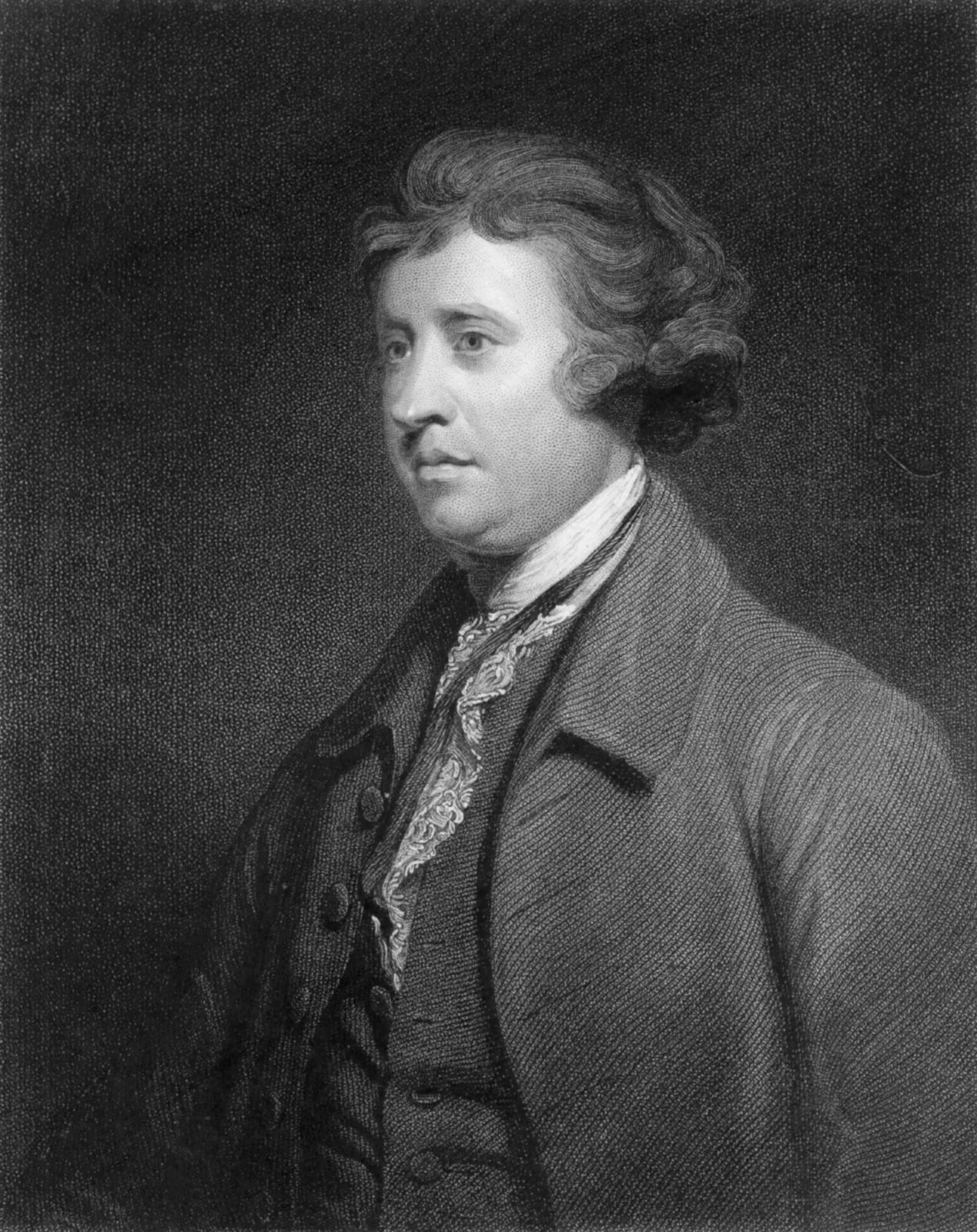
1. Historical Genesis: The Empirical Revolution in Aesthetics
In 1757, at the age of twenty-eight, Irish philosopher and statesman Edmund Burke published A Philosophical Enquiry into the Origin of Our Ideas of the Sublime and Beautiful (followed by a revised second edition in 1759 containing his famous introductory essay, "A Discourse Concerning Taste"). To appreciate the radicalism of Burke's treatise, it must be situated against the dominant aesthetic traditions of classical antiquity and the Enlightenment.[1]
               [ EVOLUTION OF SUBLIME DISCOURSE ]
                               │
       ┌───────────────────────┴───────────────────────┐
       ▼                                               ▼
[ CLASSICAL / RHETORICAL TRADITION ]          [ BURKEAN SOMATIC EMPIRICISM ]
• Longinus (Peri Hypsous)                      • Edmund Burke (1757 Enquiry)
• Rhetorical elevation, high diction           • Neurophysiology, somatic mechanics
• Moral and spiritual transport (ekstasis)     • Instinct for self-preservation
• Persuasion and soul-elevation                • Terror, pain, and muscular spasm
• Sublimity as textual & oratorical craft      • Sublimity as biological nervous reflex
The Longinian Inheritance and Its Secularization
Before Burke, European discussions of the sublime were dominated by the rediscovery of the first-century CE Greek treatise Peri Hypsous (On the Sublime), attributed to Longinus and popularized across Europe by Nicolas Boileau-Despréaux's 1674 French translation.[2]
For Longinus, the sublime was fundamentally a rhetorical and ethical phenomenon:
- Ecstatic Transport (Ekstasis): The orator or poet marshals elevated language, noble metaphors, and dignified cadence to sweep listeners outside of themselves, striking like a sudden thunderbolt that overwhelms ordinary logical persuasion.[3]
- The Echo of a Great Soul: Longinian sublimity was an attribute of noble character, intellect, and spiritual elevation, connecting mortal consciousness with cosmic grandeur.
Burke executed a decisive secularization and somatic relocation of this concept. Rather than seeking sublimity in poetic tropes or moral nobility, Burke approached aesthetic feelings through the lens of British Empiricism, heavily indebted to John Locke's An Essay Concerning Human Understanding (1690). Locke had established that all ideas originate in sensory impressions (sensation) and the mind's internal reflection on those sensations (reflection). Burke pushed Lockean sensationalism to its biological extreme: aesthetic judgment is not an intellectual deduction, nor a refined social habit, but an involuntary, mechanical reaction of the human nervous system to external physical forces.[4]
Moving Beyond Addison and Shaftesbury
Earlier eighteenth-century British writers, such as the Third Earl of Shaftesbury and Joseph Addison (in his celebrated 1712 Spectator essays on the "Pleasures of the Imagination"), had begun associating sublimity with vast natural spectacles—oceans, mountain chains, and star-filled skies.[5] However, they maintained that aesthetic enjoyment was a polite, disinterested intellectual pleasure that harmonized the senses. Burke rejected this polite consensus. He argued that the most intense human passions are violent, irrational, and rooted in terror, tearing aesthetics away from harmonious decorum and anchoring it in visceral survival instincts.[6]
2. Somatic Architecture: The Mechanics of the Physiological Sublime
Burke's theory is termed "physiological" because he directly correlates emotional and aesthetic responses to the physical state of the human body's nerves, vascular channels, and muscle fibers.[7]
┌────────────────────────────────────────────────────────────────────────┐
│             THE PHYSIOLOGICAL FEEDBACK LOOP OF THE SUBLIME             │
└───────────────────────────────────┬────────────────────────────────────┘
                                    │
                                    ▼
       [ EXTERNAL STIMULUS: Vastness, Darkness, Sudden Roar ]
                                    │
                                    ▼
       [ SENSORY PERCEPTION: Optical strain, auditory shock ]
                                    │
                                    ▼
       [ SOMATIC RESPONSE: Muscular contraction, vascular spasm ]
       • Fibers tighten and stretch under unnatural load
       • Biological organism registers mortal threat
                                    │
                                    ▼
       [ AESTHETIC CONDITION: Physical distance / Absolute safety ]
       • Threat cannot inflict immediate bodily destruction
                                    │
                                    ▼
       [ AFFECTIVE RESOLUTION: "Delightful Horror" ]
       • Somatic exercise clears nervous melancholia
       • Visceral shock + cognitive relief of survival
Terror and Self-Preservation
Burke divided all human passions into two primordial biological drives, each governed by an opposing bodily state:[8]
- The Instinct for Society: Governed by companionship, sexual attraction, sympathy, and generational continuity. Its affective register is pleasure, love, and affection. Physically, it produces ease, lubrication, and relaxation of bodily fibers—the foundation of The Beautiful.
- The Instinct for Self-Preservation: Governed by the apprehension of pain, sickness, danger, and death. Because physical annihilation is the ultimate catastrophe for an organism, the passions concerning self-preservation are incomparably stronger than any passion concerning positive pleasure. Anything that threatens self-preservation excites Terror, which Burke crowns as the ruling engine of The Sublime.[9]
"Whatever is fitted in any sort to excite the ideas of pain, and danger, that is to say, whatever is in any sort terrible, or is conversant about terrible objects, or operates in a manner analogous to terror, is a source of the sublime; that is, it is productive of the strongest emotion which the mind is capable of feeling." — A Philosophical Enquiry (Part I, Section VII)[10]
Neurological Tension vs. Bodily Relaxation
Burke operated within the physiological paradigm of his era, which conceived of the nervous system as a network of physical, tensile cords or delicate vascular tubes through which animal spirits circulated:
- The Sublime State (Somatic Spasm and Tension): When confronted with a terrible or vast object, the body undergoes a violent contraction. The eye strains its muscles trying to encompass an ungraspable horizon; the heart accelerates; the respiratory channels constrict; the muscular fibers contract in a defensive crouch against anticipated physical impact. The sublime is fundamentally an aesthetic of somatic stress, shock, and unnatural exertion.[7:1]
- The Beautiful State (Melting and Languor): When encountering smooth, delicate, gently undulating, and harmonious forms, the bodily fibers soften, slacken, and melt into languor. Beauty acts as a sedative, bringing physiological calm, gentle cardiovascular flow, and muscular release.[1:1]
The Exercise of the Finer Fibers: Sublime Catharsis
One of Burke's most striking and modern insights was his explanation of why human beings need the sublime. Burke observed that in advanced, affluent, and sedentary civilizations, human beings often suffer from nervous stagnation, lethargy, and dejection—a clinical condition known in the eighteenth century as the "spleen" or melancholia (and in modern terminology, clinical depression or anhedonia).[11]
Because refined citizens rarely face raw physical labor or lethal predatory threats, their nervous and vascular fibers become slack, clogged, and dysfunctional through disuse. Burke proposed that sublime terror serves as a vital somatic workout:[12]
- The shock of terror violently exercises the fine, delicate fibers of the nervous system.
- This involuntary spasm purges toxic physical obstructions from the vascular channels, restoring elasticity to the vascular network.
- The sublime acts as a physiological tonic: a bracing purgation that shakes the biological mechanism awake and rescues the individual from civilizational decay and psychic paralysis.[12:1]
3. The Sensory Spectrum: Burke's Eight Primary Triggers
Burke did not leave his theory as an abstract philosophical speculation; he cataloged the concrete sensory triggers and environmental properties that reliably stimulate somatic tension and unleash sublime awe.[13]
==================================================================
                 THE BURKEAN TAXONOMY OF SUBLIME TRIGGERS
==================================================================
  [ OBSCURITY ]       ──► Darkness, dense fog, indeterminate bounds;
                          fuels panic through imaginative magnification.
  [ POWER ]           ──► Irresistible, untamed natural violence;
                          exposes human biological vulnerability.
  [ PRIVATION ]       ──► Vacuity, Darkness, Solitude, Silence;
                          sensory absences that prefigure mortal death.
  [ VASTNESS ]        ──► Immense scale; perpendicular depth (the abyss)
                          shocks the senses far more than towering height.
  [ INFINITY ]        ──► Boundless horizons, or "artificial infinity"
                          via succession and uniformity (colonnades).
  [ DIFFICULTY ]      ──► Immense, crushing labor and colossal effort
                          required to erect monuments (e.g., Stonehenge).
  [ MAGNIFICENCE ]    ──► Starry firmaments, constellations, fireworks;
                          splendor in profuse, chaotic abundance.
  [ SENSORY SHOCK ]   ──► Sudden blinding flash, deafening cannonade,
                          low subterranean vibrations, piercing cries.
==================================================================
1. Terror and Danger: The Ruling Principle
Terror is the foundational substrate of the sublime. Any object that evokes the prospect of bodily injury, torture, or death acts directly upon the instinct for self-preservation. When terror is wholly absent, sublimity collapses into mere intellectual curiosity or picturesque admiration.[10:1]
2. Obscurity: Epistemological and Visual Fog
Burke insisted that clear, distinct ideas are the enemies of the sublime. When an object is fully illuminated and its boundaries clearly delineated, the intellect grasps its limits, and fear evaporates. By contrast, obscurity—mist, murky shadows, darkness, and indeterminate silhouettes—prevents the mind from assessing the magnitude of a threat.[14]
- Milton's Paradise Lost as Paradigm: Burke cited John Milton's poetic description of Death in Paradise Lost (Book II) as the greatest literary example of sublimity precisely because of its complete lack of definite form:
"The other shape, / If shape it might be called that shape had none / Distinguishable in member, joint, or limb... / What seemed his head / The likeness of a kingly crown had on."
- Because Death possesses no fixed anatomy, the imagination is unmoored, multiplying its terror in the dark.[15]
3. Power: Untamed Domination
Power is sublime only when it is unmastered, dangerous, and superior to human physical capacity. Burke distinguished sharply between animals associated with utility and those embodying untamed power:[16]
- An ox or a draft horse, despite immense muscular strength, is never sublime because its strength is subjugated to human command and useful labor.
- A charging bull, a wild stallion, a lion, or a wolf is intensely sublime because its power is untamed, hostile, and capable of destroying the observer.
- Nature's destructive power—volcanic eruptions, crashing waterfalls, ocean tempests—manifests this dynamic on a planetary scale.
4. Privation: The Four Somatic Absences
Burke identified four radical sensory deprivations that reliably induce acute horror, because each prefigures the total sensory extinction of death:[17]
- Darkness: The privation of light.
- Solitude: The privation of human fellowship and society.
- Silence: The privation of sound and auditory feedback.
- Vacuity: The privation of substance, space, and physical support (the empty void).
5. Vastness and Dimensionality: The Terror of the Abyss
Vastness excites the sublime by demanding that the sensory organs strain beyond their physiological limits. Burke made a keen phenomenological distinction between vertical directions:[18]
- Looking upward at a towering cliff or mountain summit (height) produces awe.
- Looking downward into a dizzying chasm or precipice (perpendicular depth) produces a vastly sharper, more sickening terror. The abyss threatens the observer with an immediate fall into nothingness, activating a visceral vertigo of self-preservation.[18:1]
6. Infinity and the "Artificial Infinite"
True infinity cannot be perceived by finite human senses. However, the human nervous system can be tricked into experiencing an "artificial infinite" through two key architectural and sensory principles:[19]
- Succession: A repetitive series of identical stimuli (such as an endless colonnade, rows of uniform arches, or the rhythmic ticking of a clock).
- Uniformity: Identical shape, texture, and color across the series.
- Mechanics of Exhaustion: As the eye travels along a long line of uniform pillars, each new pillar strikes the optical nerve with an identical impression. Before the eye can recover from the first impression, the next arrives. The nervous system becomes exhausted by the unrelenting cycle of repetition, surrendering to the sensation that the sequence continues forever.[19:1]
7. Difficulty and Magnificence
- Difficulty: When an object or structure represents an enormous expenditure of human labor, crushing physical weight, and immense obstacle overcome (such as Stonehenge, the Egyptian Pyramids, or colossal mountain passes), the mind experiences a vicarious strain that borders on the sublime.[20]
- Magnificence: A vast, chaotic profusion of grandeur—such as the starry vault of heaven, celestial nebulae, or an illuminated metropolis seen from a distance—overwhelms the eye with sheer informational density.[20:1]
8. Sudden Sensory Disruption
The sublime can be triggered instantaneously through acute sensory shocks that breach ordinary perceptual continuity:
- Suddenness: An unexpected explosion, a lightning strike, or a sudden transition from light to total darkness.
- Auditory Shocks: Deafening noises (cataracts, cannon fire, thunder) or, conversely, low, ominous, vibrating subterranean rumbles that rattle the sternum and thoracic cavity.
- Excessive Light: Light, when pushed to an unnatural extreme (such as staring directly into the midday sun or experiencing the blinding flash of an explosion), acts as a violent physical agent that blinds the eye, functionally converting into darkness and producing pain.[21]
4. Aesthetic Distance and "Delightful Horror"
The central psychological mystery that Burke solved was the paradox of aesthetic terror: why do human beings voluntarily seek out and derive profound aesthetic pleasure from witnessing images and events that depict mortal ruin, pain, and death?[22]
                     [ THE THREAT SPECTRUM ]
                                │
        ┌───────────────────────┴───────────────────────┐
        ▼                                               ▼
[ UNMEDIATED IMMINENT THREAT ]                 [ MEDIATED AESTHETIC THREAT ]
• Zero distance / Immediate peril              • Safe distance / Conceptual peril
• Sinking in a shipwreck                       • Watching shipwreck from high cliff
• Running from an apex predator                • Observing caged tiger in menagerie
• Biological paralysis & panic                 • Somatic shock + conscious safety
• Pure, unadulterated terror                   • "Delightful Horror" (The Sublime)
• EXCLUDES AESTHETIC EXPERIENCE                • FOUNDATION OF AESTHETIC PLEASURE
The Lucretian Vantage and the Necessity of Safety
Burke resolved this paradox by formulating the concept of aesthetic distance, reviving and refining the classical philosophical motif of the suave mari magno articulated by Roman poet Lucretius in De Rerum Natura (the bittersweet pleasure of standing safely on a solid cliff while watching a ship tossed upon a violent storm at sea):[23]
"When danger or pain press too nearly, they are incapable of giving any delight, and are simply terrible; but at certain distances, and with certain modifications, they may be, and they are, delightful, as we every day experience." — A Philosophical Enquiry (Part I, Section VII)[10:2]
If an individual is locked in a room with a ravenous tiger, or stranded on a sinking vessel in an arctic hurricane, their physiological system is flooded with acute survival panic. The biological ego is entirely absorbed in frantic efforts to escape death. In this unmediated state, no aesthetic experience is possible.[24]
"Delight" versus "Positive Pleasure"
Burke made a vital semantic and philosophical distinction between Pleasure (voluptas) and Delight (delectatio):[25]
- Positive Pleasure: An autonomous, independent sensation arising from social interaction, harmonious forms, delicious tastes, and restful relaxation. It requires no preceding state of discomfort.
- Delight: A specific, complex emotional state that can only occur upon the cessation or mitigation of pain and terror. Delight is fundamentally the somatic and cognitive relief of survival.[25:1]
When a human being observes a violent storm, a bottomless ravine, or a monstrous beast from a position of guaranteed physical safety, two simultaneous processes occur:
- The sensory cues of destruction strike the nervous system, producing the visceral somatic contraction, accelerated pulse, and muscular tension of self-preservation.
- Simultaneously, conscious rational awareness registers that the threat cannot reach the physical self.
The resulting affective state is what Burke termed "delightful horror"—a tranquility tinged with terror, an intoxicating thrill born from the nervous system experiencing the bracing shock of mortality while the conscious ego enjoys the triumphant certainty of survival.[26]
5. The Antithetical Taxonomy: Sublime versus Beautiful
Before Burke, aesthetics treated beauty as an umbrella term that encompassed proportion, grace, and grandeur, with sublimity viewed merely as an elevated subspecies of the beautiful. Burke shattered this syncretism, proving that the Sublime and the Beautiful are diametrically opposed across every biological, sensory, and psychological axis.[27]
   [ THE BEAUTIFUL ]                              [ THE SUBLIME ]
   • Origin: Society & Love                       • Origin: Self-Preservation & Fear
   • Effect: Relaxation & Languor                 • Effect: Contraction & Tension
   • Scale: Small, delicate, intimate             • Scale: Vast, colossal, infinite
   • Surface: Smooth, polished, rounded           • Surface: Rugged, jagged, broken
   • Light: Bright, clear, soft                   • Light: Gloomy, obscure, blinding
   • Form: Gradual, undulating variation          • Form: Abrupt, angular, formless
   • Result: Tenderness and Affection             • Result: Astonishment and Delightful Horror
Comprehensive Comparative Matrix
| Analytical Dimension | The Beautiful (Pulchrum) | The Sublime (Sublime) |
| :--- | :--- | :--- |
| Governing Biological Instinct | Society, affection, companionship, sex, and generational survival.[8:1] | Self-preservation, avoidance of pain, and mortal survival.[9:1] |
| Neurophysiological State | Relaxation, softening, melting of muscular fibers, bodily ease.[1:2] | Acute muscular tension, vascular contraction, ocular strain, nervous shock.[7:2] |
| Primary Affective Tone | Tenderness, love, social sympathy, quiet admiration.[27:1] | Terror, awe, astonishment, vertigo, and "delightful horror."[10:3] |
| Dimensional Scale | Small, delicate, miniature, easily encompassed by human touch.[28] | Vast, colossal, mountainous, fathomless, infinite.[18:2] |
| Surface Texture & Edge | Smooth, polished, gently curved, soft to the touch.[28:1] | Rugged, jagged, broken, precipitous, craggy, abrasive.[28:2] |
| Geometric Linearity | Gradual variation, slow undulating serpentine curves (Hogarth's "Line of Beauty").[29] | Abrupt angles, sharp chasms, jagged fissures, formlessness.[29:1] |
| Atmospheric Illumination | Bright, clear, gentle, transparent, pastel illumination.[21:1] | Dark, gloomy, obscure, foggy, or suddenly and painfully blinding.[21:2] |
| Color Spectrum | Soft, varied colors (light pink, sky blue, pale green, pearl white).[21:3] | Somber, monolithic tones (pitch black, deep crimson, iron gray, sulfurous yellow).[21:4] |
| Auditory Qualities | Soft, melodious, intermittent, harmonious, soothing sounds.[21:5] | Thunderous roaring, cataracts, sudden shouts, dead silence, deep rumbles.[21:6] |
| Subject Position | Contemplative ease, superiority, protective affection toward the object.[27:2] | Humiliation, dwarfed insignificance, visceral shock, followed by survival relief.[24:1] |
| Representative Archetypes | The delicate swan, the sculpted marble nymph, the trimmed rose garden, the domestic brook. | The crashing ocean tempest, the bottomless alpine crevasse, the charging wild beast, Milton's formless Death. |\
6. The Political Sublime: From the Enquiry (1757) to Reflections (1790)
A profound continuity connects Burke's early aesthetic treatise with his later political masterpiece, Reflections on the Revolution in France (1790). In Burke's thought, political structures, social institutions, and civilizational orders operate under the identical aesthetic laws governing the Beautiful and the Sublime.[30]
               [ BURKE'S AESTHETIC-POLITICAL INTEGRATION ]
                                    │
           ┌────────────────────────┴────────────────────────┐
           ▼                                                 ▼
[ THE BEAUTIFUL: CONSTITUTIONAL ORDER ]       [ THE MONSTROUS SUBLIME: REVOLUTION ]
• Ancient constitutional traditions           • French Jacobin leveling & regicide
• Hereditary customs & organic growth         • Sudden violent rupture of history
• Chivalric affection & social deference      • Cold mathematical rationalism
• "The pleasing illusions of life"            • Unmediated terror without safety
• Gentle, protective social fabric            • The sublime unleashed into raw horror
The Beautiful as Constitutional Chivalry
Burke conceptualized traditional British constitutional monarchy, organic social hierarchies, and church institutions as embodiments of The Beautiful:[31]
- The Decent Drapery of Life: Civil society relies on inherited manners, ancestral affections, and "pleasing illusions" that soften the harsh exercise of sovereign power into something lovable and harmonious.[32]
- Gradual Variation: Like beautiful objects, healthy legal and political orders evolve smoothly and incrementally over centuries through customary practice, avoiding jarring, violent shocks.[31:1]
The French Revolution as the Unmediated Sublime
When the French Revolution erupted in 1789, tearing down the monarchy, desecrating the Catholic Church, and executing Louis XVI and Marie Antoinette, Burke viewed the catastrophe as the terrifying political realization of The Sublime:[33]
- Shattering Obscurity and Suddenness: The Revolution was an abrupt, unmediated volcanic eruption that leveled ancient traditions, plunging European civilization into a chaotic void of uncertainty and obscure terror.[33:1]
- The Collapse of Aesthetic Distance: In the Enquiry, Burke established that when danger presses too closely, the sublime ceases to be delightful and becomes pure, agonizing, destructive terror. In revolutionary Paris, the Jacobin guillotine and the mob's violent rampages obliterated all aesthetic distance. The sublime broke free from artistic representation, manifesting as raw, unadulterated political horror that consumed the state.[34]
7. Intertextual Legacy and Theoretical Evolution
Burke's materialist, body-centric redefinition of the sublime detonated across European philosophy, visual art, literature, and modern psychology, permanently altering Western consciousness.[35]
                       [ BURKE'S HISTORICAL IMPACT ]
                                     │
      ┌──────────────────────────────┼──────────────────────────────┐
      ▼                              ▼                              ▼
[ PHILOSOPHY ]                 [ THE ARTS ]                  [ PSYCHOLOGY ]
• Kant: Critique of Judgment   • Gothic Fiction: Walpole,    • Neuroaesthetics & somatics
  (Transcendental revision;      Radcliffe, Shelley, Poe     • Freud: Thanatos & Uncanny
  Reason over nervous reflex)  • Painting: Fuseli, Turner,   • Cinema: Horror genre &
• Schopenhauer: Will & Terror    Friedrich, Group of Seven     biological fear responses
1. Immanuel Kant's Transcendental Critique
The most immediate and consequential philosophical response to Burke came from Immanuel Kant in his Critique of Judgment (Kritik der Urteilskraft, 1790). Kant read Burke in German translation and openly praised his treatise as one of the finest empirical psychological studies of human emotion ever written.[36]
However, Kant executed an aesthetic "Copernican Revolution" that fundamentally rejected Burke's physiological reductionism:[37]
- The Idealist Rebuttal: Kant argued that reducing the sublime to a nervous reflex or vascular contraction failed to account for its universal validity and profound moral gravity.
- The Locus of Sublimity: True sublimity, Kant argued, does not reside in external physical objects (not in the ocean, not in the mountain, not in the storm); it resides entirely within the judging human mind.[38]
- The Transcendental Turn: When overwhelming nature crushes sensory comprehension (the Mathematically Sublime) or threatens physical existence (the Dynamically Sublime), the mind experiences initial humiliation. However, this failure awakens our supersensible faculty of Reason (Vernunft), confirming that human moral autonomy and rational dignity transcend the entire physical universe. Where Burke ended with the biological body trembling in safe relief, Kant elevated the human mind to cosmic supremacy.[38:1]
2. Gothic Romanticism and the Visual Arts
Burke's catalog of terror, obscurity, vastness, and privation served as the direct compositional handbook for the Gothic and Romantic movements:[39]
- Gothic Literature: Horace Walpole (The Castle of Otranto), Ann Radcliffe (The Mysteries of Udolpho), and Mary Shelley (Frankenstein) systematically engineered scenes of subterranean vaults, crumbling ruins, impenetrable fogs, and lurking predators to induce the somatic terror Burke theorized.[39:1] In America, Edgar Allan Poe (1809-1849) brought Burkean privation to its absolute zenith in stories of sensory deprivation, burial alive, and the psychological abyss (The Pit and the Pendulum, The Fall of the House of Usher).
- Henry Fuseli and The Nightmare: Fuseli's celebrated 1781 canvas stands as the supreme pictorial translation of the Burkean sublime into visual art. By confronting the viewer with suffocating darkness, the oppressive physical weight of the incubus sitting upon the maiden's chest, and the glowing, pupil-less eyes of the spectral mare, Fuseli materialized Burke's criteria of obscurity, power, and somatic distress within the domestic bedchamber.[40]
- Romantic Landscape Painting: J.M.W. Turner dissolved solid architectural forms into swirling, blinding thermodynamic vortexes of steam, blizzard, and oceanic tempest, capturing the sensory shock of light and obscure vastness. In Germany, Caspar David Friedrich painted solitary figures standing before abysses and icy mountain ranges, visually staging the human subject's encounter with Burke's perpendicular depth. In Canada, the Group of Seven (also known as the Algonquin School) transposed this sensibility onto the unyielding granite and vast boreal isolation of the northern wilderness.[41]
3. Modern Psychology, Psychoanalysis, and the Horror Industry
By liberating aesthetic theory from decorative harmony and tying it directly to survival drives, autonomic arousal, and bodily panic, Burke anticipated key breakthroughs in modern science and culture:[42]
- Neuroaesthetics and Evolutionary Psychology: Contemporary cognitive neuroscience confirms Burke's central thesis: threatening stimuli trigger instantaneous, subcortical responses in the amygdala, initiating muscular tension and hormonal adrenaline surges long before conscious rational processing occurs in the neocortex.[43]
- Psychoanalysis (Thanatos and The Uncanny): Decades before Sigmund Freud formulated the death drive (Thanatos) in Beyond the Pleasure Principle and dissected the terror of repressed domestic spaces in Freud's The Uncanny (Das Unheimliche), Burke demonstrated that human consciousness is fundamentally haunted by the terrifying shadow of its own mortality.
- The Modern Thrill Economy: Burke's theory provides the precise mechanics explaining why global audiences flock to modern horror cinema, haunted houses, and towering rollercoasters. The spectator straps into a mechanical carriage or sits in a darkened theater seat—guaranteeing aesthetic distance and physical immunity—while cinematic sound design, abrupt shadows, and simulated monsters flood the nervous system with Burkean terror, terminating in the intoxicating catharsis of "delightful horror."[44]
🎴 Interactive Web Practice (Comprehension Check)
Question 1 (Physiological Mechanics & Self-Preservation): How does Edmund Burke fundamentally rupture classical aesthetic traditions (such as Longinus) in his explanation of the sublime, and what specific role does neurophysiological tension play in his model?
Answer: While classical thinkers like Longinus approached the sublime (hypsos) as an elevated property of noble rhetoric, poetic cadence, and moral elevation of the soul, Burke radicalized and secularized aesthetics by anchoring it in radical empirical sensationalism, human biology, and neurophysiology. Burke argued that the sublime is rooted in the most primal biological drive: the instinct for self-preservation.
Because the avoidance of pain and mortal destruction takes absolute evolutionary precedence over pleasure, objects that threaten existence excite the passion of terror—the strongest emotion the human mind can experience. Physically, confronting vast, dark, or terrifying phenomena triggers an involuntary somatic contraction: the muscles tighten, the vascular network constricts, and the ocular and nervous fibers stretch under unnatural load. Furthermore, Burke viewed this nervous spasm as a vital physiological purge or "exercise of the finer fibers," clearing sedentary human beings of vascular stagnation and mental melancholia.
Question 2 (Aesthetic Distance & Delightful Horror): Why is physical safety (aesthetic distance) an indispensable prerequisite for the Burkean sublime, and how does "delight" differ ontologically from positive pleasure?
Answer: Burke demonstrated that aesthetic distance is the absolute threshold separating unadulterated panic from aesthetic awe. If a mortal threat is immediate and physical (e.g., drowning in a storm or facing an untamed predator without barriers), the human organism is flooded with paralyzing survival panic, which completely precludes reflective contemplation or artistic enjoyment.
The sublime can only occur when terrifying phenomena are witnessed from a position of guaranteed physical safety. In this state of aesthetic distance, the observer experiences what Burke termed "delightful horror" (a tranquility tinged with terror). Burke made a crucial distinction between positive pleasure and delight: positive pleasure is an autonomous, gentle sensation that requires no preceding pain, whereas delight is strictly a negative passion—the somatic relief, cardiovascular thrill, and cognitive exhilaration born from the awareness that a perceived mortal threat has been survived.
Question 3 (The Sublime vs. Beautiful Dichotomy & Political Philosophy): How does Burke's antithetical separation of the Sublime and the Beautiful structure both his aesthetic taxonomy and his later political critique in Reflections on the Revolution in France?
Answer: Burke shattered the traditional aesthetic consensus by proving that the Sublime and the Beautiful are diametrically opposed across every dimension:
- The Beautiful: Governed by the social and reproductive instinct (love, companionship); manifests physically as muscular relaxation, melting, and languor; characterized by small, smooth, polished, gently varying forms and soft, bright lighting.
- The Sublime: Governed by self-preservation and fear; manifests physically as violent contraction and somatic stress; characterized by vast, dark, jagged, obscure, and powerful phenomena.
This aesthetic dichotomy directly structured Burke's political philosophy in Reflections on the Revolution in France (1790). Burke conceived of the British constitutional monarchy and ancient hereditary traditions as The Beautiful—a delicate, smooth, organically woven social fabric sustained by chivalric affection, inherited manners, and "pleasing illusions."
Conversely, he diagnosed the French Jacobin Revolution as an uncontrolled, monstrous manifestation of The Sublime: a sudden, obscure, and violent leveling that obliterated historic boundaries, abolished aesthetic distance, and unleashed unmediated political terror upon European civilization.
Resonant Notes
The following notes in the vault share direct thematic, philosophical, and aesthetic connections with Edmund Burke's physiological sublime:
🔴 Aesthetics, Philosophy & The Dialectic of the Sublime
- The Sublime — The central conceptual synthesis note tracing the evolution of sublimity from Longinus's rhetorical ecstasy to Burke's somatic terror, Kant's rational idealism, and postmodern technological systems. Burke's Enquiry initiated the foundational aesthetic schism between the harmonious Beautiful and the visceral Sublime.
- Immanuel Kant-The Transcendental Sublime — Kant accepts Burke's empirical distinction between beauty and sublimity but executes a transcendental turn: rejecting Burke's purely physiological nervous reflex, Kant argues that the encounter with overwhelming nature exposes sensory failure only to awaken Reason's supersensible supremacy and moral autonomy.
- The Dehumanization of Art — Ortega y Gasset critiques nineteenth-century Romanticism for relying on raw somatic contagion, visceral pathos, and physiological arousal—the direct legacy of Burke's body-centric aesthetic of shock and self-preservation—contrasting it with modern art's emotional detachment and geometric purity.
- The Renaissance — Highlights Michelangelo's terribilità on the Sistine Chapel ceiling and The Last Judgment, marking the historical aesthetic bridge where High Renaissance classical proportion yielded to the overwhelming, muscular scale that anticipated eighteenth-century theories of the sublime.
- Metaphysics of Henry David Thoreau — Explores American Transcendentalism's intimate reconciliation of Kantian idealism with the wild, discovering in uncultivated natural environments a spiritual awakening that reinterprets Burke's terrifying wilderness into a sacred sanctuary of self-renewal.
🟡 Gothic Somatics, Terror & The Uncanny
- The Nightmare — Henry Fuseli's 1781 Gothic masterpiece visually externalizes Burke's physiological tension: the heavy, suffocating incubus and shadowy mare embody the bodily paralysis, thoracic pressure, and dark obscurity of the sublime experienced at the border of sleep.
- Edgar Allan Poe (1809-1849) — Poe serves as the literary twin to Burke's physiological sublime, translating sensory privation, obscurity, perpendicular depth, and existential vertigo (The Imp of the Perverse) into claustrophobic somatic dread and entombed spaces.
- Freud's The Uncanny (Das Unheimliche) & Sigmund Freud — Freud notes that traditional aesthetics historically privileged the Beautiful and the Sublime while neglecting distressing affects; Burke's grounding of sublimity in mortal terror and self-preservation prefigures psychoanalytic investigations into somatic anxiety and the death drive (Thanatos).
- Anthony Vidler-The Architectural Uncanny — Vidler spatializes Burke's sublime triggers—obscurity, darkness, vastness, and privation—into modern architectural estrangement, analyzing how disorienting voids, warped geometries, and unhomely environments trigger bodily anxiety.
- Goethe's Faust & Johann Wolfgang von Goethe (1749-1832) — Faust's unquenchable Streben (striving) and defiance of finite human limitations embody the existential sublime, seeking union with the absolute and cosmic elemental powers even at the peril of mortal destruction.
- Sehnsucht — The profound, unfulfillable yearning at the core of German Romanticism shares Burke's affective threshold, channeling the tension between mortal limitation and the vast, ungraspable infinite into acute aesthetic and emotional intensity.
🟢 Nature, Isolation & The Technological Sublime
- Group of Seven (also known as the Algonquin School) — Translates the European sublime into the rugged Canadian shield, confronting vast, unyielding northern geography that elicits visceral vulnerability and awe rather than classical pastoral harmony.
- From Walls of Wood to Walls of Glass - Northrop Frye’s Geography of Isolation & Northrop Frye — Frye's "garrison mentality" exemplifies Burke's instinct for self-preservation, analyzing how isolated human communities construct physical and psychological enclosures against a menacing, incomprehensible, and boundless wilderness.
- Don DeLillo Major Themes Analysis — DeLillo updates the sublime for late capitalism, tracking how the awe and terror once inspired by natural chasms have migrated into multinational finance networks, media spectacle, consumer "blur and glut," and toxic technological disasters.
- Defining a Simulacrum — Baudrillard's hyperreality and the precession of simulacra articulate the postmodern technological condition, where artificial media simulations replace natural reality as the ungraspable, sublime environment enveloping human consciousness.
- The Work of Art in the Age of Mechanical Reproduction & Walter Benjamin (1892–1940) — Benjamin analyzes how modern reproductive technology strips the art object of its traditional cultic "aura," initiating the transition from contemplative, sublime absorption to distracted mass consumption.
- Aldous Huxley's Heaven and Hell (1956) — Huxley's analysis of visionary transport and the terrifying "infernal antipodes" of the mind mirrors Burke's distinction between harmonious sensory beauty and the disorienting, terror-laden sublime.
References
Edmund Burke / A Philosophical Enquiry into the Origin of Our Ideas of the Sublime and Beautiful (1757), edited by David Womersley / Penguin Classics (1998) ↩︎ ↩︎ ↩︎
Longinus / On the Sublime (Peri Hypsous), translated by W. Hamilton Fyfe / Loeb Classical Library, Harvard University Press (1995) ↩︎
Philip Shaw / The Sublime / Routledge (2006) ↩︎
John Locke / An Essay Concerning Human Understanding (1690), edited by Peter H. Nidditch / Oxford University Press (1975) ↩︎
Joseph Addison / The Spectator (Nos. 411–421: "On the Pleasures of the Imagination", 1712), edited by Donald F. Bond / Oxford University Press (1965) ↩︎
Ernst Cassirer / The Philosophy of the Enlightenment / Princeton University Press (1951) ↩︎
Vanessa L. Ryan / The Physiological Sublime: Burke's Critique of Reason / Journal of the History of Ideas, Vol. 62, No. 2 (2001), pp. 265–279 / JSTOR ↩︎ ↩︎ ↩︎
Edmund Burke / A Philosophical Enquiry, Part I, Section VIII: "Of the passion caused by the SUBLIME" ↩︎ ↩︎
Edmund Burke / A Philosophical Enquiry, Part I, Section VI: "Of the passions which belong to SELF-PRESERVATION" ↩︎ ↩︎
Edmund Burke / A Philosophical Enquiry, Part I, Section VII: "Of the SUBLIME" ↩︎ ↩︎ ↩︎ ↩︎
Roy Porter / Mind-Forg'd Manacles: A History of Madness in England from the Restoration to the Regency / Athlone Press (1987) ↩︎
Edmund Burke / A Philosophical Enquiry, Part IV, Section VI: "How the Sublime is produced" & Part IV, Section VII: "Exercise necessary for the finer organs" ↩︎ ↩︎
W.J.T. Mitchell / Iconology: Image, Text, Ideology / University of Chicago Press (1986) ↩︎
Edmund Burke / A Philosophical Enquiry, Part II, Section III: "Obscurity" ↩︎
John Milton / Paradise Lost (1667), Book II, lines 666–673 ↩︎
Edmund Burke / A Philosophical Enquiry, Part II, Section V: "Power" ↩︎
Edmund Burke / A Philosophical Enquiry, Part II, Section VI: "Privation" ↩︎
Edmund Burke / A Philosophical Enquiry, Part II, Section VII: "Vastness" ↩︎ ↩︎ ↩︎
Edmund Burke / A Philosophical Enquiry, Part II, Section VIII: "Infinity" & Section IX: "Succession and Uniformity" ↩︎ ↩︎
Edmund Burke / A Philosophical Enquiry, Part II, Section XII: "Difficulty" & Section XIII: "Magnificence" ↩︎ ↩︎
Edmund Burke / A Philosophical Enquiry, Part II, Sections XIV–XXII (Light, Color, Sound, Loudness, Suddenness, Intermitting Sounds) ↩︎ ↩︎ ↩︎ ↩︎ ↩︎ ↩︎ ↩︎
Paul Guyer / Values of Beauty: Historical Essays in Aesthetics / Cambridge University Press (2005) ↩︎
Lucretius / De Rerum Natura (On the Nature of Things), Book II, lines 1–4: "Suave, mari magno turbantibus aequora ventis, e terra magnum alterius spectare laborem" ↩︎
David Bromwich / A Choice of Inheritance: Self and Community from Edmund Burke to Robert Frost / Harvard University Press (1989) ↩︎ ↩︎
Edmund Burke / A Philosophical Enquiry, Part I, Section IV: "Of Delight and Pleasure, as opposed to each other" ↩︎ ↩︎
Neel Burton / The Beautiful vs the Sublime: Key Philosophical Insights / neelburton.com ↩︎
Stanford Encyclopedia of Philosophy / 18th Century British Aesthetics / plato.stanford.edu ↩︎ ↩︎ ↩︎
Edmund Burke / A Philosophical Enquiry, Part III, Section XXIV: "Recapitulation" & Part III, Section XXVII: "The Sublime and Beautiful compared" ↩︎ ↩︎ ↩︎
William Hogarth / The Analysis of Beauty (1753), edited by Ronald Paulson / Yale University Press (1997) ↩︎ ↩︎
Tom Furniss / Edmund Burke's Aesthetic Ideology: Language, Gender, and Political Economy in Revolution / Cambridge University Press (1993) ↩︎
Edmund Burke / Reflections on the Revolution in France (1790), edited by J.G.A. Pocock / Hackett Publishing (1987) ↩︎ ↩︎
Conor Cruise O'Brien / The Great Melody: A Thematic Biography and Commented Anthology of Edmund Burke / University of Chicago Press (1992) ↩︎
W.J.T. Mitchell / Picture Theory: Essays on Verbal and Visual Representation / University of Chicago Press (1994) ↩︎ ↩︎
F.P. Lock / Edmund Burke: Volume II, 1784–1797 / Oxford University Press (2006) ↩︎
Andrew Ashfield and Peter de Bolla (Eds.) / The Sublime: A Reader in British Eighteenth-Century Aesthetic Theory / Cambridge University Press (1996) ↩︎
Immanuel Kant / Critique of Judgment (Kritik der Urteilskraft, 1790), General Remark on the Exposition of Aesthetic Reflective Judgments ↩︎
Henry E. Allison / Kant's Theory of Taste: A Reading of the Critique of Judgment / Cambridge University Press (2001) ↩︎
Paul Guyer / Kant and the Experience of Freedom / Cambridge University Press (1996) ↩︎ ↩︎
Martin Myrone / Gothic Nightmares: Fuseli, Blake and the Romantic Imagination / Tate Publishing (2006) ↩︎
Northrop Frye / The Bush Garden: Essays on the Canadian Imagination / House of Anansi Press (1971) ↩︎
Semir Zeki / Inner Vision: An Exploration of Art and the Brain / Oxford University Press (1999) ↩︎
Joseph LeDoux / The Emotional Brain: The Mysterious Underpinnings of Emotional Life / Simon & Schuster (1996) ↩︎
Noël Carroll / The Philosophy of Horror, or Paradoxes of the Heart / Routledge (1990) ↩︎