Guillaume Apollinaire (1880–1918)
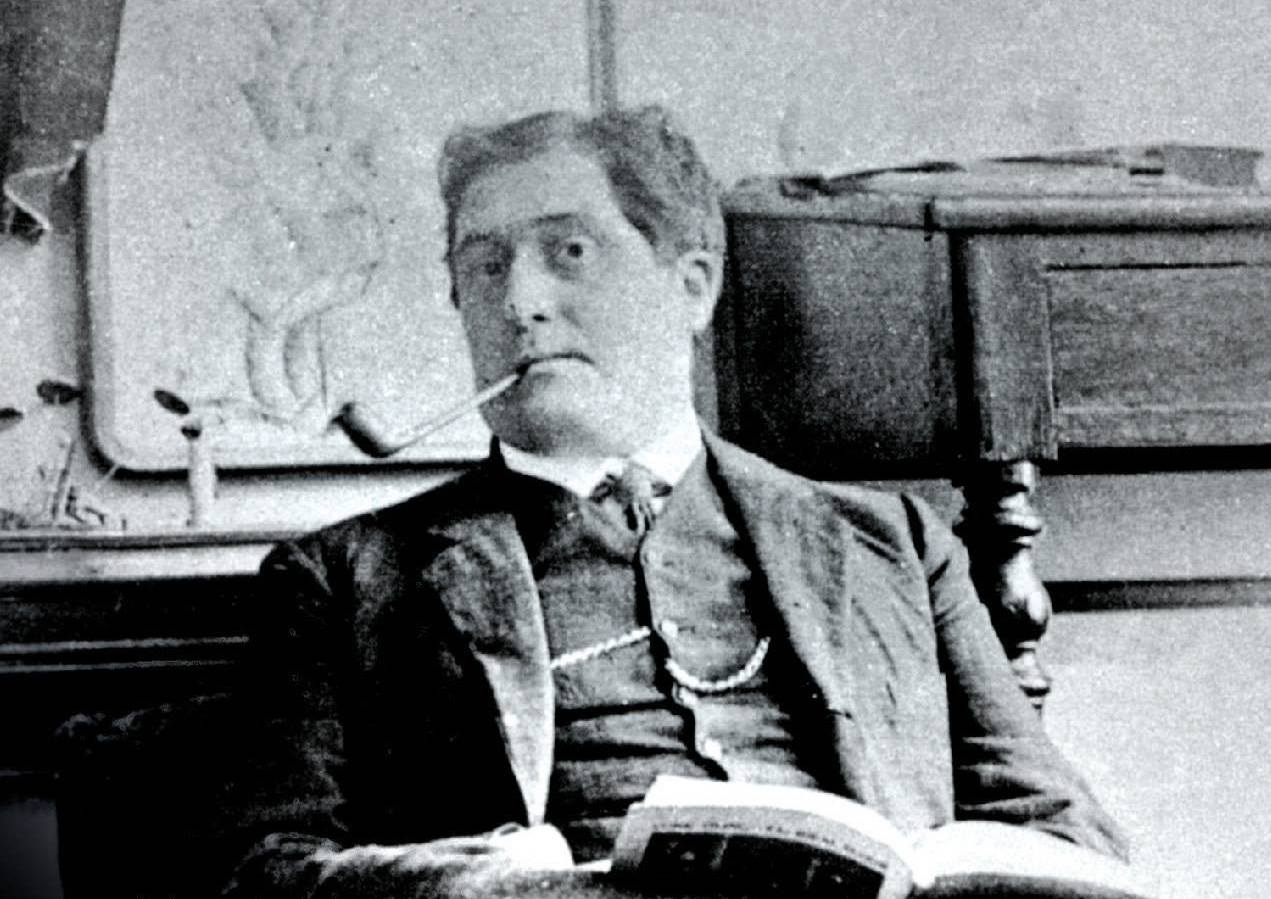
Guillaume Apollinaire (1880–1918) was a seminal Polish-French poet, playwright, aesthetician, and art critic who functioned as the primary catalyst and theoretical architect of the Parisian avant-garde during the pivotal opening decades of the twentieth century. Operating at the dynamic intersection of Symbolism, Cubism, and proto-Surrealism, Apollinaire systematically dismantled classical prosody and linear syntax through radical typographical ideograms (calligrammes), the complete suppression of punctuation, and polyphonic poetic montage. Through foundational treatises such as Méditations esthétiques. Les peintres cubistes (1913) and his scandalous play Les Mamelles de Tirésias (1917)—wherein he coined the term surrealism—Apollinaire theorized a new aesthetic realism that superseded 19th-century photographic mimesis. His life and tragic death on the eve of the 1918 Armistice embody the ecstatic embrace of industrial modernity and the catastrophic bodily shock of industrialized warfare.
Biography and the Parisian Crucible
Early Life and Cosmopolitan Marginality
Apollinaire was born Wilhelm Albert Włodzimierz Kostrowicki on August 26, 1880, in Rome, Italy.[1] He was the son of Angelika Kostrowicka, a Polish noblewoman whose aristocratic family had been dispossessed in the wake of the Polish anti-Russian uprisings, and an unacknowledged Italian father (widely believed to be the Swiss-Italian military officer Francesco Flugi d'Aspermont).[2] Raised in a peripatetic, multilingual household, Kostrowicki spent his formative adolescence shuttling between Rome, Bologna, Monaco, Cannes, and Nice.
This marginal, stateless identity fostered a profound linguistic fluidity and a chronic sense of dislocation that fueled his poetic reinvention. Arriving in Paris in 1899 at the age of nineteen, he worked as a bank clerk and ghostwriter while adopting the Gallicized literary nom de plume Guillaume Apollinaire—invoking Apollo, the Greek god of lyric poetry, light, and aesthetic order.[3]
Immersing himself in the Bohemian café life of Montmartre and Montparnasse, Apollinaire emerged as the quintessential modern observer, adopting the urban poet-critic mantle theorized in The Painter of Modern Life, a seminal 1863 essay by French poet and art critic Charles Baudelaire and incarnating the restless trajectory of The flâneur.
The Montmartre Network and the Bateau-Lavoir Circle
By 1904, Apollinaire had embedded himself at the structural center of Parisian literary and artistic insurrection. He became the intellectual liaison and primary interlocutor for the impoverished international community of painters and poets residing at the Bateau-Lavoir ("Washhouse Boat"), a dilapidated warren of artist studios at 13 Rue Ravignan in Montmartre.[4] There, he forged lifelong intimate alliances with Pablo Picasso, Georges Braque, André Derain, Maurice de Vlaminck, Juan Gris, Max Jacob, and André Salmon:
- Alfred Jarry and 'Pataphysics: Apollinaire was deeply influenced by Alfred Jarry's anarchic theatrical farce Ubu Roi (1896) and his "science of imaginary solutions" ('Pataphysics), absorbing Jarry's subversive embrace of absurdity, linguistic collage, and black humor.[5]
- The Rediscovery of Henri Rousseau: Recognizing visionary power in self-taught and archaic expressions, Apollinaire was instrumental in introducing "Le Douanier" Henri Rousseau to the Parisian vanguard, co-hosting the legendary 1908 banquet in Picasso's studio honoring Rousseau's naive monumentalism.[5:1]
- Championing Giorgio de Chirico: In 1911, when Giorgio de Chirico (1888-1978) arrived in Paris, Apollinaire was the first to recognize the genius of his deserted piazzas, ominous arcades, and silent classical statues, hailing him as "the most astonishing painter of his generation" and organizing de Chirico's inaugural studio exhibitions in 1913.[6]
- Editorial Platforms: Apollinaire co-founded and edited key avant-garde literary reviews, notably Le Festin d'Ésope (1903) and later Les Soirées de Paris (1912–1914), which provided the premier theoretical and visual vehicle for publishing Cubist reproductions, experimental scores, and polemical manifestos.[7]
"One cannot forever carry around the corpse of one's father. You must abandon it to the other dead. You must remember it, regret it, speak of it with admiration. And if you become a father yourself, do not expect one of your children to consent to split himself in two for the mere pleasure of carrying your corpse around."
— Guillaume Apollinaire, Méditations esthétiques (1913)[8]
The 1911 Louvre Theft Scandal: The Mona Lisa Affair
In August 1911, Leonardo da Vinci's Mona Lisa (La Gioconda) was stolen from the Musée du Louvre, triggering a sensational international manhunt and press hysteria. Shortly before the theft, Apollinaire's former personal secretary and associate, a Belgian adventurer named Honoré Joseph Géry Pieret, had stolen several small Iberian stone statues from the Louvre and sold them to Picasso (who used their archaic, mask-like features as anatomical models while painting Les Demoiselles d'Avignon in 1907).[9]
When Pieret flaunted another stolen artifact to the newspaper Paris-Journal, Apollinaire and Picasso panicked, fearing deportation as undesirable foreign aliens. After attempting to discard the statues in the Seine, Apollinaire arranged to return them through an intermediary. However, the police traced the artifacts to Apollinaire's apartment, arrested him on September 7, 1911, and incarcerated him in the notorious La Santé Prison on suspicion of participating in an international art-theft syndicate.[9:1]
Apollinaire was interrogated for days, publicly scapegoated in the xenophobic press as a "Russian-Polish conspirator," and confronted with Picasso—who broke down under police questioning and notoriously claimed he had never seen Apollinaire before.[10] Apollinaire spent six traumatic days in solitary confinement before being exonerated and released without charges (the Mona Lisa was recovered two years later in Florence, having been stolen by Italian Louvre glazier Vincenzo Peruggia). The imprisonment left deep emotional scars on Apollinaire, which he transfigured into the poignant prison cycle À la Santé in Alcools.[10:1]
Theoretical Codification of the Avant-Garde
                       [ 19th-Century Realism / Mimesis ]
                                      │
                         (Radical Rupture / 1907-1912)
                                      │
                     ┌────────────────┴────────────────┐
                     │                                 │
           [ Scientific Cubism ]               [ Orphic Cubism ]
         (Picasso, Braque, Gris)            (Delaunay, Picabia, Léger)
         Multi-point perspective,          Pure chromatic abstraction,
         geometric decomposition           rhythmic simultaneity, music
                     │                                 │
                     └────────────────┬────────────────┘
                                      │
                       [ Sur-réalisme / The New Spirit ]
                                 (1917-1918)
                     Analogical creation, not imitation:
                   "When man wanted to imitate walking,
                         he invented the wheel."
The Champion of Cubism (Les Peintres Cubistes, 1913)
Apollinaire was the preeminent intellectual theorist of Cubism, articulating the philosophical foundations of a movement that conservative critics dismissed as geometric barbarism. In 1913, he published his definitive critical work, Méditations esthétiques. Les peintres cubistes (The Cubist Painters: Aesthetic Meditations).[8:1]
Apollinaire argued that Cubism was not an art of sensory imitation, but an art of conception—a profound philosophical progression that severed painting from Renaissance perspective, dynamic mimesis, and sentimental narrative. Echoing ideas later systematized by José Ortega y Gasset in The Dehumanization of Art, Apollinaire insisted that modern art must liberate itself from emotional reproduction to construct pure, autonomous plastic realities:
"The plastic virtues: purity, unity, and truth, keep nature in subjection... While the goal of painting is now, as it has always been, the pleasure of the eye, the art lover is henceforth asked to find a pleasure different from that which the depiction of natural things could just as easily provide him... Modern art rejects human sentimentalism, seeking an internal geometry of form."
— Guillaume Apollinaire, Les Peintres Cubistes (1913)[8:2]
Apollinaire's Fourfold Taxonomy of Cubism
In Les Peintres Cubistes, Apollinaire formulated the first comprehensive structural taxonomy to categorize the divergent trajectories emerging within the Cubist movement:
| Category | Key Practitioners | Aesthetic Definition & Formal Strategy | Philosophical Principle |
|---|---|---|---|
| Scientific Cubism (Le cubisme scientifique) | Pablo Picasso, Georges Braque, Juan Gris | The rigorous decomposition of visible reality into geometric facets; multi-perspectival synthesis; pure plastic construction derived from conception rather than visual perception. | The intellect (l'esprit) reconstructing spatial knowledge independently of optical illusion. |
| Physical Cubism (Le cubisme physique) | Henri Le Fauconnier, Albert Gleizes, Jean Metzinger | The construction of compositions using visual elements borrowed largely from external reality, emphasizing volumetric mass and tactile materiality. | A transitory discipline bridging visual perception with geometric structural discipline. |
| Orphic Cubism / Orphism (Le cubisme orphique) | Robert Delaunay, Sonia Delaunay, Fernand Léger, Marcel Duchamp | Pure non-representational painting created entirely out of autonomous color harmonies, simultaneous contrasts, and luminous rhythm; direct analogy to music. | Pure aesthetic creation independent of visual motifs; light and color as self-sufficient form. |
| Instinctive Cubism (Le cubisme instinctif) | Henri Matisse, André Derain, Maurice de Vlaminck | Compositions derived from instinct and personal impulse rather than strict geometric analysis, retaining rhythmic freedom and emotional vibrancy. | Intuitive vitality seeking to harmonize modern pictorial construction with subjective expression. |
Orphism: Chromatic Lyricism and Non-Objective Abstraction
Around 1912, Apollinaire coined the term Orphism (or Cubisme orphique) to distinguish the radiant, color-saturated canvases of Robert and Sonia Delaunay, Fernand Léger, and František Kupka from the monochrome ochres, greys, and analytical severities of Picasso and Braque.[11]
Invoking Orpheus—the mythological archetype of the musician whose lyre could move inanimate nature—Apollinaire theorized a form of painting that operated according to the structural laws of music. By utilizing Michel Eugène Chevreul's scientific law of simultaneous color contrasts, the Orphists discovered that adjacent primary and complementary colors produce an optical vibration of light and dynamic rhythm. This synthesis of geometric abstraction, spectral color theory, and musicality directly parallels the contemporaneous pictorial investigations of Paul Klee (1879–1940) and Wassily Kandinsky, laying the cornerstone for absolute abstraction in Western art.[12]
Coining Surréalisme (1917)
Apollinaire is universally recognized as the inventor of the neologism surrealism (sur-réalisme). He first deployed the term in May 1917 in the program notes for the Ballets Russes production of Parade—a revolutionary multidisciplinary collaboration uniting the music of Erik Satie, the libretto of Jean Cocteau, the choreography of Léonide Massine, and the Cubist sets and costumes of Pablo Picasso. Apollinaire characterized Parade as producing:
"A kind of sur-realism in which I see the point of departure for a series of manifestations of that New Spirit which... promises to modify arts and conduct from top to bottom in universal joyfulness."
— Guillaume Apollinaire, Program Notes for Parade (May 1917)[13]
One month later, on June 24, 1917, Apollinaire applied the term to his own scandalous avant-garde play, Les Mamelles de Tirésias (The Breasts of Tiresias), which he subtitled a "drame surréaliste." Staged in the middle of World War I, the play defied classical theater conventions through absurd parody, gender transformation, megaphones, and burlesque satire.
In the play's celebrated preface, Apollinaire delivered his foundational definition of the surrealist methodology:
"When man wanted to imitate walking, he created the wheel, which does not resemble a leg. In so doing, he practiced surrealism without knowing it... Art must not be photographic duplication; it must invent analogies that transcend mundane reality."
— Guillaume Apollinaire, Preface to Les Mamelles de Tirésias (1917)[14]
While André Breton and the official Surrealist movement later codified the concept in the 1924 First Surrealist Manifesto as psychic automatism, dream transcription, and Freudian unconsciousness, Apollinaire conceived sur-réalisme as a conscious aesthetic liberation: constructing new, autonomous metaphors that interpret reality through artistic analogy rather than mechanical reproduction.[15]
L'Esprit Nouveau and the Poets (1917)
On November 26, 1917, Apollinaire delivered his final landmark lecture at the Théâtre du Vieux-Colombier, titled L'Esprit nouveau et les poètes (The New Spirit and the Poets). Published posthumously in the Mercure de France, the essay served as his artistic testament:[16]
- Embracing Technological Media: Apollinaire boldly prophesied that traditional printing and written text would eventually be augmented or replaced by the phonograph, cinema, radio, and telecommunications. He challenged poets to master the sensory machinery of modern life rather than retreat into antiquarian nostalgia.
- The Union of Order and Adventure: He warned that the avant-garde must balance daring formal experimentation (l'aventure) with critical rigor and cultural heritage (l'ordre). Pure destruction was infantile; the modern poet must synthesize the discoveries of the machine age into a new classicism.
- Surprise as the Core Poetic Engine: Apollinaire established surprise (l'étonnement) as the supreme aesthetic mechanism of modern literature: "Surprise is the greatest new source of poetry today. It is through surprise, through the important place he accords to surprise, that the new spirit is distinguished from all previous literary and artistic movements."[16:1]
Poetic Architecture and Formal Innovations
TRADITIONAL SYMBOLIST POETICS          APOLLINAIRE'S "NEW SPIRIT"
┌──────────────────────────────┐        ┌──────────────────────────────┐
│  Linear, sequential verse    │        │  Simultaneous polyphony      │
│  Metrical alexandrines       │        │  Free verse / unrhymed lyric │
│  Standard punctuation (, . ;)│  ───►  │  COMPLETE ABOLITION OF      │
│  Hermetic inwardness         │        │    PUNCTUATION               │
│  Lyrical decorum             │        │  Urban collage & street signs│
│  Single temporal stream      │        │  Ideograms (Calligrammes)    │
└──────────────────────────────┘        └──────────────────────────────┘
Alcools (1913): The Unpunctuated Modern Lyric and "Zone"
Published in 1913 with a Cubist frontispiece portrait of Apollinaire drawn by Pablo Picasso, Alcools (Alcohols) is universally considered one of the absolute pinnacles of modern Western poetry.[17] Gathering fifteen years of verse composed between 1898 and 1913, the volume's title metaphorically compares poetic consciousness to distilled spirits: burning, intoxicating, dangerous, and transformative.
The collection marks a momentous formal revolution:
- The Complete Abolition of Punctuation: While reviewing the final galley proofs of Alcools at the Imprimerie Symboliste in late 1912, Apollinaire made the radical decision to strike out every single comma, period, semicolon, and colon from the entire collection.[18] Punctuation, he asserted, was an artificial typographic crutch; the true rhythm of modern verse should be governed organically by breath, line breaks, and semantic polyphony. This elimination created intentional syntactical ambiguities, allowing words to connect simultaneously to preceding and succeeding lines.
- "Zone": The Manifesto of Modernity: The opening poem, "Zone" (composed in 1912 after Apollinaire read Blaise Cendrars's pioneering Les Pâques à New York), functions as the anthem of 20th-century urban consciousness. The poem repudiates archaic classical antiquity in its electrifying opening line:
"À la fin tu es las de ce monde ancien / Bergère ô tour Eiffel le troupeau des ponts bêle ce matin"
("In the end you are weary of this ancient world / Shepherdess O Eiffel Tower the flock of bridges bleats this morning")[17:1] - The Collage of Urban Perception: "Zone" wanders through the industrial landscape of Paris, juxtaposing soaring aviation, industrial hangars, street handbills, neon advertising catalogs, Christian mysticism, and immigrant poverty with private heartbreak. The poem fluidly shifts between the first-person ("I"), second-person ("you"), and third-person, mimicking the sensory overstimulation and fragmented perception of the modern metropolis explored by Walter Benjamin (1892–1940).
- "Le Pont Mirabeau": Juxtaposed against the jarring urbanism of "Zone" stands Le Pont Mirabeau, Apollinaire's most celebrated elegiac lyric. Commemorating the dissolution of his tempestuous romance with the avant-garde painter Marie Laurencin, the poem uses the rhythmic flow of the Seine beneath the Mirabeau Bridge as a timeless emblem of memory and lost love:
"Vienne la nuit sonne l'heure / Les jours s'en vont je demeure"
("Let night come strike the hour / The days run out I remain")[17:2]
Calligrammes (1918): Visual Ideograms and Spatialized Poetics
Subtitled Poèmes de la paix et de la guerre (1913–1916) and published in April 1918, Calligrammes represents Apollinaire's most audacious typographical breakthrough.[19] In this collection, Apollinaire coined the portmanteau calligramme (combining calligraphie—beautiful writing—and idéogramme—ideogram).
Rather than arranging words in conventional horizontal linear blocks, Apollinaire manipulated letterpress typography to physically form pictorial shapes directly reflecting the poem's subject:
- Simultaneity (Simultanéité): Apollinaire sought to overcome the temporal lag inherent in traditional reading. A classical poem must be read sequentially through time; a painting is perceived instantaneously across space. By creating visual poems—words configured into falling raindrops, neckties, pocket watches, blooming carnations, or the Eiffel Tower—Apollinaire collapsed the boundary between literary and visual arts, enabling the reader to comprehend image and text simultaneously.[20]
- Ideogrammatic Spatialization: In poems such as "Il pleut" ("It's Raining"), vertical ribbons of delicate typography cascade diagonally across the white page, evoking falling rain while meditating on nostalgia, sorrow, and distant voices. In "La Colombe poignardée et le jet d'eau" ("The Stabbed Dove and the Water Fountain"), the typography delineates a wounded dove hovering above an arching fountain jet, transforming typographical design into an emblem of wartime mourning and lost comrades.[19:1]
- Anticipation of Semiotic Deconstruction: Apollinaire's fusion of verbal signifier and visual signified directly anticipated the semiotic investigations of modern linguistics and the visual paradoxes of René Magritte, who continually dissected the tension between words, images, and physical objects.
Industrialized Warfare, Bodily Trauma, and Final Years
     [ 1914: Outbreak of WWI ]
                 │
  (Voluntary enlistment in 38th Field Artillery)
                 │
     [ Frontline Trench Combat ]
  (Shellfire, machine guns, poisonous gas;
   Sublimation into *Calligrammes*)
                 │
    [ March 17, 1916: Wounded in Action ]
  (Head trauma from shell shrapnel; Trepanation;
   Granted French citizenship)
                 │
     [ 1917–1918: The Final Works ]
  (*Les Mamelles de Tirésias*; Coining Surrealism;
   *L'Esprit Nouveau*; Marriage to Jacqueline Kolb)
                 │
   [ November 9, 1918: Death at Age 38 ]
  (Succumbs to Spanish Flu on the eve of Armistice)
                 │
     [ Père Lachaise Cemetery ]
Frontline Artillery and the Trench Experience
When World War I erupted in August 1914, Apollinaire was an Italian citizen and was exempt from mandatory French conscription. However, driven by a romanticized devotion to France and a desire to formalize his citizenship, he voluntarily enlisted in the French Army in December 1914.[21]
Initially assigned to the 38th Field Artillery Regiment in Nîmes, he was deployed to the violent Champagne front in April 1915. Later transferring to the frontlines as a second lieutenant in the 96th Infantry Regiment, Apollinaire experienced the visceral horror of industrial warfare: rat-infested mud trenches, torrential bombardment, barbed wire, and asphyxiating poison gas.[21:1]
Remarkably, Apollinaire sublimated this catastrophe into poetry. In letters and poems later gathered in Calligrammes, he viewed nighttime artillery barrages through an aesthetic lens, comparing artillery flares, star-shells, and mortar explosions to cosmic fireworks and modern Orphic spectacles—an ambivalence that captured both the horror and the perverse technological grandeur of mechanized conflict.[22]
The Shrapnel Wound and Trepanation
On March 17, 1916, while sitting in a frontline trench reading the Mercure de France, Apollinaire was struck in the head by a jagged fragment of an exploding artillery shell that pierced his steel helmet.[23]
Evacuated to military hospitals in Château-Thierry and Paris, he underwent a harrowing surgical trepanation in May 1916 to relieve intracerebral pressure and extract the shrapnel. The surgery saved his life, and he was officially naturalized as a French citizen in recognition of his military sacrifice. However, the physical trauma left him permanently weakened, prone to bouts of exhaustion, dizziness, and psychological depression.[23:1] He was reassigned to administrative duties at the Ministry of Colonies and the military censorship bureau.
Premature Death and the Spanish Flu Pandemic
Despite his failing health, Apollinaire threw himself into feverish creative activity during 1917 and 1918, staging Les Mamelles de Tirésias, publishing Calligrammes, and marrying Jacqueline Kolb ("the Ruby-headed beauty") in May 1918 at the church of Saint-Thomas-d'Aquin (with Picasso and Max Jacob serving as witnesses).[24]
In the autumn of 1918, the catastrophic second wave of the Spanish Flu (La Grippe Espagnole) swept through Paris. Weakened by his severe war wound and damaged respiratory system, Apollinaire contracted the influenza virus in early November.
On November 9, 1918—only two days before the signing of the Armistice that ended the First World War—Guillaume Apollinaire died in his attic apartment at 202 Boulevard Saint-Germain at the age of 38.[24:1]
As he lay dying, delirious crowds gathered outside his window celebrating the imminent German surrender, chanting "À bas Guillaume!" ("Down with William!"), referring to Kaiser Wilhelm II of Germany. In his delirium, Apollinaire mistakenly believed the Parisian crowd was clamoring for his own death.[25] He was buried in Père Lachaise Cemetery in Paris, his granite tombstone inscribed with an unpunctuated calligramme from Calligrammes depicting a star and a heart.
Major Aesthetic and Theoretical Contributions
| Conceptual Dimension | Apollinaire's Innovation | Key Works / Manifestos | Historical & Modernist Impact |
|---|---|---|---|
| Syntactic Polyphony | Complete abolition of punctuation; spatial rhythm governed by breath and lineation. | Alcools (1913), "Zone" | Destroyed traditional 19th-century linear syntax; established multi-layered temporal reading. |
| Visual Poetry | Typographical ideograms (calligrammes) fusing the spatial immediacy of visual art with lyric verse. | Calligrammes (1918), "Il pleut" | Anticipated concrete poetry, Dada typographies, and semiotic visual theory. |
| Codification of Cubism | Intellectual formulation of Cubism as an art of conceptual construction rather than visual mimesis. | Méditations esthétiques. Les peintres cubistes (1913) | Provided the primary theoretical defense that legitimized Picasso, Braque, and Gris. |
| Orphic Abstraction | Conceptualized non-representational painting governed by color theory and musical rhythm. | Critical essays on Robert & Sonia Delaunay (1912–1913) | Formulated the transition from analytical representation to pure geometric abstraction. |
| Invention of Surrealism | Coined sur-réalisme as autonomous artistic creation through analogy rather than copying. | Les Mamelles de Tirésias (1917), Parade (1917) | Catalyzed the foundational term and conceptual paradigm of the major 20th-century movement. |
| L'Esprit Nouveau | Advocated embracing modern media (cinema, phonograph) while unifying adventurous shock with classic form. | L'Esprit nouveau et les poètes (1917) | Prefigured the media-conscious avant-garde and postmodern intermediality. |
🎴 Interactive Web Practice (Comprehension Check)
Question 1 (Aesthetic Theory & The Birth of Surrealism): How did Apollinaire define the concept of "sur-réalisme" in the preface to Les Mamelles de Tirésias, and how did his formulation of artistic analogy fundamentally diverge from 19th-century mimesis and later Bretonian automatism?
Answer: In the 1917 preface to Les Mamelles de Tirésias, Apollinaire illustrated surrealism through his celebrated analogy of the wheel: "When man wanted to imitate walking, he created the wheel, which does not resemble a leg. In so doing, he practiced surrealism without knowing it." Through this formulation, Apollinaire asserted that art must not be a passive, photographic duplication (mimesis) of external nature. Instead, the artist must invent autonomous structural analogies that perform the essential functions of reality without imitating its surface appearance.
This diverged sharply from 19th-century Realism and Naturalism, which prioritized faithful visual transcription. Furthermore, Apollinaire's formulation differed substantially from André Breton's 1924 orthodox Surrealism: while Breton codified surrealism through psychoanalytic automatism, subconscious dream transcription, and involuntary psychic discharge, Apollinaire conceived sur-réalisme as a conscious, rigorous intellectual invention that deployed surprise (l'étonnement), modern humor, and poetic synthesis to capture the dynamic essence of the machine age.
Question 2 (Syntactic Revolution & The Flâneur's Gaze in Alcools): What was the structural purpose behind Apollinaire's total elimination of punctuation in Alcools, and how does the opening poem "Zone" instantiate a modern, multi-perspectival urban poetics?
Answer: Apollinaire made the radical decision to strike all punctuation from the proofs of Alcools in 1912 to liberate verse from mechanical syntactic constraints. By removing periods, commas, and semicolons, Apollinaire achieved three crucial poetic objectives:
- Syntactic Polyphony & Ambiguity: A line can simultaneously complete the thought of the preceding line and initiate the thought of the succeeding line, multiplying interpretive possibilities.
- Rhythm of Breath: The cadence of the poem is dictated organically by the reader's breath, pause, and line breaks rather than arbitrary grammatical punctuation.
- Simultaneity & Urban Velocity: Mimicking the rapid tempo of modern metropolitan life, thoughts flow continuously without artificial interruption.
Question 3 (Visual Poetics & Technological Shock in Calligrammes): How do the typographical ideograms of Calligrammes collapse the boundary between literary and visual arts, and how did the trauma of World War I reshape Apollinaire's aesthetic of simultaneity?
Answer: In Calligrammes (1918), Apollinaire invented the typographical ideogram to overcome the temporal linearity of conventional reading. Traditional text must be read sequentially through time, whereas a visual painting is comprehended instantaneously across space. By physically shaping the typography of his poems into visual iconography (such as falling rain in "Il pleut" or a wounded dove in "La Colombe poignardée"), Apollinaire achieved simultanéité—enabling the reader to perceive semantic meaning and visual representation concurrently. This directly dismantled the academic division between spatial arts (painting) and temporal arts (poetry).
The experience of World War I deeply complicated this aesthetic. As an artillery officer on the Champagne front, Apollinaire was directly exposed to the catastrophic technological shock of industrialized warfare—barbed wire, shellfire, and shrapnel. Rather than retreating into pastoral escapism, Apollinaire incorporated battlefield trauma into his ideograms. Artillery flares and mortar bombardments were transcribed as cosmic fireworks and Orphic spectacles, while poems shaped as watchfaces, cannons, and bleeding wounds registered the bodily fragility of the soldier. This aestheticization of mechanized destruction anticipated Walter Benjamin's critical diagnosis of technological trauma, where the shock of modern combat permanently destroys classical artistic contemplation.
Resonant Notes
The following notes in the vault share direct thematic, aesthetic, and literary connections with Guillaume Apollinaire:
🔴 Avant-Garde Theory, Cubism & Metaphysical Art
- Giorgio de Chirico (1888-1978) — Apollinaire was de Chirico's earliest and most articulate champion in Paris, hosting his first studio exhibition in 1913 and defending his Pittura Metafisica against academic critics; de Chirico's enigmatic juxtapositions served as the direct visual bridge toward the Surrealism Apollinaire named.
- René Magritte — Apollinaire's invention of the term surréalisme and his typographical experiments in Calligrammes—fusing visual iconography and verbal text—directly anticipated Magritte's semiotic investigations into the friction between words, painted images, and objects.
- Paul Klee (1879–1940) — Klee's integration of Cubist geometry, musical counterpoint, Orphic spectral color theory, and typographic runes into painting closely mirrors Apollinaire's codification of Orphism and visual ideograms.
- The Dehumanization of Art — José Ortega y Gasset's 1925 thesis on the avant-garde's rejection of 19th-century mimesis and sentimentalism in favor of pure conceptual form provides the theoretical framework for Apollinaire's defense of Cubism in Méditations esthétiques.
- The Bauhaus School — The Bauhaus ethos of abolishing the boundary between fine arts and industrial design, alongside its typographic revolutions (Herbert Bayer, László Moholy-Nagy), directly inherited Apollinaire's call in L'Esprit Nouveau for the synthesis of modern engineering, print machinery, and aesthetic creation.
🟡 Modernist Poetics, Urban Consciousness & The Flâneur
- The Painter of Modern Life, a seminal 1863 essay by French poet and art critic Charles Baudelaire — Baudelaire established the archetype of the modern poet serving as premier art critic and chronicler of urban transience—a lineage Apollinaire explicitly adopted and updated for the 20th-century avant-garde.
- The flâneur — Apollinaire's poetic immersion in Parisian café life, industrial suburbs, railway stations, and commercial street signs represents the radical transformation of the 19th-century stroller into the multi-perspectival observer of the machine age.
- Henri Bergson — Bergson's philosophical distinction between mechanical clock time and durée (lived psychological duration) directly underpins Apollinaire's abolition of punctuation and the simultaneous temporal montage of "Zone".
- James Joyce (1882-1941) & Virginia Woolf — Apollinaire's stream-of-consciousness montage, syntactical fluidity, and urban peripatetic wandering in Alcools run parallel to the high-modernist internal monologues and city streetscapes of Ulysses and Mrs. Dalloway.
🟢 Technological Shock, Warfare & Mechanical Reproduction
- The Work of Art in the Age of Mechanical Reproduction & Walter Benjamin (1892–1940) — Benjamin's analysis of how technological reproduction, urban montage, and industrialized warfare shatter traditional artistic "aura" directly illuminates Apollinaire's wartime verse in Calligrammes and his prophecies regarding cinema and phonographs in L'Esprit Nouveau.
- Anthony Vidler-The Architectural Uncanny — Apollinaire's poetry and de Chirico's canvases articulate the eerie estrangement of modern urban architecture, where ancient city monuments (the Eiffel Tower, Notre-Dame, railway viaducts) are haunted by industrialized disorientation.
- Freud's The Uncanny (Das Unheimliche) — The unsettling transformation of ordinary human forms in Les Mamelles de Tirésias and the mutilated, mechanized bodies of World War I battlefield verse engage Freud's concept of the uncanny (das Unheimliche) at the threshold between the animate living human and the mechanized automaton.
- Marshall McLuhan (1911-1980) — Apollinaire's declaration in L'Esprit nouveau that new recording technologies and visual media would eclipse the printed book anticipates McLuhan's electronic media theory and the concept that the sensory medium reshapes human cognition.
- The Sublime — Apollinaire transposes the 18th-century natural sublime into the technological sublime of wartime artillery and industrial cityscapes, finding terrifying aesthetic ecstasy in the explosions and mechanical power of the Great War.
References
Thomas Ellison / Guillaume Apollinaire: Cubist, Orphist, Surrealist / TheCollector ↩︎
Francis Steegmuller / Apollinaire: Poet Among the Painters / Farrar, Straus and Giroux ↩︎
New World Encyclopedia / Guillaume Apollinaire / New World Encyclopedia ↩︎
John Richardson / A Life of Picasso: The Prodigy, 1881–1906 / Random House ↩︎
Roger Shattuck / The Banquet Years: The Origins of the Avant-Garde in France, 1885 to World War I / Vintage Books / Random House ↩︎ ↩︎
James Thrall Soby / Giorgio de Chirico / The Museum of Modern Art, New York ↩︎
TheArtStory / Guillaume Apollinaire Overview and Analysis / TheArtStory ↩︎
Guillaume Apollinaire / The Cubist Painters: Aesthetic Meditations (Méditations esthétiques. Les peintres cubistes) / Translated by Peter Read / University of California Press ↩︎ ↩︎ ↩︎
Noah Charney / The Thefts of the Mona Lisa: The Complete Story of the World's Most Famous Artwork / ARCA Publications ↩︎ ↩︎
Dan Franck / Bohemian Paris: Picasso, Modigliani, Matisse, and the Birth of Modern Art / Grove Press ↩︎ ↩︎
Virginia Spate / Orphism: The Evolution of Non-figurative Painting in Paris, 1910–1914 / Oxford University Press ↩︎
Tate / Orphism Art Term / Tate Modern ↩︎
Guillaume Apollinaire / Program Notes for Parade / Ballets Russes, Théâtre du Châtelet (May 1917) ↩︎
Guillaume Apollinaire / The Breasts of Tiresias (Les Mamelles de Tirésias) / Translated by Louis Simpson / New Directions ↩︎
André Breton / Manifestoes of Surrealism / Translated by Richard Seaver and Helen R. Lane / University of Michigan Press ↩︎
Guillaume Apollinaire / The New Spirit and the Poets (L'Esprit nouveau et les poètes) / Mercure de France (December 1918) ↩︎ ↩︎
Guillaume Apollinaire / Alcools: Poems 1898–1913 / Translated by Donald Revell / Wesleyan University Press ↩︎ ↩︎ ↩︎
Scott Bates / Guillaume Apollinaire / Twayne Publishers ↩︎
Guillaume Apollinaire / Calligrammes: Poems of Peace and War (1913–1916) / Translated by Anne Hyde Greet / University of California Press ↩︎ ↩︎
Willard Bohn / The Aesthetics of Visual Poetry, 1914–1928 / Cambridge University Press ↩︎
TheArtStory / Guillaume Apollinaire Influences and Life / TheArtStory ↩︎ ↩︎
Peter Read / Apollinaire and the International Avant-Garde / McGill-Queen's University Press ↩︎
Thomas Ellison / Guillaume Apollinaire: Cubist, Orphist, Surrealist / TheCollector ↩︎ ↩︎
New World Encyclopedia / Guillaume Apollinaire Biography / New World Encyclopedia ↩︎ ↩︎
Francis Steegmuller / Apollinaire: Poet Among the Painters / Farrar, Straus and Giroux ↩︎