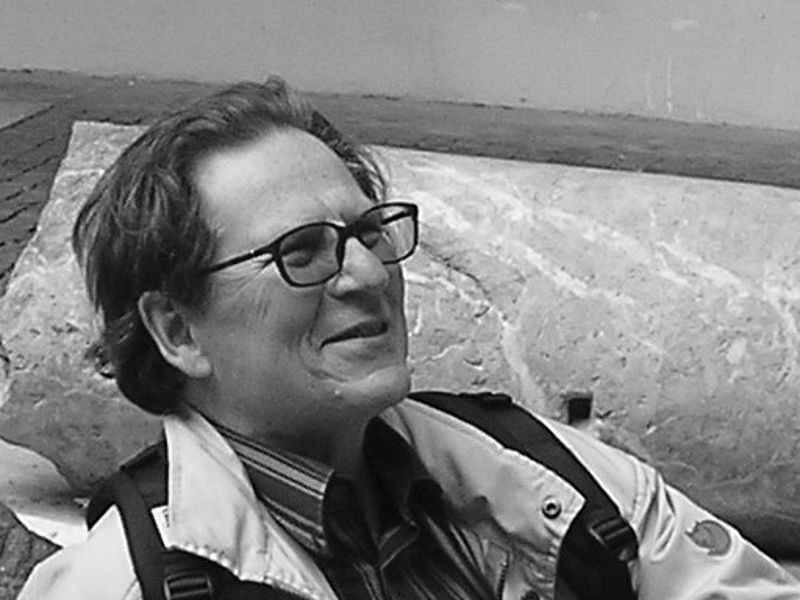
Peter Bürger: Theorie der Avantgarde
In his foundational 1974 treatise Theorie der Avantgarde (Theory of the Avant-Garde), German literary critic Peter Bürger establishes a critical demarcation between Modernism and the Historical Avant-Garde (primarily Dada, early Surrealism, and Russian Constructivism).[1] While Modernism attacks traditional artistic techniques yet remains safely housed within the autonomous institution of art, the Historical Avant-Garde launches a systemic institutional critique aimed at abolishing the autonomy of art and reintegrating aesthetic experience back into everyday life-praxis (Lebenspraxis).[2]
The Institution of Art and Bourgeois Autonomy
To understand the radical rupture of the early twentieth-century avant-garde, Bürger first constructs a materialist genealogy of what he terms the "institution of art" (Institution Kunst).[1:1] Rather than treating art merely as a chronological series of individual masterpieces or stylistic evolutions, Bürger defines the institution of art as the productive and distributive apparatus—alongside the prevailing ideological ideas about art—that determines how aesthetic objects are produced, circulated, and received in a given historical epoch.[1:2]
According to Bürger, the trajectory of Western art from the Middle Ages to the late nineteenth century is defined by a gradual detachment from social function, culminating in the doctrine of aesthetic autonomy.[3]
| Historical Phase | Social Function (Purpose) | Mode of Production | Mode of Reception |
|---|---|---|---|
| Sacral Art (High Middle Ages) | Cult object; integrated into religious ritual | Collective craft | Collective (institutionalized sacral community) |
| Courtly Art (Absolutism) | Representational object; glorification of the prince and courtly society | Individual (emerging status of the artist) | Collective (sociable courtly class) |
| Bourgeois Art (Enlightenment to Aestheticism) | Portrayal of bourgeois self-understanding; eventually loses direct social use | Individual (genius ideology) | Individual (solitary contemplation) |
By the late nineteenth century, with the rise of Aestheticism (l'art pour l'art or "art for art's sake"), the separation of art from everyday life (Lebenspraxis) became complete—an ideological insulation exemplified by the detached, aristocratic stance of The flâneur and Charles Baudelaire's aesthetic modernism.[2:1] In bourgeois society, art occupies an autonomous, cordoned-off sphere. Drawing on Herbert Marcuse's 1937 essay "The Affirmative Character of Culture", Bürger notes that this autonomy is deeply ambivalent.[2:2] On one hand, detachment from the capitalist means-end rationality of daily life allows art to critique society and preserve utopian ideals of human wholeness; on the other hand, because those ideals are confined strictly to an imaginary realm, autonomous art relieves pressure for actual social change, functioning as a compensatory mechanism that stabilizes the status quo and enforces normative bourgeois standards of reified "good taste".[2:3]
Under Aestheticism, the historical detachment of art from practical life ceases to be merely the hidden precondition of artistic production and becomes the explicit content of the work itself.[2:4] This self-referential exhaustion sets the stage for the avant-garde's self-criticism.
Modernism vs. The Historical Avant-Garde
In Anglo-American criticism (most notably in the formalist theory of Clement Greenberg, whose defense of high art against commercial Kitsch treated avant-garde autonomy as an absolute barrier), "modernism" and the "avant-garde" are frequently conflated to describe the progressive formal purification of mediums like painting and literature.[4] Bürger sharply rejects this conflation, introducing a rigorous theoretical distinction between system-immanent criticism (Modernism/Aestheticism) and self-criticism (the Historical Avant-Garde), directly contrasting with psychological and sociological accounts of avant-garde succession such as Renato Poggioli's theory of movements.[2:5]
-
Modernism (System-Immanent Critique): Modernist movements attack the specific formal languages, stylistic conventions, or representational schemes of preceding generations (e.g., Symbolist poetry rejecting Realist prose, or Cubism fracturing Renaissance perspective). However, Modernism leaves the institution of art untouched.[2:6] The modernist artwork still demands to be read as a unified, autonomous aesthetic object inside a museum, gallery, or literary canon.
-
The Historical Avant-Garde (Institutional Self-Critique): Movements of the 1910s and 1920s—specifically Dada, early Surrealism, and post-revolutionary Russian Constructivism—did not simply invent a new style to replace an old one.[4:1] Instead, they recognized that the social inconsequentiality of art was dictated by its institutional autonomy. Within the broader genealogy of The Avant-Garde, their attack was directed against the framing apparatus itself: the museum, the art market, the cult of individual genius, and the passive contemplation of the bourgeois spectator.[3:1]
Sublating Art into Life-Praxis (Lebenspraxis)
The central project of the Historical Avant-Garde is the reintegration of art into the praxis of life.[2:7] Bürger is careful to specify that the avant-gardists did not aim to simply destroy art in a fit of nihilistic vandalism, nor did they want to subordinate art to the utilitarian, profit-driven rationality of bourgeois everyday life.[3:2] Rather, they sought a Hegelian sublation (Aufhebung) of art: destroying art as an isolated institution so that its creative, liberatory potential could reorganize a new, emancipated life-praxis.[4:2]
This institutional attack manifested across the three dimensions of the artistic apparatus:
1. Negation of Individual Production
When Marcel Duchamp signed a mass-produced urinal (Fountain, 1917) with the pseudonym "R. Mutt" and submitted it to an exhibition, he did not create an aesthetic object; he exposed the institutional mechanism that confers the status of "art" upon an object.[3:3] Because the Readymade requires zero artisanal skill or subjective expression, it mocks the bourgeois ideology of the solitary genius. Similarly, Tristan Tzara's instructions for making a Dadaist poem (cutting up newspaper articles and drawing words from a bag) and André Breton's recipes for automatic writing democratize production, reducing the privileged "author" to an everyday operator—prefiguring the procedural, algorithmic appropriation of texts analyzed in Uncreative Writing-Managing Language in the Digital Age.[3:4]
2. Negation of Individual Reception
Autonomous bourgeois art requires a solitary, contemplative viewer or reader who immerses themselves in the work. The Historical Avant-Garde replaced contemplation with shock and provocation.[3:5] Dadaist cabaret performances were engineered to incite public outrage, abolishing the boundary between performers and spectators. The goal of aesthetic shock was to jolt the recipient out of passive consumerism, mirroring the sensory jolts of the industrial capitalist city analyzed in Georg Simmel's urban sociology and Walter Benjamin's account of the shattered ritual "aura" in The Work of Art in the Age of Mechanical Reproduction.[3:6] By rejecting sentimental empathy, this aggressive estrangement parallels the aristocratic distancing identified in José Ortega y Gasset's The Dehumanization of Art.[3:7]
3. Negation of the Autonomous Purpose
Russian Constructivists and Productivists (such as Alexander Rodchenko, Varvara Stepanova, and Vladimir Tatlin) went furthest in attempting to dissolve the boundary between artist and engineer.[4:3] Moving out of the studio and into the factory following the 1917 Bolshevik Revolution, they designed textiles, everyday furniture, worker clubhouses, and agitprop posters, directly fusing aesthetic organization with the material reconstruction of society—a total synthesis between art, craft, and everyday utility that found its institutional parallel in the functionalist design workshops of The Bauhaus School.[4:4]
Theory of the Avant-Garde Work of Art
Even when the Historical Avant-Garde produced discrete artifacts, the internal structure of these works rejected traditional aesthetics. Bürger contrasts the traditional organic work of art with the avant-gardiste non-organic (or allegorical) work.[1:3]
-
The Organic Work (Classicist/Bourgeois): Strives to conceal the fact that it has been artificially constructed, presenting itself as a living, natural whole. Every individual detail is strictly subordinated to the overarching meaning of the totality, creating an illusion of harmony.[2:8]
-
The Non-Organic Work (Avant-Gardiste): Exemplified by montage and collage (such as the photomontages of John Heartfield and Hannah Höch, or Kurt Schwitters's Merz assemblages), the non-organic work tears fragments of empirical reality—bus tickets, newspaper clippings, machine parts—out of their functional contexts and forces them together without hiding the seams—a technique deeply linked to Walter Benjamin's concept of allegorical construction.[3:8]
"The organic work of art seeks to make unrecognizable the fact that it has been made. The opposite holds true for the avant-gardiste work: it proclaims itself an artificial construct, an artifact. To this extent, montage may be considered the fundamental principle of avant-gardiste art." — Peter Bürger, Theory of the Avant-Garde[1:4]
Because the fragments in a montage retain their reference to external reality while refusing to synthesize into a harmonious whole, the viewer is denied a closed, comforting interpretation. Instead of asking "What does this work mean?", the recipient is forced to confront the institutional question: "What is art, and how does it relate to my reality?"[3:9]
The Failure of the Avant-Garde and the Neo-Avant-Garde
Bürger's treatise arrives at a famously pessimistic conclusion: the Historical Avant-Garde failed in its central objective.[3:10] It did not succeed in destroying the art institution, nor did it transform bourgeois life-praxis through aesthetic emancipation. Instead, the institution proved extraordinarily resilient, absorbing the very anti-art gestures meant to destroy it.[3:11] Duchamp's urinal, Dadaist collages, and Surrealist objects were ultimately placed on pedestals inside the modern museum, canonized by art historians, and traded as high-value commodities. Once a Readymade is admired in a museum for its formal elegance, the institutional protest is neutralized; anti-tradition becomes the new tradition—the quintessential cycle of capitalist co-optation that governs modern counter-cultures and the late-capitalist culture industries examined in Don DeLillo Major Themes Analysis.[3:12]
From this historical failure, Bürger formulates a harsh critique of the post-World War II Neo-Avant-Garde (movements of the 1950s and 1960s such as Pop Art, Minimalism, Fluxus, and Nouveau Réalisme).[4:5]
-
Institutionalization of the Protest: When Andy Warhol exhibits Campbell's Soup Cans or Brillo Boxes in the 1960s, the gesture no longer carries the subversive shock of Duchamp's 1917 Readymade, because the museum has already accepted the Readymade as a legitimate artistic category. In Jean Baudrillard's terms, the anti-art object has been completely assimilated into the circulation of pure sign-value, functioning within what Defining a Simulacrum identifies as a hyperreal simulation of rebellion.[3:13]
-
Inauthentic Repetition: For Bürger, repeating the formal strategies of the Historical Avant-Garde (montage, chance, readymades, happenings) inside an institution that now welcomes them turns revolutionary anti-art into affirmative, autonomous art.[4:6] In his view, the Neo-Avant-Garde institutionalizes the avant-garde as art and thus negates genuinely avant-gardiste intentions.
Bürger's dismissal of the post-war Neo-Avant-Garde sparked one of the most significant debates in late twentieth-century art theory. In The Return of the Real (1996), art historian Hal Foster critiqued Bürger for relying on a linear, historicist narrative of "heroic origin and farcical repetition."[4:7] Foster argued that the Historical Avant-Garde itself never fully grasped the nature of the art institution; rather, it was the Neo-Avant-Garde of the 1960s and 1970s—specifically Institutional Critique artists like Marcel Broodthaers, Daniel Buren, Michael Asher, and Hans Haacke—that systematically analyzed and exposed the economic, architectural, and ideological mechanisms of the museum for the first time.[4:8] In our contemporary network condition, as analyzed in Postscript on the Societies of Control, this institutional framing has expanded beyond physical museum walls into distributed algorithmic modulations, transforming the very meaning of resistance.
Resonant Notes
The following notes in the vault share direct thematic, sociological, and literary connections with Peter Bürger's Theory of the Avant-Garde:
🔴 Institutional Theory & Historical Avant-Garde vs. Modernism
- The Avant-Garde — Serves as the vault's overarching historical and conceptual anchor note; frames the broader evolution of the vanguard from Saint-Simonian social engineering to mid-century aestheticism, incorporating Bürger's distinction between formalist modernism and institutional self-critique.
- Renato Poggioli-Teoria dell'arte d'avanguardia — The primary sociological and psychological foil to Bürger; while Bürger provides a historical-materialist critique centered on the apparatus of art and Lebenspraxis, Poggioli conceives of the avant-garde as an agonistic, recurring psychological movement defined by activism, antagonism, and dialectical self-immolation.
- The Bauhaus School — Walter Gropius and the Bauhaus circle embody the architectural and practical counterpart to Constructivism's sublation of art into life; rather than pursuing anti-art destruction, the school sought a functionalist synthesis uniting aesthetic form, craft, and industrial production within everyday life-praxis.
- The Dehumanization of Art — José Ortega y Gasset offers a parallel diagnosis of high modernism's autonomous detachment; by methodically purging sentimental, human-centered realism, modernist art creates an unpopular, self-contained aesthetic realm that Bürger identifies as the institutional prerequisite for the historical avant-garde's subsequent revolt.
- Kitsch — Clement Greenberg's seminal 1939 essay Avant-Garde and Kitsch defends the absolute formal autonomy of the avant-garde against industrial commercial culture; Bürger directly challenges Greenberg's framework by arguing that Greenberg conflates modernism with the avant-garde while leaving the bourgeois institution of art uncritiqued.
🟡 Aesthetic Autonomy, Aura & the Shock of Mass Culture
- The Work of Art in the Age of Mechanical Reproduction & Walter Benjamin (1892–1940) — Benjamin's dialectical materialism directly underpins Bürger's theory; the liquidation of the traditional ritual "aura" through mechanical reproduction, the adoption of montage, and the mobilization of aesthetic "shock" serve as the essential technical preconditions for Dada and Russian Constructivism.
- The Metropolis and Mental Life & Georg Simmel (1858-1918) — Simmel's analysis of metropolitan sensory intensification, money economy rationalization, and the defensive blasé attitude of urbanites illuminates the psychological conditions that the historical avant-garde attempted to rupture through aesthetic shock and disruptive cabaret provocations.
- The flâneur & The Painter of Modern Life, a seminal 1863 essay by French poet and art critic Charles Baudelaire — Baudelaire's detached dandy wandering Parisian boulevards marks the historical zenith of aesthetic autonomy under Aestheticism (l'art pour l'art), creating the isolated, self-referential sphere of bourgeois art that the avant-garde sought to sublate into revolutionary action.
- Good Taste and Naïve Realism — Explores the cognitive and sociological mechanisms that reify bourgeois aesthetic preferences into normative canons of "good taste"; Bürger highlights how the historical avant-garde attacked this normative consensus by elevating industrial readymades and nonsensical collages into high-art contexts.
- Georg Wilhelm Friedrich Hegel (1770–1831) — Provides the dialectical machinery of Aufhebung (sublation)—the simultaneous negation, preservation, and elevation of art—which Bürger positions as the core theoretical ambition of the historical avant-garde's drive to dissolve art into daily life-praxis.
🟢 The Neo-Avant-Garde, Postmodern Recuperation & Commodity Culture
- Don DeLillo Major Themes Analysis — Demonstrates the late-capitalist realization of Bürger's warning about institutional absorption; DeLillo's fiction depicts a consumer society that effortlessly neutralizes and packages aesthetic subversion, terror, and counter-cultural gestures into consumable spectacle.
- Counter-Culture — Examines the sociological lifecycle of dissident movements; mirrors Bürger's pessimistic diagnosis of avant-garde failure by detailing how rebellious anti-bourgeois gestures are systematically recuperated, commodified, and normalized by consumer capitalism.
- Defining a Simulacrum — Jean Baudrillard's theory of hyperreality and simulation explains the structural dilemma of the Neo-Avant-Garde (e.g., Warhol's Pop Art); stripped of genuine institutional friction, transgressive anti-art objects are assimilated into self-referential sign-exchange value within the museum.
- Uncreative Writing-Managing Language in the Digital Age — Kenneth Goldsmith applies the historical avant-garde's negation of individual authorship (Duchamp's readymade, Tzara's cut-ups) to the 21st-century digital landscape, demonstrating how mechanical copying and data appropriation function once autonomous literature is subsumed into information networks.
- Postscript on the Societies of Control — Gilles Deleuze outlines the transition from closed disciplinary institutions (the museum, the factory) to fluid, open-circuit networks of control, illustrating why the institutional critique envisioned by Bürger must adapt when institutions themselves dissolve into continuous electronic modulation.
- Marshall McLuhan (1911-1980) & McLuhan's The Medium is the Message — McLuhan’s insight that the content of any medium is always another medium echoes Bürger’s finding that under Aestheticism, the institution of art itself became the explicit content of artistic reflection, paving the way for avant-garde institutional self-criticism.
Backlinks
- The Avant-Garde — Serves as the overarching syllabus hub, contrasting Bürger's institutional theory with Clement Greenberg's formalist modernism and Renato Poggioli's psychological dialectic.
- Renato Poggioli-Teoria dell'arte d'avanguardia — Provides the primary theoretical counter-model, contrasting Poggioli's cyclical, psychological theory of avant-garde movements with Bürger's materialist institutional critique.
- The Work of Art in the Age of Mechanical Reproduction — Walter Benjamin's analysis of the loss of aura, montage, and political reception that forms the conceptual foundation for Bürger's non-organic work of art.
- The Bauhaus School — Institutional and practical realization of the historical vanguard's desire to integrate art into industrial life-praxis.
- The Dehumanization of Art — Ortega y Gasset's diagnosis of autonomous modernism as an aristocratic filter separating the vanguard from bourgeois mass culture.
- Kitsch — Greenberg's defense of aesthetic autonomy against commercial mass culture, critiqued by Bürger for defending the bourgeois institution of art.
- Counter-Culture — Sociological analysis of how transgressive movements against bourgeois hegemony inevitably face institutional recuperation and market commodification.
- Don DeLillo Major Themes Analysis — Literary examination of the total commodification and neutralization of subversive art in late-capitalist consumer culture.
- Defining a Simulacrum — Baudrillard's semiotic framework illustrating how the neo-avant-garde's transgressive gestures are recuperated as simulated sign-values.
References
Peter Bürger / Theory of the Avant-Garde / University of Minnesota Press ↩︎ ↩︎ ↩︎ ↩︎ ↩︎
Peter Bürger / Theory of the Avant-Garde (Full Text & Critical Apparatus) / Scribd Academic Archive ↩︎ ↩︎ ↩︎ ↩︎ ↩︎ ↩︎ ↩︎ ↩︎ ↩︎
The Other Room / Notes on Peter Bürger's Theory of the Avant-Garde / otherroom.org ↩︎ ↩︎ ↩︎ ↩︎ ↩︎ ↩︎ ↩︎ ↩︎ ↩︎ ↩︎ ↩︎ ↩︎ ↩︎ ↩︎
Fusion Journal / Fusion and the Avant-Garde: Bürger, Greenberg, and Foster / fusion-journal.com ↩︎ ↩︎ ↩︎ ↩︎ ↩︎ ↩︎ ↩︎ ↩︎ ↩︎