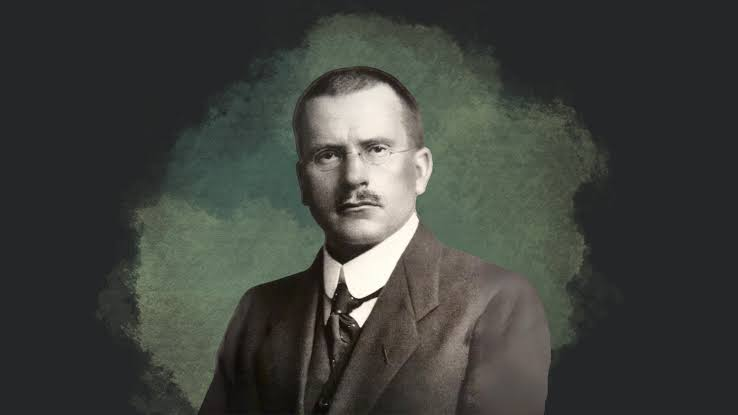
Carl Gustav Jung (1875–1961)
Carl Gustav Jung (1875–1961), the Swiss psychiatrist and founder of Analytical Psychology, fundamentally reshaped 20th-century thought by demonstrating that the human psyche extends beyond personal biography into a transpersonal, evolutionary substrate.[1] Departing from Freudian instinct theory, Jung established that the mind is a self-regulating teleological system driven by a quest for wholeness. His paradigm introduces the collective unconscious, structural archetypes, personality typology, the reconciliation of opposites through individuation, and the acausal connective principle of synchronicity.[2][3]
1. Epistemological Foundations & The Break from Freud
Jung began his psychiatric career at the prestigious Burghölzli Psychiatric Hospital in Zürich under Eugen Bleuler.[1:1] There, he conducted empirical research using the Word Association Test, measuring physiological reaction times, respiration, and galvanic skin responses to demonstrate the existence of feeling-toned unconscious constellations, which he termed complexes (gefühlsbetonte Komplexe).[4]
                     [ Burghölzli Clinical Research (1900–1909) ]
                     (Word Association Tests & Empirical Complexes)
                                      │
                                      ▼
                      [ Freud-Jung Alliance (1906–1913) ]
                     (Elected 1st President of the IPA, 1910)
                                      │
                     Theoretical Fracture on Drive Theory
                     ┌────────────────┴────────────────┐
                     ▼                                 ▼
           Sigmund Freud                     Carl Gustav Jung
      Libido as Biological-Sexual        Libido as Undifferentiated
            Drive Energy                   General Psychic Energy
                     │                                 │
                     ▼                                 ▼
          Pansexual Reductionism            Teleological Wholeness,
        Infantile Wish-Fulfillment         Myth, & Archetypal Symbols
                                      │
                                      ▼
                      [ The Great Rupture (1912–1913) ]
                *Transformations and Symbols of the Libido*
                                      │
                                      ▼
                 [ Confrontation with the Unconscious (1913–1919) ]
                     *The Red Book* (*Liber Novus*) & Active Imagination
The Collaboration and the Fracture
Intrigued by Sigmund Freud's The Interpretation of Dreams (1899), Jung initiated correspondence in 1906. Their initial meeting in Vienna in 1907 lasted thirteen uninterrupted hours, inaugurating an intense intellectual partnership.[1:2] Freud designated Jung his intellectual heir and "crown prince," appointing him the first president of the International Psychoanalytical Association (IPA) in 1910.[1:3]
However, deep epistemological rifts quickly emerged:
- The Nature of Libido: Freud insisted that libido was strictly sexual drive energy (Triebenergie). Jung countered that libido is neutral, dynamic psychic energy analogous to physical energy, capable of flowing into cultural, spiritual, creative, or intellectual manifestations.[2:1][4:1]
- The Etiology of Neurosis: Freud traced neurosis backward to repressed infantile psychosexual trauma. Jung viewed neurosis prospectively, arguing that psychological symptoms represent an unsuccessful, compensatory attempt of the psyche to adapt to an immediate, present-day developmental impasse.[3:1]
- The Scope of the Unconscious: Jung rejected Freud's reduction of the unconscious to a personal repository of repressed taboos, maintaining that beneath personal history lies an archaic, myth-forming layer common to all mankind.[2:2]
The definitive rupture occurred with Jung's publication of Transformations and Symbols of the Libido (Wandlungen und Symbole der Libido, 1912), where he reinterpreted incestuous fantasies not as literal biological urges, but as symbolic longings to return to the maternal womb of the creative unconscious for spiritual rebirth.[1:4] By 1913, Jung resigned from the IPA, severing their personal and professional ties.
The "Confrontation with the Unconscious" and The Red Book
Following the break with Freud, Jung underwent an intense period of self-induced psychological crisis between 1913 and 1919, which he termed his "confrontation with the unconscious."[5] Experiencing visions and auditory phenomena that pushed him to the edge of psychosis, Jung resolved to record and actively dialogue with these internal figures rather than suppress them.[6]
Documented in the illuminated manuscript known as The Red Book (Liber Novus), this profound period of self-analysis served as the empirical crucible for his mature system, giving birth to his methods of active imagination, the recognition of autonomous internal figures (such as the wise guide Philemon and the anima Salome), and his concepts of archetypal dynamics.[6:1]
2. The Architecture of the Psyche
Jung conceptualized the human psyche as a dynamic, self-regulating structural organism composed of three distinct yet permeable layers:[4:2]
     ┌─────────────────────────────────────────────────────────┐
     │                       CONSCIOUSNESS                     │
     │                      ┌─────────────┐                    │
     │                      │   The Ego   │                    │
     │                      └─────────────┘                    │
     ├─────────────────────────────────────────────────────────┤
     │                  PERSONAL UNCONSCIOUS                   │
     │       ┌───────────────┐         ┌───────────────┐       │
     │       │ Mother Complex│         │ Power Complex │       │
     │       └───────────────┘         └───────────────┘       │
     │       (Forgotten memories, repressed biographical data) │
     ├─────────────────────────────────────────────────────────┤
     │                 COLLECTIVE UNCONSCIOUS                  │
     │                                                         │
     │    [ Persona ]      [ Shadow ]     [ Anima / Animus ]   │
     │                                                         │
     │                     ┌─────────────┐                     │
     │                     │  THE SELF   │                     │
     │                     │ (Wholeness) │                     │
     │                     └─────────────┘                     │
     │        (Phylogenetic substrate, archetypal blueprints)  │
     └─────────────────────────────────────────────────────────┘
The Ego (The Conscious Center)
The Ego constitutes the center of personal conscious awareness, personal identity, and continuity of memory across time.[4:3] It exercises executive function, screening sensory inputs and organizing deliberate action. Crucially, Jung emphasized that the Ego is not identical to the total psyche; it is merely an outpost of consciousness floating atop an immense, unconscious psychological ocean.[2:3] Over-identification with the Ego generates psychic rigidity and cuts the individual off from the instinctual vitality of the unconscious.
The Personal Unconscious & Autonomous Complexes
The Personal Unconscious adjoins the conscious ego, housing impressions that were once conscious but have faded, subliminal perceptions, and memories repressed due to moral or emotional distress.[1:5]
The building blocks of the personal unconscious are complexes (Gefühlsbetonte Komplexe):
- Definition: Emotionally charged constellations of ideas, memories, and reaction tendencies clustered around a shared thematic core (e.g., an inferiority complex, savior complex, or mother complex).[4:4]
- Autonomous Nature: Complexes behave like sub-personalities possessing their own volition, momentarily hijacking conscious behavior when triggered by external circumstances.[3:2] As Jung famously observed:
"Complexes are not under the control of the conscious mind... Everyone knows nowadays that people 'have complexes'; what is not so well known is that complexes can have us."[2:4]
- Archetypal Core: While the surface content of a complex is formed by biographical experiences (such as personal interactions with one's biological mother), its structural nucleus is anchored in a universal archetype of the collective unconscious (the Mother Archetype).[2:5]
The Collective Unconscious (The Transpersonal Substrate)
Jung's most radical contribution is the postulate of the Collective Unconscious—a layer of the psyche deeper than personal memory, identical in all individuals, and transmitted through ancestral inheritance.[2:6]
Unlike the personal unconscious, it is not formed through biographical experience:
- Phylogenetic Architecture: Just as the physical human body inherits an evolutionary anatomical blueprint (opposable thumbs, two lungs, upright posture), the human brain inherits innate cognitive and instinctual predispositions evolved over hundreds of thousands of years.[2:7][3:3]
- Archetype-as-Such vs. Archetypal Image: Jung maintained a crucial epistemological distinction between the Archetype-as-Such (Archetyp an sich) and the Archetypal Representation (archetypische Vorstellung):[2:8]
- The Archetype-as-Such is an unrepresentable, invisible formal structure or ordering predisposition, analogous to the invisible geometric lattice of a crystal before the liquid solution mineralizes.[2:9]
- The Archetypal Image is the culturally, linguistically, and historically specific manifestation that appears in consciousness, mythology, religion, literature, and dreams (e.g., the Virgin Mary, Isis, or Demeter as varied cultural portraits of the underlying Mother archetype).[2:10]
3. Universal Archetypes of the Psyche
Within the collective unconscious reside dynamic archetypal structures that act as autonomous nodes of psychic transformation. Jung identified several foundational archetypes central to personality organization and psychological development:[2:11][1:6]
| Archetype | Structural Layer | Core Function | Psychological Pathology / Inflation Risk |
|---|---|---|---|
| Persona | Conscious-Social Boundary | Social adaptation, conformity to cultural roles, professional mediation. | Identity collapse; emotional shallowness; equating self with job title. |
| Shadow | Personal & Collective Unconscious | Houses disowned impulses, hidden instincts, uncultivated creative potential. | Radical outward projection; paranoid demonization of out-groups; hypocrisy. |
| Anima | Collective Unconscious (in Men) | Contragender soul-bridge; emotional intuition; relation to depth and eros. | Moodiness, irrational resentment, possessive idealization of romantic partners. |
| Animus | Collective Unconscious (in Women) | Contragender soul-bridge; capacity for logos, discernment, inner conviction. | Rigid dogmatism, hyper-critical opinionation, domineering intellectualization. |
| The Self | Central Axis of Total Psyche | Archetype of wholeness; teleological regulator of individuation; inner imago Dei. | Megalomania, messianic delusions (ego-Self inflation), or complete nihilism. |
The Persona (The Social Mask)
The Persona (derived from the Latin word for an actor's theater mask) represents the compromise between the individual and society.[4:5] It comprises the set of social conventions, behavioral scripts, and professional personas cultivated to navigate interpersonal reality, gain approval, and function effectively within civilization.[1:7]
- Function: Serves as a necessary protective buffer guarding the private, vulnerable inner self from intrusive societal scrutiny.[4:6]
- Pathology: When an individual completely identifies with their Persona—believing they are their social title, wealth, or corporate rank—the conscious ego detaches from genuine unconscious roots, generating neurosis, acute anxiety, and existential sterility.[1:8]
The Shadow (The Disowned Self)
The Shadow represents the dark, unacknowledged, and repressed components of the personality that the conscious ego finds morally objectionable, socially inadmissible, or incompatible with the Persona.[1:9]
                     [ Conscious Ego / Persona ]
                                │
                      Repression & Disavowal
                                │
                                ▼
                       [ The Shadow Realm ]
                 ┌──────────────┴──────────────┐
                 ▼                             ▼
       [ Personal Shadow ]            [ Collective Shadow ]
    Biographical flaws, petty      Archaic, predatory instincts,
     envies, repressed impulses     demonic destructive impulses
                 │                             │
                 └──────────────┬──────────────┘
                                │
                     Mechanism of Projection
                                │
                                ▼
         [ External Scapegoat / Rival / Perceived Enemy ]
            "Why do you look at the speck of sawdust in
              your brother's eye and pay no attention
                 to the plank in your own eye?"
- Personal vs. Collective Shadow: The personal shadow consists of biographical traits disowned during childhood socialization (e.g., cowardice, selfishness, rage). The collective shadow comprises primordial human destructiveness, cruelty, and the capacity for collective atrocities.[2:12]
- The "Golden Shadow": Jung emphasized that the Shadow is not exclusively negative. It also contains uncultivated talents, primal vitality, spontaneous creativity, and instinctual passions that were suppressed because they were inconvenient to early caregivers or social conventions.[1:10]
- The Task of Shadow Integration: Confronting and integrating the Shadow is the indispensable first stage of psychological growth. Failure to integrate the Shadow produces projection, wherein an individual or nation projects its own unrecognized wickedness onto foreign groups, political opponents, or romantic partners, resulting in scapegoating and collective hysteria.[1:11]
The Syzygy: The Anima and Animus
The Anima and Animus represent the contragender psychological archetypes that bridge conscious ego awareness with the deep collective unconscious:[2:13]
- The Anima (The Archetype of Life in Men): The personification of feminine psychological qualities within the male psyche—feeling, relationship, receptivity, and connection to instinctual nature.[2:14] Jung traced the developmental maturation of the Anima across four stages:
- Eve: Purely biological, maternal, and erotic instinct.
- Helen of Troy: Romantic, idealized, and aesthetic beauty.
- Mary: Spiritual devotion, moral elevation, and pure maternal love.
- Sophia: Transcendent wisdom, self-knowledge, and integrative eros.[2:15]
- The Animus (The Archetype of Meaning in Women): The personification of masculine psychological qualities within the female psyche—logic, logos, focused willpower, and philosophical discrimination.[2:16] Its four stages of evolution include:
- Physical Power: The athletic champion or muscular hero (e.g., Tarzan).
- Action/Initiative: The romantic hero, pioneer, or capable leader.
- The Word (Logos): The eloquent orator, professor, or intellectual authority.
- Spiritual Meaning: The wise guide, philosophical visionary, or spiritual sage.[2:17]
When left unconscious, the Anima/Animus is projected onto romantic partners, causing lovers to fall in love not with the actual human being before them, but with their own projected inner contragender soul-image.[2:18]
The Self (The Archetype of Wholeness)
The Self is the paramount archetype of Analytical Psychology.[1:12] It represents both the total psychological organism (uniting the conscious mind, personal unconscious, and collective unconscious) and the inner organizing teleological center guiding the individual toward psychic completion.[3:4]
- Ego vs. Self: The Ego is merely the subjective center of conscious awareness, whereas the Self is the objective center and comprehensive circumference of the total psyche.[2:19] Jung often compared the relationship between the Ego and the Self to the earth orbiting the sun.
- Symbolism of the Self: Cross-culturally, the Self manifests in dreams and sacred art as balanced quaternities, squaring of the circle, geometric mandalas, precious jewels, sacred stones, or divine figures (imago Dei).[3:5]
4. Psychological Typology: Attitudes and Functions
In Psychological Types (1921), Jung formulated a comprehensive cognitive model to explain why human beings perceive, evaluate, and adapt to reality in fundamentally different manners.[7] His model maps personality through the intersection of two overarching attitudes and four cognitive functions.[7:1][4:7]
The Two Attitudes: Extraversion and Introversion
- Extraversion: Libidinal energy, interest, and attention are oriented outward toward objective events, people, and material conditions.[4:8] The extravert is energized by external engagement and adapts readily to social environments.
- Introversion: Libidinal energy is directed inward toward internal subjective impressions, concepts, and emotional reflections.[4:9] The introvert protects energy from external depletion and interprets events through internal filters.
The Four Cognitive Functions
Jung divided consciousness into two rational (evaluating) functions and two irrational (perceiving) functions:[7:2][4:10]
                       [ Rational / Judging ]
                 ┌────────────────────────────────┐
                 │ Thinking (Logos)    - Logic    │
                 │ Feeling  (Valuation)- Ethics   │
                 └────────────────────────────────┘
                                  │
                                  ▼
                      [ Irrational / Perceiving ]
                 ┌────────────────────────────────┐
                 │ Sensation (Direct Sensory)     │
                 │ Intuition (Hidden Possibility) │
                 └────────────────────────────────┘
The combination of 2 attitudes and 4 functions yields the 8 Classical Jungian Psychological Types:[7:3]
| Psychological Type | Cognitive Focus & Modality | Conscious Manifestation | Unconscious Compensation / Shadow Vulnerability |
|---|---|---|---|
| Extraverted Thinking (ET) | Objective data, empirical systems, organizational rules, linear logic. | Pragmatic executives, systematic scientists, law-makers, technical planners. | Repressed, volatile feelings; dogmatic tyranny; hyper-rigidity when systems fail. |
| Introverted Thinking (IT) | Subjective theories, internal logical consistency, philosophical models. | Independent philosophers, theoretical mathematicians, original system builders. | Impracticality, social awkwardness, extreme stubbornness, detachment from external facts. |
| Extraverted Feeling (EF) | Interpersonal harmony, cultural values, relational etiquette, social empathy. | Natural hosts, diplomatic consensus-builders, community leaders. | Shallow emotional conformity; loss of genuine inner identity; sudden coldness. |
| Introverted Feeling (IF) | Deep, silent values, inner authentic ethics, profound subjective emotion. | Poetic souls, quiet idealists, steadfast defenders of marginalized values. | Concealed melancholy; hypersensitivity to perceived ethical slights; cold outward aloofness. |
| Extraverted Sensation (ES) | Concrete reality, physical aesthetics, real-time sensory data, tactile joy. | Realists, connoisseurs, physical performers, pragmatic opportunists. | Vulgar materialism, sensual compulsions, complete blindness to future implications. |
| Introverted Sensation (IS) | Subjective sensory archetypes, memory impressions, vivid inner sensations. | Artists of nuanced memory, meticulous observers of subjective somatic states. | Hypochondria, catastrophic apprehension, irrational suspicion of new innovations. |
| Extraverted Intuition (EN) | External possibilities, emergent trends, future potentials, creative ventures. | Entrepreneurs, visionary innovators, scouts of new horizons, catalysts. | Inability to complete projects; chronic restlessness; exhaustion of physical body. |
| Introverted Intuition (IN) | Unconscious archetypes, prophetic symbols, metaphysical visions, deep patterns. | Mystics, prophets, visionary artists, foundational philosophers (e.g., Nietzsche). | Disdain for practical reality; esoteric isolation; total detachment from bodily needs. |
Functional Hierarchy and the Inferior Function
Jung established that no individual uses all functions equally. Consciousness establishes a structural hierarchy:[7:4]
- The Superior (Dominant) Function: The most differentiated, conscious, and reliable tool of the ego.
- The Auxiliary Function: A secondary, complementary function from the opposite category (e.g., if Thinking is dominant, Intuition or Sensation acts as auxiliary) that assists the dominant.
- The Tertiary Function: Less differentiated, often vacillating between conscious and unconscious deployment.
- The Inferior Function: The polar opposite of the dominant function (e.g., Feeling is inferior to Thinking; Sensation is inferior to Intuition). Residing in the personal unconscious, the inferior function remains primitive, archaic, and unadapted.[7:5]
Because the inferior function is the least developed faculty of the conscious ego, it acts as the primary psychological conduit through which the Shadow and the contents of the collective unconscious erupt into consciousness. It represents our greatest vulnerability, yet also the supreme crucible for psychological renewal.[7:6]
5. Individuation, Opposites, and Psychological Alchemy
The central teleological arc of Analytical Psychology is the process of individuation—the lifelong journey through which a human being integrates conscious and unconscious contents to realize their unique, holistic Self.[1:13][3:6]
                             [ Unconscious Wholeness ]
                              (Undifferentiated Infant)
                                         │
                                         ▼
                             [ Ego Differentiation ]
                         (Persona cultivation, socialization)
                                         │
                                         ▼
                            [ The Mid-Life Crisis ]
                       (Enantiodromia, collapse of Persona)
                                         │
                 ┌───────────────────────┴───────────────────────┐
                 ▼                                               ▼
         Confrontation with                               Integration of
            the Shadow                                     Anima / Animus
                 │                                               │
                 └───────────────────────┬───────────────────────┘
                                         │
                                         ▼
                             [ Transcendent Function ]
                         (Dialectical emergence of Symbol)
                                         │
                                         ▼
                              [ Realization of the Self ]
                         (Coniunctio Oppositorum, Wholeness)
The Tension of Opposites and Enantiodromia
Jung maintained that psychic energy (libido) is generated solely through the dynamic tension between opposing psychological polarities (conscious vs. unconscious, light vs. dark, ego vs. shadow, thinking vs. feeling).[3:7]
Drawing upon the pre-Socratic philosopher Heraclitus, Jung emphasized the principle of enantiodromia—the psychological law that any extreme, one-sided conscious attitude will eventually, inevitably turn into its direct opposite from the unconscious.[2:20] When an individual or society over-identifies with extreme hyper-rationalism or rigid moralism, the repressed irrational opposite erupts catastrophically to re-establish psychic equilibrium.[3:8]
The Transcendent Function
To escape the deadlock of opposing forces without falling into neurotic paralysis, the psyche produces the Transcendent Function (Die transzendente Funktion):[3:9]
- It is not a basic cognitive function like thinking or feeling, but a synthetic psychological process uniting thesis (conscious ego) and antithesis (unconscious content).[3:10]
- Through creative work, dream analysis, and active imagination, the transcendent function generates a living symbol that reconciles the conflicting polarities on a higher, previously unimagined plane of consciousness.[2:21]
Psychological Alchemy: The Great Work (Opus)
In his mature period (Psychology and Alchemy, 1944; Mysterium Coniunctionis, 1955), Jung recognized that the enigmatic, symbolic texts and woodcuts of medieval and Renaissance alchemy were not primitive, failed attempts at chemical metallurgy, but rather profound psychological projections of the individuation process.[3:11]
Jung mapped the four primary stages of the alchemical Opus directly onto the journey of psychic integration:[3:12]
  Stage 1: NIGREDO           Stage 2: ALBEDO           Stage 3: CITRINITAS        Stage 4: RUBEDO
┌──────────────────┐      ┌──────────────────┐      ┌──────────────────┐      ┌──────────────────┐
│   Blackening     │ ───► │    Whitening     │ ───► │    Yellowing     │ ───► │    Reddening     │
│ Shadow Descent,  │      │ Purification,    │      │ Dawn of Wisdom,  │      │ Coniunctio,      │
│ Putrefaction,    │      │ Integration of   │      │ Solar Insight,   │      │ Realization of   │
│ Psychic Death    │      │ Anima / Animus   │      │ Philosophical    │      │ the Self in the  │
│                  │      │                  │      │ Awakening        │      │ Mortal World     │
└──────────────────┘      └──────────────────┘      └──────────────────┘      └──────────────────┘
- Nigredo (The Blackening / Putrefaction): The dark night of the soul. The conscious ego's illusions of total control break down; the individual descends into the shadow, experiencing melancholy, chaos, and symbolic psychic death.[3:13]
- Albedo (The Whitening / Washing): The purification of the soul. The chaotic emotional darkness of the Nigredo is cooled through reflective contemplation. The projections of the Anima and Animus are recognized, dissected, and integrated.[3:14]
- Citrinitas (The Yellowing): The transition from lunar reflection to solar illumination. Spiritual wisdom and authentic self-knowledge dawn as the individual moves beyond theoretical insight into active moral transformation.[3:15]
- Rubedo (The Reddening): The ultimate achievement of the Philosopher's Stone (Lapis Philosophorum). The transcendent Self is embodied and anchored back in the mundane, mortal world. This culminates in the Coniunctio Oppositorum (the sacred marriage of opposites / Hieros Gamos), harmonizing spirit and matter, conscious and unconscious.[3:16]
6. Synchronicity: The Acausal Connecting Principle
In 1952, Jung published Synchronicity: An Acausal Connecting Principle, formulating a conceptual bridge between psychology, physics, and metaphysics.[8]
"Synchronicity is the coincidence in time of two or more causally unrelated events which have the same or a similar meaning... a meaningful coincidence of an objective, outer event with an inner, subjective psychic state."[8:1]
                     [ Cartesian-Newtonian Model ]
                     Causality: Cause ──► Effect
                     (Time, Space, Linear Energy Transfer)
                                      ▲
                                      │  Complementary
                                      │   Dimensions
                                      ▼
                      [ The Jungian Model ]
                     Synchronicity: Meaningful Parallelism
                     (Inner Psychic State ◄--- Shared Meaning ---► Outer Physical Event)
                                      │
                                      ▼
                             [ UNUS MUNDUS ]
                     (Single Unified Psychophysical Ground)
The Collaboration with Wolfgang Pauli
Jung's formulation of synchronicity emerged through a profound, decades-long dialogue with Nobel laureate physicist Wolfgang Pauli, one of the pioneers of quantum mechanics.[8:2] Pauli sought psychoanalytic treatment from Jung in the 1930s for personal crises, but their interactions soon evolved into an interdisciplinary exploration of the relationship between quantum physics (such as wave-particle duality and the observer effect) and depth psychology.[8:3]
Together, they argued that classical Newtonian determinism explains only a portion of reality. Synchronicity operates not through linear mechanical chains of energy exchange, but through formal equivalence and semantic significance.[8:4]
The Psychoid Realm and the Unus Mundus
To explain how internal mental archetypes could correlate with external physical events without physical causality, Jung posited:
- The Psychoid Nature of Archetypes: At their deepest roots, archetypes transcend the dichotomy between mind and matter; they are "psychoid"—neither purely mental nor purely material, but operating on an axis that conditions both.[8:5]
- Unus Mundus (The One World): Jung revived the medieval metaphysical concept of the Unus Mundus—the unified ground of being. He argued that psyche and physical matter are not dualistic, Cartesian substances, but complementary, polarized manifestations of a single, indivisible underlying reality.[3:17][8:6]
7. Analytical Methodologies & Clinical Praxis
Analytical psychology is grounded in distinctive clinical techniques designed to establish a living dialogue between the conscious ego and the unconscious:[3:18]
The Word Association Experiment
Jung's early diagnostic breakthrough involved presenting patients with a standardized list of 100 stimulus words. The clinician recorded the patient's reaction time, physical slips, breathing irregularities, and galvanic skin response.[4:11] Unusually delayed response times or idiosyncratic associations provided empirical markers indicating the presence of an activated, repressed feeling-toned complex.[4:12]
Compensatory and Prospective Dream Analysis
Jung departed fundamentally from Freud's dream theory (Traumdeutung):
- Rejection of the "Censor": Jung rejected Freud's premise that dreams are deceptive, disguised fulfillments of taboo repressed wishes requiring decoding of latent content.[3:19]
- The Compensatory Function: Jung maintained that dreams are spontaneous, candid, and unvarnished self-portrayals of the actual state of the unconscious. They act compensatorily, presenting the conscious mind with the exact instinctual perspectives needed to counterbalance one-sided waking attitudes.[3:20]
- The Prospective Function: Dreams are teleological, anticipating future developmental possibilities and pointing the dreamer toward individuation.[3:21]
The Method of Amplification
In analyzing dreams and fantasies, Jung found free association inadequate because it tended to lead away from the dream image back to personal complexes. Instead, he designed amplification:[3:22]
- The specific dream motif (e.g., a green serpent or a locked iron chest) is treated as a symbolic node.
- The analyst and patient expand the symbol by gathering parallel archetypal motifs from comparative mythology, world religions, alchemy, folklore, and ancient art, clarifying the collective, universal dimension of the patient's psychological impasse.[3:23]
Active Imagination
Active Imagination is Jung's most advanced introspective methodology, developed during his self-analysis in The Red Book:[6:2]
- Emptying Consciousness: The individual suspends intellectual deliberation and quiets the ego's critical faculties.
- Inviting the Image: A dream fragment, mood, or spontaneous mental image is allowed to surface into conscious awareness.
- Engaging in Dialogue: Rather than merely observing the image passively, the individual steps into the imaginal space, actively conversing, negotiating, and interacting with the personified unconscious figures as autonomous beings.[3:24][6:3]
- Ethical Integration: The individual reflects consciously on the dialogue and incorporates its psychological insights into concrete, daily ethical life.[3:25]
8. Critical Evaluation and Contemporary Legacy
Epistemological and Scientific Critiques
Despite its monumental cultural impact, Analytical Psychology has faced substantial critiques from academic psychology and philosophy:
- Empirical Falsifiability: Critics influenced by Karl Popper argue that Jungian concepts—such as the collective unconscious, synchronicity, and archetypes—are formulated in ways that defy empirical testing and falsification, bordering on mystical metaphysics.[2:22]
- Essentialism: Postmodern and feminist theorists have occasionally critiqued Jung's formulations of the Anima, Animus, and gender archetypes for relying on essentialist, historically contingent 19th-century European conceptions of gender and sexuality.[4:13]
- Accusations of Mysticism: Jung's intense interest in astrology, the I Ching, alchemy, and the occult led some positivist scientists to dismiss Analytical Psychology as esoteric mysticism rather than rigorous clinical psychiatry.[1:14]
Contemporary Resonance and Cognitive Neuroscience
Conversely, modern intellectual and scientific developments have increasingly validated many of Jung's core intuitions:
- Cognitive Science & The Adaptive Unconscious: Contemporary cognitive psychology has abandoned the Cartesian view of conscious supremacy, recognizing that the vast majority of perception, information processing, and problem-solving occurs unconsciously.[3:26]
- Evolutionary Psychology: The premise that human infants inherit evolved cognitive adaptations and instinctual behavioral templates (such as fear of snakes, parental attachment scripts, and facial recognition architecture) directly mirrors Jung's concept of the collective unconscious.[2:23]
- Neuroscience & Hemispheric Balance: In The Master and His Emissary, psychiatrist Iain McGilchrist demonstrates that the human brain relies on two distinct modes of attention: the analytical, verbal, and utilitarian left hemisphere (corresponding to Jung's conscious Ego and extraverted thinking) and the holistic, metaphoric, and contextual right hemisphere (which interfaces directly with archetypal, mythic, and affective depths).
- The Default Mode Network (DMN): Modern functional neuroimaging reveals that the brain's Default Mode Network orchestrates spontaneous autobiographical narratives, mythic reflection, and mind-wandering during task-negative states, corroborating Jung's view of the unconscious as an active, generative creator of symbolic meaning.
🎴 Interactive Web Practice (Comprehension Check)
Question 1 (The Architecture of the Psyche & Complexes): How does Jung's structural model of the psyche diverge from Sigmund Freud's topographical and drive-based frameworks, and how do feeling-toned complexes function as autonomous sub-personalities centered on an archetypal nucleus?
Answer: While Sigmund Freud conceived of the unconscious primarily as a personal subterranean repository of repressed infantile experiences, unacceptable sexual wishes, and aggressive biological drives (governed by the pleasure principle), Carl Gustav Jung formulated a three-tiered, teleological architecture composed of the conscious Ego, the Personal Unconscious, and the phylogenetic Collective Unconscious. In Jung's paradigm, psychic energy (libido) is not purely sexual, but a generalized, dynamic psychic energy flowing between conscious and unconscious polarities. Within the Personal Unconscious reside feeling-toned complexes (gefühlsbetonte Komplexe)—clusters of memories, associations, and behavioral patterns united by a common emotional charge. Rather than being passive symptoms, complexes operate as relatively autonomous sub-personalities with their own goals and energy; when stimulated by external triggers, they can hijack conscious ego functioning ("complexes have us"). Crucially, while a complex acquires its idiosyncratic imagery from an individual's personal biographical history (e.g., personal experiences with one's biological mother), its structural organizing center is always rooted in an ancestral, universal archetype within the collective unconscious (such as the primordial Mother archetype).
Question 2 (Psychological Typology & The Inferior Function): How does Jung's matrix of attitudes (extraversion/introversion) and cognitive functions (rational vs. irrational) structure human consciousness, and why does Analytical Psychology identify the inferior function as both the greatest vulnerability and the primary gateway to the unconscious?
Answer: In Psychological Types (1921), Jung structured personality around two basic energetic attitudes—Extraversion (libidinal orientation directed outward toward objective entities and collective environments) and Introversion (libidinal orientation directed inward toward subjective impressions and internal reflection)—and four cognitive functions divided into Rational/Judging (Thinking, which organizes reality through objective logic, and Feeling, which evaluates reality through subjective ethics and valuation) and Irrational/Perceiving (Sensation, which captures immediate sensory data, and Intuition, which perceives hidden relationships and future possibilities). The intersection of 2 attitudes and 4 functions yields the 8 classical cognitive types. In every individual psyche, consciousness establishes an asymmetric hierarchy: a superior (dominant) differentiated function, supported by an auxiliary function, while its polar opposite remains repressed as the inferior function. Because the inferior function is the least differentiated, least accessible to voluntary conscious control, and immersed deepest in the personal and collective unconscious, it behaves in a primitive, clumsy, and archaic manner. Under stress or fatigue, the ego's defenses slip, causing the inferior function to erupt with volcanic emotional force. Paradoxically, this vulnerability makes the inferior function the indispensable gateway to the unconscious: because the conscious ego cannot master it through sheer will, it forces the individual to confront their blind spots, integrate their Shadow, and activate the Transcendent Function.
Question 3 (The Individuation Process, Enantiodromia & Alchemical Transformation): What is the teleological objective of the individuation journey, how does the Heraclitean principle of enantiodromia govern psychic dynamics, and why did Jung utilize the stages of medieval alchemy to articulate the realization of the Self?
Answer: The teleological goal of individuation is the realization of the Self—the attainment of psychological wholeness through the integration of conscious and unconscious contents, dismantling the ego's false identification with the Persona without succumbing to ego-Self inflation. Psychic energy operates through the dynamic tension of polar opposites. According to the Heraclitean law of enantiodromia, whenever an individual or cultural collective adopts a radically one-sided, extreme conscious posture (such as hyper-rationalism, puritanical moralism, or obsessive persona-driven ambition), the unacknowledged opposing psychological quality gathers unconscious charge until it suddenly and catastrophically reverses the conscious position, re-establishing systemic balance. To guide this volatile reconciliation, Jung turned to the symbolic operations of medieval alchemy, recognizing that the alchemical quest to transmute base lead into gold was an externalized projection of internal psychic transformation. The stages of the alchemical Opus map precisely onto individuation: Nigredo (blackening/putrefaction) represents the painful breakdown of ego illusions and the harrowing descent into the personal and collective Shadow; Albedo (whitening/washing) signifies intellectual purification and the reflective differentiation of the contragender soul-images (Anima/Animus); Citrinitas (yellowing) marks the dawn of solar philosophical wisdom; and Rubedo (reddening) represents the ultimate realization of the Philosopher's Stone through the Coniunctio Oppositorum (the sacred marriage of opposites), wherein conscious and unconscious, matter and spirit, are harmoniously unified in concrete worldly life.
Resonant Notes
The following notes in the vault share direct thematic, psychological, and philosophical connections with Carl Gustav Jung:
🔴 Depth Psychology, Unconscious Architecture & Psychoanalysis
- Sigmund Freud & Jokes and Their Relation to the Unconscious — Jung's foundational mentor and theoretical foil; Jung expanded Freud's personal, drive-reductionist unconscious into a transpersonal, archetypal, and prospective psyche that generates mythic and spiritual symbols.
- Jacques Lacan — Lacan's linguistic restructuring of the unconscious and his diagnosis of the alienated ego in the Mirror Stage provide a structuralist counterpoint to Jung's teleological individuation and the archetype of the Self.
- Jean-Paul Sartre — Jung's warning against over-identifying with the Persona directly mirrors Sartre's existential critique of "bad faith" (mauvaise foi), exemplified by the café waiter who mistakes his external social role for his authentic essence.
- Travis Bickle — A tragic case study in failed individuation; Bickle exhibits severe ego-Persona inflation, complete repression of his vulnerable Anima, and the violent projection of his unintegrated Shadow onto the metropolis.
- The Nightmare — Henry Fuseli's iconic painting serves as a visceral visual manifestation of the unintegrated Shadow, erotic-demonic projection, and the psychological horror experienced when the conscious ego is overwhelmed by archetypal unconscious forces.
- Louis Sass - Phenomenological Psychopathology and the Self — Sass's analysis of hyper-reflexivity and ipseity disturbance in schizophrenia provides a clinical and phenomenological parallel to Jung's investigations into dementia praecox, autonomous complexes, and the disintegration of the ego-axis.
- Gestalt Psychology-The Mechanics of the Whole — The Gestalt principle that the whole is fundamentally distinct from and prior to the sum of its parts reinforces Jung's holistic, non-reductionist view of the psyche as a self-regulating organism striving for integration.
🟡 Archetypal Criticism, Myth & Narrative Structure
- Joseph Campbell and the Hero's Journey — Campbell explicitly adapted Jung's concepts of the collective unconscious, universal archetypes, and dream symbolism to formulate the Monomyth, framing the hero's mythic quest as an externalized allegorical map of psychic individuation.
- Northrop Frye & Northrop Frye's - Anatomy of Criticism — Frye transposed Jungian archetypal psychology into structural literary criticism, demonstrating that Western literature forms an autonomous, cyclical universe governed by four foundational archetypal mythoi (Comedy, Romance, Tragedy, and Irony/Satire).
- Goethe's Faust & Johann Wolfgang von Goethe (1749-1832) — Goethe was Jung's lifelong literary and philosophical inspiration; the dramatic dialectic between Heinrich Faust and Mephistopheles embodies the tension between the conscious Ego and the archetypal Shadow, pointing toward the coniunctio oppositorum through the Eternal Feminine (Das Ewig-Weibliche).
- Edgar Allan Poe (1809-1849) — Poe's psychological horror tales (such as William Wilson and The Fall of the House of Usher) serve as narrative dramatizations of the Shadow, the destructive double (Doppelgänger), and psychic disintegration when the conscious ego refuses to integrate unconscious material.
- Franz Kafka (1883-1924) — Kafka's bureaucratic labyrinths and surreal nightmares portray alienated individuals crushed beneath the oppressive weight of tyrannical parental archetypes and alienated personas, unable to attain individuation.
🟢 Metaphysics, Perception & Eastern Philosophy
- Tibetan Wheel of Life — The Buddhist Bhavacakra—with its twelve links of dependent origination and the central Three Poisons (ignorance, attachment, aversion)—parallels Jung's shadow and complex dynamics, illustrating how unintegrated unconscious compulsions perpetuate cyclical suffering.
- Perennial Philosophy & Aldous Huxley's The Perennial Philosophy — Jung's conception of the Unus Mundus (the unified psychophysical ground) and transcultural archetypes resonates directly with the perennialist recognition of a primordial, universal spiritual knowledge underlying diverse human traditions.
- William James & William James and the Landscape of Eastern Thought — James's radical empiricism, exploration of mystical states in The Varieties of Religious Experience, and openness to non-rational phenomena deeply influenced Jung's empirical methodology regarding the unconscious.
- Henri Bergson & Bergson’s Eliminative Model of Perception and Memory — Bergson's concept of durée and his hypothesis that the brain acts as an eliminative filter protecting consciousness from overwhelming cosmic memory parallel Jung's view of the ego as a selective lens over the boundless collective unconscious.
- Goethe's Metaphysics of Polarity — Goethe's organic philosophy of polarity (Polarität) and upward intensification (Steigerung) directly informs Jung's principle of psychic energy as an unceasing tension of opposites driving the individuation of the Self.
- Iain McGilchrist — McGilchrist's neurological thesis regarding the divided brain parallels Jung's cognitive topography: the left hemisphere correlates with the narrow, utilitarian control of the conscious Ego, while the right hemisphere bridges the relational, archetypal, and mythic dimensions of the Self.
- Emanuel Swedenborg — Swedenborg's doctrine of correspondences between internal psychic/spiritual states and external natural structures provided an early metaphysical foundation for Jung's theory of synchronicity and active imagination.
- Default Mode Network (DMN) — Modern cognitive neuroscience demonstrates that the brain's default mode network coordinates autobiographical reflection, theory of mind, and spontaneous narrative generation during task-negative states, validating Jung's model of the unconscious as a creative, meaning-making engine.
- Apophenia — Explores the cognitive tendency to perceive meaningful patterns in random information, serving as a critical scientific and epistemological counterpoint to Jung's theory of synchronicity.
- Paranormal Research - History, Parapsychology, and Anomalistic Psychology — Bridges Jung's lifelong investigation into parapsychological phenomena, telepathy, and mediumship with the clinical and methodological history of anomalous psychology.
References
Society of Analytical Psychology / Carl Gustav Jung: Biography, Archetypes & Beliefs / The SAP ↩︎ ↩︎ ↩︎ ↩︎ ↩︎ ↩︎ ↩︎ ↩︎ ↩︎ ↩︎ ↩︎ ↩︎ ↩︎ ↩︎ ↩︎
Carl Jung / The Archetypes and the Collective Unconscious (Collected Works Vol. 9/1) / Taylor & Francis ↩︎ ↩︎ ↩︎ ↩︎ ↩︎ ↩︎ ↩︎ ↩︎ ↩︎ ↩︎ ↩︎ ↩︎ ↩︎ ↩︎ ↩︎ ↩︎ ↩︎ ↩︎ ↩︎ ↩︎ ↩︎ ↩︎ ↩︎ ↩︎
International Association for Analytical Psychology / Analytical Psychology Concepts / IAAP ↩︎ ↩︎ ↩︎ ↩︎ ↩︎ ↩︎ ↩︎ ↩︎ ↩︎ ↩︎ ↩︎ ↩︎ ↩︎ ↩︎ ↩︎ ↩︎ ↩︎ ↩︎ ↩︎ ↩︎ ↩︎ ↩︎ ↩︎ ↩︎ ↩︎ ↩︎ ↩︎
EBSCO Research Starters / Analytical Psychology according to Carl Jung / EBSCO ↩︎ ↩︎ ↩︎ ↩︎ ↩︎ ↩︎ ↩︎ ↩︎ ↩︎ ↩︎ ↩︎ ↩︎ ↩︎ ↩︎
Carl Jung / Memories, Dreams, Reflections / Vintage Books ↩︎
Carl Jung / The Red Book: Liber Novus / Edited by Sonu Shamdasani / W. W. Norton & Company ↩︎ ↩︎ ↩︎ ↩︎
Carl Jung / Psychological Types (Collected Works Vol. 6) / Routledge ↩︎ ↩︎ ↩︎ ↩︎ ↩︎ ↩︎ ↩︎
C. G. Jung & Wolfgang Pauli / The Interpretation of Nature and the Psyche / Princeton University Press / Bollingen Series ↩︎ ↩︎ ↩︎ ↩︎ ↩︎ ↩︎ ↩︎