Don DeLillo Major Themes Analysis
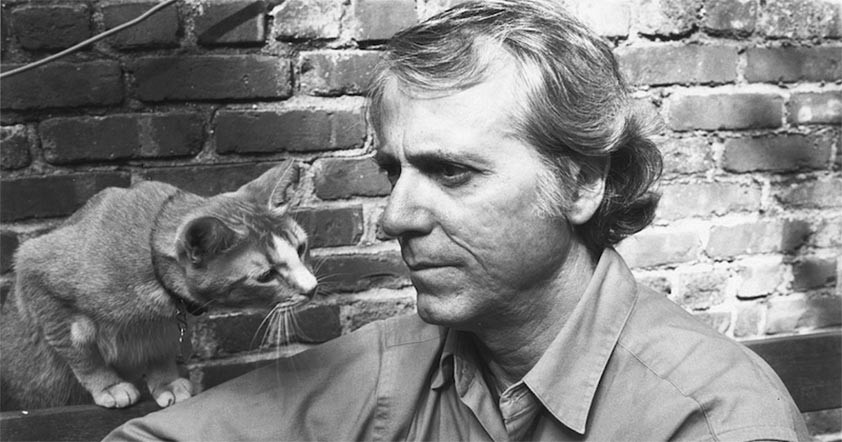
Don DeLillo (born 1936) stands as the foremost chronicler of late-twentieth-century American dread, systemic paranoia, and media saturation. His fiction functions as an acute postmodern reimagining of George Orwell’s Nineteen Eighty-Four. Where Orwell warned of a "hard" totalitarianism enforced by state violence, physical surveillance, and linguistic censorship (Newspeak), DeLillo illustrates an insidious "soft totalitarianism" sustained by consumer capitalism, informational glut, and streaming telecommunications. In this late-capitalist landscape, narrative authority over mass consciousness has migrated away from the novelist and the state, contested instead by the corporate spectacle, the intelligence apparatus, and the modern terrorist. Across masterworks such as White Noise, Libra, Mao II, and Underworld, DeLillo interrogates the liquidation of the individual within crowds, the semiotic tyranny of the brand, the metaphysical significance of waste, and the persistent human compulsion toward apophenia—hyper-pattern recognition—in an ungraspable world.
1. The "Soft Totalitarianism" of Media, Consumerism, and Informational Glut
Orwell's dystopian Oceania in Nineteen Eighty-Four relied on continuous physical surveillance, the threat of torture in Room 101, and the violent suppression of heterodoxy. DeLillo recognizes that in the affluent, postmodern West, overt physical coercion is unnecessary; the population is effectively pacified through an overwhelming abundance of commodities, data streams, and televised spectacles. This cultural shift anticipates Gilles Deleuze’s diagnosis of control societies, where the rigid physical enclosures of disciplinary institutions (factories, prisons, schools) give way to continuous digital modulation, consumer profiling, and informational capture.
                    [ TOTALITARIAN CONTROL PARADIGMS ]
                                    │
           ┌────────────────────────┴────────────────────────┐
           ▼                                                 ▼
[ ORWELLIAN "HARD" TOTALITARIANISM ]              [ DELILLOAN "SOFT" TOTALITARIANISM ]
• Centralized state apparatus (Big Brother)       • Decentralized consumer megasystem
• Scarcity, rationing, physical deprivation       • Hyper-abundance, brand glut, consumer choice
• Direct violence, secret police, torture         • Digital sedation, televisual spectacle
• Linguistic compression (Newspeak)               • Informational noise ("blur and glut")
• Dissent punished by physical liquidation        • Dissent commodified, neutralized & sold
Blur, Glut, and Cultural Entropy
In his 1991 novel Mao II, DeLillo observes that contemporary urban consciousness has been "reduced to blur and glut," a condition in which the average human being is bombarded with more messages, commercial icons, and digital representations than can be synthesized across thousands of lifetimes.[1]
- Inertia-Hysteria: Rather than liberating the subject, this hyper-informational environment produces a distinct psychic pathology: inertia-hysteria. Bombarded by simultaneous crises, breaking news alerts, and competing product claims, the individual experiences emotional paralysis paired with acute nervous agitation.
- The Slide into Entropy: Informational noise drowns out meaningful communication. The explosion of data does not produce enlightenment; instead, it accelerates cultural and cognitive entropy, degrading authentic lived experience into interchangeable media bites.
The Commodification and Assimilation of Dissent
In Orwell's Oceania, dissent is dangerous to the state and must be stamped out through violent re-education. In DeLillo’s America, late consumer capitalism maintains its hegemony not by executing dissidents, but by absorbing and commodifying them.[2]
- Processing Subversion: DeLillo notes that whenever an artist, countercultural thinker, or political radical generates a genuinely subversive critique, the corporate marketing machine instantly absorbs the rebellion, strips it of ethical venom, and repackages it as an edgy lifestyle choice or television commercial.[2:1]
- The Mailerian Resonance: This dynamic directly confirms the warnings of Norman Mailer, who argued that mid-century corporate technocracy was constructing a sterile "plastic totalitarianism" that neutralizes genuine existential vitality by smoothing away all human friction and organic resistance.
2. The Terrorist as the Postmodern Narrative-Maker: Raids on Consciousness and Spectacle
In Nineteen Eighty-Four, narrative authority is monopolized by the centralized Party: "Who controls the past controls the future: who controls the present controls the past." DeLillo updates this dynamic for the global telecommunications era, illustrating how narrative authority has been wrested away from traditional cultural arbiters—specifically the literary novelist—and seized by violent extremists who stage catastrophic media spectacles.
                  ┌────────────────────────────────────────┐
                  │    THE STRUGGLE FOR NARRATIVE POWER    │
                  └───────────────────┬────────────────────┘
                                      │
              ┌───────────────────────┴───────────────────────┐
              ▼                                               ▼
     [ THE MODERN NOVELIST ]                         [ THE MODERN TERRORIST ]
• Patient linguistic construction               • Catastrophic kinetic event
• Nuance, interiority, moral depth              • Unambiguous, shocking imagery
• Bound to linear print culture                 • Exploits real-time satellite broadcast
• Assimilated into entertainment market          • Resists commercial pacification
              │                                               │
              └───────────────────────┬───────────────────────┘
                                      ▼
                      [ "WHAT TERRORISTS GAIN, NOVELISTS LOSE" ]
                      The capture of the global imaginary through
                                visceral media shock
The Decline of the Novelist
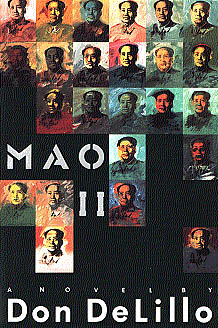
Historically, the novelist operated as a primary architect of a culture's interior life, moral values, and collective self-understanding.[3] In Mao II, protagonist Bill Gray—a reclusive novelist modeled in part on J.D. Salinger and Thomas Pynchon—laments that this traditional authority has been permanently dismantled. Gray formulates a zero-sum law governing postmodern culture: "What terrorists gain, novelists lose."[4]
The degree to which violent extremists alter human consciousness and dominate the public imaginary serves as the exact index of the writer's decline into cultural irrelevance.[5] In an era dominated by instantaneous digital transmission, the slow, reflective craft of literary fiction cannot compete with the immediate, visceral shock of catastrophic spectacle.
Raids on Human Consciousness
Because late-stage consumer capitalism effortlessly sanitizes, packages, and sells conventional art, political protest, and literary irony, terrorism emerges in DeLillo's analysis as one of the few human acts that temporarily defies commercial assimilation:[6]
"Only the terrorists stand outside. The culture hasn't figured out how to assimilate him... But this is precisely the language of being noticed, the only language the West understands. The way they determine how we see them. The way they dominate the rush of endless streaming images." — Mao II (1991)[7]
The modern terrorist is not merely a political operative; he is a performance artist and narrative architect who intuitively understands the architecture of the media environment.[8]
- Hijacking the Transmission: By engineering disasters specifically tailored for the lens of the television camera, terrorists bypass intellectual analysis and directly conquer the global nervous system.
- The Medium as the Message: As Marshall McLuhan argued in McLuhan's The Medium is the Message, the physical medium alters cognitive perception far more than its spoken content. The catastrophic broadcast functions as a hyperreal simulacrum—a televised event that creates an emotional reality far more potent than the physical facts on the ground.
3. Hyperreality, Simulacra, and the Thanatological Core: White Noise
DeLillo's 1985 breakthrough novel White Noise represents the definitive literary exploration of Jean Baudrillard’s theory of hyperreality and simulacra, grounded in the quiet, desperate texture of middle-class suburban existence.
       [ THE REAL (PHYSICAL OBJECT) ]
          - Barn timber, farm soil, physical structure
                       │
                       ▼
       [ THE MECHANICAL REPRODUCTION ]
          - Photographs, postcards, roadside signs
                       │
                       ▼
       [ THE THIRD-ORDER SIMULACRUM ]
          - "The Most Photographed Barn in America"
          - Tourists photograph people taking photographs
          - The original barn vanishes behind its aura of celebrity
"The Most Photographed Barn in America"
In White Noise, Jack Gladney (chairman of the Department of Hitler Studies at the College-on-the-Hill) and his colleague Murray Jay Siskind visit a celebrated roadside tourist attraction known as "The Most Photographed Barn in America." Murray delivers a brilliant semiotic diagnosis of the site:
"No one sees the barn... Once you've seen the signs about the barn, it becomes impossible to see the barn... We're not here to see the barn, we're here to see the others photographing it. Look at the cameras... A collection of photography equipment that's more impressive than the barn itself. We've agreed to be part of a collective perception." — White Noise (1985)
This sequence dramatizes Baudrillard’s third order of simulation, where the image has lost all connection to an underlying physical reality:
- Collective Complicity: The tourists do not come to experience the architectural reality of a barn; they come to confirm their membership in a shared ritual of media consumption.
- Inversion of the Aura: While Walter Benjamin (1892–1940) posited in The Work of Art in the Age of Mechanical Reproduction that mass reproduction destroys the unique "aura" of an art object, DeLillo shows that in postmodern consumerism, mass reproduction generates a synthetic aura. The barn is famous solely because it is photographed, and photographed solely because it is famous.
The Airborne Toxic Event and SIMUVAC
When an industrial rail accident unleashes a lethal chemical cloud—the "Airborne Toxic Event"—over the town of Blacksmith, the crisis is mediated through bureaucratic and televisual simulations. The disaster-relief agency SIMUVAC (Simulated Evacuation) arrives to manage the catastrophe, but their operational logic is inverted:
- The Real as Practice for the Simulation: When Jack Gladney points out that this is an actual disaster rather than a drill, a SIMUVAC technician explains that they are using the real catastrophe to calibrate their computerized simulation model: "The simulation does not correspond to the disaster; we are using the disaster to practice the simulation."
- Hyperreal Precedence: The digital representation holds ontological priority over somatic reality. If the symptoms described on television do not match the physical sensations of the victims, the victims experience anxiety not because of the chemical toxin, but because their bodies fail to mirror the broadcast.
+-----------------------------------------------------------------------+
|                    THE DUAL DEFENSES AGAINST DEATH                    |
|                                                                       |
|   [ CONSUMER MYSTICISM ]                   [ CHEMICAL ERADICATION ]   |
|   • Supermarket chanting ("Toyota Celica") • Dylar: Experimental pill |
|   • Endless aisles of packaged certainty   • Surgically targets fear  |
|   • Acquisition as ontological shield      • Erases linguistic memory |
|                                                                       |
|              <====== THE UNDERLYING TERROR ======>                    |
|                                                                       |
|                  [ SOMATIC FINITUDE: WHITE NOISE ]                    |
|          The ceaseless electronic and biological hum of death         |
+-----------------------------------------------------------------------+
Supermarkets and Death Anxiety: Dylar and Brand Mantras
Underneath the comic, satirical surface of White Noise lies an existential horror: the unresolvable dread of dying (Thanatos).
- The Supermarket as Cathedrals of Transcendence: Jack Gladney and his family make frequent, ritualized pilgrimages to the local supermarket. The brightly lit, meticulously organized aisles of plastic-wrapped foods function as religious sanctuaries. Purchasing goods temporarily wards off mortality by wrapping the vulnerable biological ego in corporate logos. When Jack overhears his daughter murmuring brand names in her sleep ("Toyota Celica... Toyota Corolla"), he recognizes that corporate trademarks have colonized the unconscious, serving as modern secular incantations against the void.
- Dylar: The pharmacological quest to silence death anxiety culminates in Babette Gladney's secret consumption of Dylar, an illicit experimental drug engineered to isolate and chemically delete the fear of death in the brain. However, Dylar’s side effects—the inability to distinguish words from the physical objects they denote—prove that erasing the dread of mortality also destroys the symbolic architecture of human consciousness.
4. Crowds, Mass Movements, and the Liquidation of the Individual
A recurring visual and sociological motif across DeLillo's bibliography is the colossal, undulating human crowd. While Winston Smith in Nineteen Eighty-Four fights desperately to safeguard an inner sanctuary of private individuality against Big Brother, DeLillo's protagonists often experience an intoxicating relief in surrendering their individual identity to the collective mass.
       [ THE ATOMIZED POSTMODERN SUBJECT ]
     - Paralysis by choice; existential isolation;
       unbearable burden of private consciousness
                           │
                           ▼
          [ THE INVITATION OF THE CROWD ]
     - The stadium, the political rally, the cult
     - Walter Benjamin: Mass mechanical reproduction
     - Durkheim: Degraded collective effervescence
                           │
                           ▼
          [ LIQUIDATION INTO THE MASS ]
     - Absorption into the collective visual spectacle
     - Individual anxiety dissolved into oceanic oneness
The Stadium as Modern Temple: Mao II
Mao II opens with one of the most astonishing set-pieces in contemporary fiction: a mass wedding conducted by Sun Myung Moon's Unification Church inside Yankee Stadium, where thousands of identical couples are married in unison.[9]
- The De-Individuation of Flesh: DeLillo describes the couples not as distinct human agents, but as cells within a vast, breathing organism. Individuals willingly surrender their personal autonomy, critical judgment, and historical specificity in exchange for the warm, oceanic security of the crowd.
- The Stadium as Spatial Trap: The baseball stadium—once the secular cathedral of American individual athletic achievement and democratic congregation—is refashioned into an arena for totalitarian uniformity.
- Historical Parallels: DeLillo links this scene to historical images of Chairman Mao's Cultural Revolution in China, the suffocating funeral throngs of the Ayatollah Khomeini in Tehran, and the lethal crush of football fans at Hillsborough. In each case, the crowd operates as a vortex that swallows the individual, proving that the modern subject secretly longs to be freed from the crushing psychological burden of selfhood.
5. Decentralized Paranoia, Apophenia, and the Secret History: Libra
In DeLillo’s narrative universe, paranoia is not a clinical delusion or pathological malfunction; it is a rational, highly sophisticated cognitive response to living in an opaque, bureaucratized, and covertly orchestrated society. Where classic detective fiction presumes an underlying rational order that can be restored by deductive logic, DeLillo’s conspiracy fiction examines how the search for patterns reveals an infinite, unresolvable labyrinth.
==================================================================
           APOPHENIA AND THE PARANOID ARCHITECTURE OF LIBRA
==================================================================

 [ THE RUPTURE: NOV 22, 1963 ] ──► Shatters the coherence of American history;
                                    spawns endless competing narratives.
              │
              ▼
 [ THE LONE GUNMAN VS. SYSTEM ] ──► Lee Harvey Oswald: alienated outsider caught
                                    in rogue CIA anti-Castro plots.
              │
              ▼
 [ COVERT DISPERSAL OF AGENCY ] ──► Plots intersect, mutate, and slip outside
                                    human control; the simulation becomes real.
              │
              ▼
 [ NICHOLAS BRANCH / ARCHIVES ] ──► Drowning in ballistic reports & testimony;
                                    hyper-pattern recognition (*apophenia*)
                                    fails to yield ultimate closure.
==================================================================
The Kennedy Assassination as Ontological Fault Line
In Libra (1988), DeLillo investigates the foundational trauma of postwar American consciousness: the assassination of President John F. Kennedy on November 22, 1963. DeLillo identifies this moment as the historical fault line where American reality permanently fractured:
- The Collapse of Consensus Reality: The assassination shattered the illusion of a coherent, transparent democratic nation. It unleashed a permanent flood of conspiracy theories, classified files, trajectory calculations, and photographic analyses, forever severing the public from verifiable historical truth.
- The Convergence of Secret Networks: In DeLillo's telling, the assassination was not orchestrated by an omnipotent cabal, but by a loose, disintegrating network of disgruntled ex-CIA agents, anti-Castro Cuban exiles, and mobsters who intended merely to stage an staged near-miss assassination attempt to blame on Fidel Castro. However, the simulation takes on an autonomous life of its own, drawing the unstable, attention-starved Lee Harvey Oswald into its magnetic field until the simulated plot collapses into actual historical murder.
Nicholas Branch and the Trap of Apophenia
The novel alternates between Oswald’s biographical trajectory and the Sisyphean labor of Nicholas Branch, a retired CIA curator charged with writing the agency's secret, definitive history of the assassination:
- The Drowning Historian: Branch sits in a secret room surrounded by 26 volumes of the Warren Commission, thousands of pages of ballistic trajectories, autopsy photographs, and endless witness depositions. Yet rather than illuminating the truth, every new document multiplies the contradictions, uncovering obscure secondary connections and fraudulent paper trails.
- Apophenia: Branch's predicament embodies Apophenia—the human compulsion to detect meaningful connections and systemic intentionality in random, chaotic data. In DeLillo's world, everything is connected, but the connections do not resolve into an authorial mastermind; they resolve into an impenetrable web of systemic noise.
6. Waste, the Secret History of Civilization, and Cold War Archaeology: Underworld
DeLillo's 1997 magnum opus Underworld expands his sociological vision across fifty years of Cold War history, linking geopolitics, consumer culture, organized crime, and urban decay through the central organizing motif of waste.
                   ┌───────────────────────────────────┐
                   │    UNDERWORLD: THE SECRET HISTORY │
                   │       OF COLD WAR CONSUMPTION     │
                   └─────────────────┬─────────────────┘
                                     │
           ┌─────────────────────────┴─────────────────────────┐
           ▼                                                   ▼
[ THE ABOVE-GROUND SPECTACLE ]                        [ THE UNDERWORLD OF WASTE ]
• Bobby Thomson's home run (Oct 3, 1951)              • Soviet atomic explosion (same day)
• Postwar suburban consumer euphoria                  • Landfills, nuclear test sites, mob disposal
• The shiny brand facade (packaged commodities)       • The repressed negative space of capitalism
• Ephemeral mass culture & pop nostalgia              • Indestructible radioactive plutonium
           │                                                   │
           └─────────────────────────┬─────────────────────────┘
                                     ▼
                    [ THE METAPHYSICAL TRUTH OF EMPIRE ]
                "What we throw away reveals who we truly are."
Waste as Negative Space and Civilizational Mirror
The protagonist of Underworld, Nick Shay, works as an executive for a waste management conglomerate in Arizona. Nick’s profession is deeply philosophical: he is an archaeologist of late capitalism who understands that the true history of an empire is written not in its self-congratulatory monuments, but in its landfills.
- The Negative Space of Capitalism: Consumer capitalism depends on the perpetual repression of its own byproduct. The consumer buys a sparkling, hermetically sealed commodity and immediately discards the packaging, banishing it from sight. Landfills like Fresh Kills on Staten Island represent the unconscious shadow of the consumer economy—mountains of discarded plastic, computer monitors, and domestic garbage that will outlive the civilization that produced them.
- The Plutonium Parallel: DeLillo establishes a direct thematic mirror between municipal domestic garbage and military nuclear waste. The nuclear standoff of the Cold War was fundamentally an industrial competition in waste generation: producing stockpiles of radioactive plutonium that remain lethal for hundreds of thousands of years. Nuclear tests and toxic landfills represent the identical metaphysical impulse: humanity generating indestructible poison in the pursuit of absolute technological mastery.
Art in the Desert: Klara Sax and the B-52 Bombers
Contrasted with Nick Shay is Klara Sax, an aging conceptual artist who leads a collective painting decommissioned B-52 bomber aircraft stored in the Southwestern desert:
- Reclaiming Instruments of Annihilation: Klara takes hundreds of giant military airplanes that were engineered to drop thermonuclear bombs on Soviet cities and covers their fuselages in vibrant, abstract expressionist pigments.
- Resonance with The Dehumanization of Art: Klara’s installation engages José Ortega y Gasset's critique of modern art. Rather than producing art as an emotional domestic ornament, she transforms instruments of industrial slaughter into monumental landscape art, forcing the spectator to confront the cold, mechanical systems that structured their existential reality during the nuclear age.
7. Cyber-Capital, Time-Dilation, and Bodily Disconnection: Cosmopolis
In Cosmopolis (2003), DeLillo anticipates the hyper-financialized, algorithm-driven world of the twenty-first century, dissecting how cyber-capitalism severs human consciousness from physical embodiment and temporal reality.
       [ THE ABSTRACT CYBER-CAPITAL REALM ]
    - Multi-billion-dollar currency transactions
    - Algorithmic charts moving at the speed of light
    - Soundproofed, cork-lined armored limousine
    - Future and past abolished into pure real-time data
                         │
                         ▼
             [ THE CRASH INTO EMBODIMENT ]
    - Anarchist street riots and self-immolation
    - Asymmetrical prostate (medical pathology)
    - The pie-thrower (carnivalesque humiliation)
    - Benno Levin / Richard Sheets (assassination)
    - Somatic death reasserts physical finitude
The Cork-Lined Limousine as Mobile Cyber-Capsule
The novel tracks twenty-eight-year-old billionaire asset manager Eric Packer as he spends an entire day crossing 47th Street in Manhattan in a custom-built, soundproofed, cork-lined stretch limousine to get a haircut. The limousine operates as a high-tech fortress:
- Financial Detachment: Inside the car, Packer watches glowing computer screens tracking currency fluctuations, trading billions of dollars across global financial networks in fractions of a second.
- The Abolition of Time: In Packer’s digital universe, capital has abolished traditional clock time. The future has already been priced into current algorithms, and the past is an irrelevant relic. Capital has transcended geography, physical matter, and human biology.
The Revenge of the Somatic Body
Despite Packer's attempts to exist as pure disembodied intellect within digital flow, the recalcitrant physical world continually intrudes upon his cocoon:
- The Medical Checkup: During an in-transit physical examination, Packer’s doctor informs him that his prostate is asymmetrical. This minor biological imperfection haunts Packer throughout the day, operating as a biological reminder of physical decay.
- The Anarchist Riots and Bodily Death: Protesters throw pies at his face, street activists self-immolate outside his window, and an alienated former employee, Benno Levin (Richard Sheets), waits in an abandoned building to shoot him. In the novel's final moments, Packer faces Levin's gun, recognizing that the flesh cannot escape its biological fate. Algorithmic cyber-capitalism may achieve digital immortality, but the individual human being remains bound to mortality, pain, and death.
8. Chronological Synthesis of DeLillo's Major Works
The following table traces the evolution of DeLillo’s primary philosophical, political, and sociological preoccupations across four decades of literary output:
| Work | Year | Narrative Form & Setting | Core Postmodern & Sociological Themes | Thanatological & Existential Trajectory |
|---|---|---|---|---|
| White Noise | 1985 | Satirical suburban domestic realism; Blacksmith college town. | Simulacra, media white noise, brand mantras, simulated disaster drills (SIMUVAC). | Pervasive dread of death (Thanatos); failed pharmacological eradication via Dylar. |
| Libra | 1988 | Historiographical metafiction; Dallas, New Orleans, Tokyo, Moscow. | Kennedy assassination, covert intelligence networks, apophenia, archival information overload. | Historical contingency vs. conspiratorial destiny; Oswald's search for narrative significance. |
| Mao II | 1991 | Global political noir; New York, London, Beirut. | The novelist vs. the terrorist, crowds as autonomous organisms, mass image reproduction. | The decline of literary moral authority; the terrorist staging spectacle to dominate the global mind. |
| Underworld | 1997 | Panoramic Cold War epic; New York, Arizona desert, Kazakhstan. | Municipal waste, nuclear fallout, Fresh Kills landfill, the secret underside of consumer capitalism. | Waste as civilization's repressed shadow; nuclear weapons and landfills as durable monuments. |
| Cosmopolis | 2003 | Picaresque urban allegory; Manhattan cross-town limousine. | Cyber-capitalism, time abolition, financial algorithms, disembodiment. | The violent return of the biological body and mortality against digital invulnerability. |
| The Silence | 2020 | Claustrophobic apocalyptic chamber drama; Manhattan apartment. | Total blackout, telecommunications collapse, loss of digital screens, sensory vacuum. | The psychological unraveling of human consciousness when electronic white noise goes silent. |
9. Theoretical Matrix: Orwell, Mailer, and DeLillo
| Diagnostic Dimension | George Orwell (Nineteen Eighty-Four) | Norman Mailer (Advertisements for Myself) | Don DeLillo (White Noise, Mao II) |
|---|---|---|---|
| Primary Totalitarian Engine | Hard state terror, Thought Police, violent interrogation, military rationing. | Corporate standardization, technocratic conformity, synthetic "plastic" culture. | Soft consumerism, informational glut ("blur and glut"), media saturation. |
| Linguistic Mechanism | Newspeak: Drastic reduction and compression of vocabulary to restrict thought. | Political euphemism and public relations jargon masking imperial violence. | White Noise: Infinite multiplication of slogans, brand names, and unassimilable data. |
| Fate of Counterculture & Dissent | Systematic physical torture, public trial, execution, and historical erasure (vaporization). | The "Hipster" wages visceral guerrilla warfare against the conformity of the "Square." | Instant assimilation: subversion is packaged, aestheticized, and sold as television entertainment. |
| Locus of Surveillance | Telescreens and informants operated directly by the centralized Ministry of Love. | Bureaucratic files, FBI surveillance, corporate managerial psychological testing. | Dispersed consumer tracking, supermarket scanner codes, automated banking, camera crowds. |
| Philosophical Anchor | Marxist-Trotskyite critique of Stalinist state totalitarianism. | Vernacular "American Existentialism," Manichean cosmological dualism. | Postmodern French theory (Baudrillard's simulacra, Deleuze's control societies). |
🎴 Interactive Web Practice (Comprehension Check)
Question 1 (Soft Totalitarianism & Informational Glut): How does Don DeLillo's formulation of "soft totalitarianism" transform George Orwell's classic model of authoritarian control, and what role does "blur and glut" play in neutralizing ideological subversion?
Answer: While George Orwell's Nineteen Eighty-Four depicts a "hard" totalitarianism maintained through physical coercion, state-managed scarcity, secret police surveillance, and the deliberate compression of language (Newspeak), Don DeLillo diagnoses a "soft totalitarianism" characteristic of advanced consumer capitalism. In DeLillo's framework, the population is controlled not through violent deprivation, but through overwhelming abundance—an endless stream of consumer goods, commercial imagery, and electronic noise that DeLillo terms "blur and glut."
This informational saturation induces a state of "inertia-hysteria," where the human subject is so overloaded with simultaneous crises and marketing stimuli that critical reflection and decisive action become impossible. Furthermore, rather than executing dissidents, late-capitalist society neutralizes subversive thought by immediately absorbing, commodifying, and aestheticizing it into mainstream commercial entertainment, transforming potential rebellion into profitable lifestyle branding.
Question 2 (The Novelist vs. The Terrorist & The Hyperreal Spectacle): Why does protagonist Bill Gray in Mao II assert that "what terrorists gain, novelists lose," and how does modern terrorism hijack the media environment to act as the primary narrative architect of public consciousness?
Answer: In Mao II, Bill Gray argues that historically, the serious literary novelist served as the primary shaper of society's inner life, moral trajectory, and collective imagination. However, in the late-twentieth-century landscape of global telecommunications and real-time electronic broadcasting, the slow, reflective craft of literary fiction has been eclipsed by the sensational shock value of visual media. In this environment, the modern terrorist operates as a performance artist and narrative-maker who stages catastrophic, highly telegenic disasters designed specifically for television cameras and satellite networks.
Because consumer capitalism effortlessly absorbs, sanitizes, and sells traditional artistic and political protests, lethal spectacle remains one of the few acts that resists immediate commercial assimilation. By dictating what appears on the global screen, the terrorist hijacks the collective nervous system and usurps the novelist's former role as the dominant architect of public narrative.
Question 3 (Simulacra, Apophenia & The Archeology of Waste): How do the concepts of Baudrillardian simulacra in White Noise, apophenia in Libra, and municipal waste in Underworld expose the repressed existential anxieties of late-twentieth-century American culture?
Answer: These three motifs function as interconnected diagnostic probes into the psychological defense mechanisms of late capitalism:
- Baudrillardian Simulacra (White Noise): Episodes like "The Most Photographed Barn in America" and SIMUVAC demonstrate that the simulation has superseded physical reality. Consumers use brand mantras and packaged commodities to create a synthetic aura that shields them from the underlying "white noise" of existential mortality and somatic finitude.
- Apophenia and Paranoia (Libra): In the wake of the Kennedy assassination, paranoia ceases to be a clinical illness and becomes an epistemological survival tool. As CIA historian Nicholas Branch discovers among mountains of unresolvable files, apophenia (hyper-pattern recognition) reflects the desperate human compulsion to find coherence in opaque, decentralized bureaucratic systems that have grown entirely beyond human comprehension.
- The Archeology of Waste (Underworld): Landfills like Fresh Kills and indestructible nuclear stockpiles constitute the repressed negative space of the consumer dream. Consumer society represses its garbage to maintain an illusion of clean, eternal convenience; however, as waste management executive Nick Shay demonstrates, what an empire discards reveals its authentic spiritual truth: indestructible materials that will outlive human civilization.
Resonant Notes
The following notes in the vault share direct thematic, sociological, and literary connections with Don DeLillo:
🔴 Totalitarianism, Media & Surveillance
- George Orwell (1903-1950) — DeLillo provides the definitive postmodern successor to Orwell's Nineteen Eighty-Four. Where Orwell anatomized "hard totalitarianism" driven by state surveillance, scarcity, and linguistic compression (Newspeak), DeLillo examines "soft totalitarianism" driven by consumerist abundance, informational glut ("blur and glut"), and media saturation.
- Norman Mailer — DeLillo inherits Mailer's critique of technocratic standardization and corporate "plastic totalitarianism," translating Mailer's mid-century existential dread into the hyper-mediated, post-Cold War landscape of late capitalism.
- Postscript on the Societies of Control — Gilles Deleuze’s transition from Foucault's disciplinary enclosures to continuous, network-based digital modulation mirrors DeLillo's depiction of decentralized power, corporate simulation, and the dissolution of the individual into informational data streams.
- Michel Foucault — DeLillo's portrayal of systemic surveillance evolves Foucault's panoptic model; where Foucault analyzed the gaze of state institutions, DeLillo reveals how consumer culture induces voluntary self-monitoring through credit profiles, supermarket scanners, and televisual conformity.
- William H. Whyte's The Organization Man & William H. Whyte's Social Ethics — Whyte’s mid-century corporate conformist governed by the "Social Ethic" evolves into DeLillo's atomized suburban professionals, who seek shelter from existential dread by assimilating into institutional systems and corporate hierarchies.
🟡 Simulation, Aura & Media Ecology
- Defining a Simulacrum — Jean Baudrillard's hyperreality (where the representation precedes and generates the real) forms the foundational theoretical spine of DeLillo's fiction, from the SIMUVAC disaster drills and "The Most Photographed Barn in America" in White Noise to the detached financial flows in Cosmopolis.
- The Work of Art in the Age of Mechanical Reproduction & Walter Benjamin (1892–1940) — Benjamin's analysis of the loss of the aura and the shift from contemplation to distracted mass consumption underpins DeLillo's critique of photographic saturation and stadium crowds; DeLillo shows that mass reproduction paradoxically creates a synthetic, commercial aura around photographed objects.
- Marshall McLuhan (1911-1980) & McLuhan's The Medium is the Message — DeLillo's characters inhabit McLuhan's electronic surround, where television screens and streaming telecommunications reshape human cognitive ratios, turning catastrophic historical events into consumable media spectacles.
- Innis (1950) - Empire and Communications — Harold Innis's distinction between space-binding and time-binding media illuminates DeLillo's portrayal of global communications networks, which aggressively bind vast geographical spaces while annihilating historical memory and deep temporal continuity.
- The flâneur & The Painter of Modern Life, a seminal 1863 essay by French poet and art critic Charles Baudelaire — DeLillo transposes Baudelaire's urban observer from nineteenth-century Parisian boulevards into the neon glare of late-twentieth-century Manhattan; characters like Eric Packer in Cosmopolis and Bill Gray in Mao II act as corrupted, hyper-mediated flâneurs drifting through urban decay and commercial spectacle.
🟢 Paranoia, Alienation & Existential Dread
- Apophenia — The psychological compulsion to detect interconnected patterns, conspiracies, and intentional designs in random data serves as the primary cognitive engine of DeLillo's paranoid protagonists (such as Nicholas Branch in Libra and Jack Gladney in White Noise).
- Entropy — Thermodynamic, informational, and social entropy acts as the silent antagonist across DeLillo's work, manifested in the accumulation of municipal garbage and nuclear waste in Underworld and the breakdown of communication into electronic static.
- Travis Bickle — Scorsese and Schrader's alienated cab driver in Taxi Driver serves as the cinematic cousin to Lee Harvey Oswald in Libra and the street shooters in Mao II: atomized men seeking historical significance and narrative authority through sensational public violence.
- John Updike's Main Literary Themes — Both Updike and DeLillo anatomize postwar American life, but where Updike locates metaphysical struggle in the somatic textures of suburban marriage and Barthian theology, DeLillo focuses on the disembodying effects of television, consumer brands, and systems paranoia.
- Anthony Vidler-The Architectural Uncanny — DeLillo extends Vidler's architectural uncanny into corporate skyscrapers, sterile supermarkets, and decommissioned missile silos, revealing how modern functional spaces produce claustrophobic estrangement rather than domestic shelter.
- The Dehumanization of Art — Ortega y Gasset's diagnosis of avant-garde modernism refusing to serve as an emotional mirror parallels DeLillo's aesthetic treatment of cold systems, technical jargon, and Klara Sax's desert installation of painted B-52 bombers in Underworld.
- The Existential Paradox of Annie Hall's Opening Monologue — Woody Allen's neurotic defense rituals against mortality provide a direct comedic parallel to Jack Gladney's supermarket pilgrimages and Dylar dependency in White Noise; both use hyper-intellectualization to evade somatic death.
- Northrop Frye's - Anatomy of Criticism — DeLillo's canon operates within Frye's Winter mythos of Satire and Irony, unmasking systemic absurdity and tracking the collapse of heroic human agency beneath the weight of technological and corporate megasystems.
- Fyodor Dostoevsky (1821-1881) — DeLillo’s political extremists in Mao II and Underworld echo Dostoevsky's radical conspirators in Demons (The Possessed); both authors recognize that ideological fanaticism often emerges as a desperate, pathological attempt to escape spiritual emptiness and personal anonymity.
- Albert Camus — DeLillo's characters inhabit an absurd universe where traditional institutions no longer provide coherent meaning; yet unlike Camus's heroic rebel asserting lucid dignity, DeLillo's subjects frequently surrender their freedom to media simulations or mass crowds.
- Jacques Lacan — Lacan's Imaginary and Symbolic orders illuminate DeLillo's exploration of media: the televised image acts as an Imaginary lure (Gestalt) that captures the subject's desire, while the dense, unorganizable archives in Libra represent an unmasterable Symbolic field.
- Sigmund Freud & Freud's The Uncanny (Das Unheimliche) — Freud's death drive (Thanatos) pervades DeLillo's novels, where consumer accumulation and technological progress operate as frantic defense mechanisms against mortality, while familiar commercial spaces become terrifyingly uncanny (unheimlich) during crises like the Airborne Toxic Event.
- Carl Gustav Jung — The colossal crowds and mass weddings in Mao II reflect Jung's warnings regarding the submergence of the conscious ego into the primordial, unreflective currents of the collective unconscious.
- Louis Sass - Phenomenological Psychopathology and the Self — Sass's analysis of hyperreflexivity and the schizophrenia spectrum illuminates DeLillo's prose style, where ordinary objects, roadside billboards, and everyday phrases become eerily detached, hyper-salient objects of obsessive contemplation.
- Schopenhauerian Pessimism — Schopenhauer’s formulation of the blind, insatiable Will finds a contemporary counterpart in DeLillo's depiction of the consumer megasystem, which compels individuals into endless material acquisition without ever providing lasting satisfaction or protection from death.
References
Chris Gregory / Mao II – Don DeLillo: A Review / chrisgregorybooks.wordpress.com ↩︎
Chris Gregory / Mao II – Don DeLillo: A Review / chrisgregorybooks.wordpress.com ↩︎ ↩︎
Chris Gregory / Mao II – Don DeLillo: A Review / chrisgregorybooks.wordpress.com ↩︎
SuperSummary / Mao II Summary / supersummary.com ↩︎
SuperSummary / Mao II Summary / supersummary.com ↩︎
Chris Gregory / Mao II – Don DeLillo: A Review / chrisgregorybooks.wordpress.com ↩︎
Chris Gregory / Mao II – Don DeLillo: A Review / chrisgregorybooks.wordpress.com ↩︎
Japanese Association for American Studies / Don DeLillo's Mao II Reconsidered in the Light of September 11 / jaas.gr.jp ↩︎
Japanese Association for American Studies / Don DeLillo's Mao II Reconsidered in the Light of September 11 / jaas.gr.jp ↩︎