The flâneur
Charles Baudelaire transformed the flâneur—traditionally a wealthy, aimless urban stroller—into a defining archetype of modern literary and artistic observation. For Baudelaire, the flâneur is a "passionate spectator" who immerses themselves in the metropolitan crowd to distill the ephemeral beauty of 19th-century urban modernity. In the 20th century, critics such as Walter Benjamin (1892–1940) and Georg Simmel (1858-1918) reframed the flâneur as a foundational figure for diagnosing commodity capitalism, metropolitan sensory shock, and urban alienation.
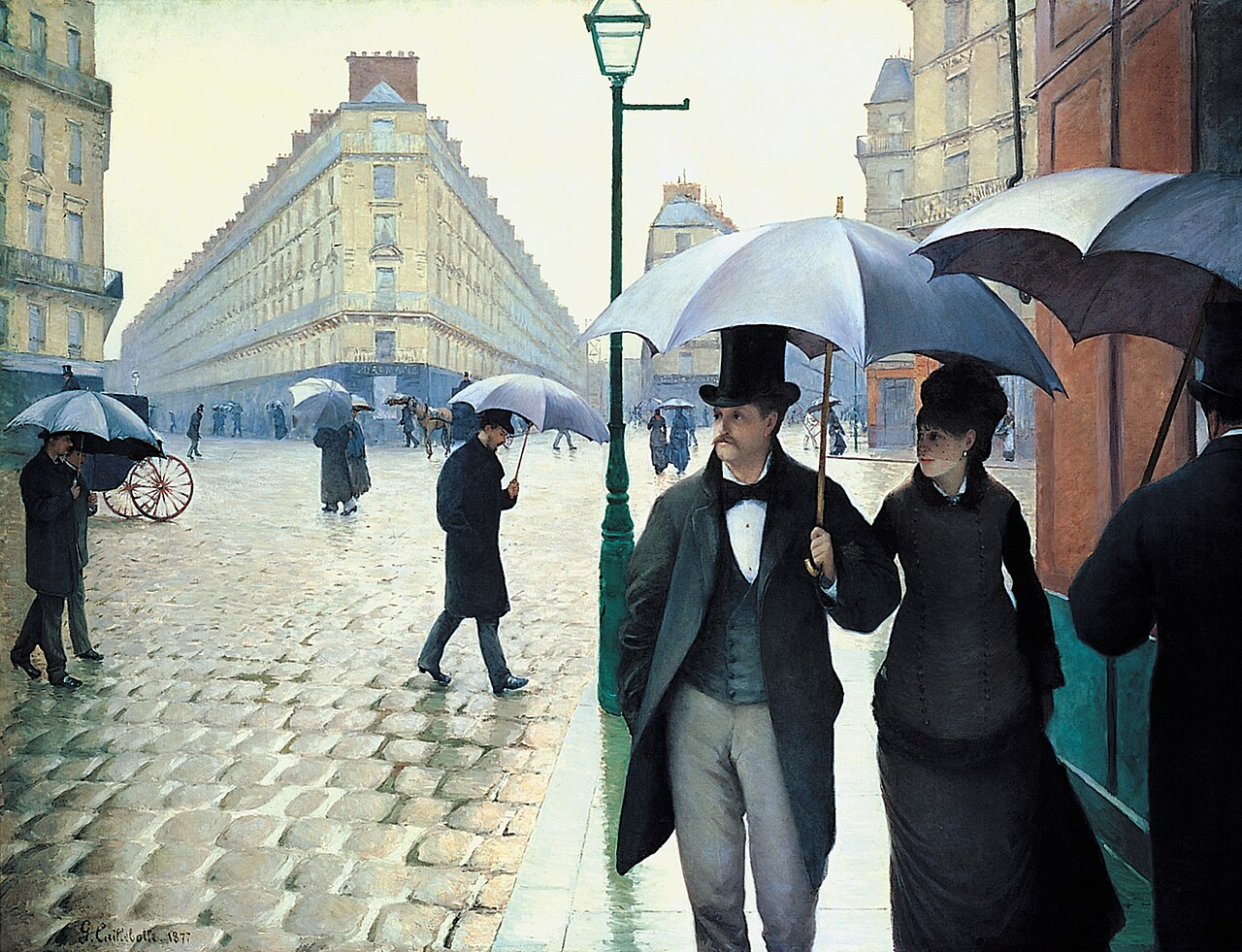
The Architect of Modern Observation
The concept of the flâneur (from the French verb flâner, meaning "to stroll") existed before Charles Baudelaire, but he elevated the figure from a mere dandy or idler into a critical observer of the modern city. In his seminal 1863 essay, The Painter of Modern Life, Baudelaire outlined the flâneur's psychological profile and artistic purpose through his analysis of the illustrator Constantin Guys.[1] Drawing inspiration from Edgar Allan Poe's short story "The Man of the Crowd," Baudelaire framed the flâneur as a figure driven by insatiable curiosity—operating as a "botanist of the sidewalk" who deciphers the bustling city streets like an intricate, living text.
The Dynamics of the Crowd
Baudelaire’s flâneur exists in a paradoxical state: deeply embedded in the masses yet entirely intellectually detached from them. The crowded streets of Paris—newly modernized by Georges-Eugène Haussmann's massive public works—served as the flâneur's natural habitat, offering a cloak of anonymity that allowed for uninterrupted voyeurism.[2]
"For the perfect flâneur, for the passionate spectator, it is an immense joy to set up house in the heart of the multitude, amid the ebb and flow of movement, in the midst of the fugitive and the infinite." — Charles Baudelaire, The Painter of Modern Life
Key characteristics of Baudelaire's true flâneur include:
- Anonymity: Moving seamlessly through the urban landscape without being identified or disturbed.
- Aesthetic Detachment: Observing both the tragic and the beautiful aspects of the metropolis with objective, unbothered fascination.
- Temporal Awareness: Capturing the "ephemeral, the fugitive, the contingent" nature of modern existence before it vanishes.
Evolution and the Benjaminian Flâneur
While Baudelaire conceptualized the flâneur in the 19th century as a sovereign aesthetic observer, 20th-century cultural critic Walter Benjamin (1892–1940) solidified the figure as a central subject of sociological and critical theory. In The Arcades Project (Das Passagen-Werk), Benjamin framed the flâneur not merely as a detached artist, but as a living emblem of alienation within industrial capitalism.[3]
Benjamin's flâneur wanders the glass-covered shopping arcades of Paris, resisting the frantic, rationalized tempo of industrial production through the deliberate, unprofitable act of slow strolling (famously walking turtles on leashes to set an unhurried cadence). However, Benjamin diagnosed a central dialectical tragedy in this resistance:
Benjamin ultimately argued that the flâneur's autonomy was an illusion. The stroller who imagines himself free from market forces is in fact an intellectual commodity parading through the marketplace looking for a buyer. With the emergence of consumer capitalism and the transformation of intimate glass arcades into colossal department stores, the flâneur was stripped of critical distance and domesticated into the passive mass consumer.[4]
This analysis directly parallels Benjamin's critique in The Work of Art in the Age of Mechanical Reproduction, where the contemplative, singular "aura" of traditional experience collapses under the relentless sensory shock of industrial reproduction and mass spectacle.
Sociological Dimensions: Simmel and Spatial Estrangement
The flâneur's psychological posture closely aligns with the classical sociological analyses of Georg Simmel (1858-1918). In his landmark 1903 essay The Metropolis and Mental Life, Simmel demonstrated that metropolitan existence subjects the individual to an unrelenting bombardment of sensory stimuli. To avoid psychological collapse, the urbanite develops the blasé attitude—a protective emotional numbness and intellectual reserve that enables the flâneur to drift through crowds without being overwhelmed.[5]
Furthermore, the flâneur shares structural DNA with Georg Simmel's concept of The Stranger:
- Simultaneous Nearness and Remoteness: Like Simmel's Stranger, the flâneur is physically immersed in the collective life of the city while remaining socially and emotionally unassimilated.
- Objective Distance: Unburdened by organic communal ties or instrumental labor obligations, the flâneur maintains a posture of sovereign observation.
- The Monetary Grid: As Simmel detailed in The Philosophy of Money (Philosophie des Geldes), the monetary economy reduces qualitative human relationships to abstract calculations; the flâneur's disinterested stroll serves as a poetic, if fragile, refusal of purely utilitarian exchange.
In spatial and architectural terms, as examined by Anthony Vidler-The Architectural Uncanny, the re-engineered boulevards of Haussmannian Paris and the labyrinths of consumer culture turned the modern city into an alienating, unhomely (unheimlich) landscape where the flâneur moves between intoxicating wonder and urban agoraphobia.
Comparative Matrix: The Evolution of Urban Spectatorship
| Diagnostic Dimension | The Baudelairean Flâneur | The Benjaminian Flâneur | The Simmelian Urbanite / Stranger |
|---|---|---|---|
| Historical Milieu | Mid-19th Century Paris (Haussmannization) | Early 20th Century Paris (Industrial Arcades) | Turn-of-the-Century Berlin (The Metropolis) |
| Primary Motivation | Aesthetic distillation of the "ephemeral and fugitive" | Resistance to industrial time; dialectical drifting | Psychic defense against relentless nervous stimulation |
| Observational Posture | "Passionate spectator"; botanist of the sidewalk | Alienated intellectual; collector of modern ruins | Blasé detachment; intellectualized reserve |
| Relationship to the Crowd | Oceanic immersion; energized by the multitude | Ambivalent shelter; absorbed into commodity phantasmagoria | Spatial proximity paired with emotional distance |
| Ultimate Fate | Sovereign poetic observer | Commodification and extinction via the department store | Atomized, calculative participant in the money economy |
🎴 Interactive Web Practice (Comprehension Check)
Question 1 (Baudelairean Flânerie & Aesthetic Modernity): How does Charles Baudelaire define the flâneur's relationship to the crowd in The Painter of Modern Life, and what paradox characterizes this observational stance?
Answer: Baudelaire defines the flâneur as a "passionate spectator" who resolves a central paradox of modernity: complete physical immersion in the multitude combined with total intellectual and aesthetic detachment. Rather than avoiding the urban crowd, the flâneur treats it as an inexhaustible electrical reservoir, "setting up house in the heart of the multitude" while retaining anonymity. This stance allows the stroller to operate as a "botanist of the sidewalk," extracting the eternal and poetic from the fleeting, transient impressions of daily metropolitan life.
Question 2 (Benjamin's Dialectical Critique & Commodification): In what way does Walter Benjamin's reading of the flâneur in The Arcades Project diverge from Baudelaire's romanticized archetype?
Answer: While Baudelaire viewed the flâneur as an autonomous, sovereign artist, Walter Benjamin dialectically unmasks the figure as an emblem of capitalist alienation. Benjamin argues that the flâneur's slow strolling—such as leading turtles through the arcades—was a futile, symbolic protest against the regimented, accelerating pace of industrial production. Ultimately, the flâneur's freedom was an illusion: he was an intellectual transformed into a commodity, parading through the arcade marketplace looking for a buyer, until the rise of the modern department store finally domesticated the solitary stroller into a passive consumer.
Question 3 (Sociological Parallels: Simmel's Stranger & The Blasé Attitude): How do Georg Simmel's sociological concepts of the "blasé attitude" and "the Stranger" illuminate the psychological survival mechanisms of the modern flâneur?
Answer: Georg Simmel observed in The Metropolis and Mental Life that urban environments subject individuals to continuous sensory overstimulation. To protect psychological equilibrium, the metropolitan individual adopts a "blasé attitude"—an emotional shield of indifference and reserve that mirrors the flâneur's detached gaze. Furthermore, the flâneur embodies the sociological paradox of Simmel's "Stranger": a figure characterized by the synthesis of nearness and remoteness, who is physically proximate within the metropolitan throng yet remains psychologically distant and socially unassimilated.
Resonant Notes
The following notes in the vault share direct thematic, sociological, and literary connections with The flâneur:
🔴 Urban Modernity, Spectatorship & The Crowd
- The Painter of Modern Life, a seminal 1863 essay by French poet and art critic Charles Baudelaire — The foundational vault text establishing the flâneur as the archetype of modern aesthetic observation, defining modernity (modernité) as the ephemeral, fleeting, and contingent.
- Walter Benjamin (1892–1940) & Walter Benjamin’s Theses on the Philosophy of History — Benjamin placed the flâneur at the core of The Arcades Project, unmasking how the stroller navigates the commodity phantasmagoria and historical shocks of high capitalism.
- The Work of Art in the Age of Mechanical Reproduction — Benjamin’s companion masterpiece analyzing how mass reproduction liquidates the traditional "aura," shifting human perception from contemplative immersion to distracted reception within the urban crowd.
- Georg Simmel (1858-1918) & Georg Simmel's concept of The Stranger — Simmel’s spatial sociology of the stranger (near yet far) and his diagnosis of the urban "blasé attitude" provide the bedrock sociological explanation for the flâneur's psychological survival in the metropolis.
- Edgar Allan Poe (1809-1849) — Author of "The Man of the Crowd," which Baudelaire and Benjamin analyzed as the direct literary predecessor of the modern urban stroller wrestling with metropolitan anonymity and moral vertigo.
🟡 Spatial Estrangement, Architecture & Modernist Wandering
- Anthony Vidler-The Architectural Uncanny — Vidler connects Benjamin's arcades and the flâneur's wandering to the modern city as a space of agoraphobia, spatial disorientation, and the architectural uncanny (unheimlich).
- Virginia Woolf — Woolf transposes the male flâneur into the modernist flâneuse in essays like "Street Haunting: A London Adventure" and Clarissa Dalloway's Bond Street walks, dissolving the bourgeois ego into the visual kaleidoscope of the metropolis.
- Guillaume Apollinaire (1880–1918) — The avant-garde poet who updated Baudelaire's peripatetic wandering into the multi-perspectival, unpunctuated urban montage of "Zone" and bohemian Montmartre.
- Giorgio de Chirico (1888-1978) — De Chirico radically inverts the flâneur's habitat: instead of crowds and bustling boulevards, his solitary stroller navigates deserted, petrified plazas haunted by melancholy and spatial silence.
- Travis Bickle — Scorsese and Schrader's alienated cab driver acts as a dark, mechanized distortion of the flâneur, drifting through nocturnal Manhattan and absorbing urban decay into toxic vigilante obsession.
🟢 Alienation, Consumer Capitalism & Cultural Foils
- The Philosophy of Money (Philosophie des Geldes) & Simmel and the Attention Economy — Abstraction, Alienation, and Cognitive Capture — Explores how monetary abstraction and platform algorithms quantify human experience, contrasting with the flâneur's unprofitable wandering.
- Don DeLillo Major Themes Analysis — DeLillo updates the flâneur for late capitalism in Cosmopolis (billionaire Eric Packer drifting across Manhattan in a cork-lined limousine) and Mao II, examining crowds and hyperreal consumer spectacles.
- Metaphysics of Henry David Thoreau & Beyond Representation-Shared Epistemology of Thoreau and Kerouac — Thoreau's rural "sauntering" in the wilderness provides the direct transcendental counterpoint to the urban flâneur, exchanging metropolitan spectacle for communion with unmediated nature.
- Jack Kerouac (1922-1969) — The Beat wanderer transposes the boulevard stroller into the American hitchhiker and rail-rider navigating highways and neon underworlds in search of ecstatic spiritual presence.
- From Walls of Wood to Walls of Glass - Northrop Frye’s Geography of Isolation — Frye's critique of the modern high-rise condominium represents the death of the flâneur's public promenade, as urbanites retreat from civic streets into atomized glass towers.
Backlinks
- The Painter of Modern Life, a seminal 1863 essay by French poet and art critic Charles Baudelaire — Conceptualizes the flâneur as the passionate spectator whose aesthetic mission is to distill the eternal from the ephemeral.
- Walter Benjamin (1892–1940) — Theorizes the flâneur in The Arcades Project as a dialectical figure embodying commodity alienation and the destruction of the aura.
- Anthony Vidler-The Architectural Uncanny — Explores how Haussmann's boulevards and the labyrinthine arcades turned the flâneur's playground into a site of psychological vertigo and spatial anxiety.
- Georg Simmel (1858-1918) — Provides the sociological framework of the blasé attitude and the metropolitan individual that underpins the flâneur's detached posture.
- Georg Simmel's concept of The Stranger — The kindred sociological archetype that shares the flâneur's synthesis of physical closeness and emotional distance.
- The Work of Art in the Age of Mechanical Reproduction — Benjamin’s companion critique of distraction, mass reproduction, and sensory shock in modern metropolitan culture.
- Don DeLillo Major Themes Analysis — Connects the nineteenth-century stroller to the postmodern observer drifting through late-capitalist media white noise and consumer spectacle.
- Virginia Woolf — Adapts the flâneur's gaze to female metropolitan consciousness and modernist stream-of-consciousness narrative.
- Metaphysics of Henry David Thoreau — Contrasts the urban flâneur's metropolitan voyeurism with the rural saunterer's spiritual immersion in nature.
References
Charles Baudelaire / The Painter of Modern Life and Other Essays / Phaidon Press Archive ↩︎
Keith Tester (Ed.) / The Flâneur / Routledge Books ↩︎
Walter Benjamin / The Arcades Project / Harvard University Press ↩︎
Susan Buck-Morss / The Dialectics of Seeing: Walter Benjamin and the Arcades Project / MIT Press ↩︎
Georg Simmel / The Metropolis and Mental Life / The Free Press ↩︎