From Walls of Wood to Walls of Glass - Northrop Frye’s Geography of Isolation
Literary theorist and cultural critic Northrop Frye introduced the concept of the garrison mentality in his 1965 "Conclusion" to Carl F. Klinck's Literary History of Canada (later collected in The Bush Garden: Essays on the Canadian Imagination, 1971) to anatomize the psychological and spatial foundations of early Canadian literature.[1] Confronted by an immense, unmapped, and physically overwhelming northern wilderness, early European settlers established tightly fortified communities that subordinated individual eccentricities to institutional law, moral conformity, and collective survival.[1:1][2]
In his subsequent cultural lectures during the late 1980s, Frye expanded his spatial diagnosis to interrogate modern hyper-urbanization, formulating the condominium mentality.[1:2][3] While the historic pioneer garrison was "social but not creative"—demanding intense human solidarity out of physical necessity—Frye diagnosed the late-twentieth-century condominium tower as "neither social nor creative."[1:3][3:1] Modern high-rise architecture replaces the wooden stockade with curtain walls of transparent glass and reinforced concrete, producing an introverted, financialized mode of living characterized by hyper-density without community, deliberate neighborly detachment, and profound civic estrangement.[3:2][4]
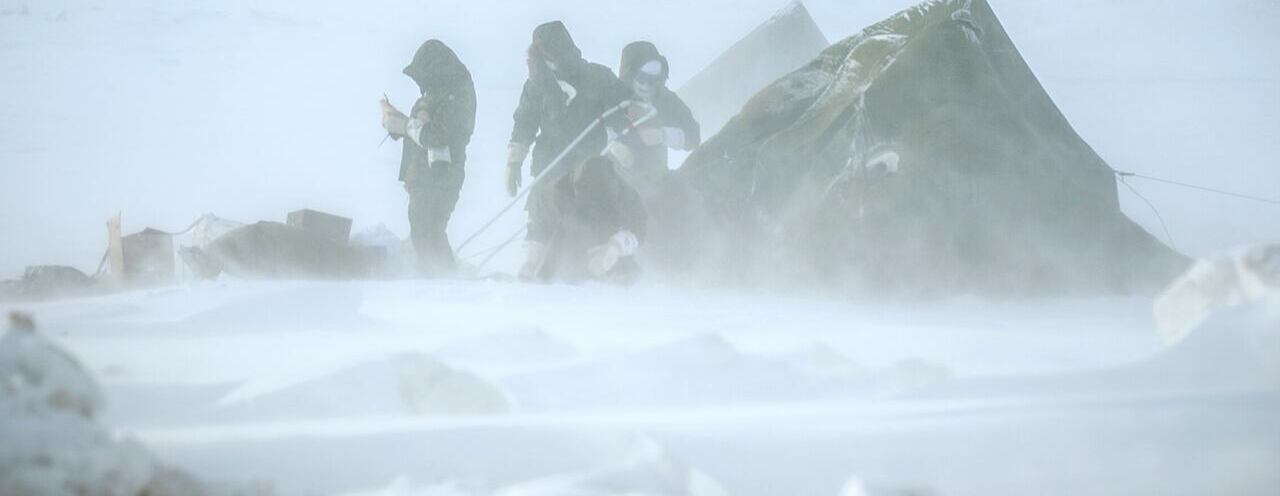
1. The Geography of Dread: Historical & Mythological Foundations of the Garrison
The garrison mentality thesis emerged as the foundational cornerstone of Canadian thematic criticism.[1:4] Frye posited that early Canadian cultural production was conditioned not by political ideology, class struggle, or classical philosophical doctrines, but by a distinct geographical trauma: European settlers encountering a colossal, indifferent, and topographically terrifying landmass.[1:5][2:1]
                  ┌────────────────────────────────────────┐
                  │       THE UNCLAIMED WILDERNESS         │
                  │   Vast, Indifferent, Silent, Menacing  │
                  └───────────────────┬────────────────────┘
                                      │
                                      ▼  (Affective Shock: Terror of Oblivion)
                  ┌────────────────────────────────────────┐
                  │         THE FORTIFIED GARRISON         │
                  │   Stockade of Wood, Church, & Militia  │
                  │   Moral Conformity / Group Solidarity  │
                  └───────────────────┬────────────────────┘
                                      │
                                      ▼  (Psychic Contraction & Institutional Hegemony)
                  ┌────────────────────────────────────────┐
                  │       THE GARRISON CONSCIOUSNESS       │
                  │   "Social but not creative"            │
                  │   Suppression of Individual Deviance   │
                  │   Defensive, Didactic, Moralizing Art  │
                  └────────────────────────────────────────┘
The Spatial Trauma of the Northern Wilderness
Unlike the European landscape—which had been humanized, cultivated, and mythologized over millennia—or the American territory, which unfolded across accessible coastal plains and temperate agricultural valleys, Canada presented a fractured, non-Euclidean geography dominated by the Canadian Shield: millions of square kilometers of exposed Precambrian granite, dense muskeg, violent waterways, and extreme winter freezes.[1:6][5]
Frye observed that early travelers did not enter Canada through a gradual frontier threshold; rather, they were swallowed whole by the St. Lawrence River, an enormous inland gulf that funneled explorers and settlers deep into a continental interior without visible borders:[1:7]
"Small and isolated communities surrounded with a physical or psychological 'frontier,' separated from one another and from their American and British cultural sources, then and for a long time made up by immigration, are compelled to feel a great respect for the law and order that holds them together, yet are also conscious of an uncreated emptiness that can easily become a menacing presence."[1:8]
In this immense emptiness, nature was perceived not as a pastoral garden or a Romantic sanctuary of divine benevolence, but as an active, menacing absence—a silent void capable of obliterating human language, sanity, and bodily existence.[1:9][2:2] The affective response was not aesthetic contemplation, but somatic terror, aligning directly with Edmund Burke's physiological sublime, where vastness, obscurity, and the threat of personal destruction provoke involuntary psychological contraction.[5:1]
The Four Pillars of the Garrison Mindset
The garrison was simultaneously a physical fortress of logs and earth and an internalized psychological apparatus. Frye identified four interdependent dynamics that defined this mentality:[1:10][2:3]
- Terror of the Unclaimed Landscape: Nature was coded as an indifferent or malignant antagonist. The settler felt swallowed by a landscape that refused to reflect human meaning, generating an existential dread of disappearing into the "bush" or succumbing to psychic delirium (windigo psychosis or cabin fever).[2:4][6]
- Hyper-Conformity and Mechanical Solidarity: Physical survival against the harsh climate and isolated geography required total, unquestioned devotion to shared institutional authorities: the church, the colonial administrator, and the military garrison.[1:11] In Durkheimian terms, the outpost operated through intense mechanical solidarity; social cohesion was maintained through the rigorous policing of boundaries, strict moral orthodoxy, and punitive suppression of deviancy (see Durkheimian Sociology).[7]
- Suppression of Individualism and Creative Eccentricity: Any deviation from group norms—whether artistic eccentricity, intellectual skepticism, or non-conformist behavior—was perceived as a crack in the palisade that threatened the physical survival of the outpost.[1:12][2:5] The individual ego was forcibly subordinated to collective preservation.
- Didactic, Defensive, and Conservative Art: Literature and visual art produced within the garrison were fundamentally defensive (see Defensive communication tactics).[1:13] Art served a conservative, didactic utility: documenting settlement struggles, instilling Christian morality, recording local topography, or preserving imperial ties to Britain or France, while avoiding radical aesthetic experimentation or philosophical exploration.[1:14][2:6]
2. The Literary Anatomy of the Garrison: CanLit Archetypes
Frye’s garrison thesis provided the interpretive lens through which generations of Canadian literary scholars analyzed nineteenth- and twentieth-century writing in English-language Canadian Literature (English CanLit).[2:7][8]
                             [ THE CANLIT GARRISON CANON ]
                                           │
         ┌─────────────────────────────────┼─────────────────────────────────┐
         ▼                                 ▼                                 ▼
[ 1. PIONEER TERROR ]             [ 2. EPIC RESISTANCE ]            [ 3. PRAIRIE CLAUSTROPHOBIA ]
• Susanna Moodie (1852)           • E.J. Pratt (1940, 1952)         • Sinclair Ross (1941)
• *Roughing It in the Bush*       • *Brébeuf and His Brethren*      • *As for Me and My House*
• Landscape as alien monster      • Human discipline vs. granite    • Town gossip as moral stockade
• Breakdown of social class       • The railway as iron garrison    • False fronts against empty sky
Susanna Moodie: Roughing It in the Bush (1852)
Susanna Moodie’s autobiographical chronicle of life in Upper Canada (modern Ontario) stands as the classic archetypal expression of the garrison mentality.[2:8][8:1] An educated, middle-class British gentlewoman, Moodie expected an idyllic, pastoral Arcadia, but instead encountered crude log shanties, ruthless swarms of blackflies, devastating cholera outbreaks, and an impenetrable, hostile forest.[8:2]
Moodie depicts the Canadian bush as a dark, unyielding monster that strips settlers of their civilized British veneer. Her text wavers between moralizing piety (reinforcing the imperial garrison of manners and faith) and moments of unvarnished horror at the physical and psychological toll of pioneer exile, establishing the foundational Canadian literary motif of alienation within nature.[2:9][8:3]
E.J. Pratt: The Heroic Collective Pitted Against the Pre-Cambrian Shield
Poet E.J. Pratt transposed the garrison mentality into epic modernist verse in works such as Brébeuf and His Brethren (1940) and Towards the Last Spike (1952).[1:15][9]
In Towards the Last Spike, Pratt personifies the Canadian Shield as a primeval, sleeping reptilian monster that awakens to crush the human engineers attempting to drive the transcontinental railway through its rocky ribs:[9:1]
"On the North Shore a reptile lay asleep / A hybrid that the ages had begun / To shape, but left unfinished... / The lizard ribs was granite and the bones / Were basalt, and the skin was gneiss and flint."[9:2]
Crucially, the heroic force in Pratt's poetry is never an isolated, rugged frontiersman; it is the disciplined human collective—laborers, technicians, financiers, and political organizers working in coordinated harmony.[1:16][9:3] The transcontinental railway functions as a linear, mobile iron garrison slicing through the untamed continent, binding isolated outposts into a single institutional structure.[1:17]
Margaret Atwood and Survival (1972)
In her landmark critical work Survival: A Thematic Guide to Canadian Literature, novelist and poet Margaret Atwood synthesized and popularized Frye’s garrison framework, arguing that every major national literature possesses a single unifying, central organizing metaphor:[6:1]
- American Literature: The Frontier (boundless expansion, conquest of space, individual triumph).
- British Literature: The Island (closed imperial center, social hierarchy, seafaring exploration).
- Canadian Literature: Survival / The Victim (the struggle to endure against an overwhelming, indifferent antagonist without achieving final victory).[6:2]
                       [ ATWOOD'S FOUR VICTIM POSITIONS ]
                                        │
    ┌───────────────────┬───────────────┴───────────────┬───────────────────┐
    ▼                   ▼                               ▼                   ▼
[ POSITION ONE ]  [ POSITION TWO ]              [ POSITION THREE ]  [ POSITION FOUR ]
Deny victimhood   Acknowledge victimhood;       Repudiate victimhood;  The Creative Non-Victim;
("Everything is   attribute it to fate,         identify systemic      transcends defensive
fine; no trauma   nature, or divine will;       causes; channel rage   paranoia into authentic
exists.")         passive resignation.          into active resistance. artistic creation.
Atwood argued that in Canadian fiction, nature is frequently personified as an unsmiling, indifferent monster that kills characters through hypothermia, drowning, or starvation—not out of malice, but out of absolute cosmic disregard.[6:3] Canadian protagonists do not triumph over nature; they merely survive its onslaught, retreating back behind physical or psychological walls.[6:4]
D.G. Jones: Butterfly on Rock (1970)
Literary critic D.G. Jones broadened the garrison thesis in Butterfly on Rock: A Study of Themes and Images in Canadian Literature, reading Canadian literary development through a biblical and theological framework.[10] Jones posited that early CanLit operated within the Old Testament narrative of exile in the wilderness, where settlers felt banished from the civilized garden into an alien desert of rock and snow.[10:1]
However, Jones identified an essential evolution in modern Canadian writing: authors such as Al Purdy, Margaret Laurence, and Leonard Cohen were beginning to intentionally dismantle the garrison walls.[10:2] Rather than treating nature as an adversary requiring moral fortification, modern writers sought a posture of vulnerability, accepting the silence and harshness of the northern landscape as the necessary ground for genuine spiritual reconciliation and authentic poetic voice.[8:4][10:3]
3. Comparative Context: The Canadian Garrison vs. The American Frontier Myth
The Canadian garrison mentality is best illuminated through a direct dialectical comparison with the American frontier mythology formulated by historian Frederick Jackson Turner in his 1893 thesis The Significance of the Frontier in American History.[1:18][11]
                  ┌────────────────────────────────────────┐
                  │    NORTH AMERICAN SPATIAL PARADIGMS    │
                  └───────────────────┬────────────────────┘
                                      │
              ┌───────────────────────┴───────────────────────┐
              ▼                                               ▼
  [ AMERICAN FRONTIER MYTH ]                       [ CANADIAN GARRISON MENTALITY ]
  • Centrifugal (outward expansion)               • Centripetal (inward retreat)
  • Nature as Romantic challenge                  • Nature as indifferent abyss
  • Rugged individualist hero                     • Coordinated institutional group
  • Antagonistic toward the state                 • Deferential to legal authority
  • "Life, Liberty, Pursuit of Happiness"         • "Peace, Order, and Good Government"
  • Manifest Destiny / Transgression              • Survival / Preservation of Boundary
Divergent Ideological Horizons
The two North American settler trajectories developed diametrically opposed relationships to space, state authority, and nature:[1:19][11:1]
| Cultural Metric | Canadian Garrison Mentality | American Frontier Myth |
|---|---|---|
| Primary Relation to Nature | Fear, defensive retreat, and somatic endurance against an indifferent, crushing northern void.[1:20][5:2] | Conquest, territorial mastery, and heroic transformation of untamed wilderness into democratic agriculture.[11:2] |
| Heroic Archetype | The coordinated collective, the institutional official, the Royal Canadian Mounted Police officer, the survivalist.[1:21][6:5] | The solitary scout, the cowboy, the renegade pioneer, the autonomous rebel challenging civilizational limits.[11:3] |
| View of the State & Authority | Deferential and protective; state institutions (the Crown, the Mounties, the Hudson's Bay Company) provide the walls of survival.[1:22][7:1] | Skeptical and adversarial; the centralized state is viewed as an infringement on personal sovereignty and natural liberty.[11:4] |
| Constitutional Axiom | "Peace, Order, and Good Government" (British North America Act, 1867).[1:23] | "Life, Liberty, and the Pursuit of Happiness" (Declaration of Independence, 1776).[11:5] |
| Artistic & Narrative Mode | Didactic, cautious, ironic, and survival-oriented; deeply attuned to physical and existential boundaries.[6:6][8:5] | Romantic, mythic, expansive, and transcendental; driven by regenerative violence and boundless horizons (see American Transcendentalism).[11:6] |
| Metaphysical Horror | The terror of being erased or swallowed by indifferent empty space (nature's silence).[1:24][5:3] | The terror of being trapped, enclosed, or civilly domesticated (loss of freedom).[11:7] |
While the American frontier moved progressively outward in a dynamic wave of manifest destiny, the Canadian historical experience consisted of scattered, isolated fortified outposts clinging to riverbanks and railway corridors across an impassable interior.[1:25][12] Consequently, the Canadian imagination became fundamentally centripetal (inward-turning, boundary-conscious, defensive), while the American imagination was centrifugal (outward-thrusting, boundary-dissolving, expansive).[1:26]
4. The Spatial Mutation: From Walls of Wood to Walls of Glass (The Condominium Mentality)
By the late 1980s, Northrop Frye observed that Canada had undergone a swift, radical sociological transformation: the rural, resource-extraction settler nation had evolved into one of the most hyper-urbanized societies on earth, with the overwhelming majority of its population concentrated in metropolitan clusters like Toronto, Montreal, and Vancouver.[1:27][3:3]
Addressing this spatial evolution, Frye noted that while the historic wooden garrison had vanished from the physical landscape, the underlying psychology of isolation had not dissolved. Instead, it had mutated into a far more alienating urban pathology: the condominium mentality.[1:28][3:4]
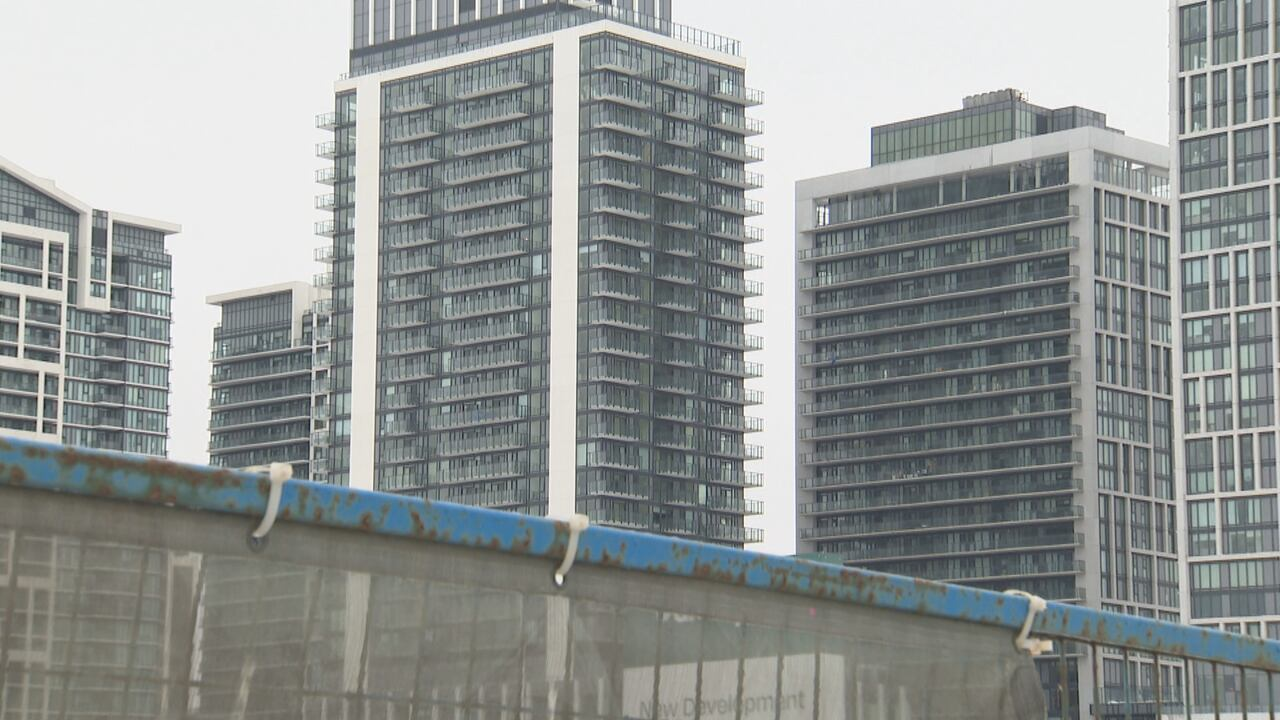
- The Historic Garrison (Walls of Wood): Social but not creative. It forced intense, visceral human interdependence, mutual reliance, and rigorous community organization out of physical necessity. While its defensive conformism stifled artistic risk, it forged authentic communal solidarity against the elements.[1:29][3:5]
- The Modern Condominium (Walls of Glass): Neither social nor creative. It packs thousands of individuals into dense, vertical concrete hives while completely atomizing them socially. Inhabitants dwell in extreme physical proximity while maintaining absolute psychological and civic detachment.[1:30][3:6][4:1]
+-----------------------------------------------------------------------------------------+
|                  THE HISTORICAL MUTATION OF CANADIAN SPATIAL DEFENSE                    |
|                                                                                         |
|   [ 18th-19th CENTURY GARRISON ]                    [ LATE-20th-21st CENTURY CONDO ]    |
|   • Material: Logs, earth, timber stockades         • Material: Reinforced concrete & glass |
|   • Perimeter: Keeps out hostile wilderness         • Perimeter: Walls off urban street/chaos|
|   • Social State: Interdependent survival           • Social State: Extreme atomization     |
|   • Psychology: Mutual reliance & moral fear        • Psychology: Anonymity & blase gaze    |
|   • Outcome: Social but not creative                • Outcome: Neither social nor creative  |
+-----------------------------------------------------------------------------------------+
1. The Architecture of Introverted Enclosure and Public Retreat
The modern high-rise condominium tower functions as a vertical, privatized gated community.[3:7][4:2] Where the eighteenth-century log stockade was engineered to hold back the wolves, freezing blizzards, and vast silence of the wilderness, the glass condominium tower is engineered to wall off the chaotic, unpredictable public sphere of the late-capitalist city: traffic, homelessness, social inequality, noise, and civic friction.[3:8][13]
Equipped with electronic keyfobs, private concierges, surveillance cameras, underground parking garages, and direct subterranean connections to shopping corridors (such as Toronto's PATH system), the condominium resident can live, work, exercise, and consume without ever stepping onto the municipal street or confronting the civic reality of the city.[3:9][13:1] The street is rendered an alien, uninhabitable wilderness, while the private tower becomes an insulated sanctuary of domestic consumption.[3:10]
2. Proximity Without Community: The Pathology of Vertical Density
The condominium mentality embodies a profound sociological and psychological paradox: unprecedented physical proximity paired with radical social isolation.[3:11][4:3]
- Physical Nearness: Hundreds of human beings sleep, cook, and inhabit spaces separated only by eight inches of poured concrete or drywall.[4:4]
- The Elevator Code and the Blasé Gaze: Inhabitants consciously develop rigid behavioral defense mechanisms to safeguard their privacy within tight quarters. In elevators, corridors, and entryways, residents systematically avoid eye contact, adopt neutral expressions, and maintain silence—a modern manifestation of Georg Simmel's "blasé attitude" formulated in The Metropolis and Mental Life (1903) (see Georg Simmel's concept of The Stranger).[4:5][14]
- Commodified Pseudo-Public Amenities: Shared building spaces—such as rooftop lounges, private screening rooms, dining suites, and fitness centers—offer the visual appearance of public civic spaces while functioning merely as privatized real estate amenities.[3:12] They do not foster organic political or neighborhood community; instead, they simulate community within a controlled, commercially sanitized environment restricted strictly to property owners.[3:13][13:2]
3. Financialization of Domestic Space and Transience
In the condominium regime, the architectural unit undergoes a radical metaphysical shift: it ceases to be an authentic home (Heim) rooted in neighborhood history, community memory, or geographic place; instead, it is experienced primarily as a financial asset, speculative deposit box, or transient investment vehicle.[3:14][4:6]
- The Real Estate Commodity: As urban real estate is integrated into global capital circuits, condominium units are frequently purchased off-plan by foreign or corporate investors, rented to transient short-term tenants, or held vacant as stores of value.[4:7]
- The Erosion of Civic Care: This speculative liquidity fosters deep civic disengagement. When occupants view their living space as a temporary stepping stone for capital appreciation, they invest zero emotional or political energy in local schools, municipal politics, or neighborhood preservation.[3:15][4:8] The condominium mentality breeds an urban population of detached nomads who consume housing services rather than participating in the life of the city.[4:9]
4. Psychological Repercussions on Art and Consciousness
Frye warned that the condominium mentality exerts an even more debilitating effect on artistic and intellectual production than the historic garrison.[1:31][3:16]
While the early settler writer struggled against an unmastered, awe-inspiring physical nature that elicited profound (if terrified) emotional responses, the condominium dweller is enclosed within an environment of sterile, climate-controlled comfort.[3:17][4:10] The walls of glass provide panoramic visual access to the horizon, but this view is entirely passive, voyeuristic, and disembodied.[3:18] Modern urban alienation shifts from the struggle to survive the physical elements to the struggle to survive claustrophobia, digital atomization, and existential invisibility.[4:11][15]
5. Spatial Theory & Architectural Affinities: Modernist Transparency & The Urban Uncanny
Northrop Frye’s diagnosis of the transition from wooden walls to glass walls directly intersects with contemporary architectural history and spatial theory, providing a critical counterpart to European and American analyses of modernism.
       [ HIGH MODERNIST UTOPIA (BAUHAUS) ]
       • Glass curtain wall = Democracy, light, hygiene, civic transparency
                                │
                                ▼  (Corporate Commodification & Speculative Real Estate)
       [ VALUE-ENGINEERED VERTICAL ENCLOSURE ]
       • Thin glass skins, acoustic leakage, micro-units (MURBs)
                                │
                                ▼  (Psychological Inversion: The Architectural Uncanny)
       [ THE PANOPTIC CONDOS OF ESTRANGEMENT ]
       • Total exposure without connection; voyeurism without community
       • Anthony Vidler: Dwelling converted into spatial dread
The Bauhaus Promise vs. The Condominium Reality
The glass curtain wall was originally championed by avant-garde architects of The Bauhaus School (such as Walter Gropius and Mies van der Rohe) as a utopian instrument of democratic liberation, physical hygiene, and spiritual transparency.[16] The eradication of dark masonry walls was intended to dissolve the bourgeois domestic prison, reuniting human beings with natural sunlight, open air, and the social collective.[16:1]
However, as Frye observed and architectural theorist Anthony Vidler demonstrated in The Architectural Uncanny (1992), this utopian dream underwent a catastrophic dialectical inversion when co-opted by speculative late capitalism:[4:12][16:2]
- The Transparent Trap: By eliminating the protective shadows, nooks, and solid envelopes of traditional masonry, modern glass towers subject the inhabitant to a continuous, panoptic vulnerability.[4:13] The resident lives on display behind a transparent skin, exposed to the gaze of adjacent towers, while feeling completely isolated from the bodies visible across the void.[4:14]
- Material Pathology and the MURB: As analyzed in Canada's Housing Crisis - Designing Better Buildings, commercial developers stripped modernist architecture of its social democratic ideals, deploying value-engineered curtain walls and micro-unit footprints in Multi-Unit Residential Buildings (MURBs).[17] Defective acoustic compartmentalization (hearing a neighbor’s mechanical appliances, footfalls, or muffled speech through thin drywall) creates an invasive, unhomely intimacy with total strangers, forcing occupants to retreat further into psychological isolation.[17:1]
- The Uncanny Home (Das Unheimliche): Vidler demonstrated that modern functionalist architecture, by stripping away historic domestic ornament, converted the home into an uncanny apparatus of estrangement.[4:15] Frye's condominium tower is the architectural uncanny materialized as a vertical city: a site engineered for domestic shelter that produces acute existential homelessness.[1:32][4:16]
Harold Innis and Marshall McLuhan: Media Ecology of the Vertical Fort
Frye’s spatial insights operate in deep synergy with his University of Toronto colleagues in media ecology: Harold Innis and Marshall McLuhan.[12:1][18]
- Innis and Space-Binding Architecture: In Innis (1950) - Empire and Communications and Innis (1951) - The Bias of Communication, Innis demonstrated that imperial systems rely on space-binding media (such as print, paper networks, and transcontinental railroads) to administer vast geographical peripheries from centralized metropolises.[12:2] The Canadian railway that E.J. Pratt praised was the ultimate space-binding machine, welding disparate garrisons into a confederation.[1:33][12:3] The modern condominium represents the terminal phase of space-binding: an architecture that compresses physical space to the maximum economic yield, while annihilating time-binding traditions—local folkways, historical memory, and enduring communal ties.[12:4]
- McLuhan and the Electronic Surround: McLuhan famously declared in McLuhan's The Medium is the Message that electronic media abolish geographic distance, returning humanity to an acoustic "global village."[18:1] Yet Frye understood that this electronic village does not produce harmonious community; rather, it produces an intensely introverted, nervous consciousness. Inside the condominium, residents interact with the globe via computer screens and fiber-optic cables, while maintaining complete numbness toward the human being living behind the adjacent plaster wall.[3:19][18:2]
6. Decolonial Critiques, Regionalist Rebuttals & Post-Garrison Revaluations
While the garrison mentality dominated Canadian literary criticism throughout the 1960s and 1970s, it sparked intense critical challenges beginning in the late 1970s from post-structuralist, feminist, regionalist, and Indigenous scholars.[8:6][19]
                  ┌────────────────────────────────────────┐
                  │    CRITICAL CONTESTATIONS OF FRYE      │
                  └───────────────────┬────────────────────┘
                                      │
         ┌────────────────────────────┼────────────────────────────┐
         ▼                            ▼                            ▼
[ 1. INDIGENOUS ERASURE ]    [ 2. FORMALIST CRITIQUE ]    [ 3. REGIONAL SPECIFICITY ]
• Settler-colonial solipsism • Frank Davey (1976)         • Prairies, Maritimes, North
• Land framed as empty wild  • "Thematic reductionism"    • Rejection of Toronto-
• Erases millennia of        • Content over aesthetic      centric monolithic
  ecological stewardship       and poetic form             national mythology
1. Indigenous Erasure and Colonial Solipsism
The most significant theoretical critique of the garrison thesis targets its profound settler-colonial solipsism.[19:1] Indigenous writers and scholars (such as Thomas King, Lee Maracle, and Armand Garnet Ruffo) point out that Frye’s foundational premise—that early Canada was an unpeopled, terrifying, and hostile "wilderness" requiring defensive fortifications—universalizes the psychological pathology of the European invader while completely erasing Indigenous peoples.[19:2][20]
- The Land as Relative, Not Adversary: For First Nations, Inuit, and Métis nations, the northern landscape was never an indifferent void, an alien chaos, or a menacing beast. It was an ancestral, relational territory endowed with spirit, language, oral history, and reciprocal ecological obligations.[20:1]
- The Pathological Fort: Seen through a decolonial lens, the garrison was not a heroic bastion of civilization holding back barbarism; it was an armed colonial beachhead deployed to dispossess Indigenous nations, enforce resource extraction, and impose European legal hegemony.[19:3][20:2] Settler dread of the wilderness was fundamentally an expression of colonial guilt and displacement—the psychological terror of living upon stolen land without authentic spiritual or ancestral belonging.[20:3]
2. Frank Davey and Surviving the Paraphrase (1976)
In his influential 1976 manifesto Surviving the Paraphrase, literary theorist Frank Davey mounted a blistering attack on Frye and Atwood's thematic criticism.[19:4] Davey argued that thematic criticism had crippled Canadian literary studies by:
- Reducing Literature to Sociological Data: Thematic critics treated literary texts not as complex, autonomous aesthetic artifacts possessing unique formal textures, syntax, and rhythms, but as sociological documents to be stripped of their plots to prove a pre-existing national neurosis (the garrison or survival).[19:5]
- Enforcing a Monolithic National Myth: By insisting that all legitimate Canadian writing must reflect the struggle against landscape and the fear of the wild, thematic criticism marginalized urban writing, experimental avant-garde poetry, French-Canadian literature, and the diverse perspectives of immigrant communities.[8:7][19:6]
3. Eli Mandel and Environmental Construction
Scholar Eli Mandel challenged Frye’s geographical determinism, arguing that writers do not passively absorb their psychological postures from physical rocks, rivers, and trees.[21] Landscape in literature is never raw geography; it is always an invented textual construct, mediated through inherited language, cultural mythologies, and ideological frameworks.[21:1] The Canadian wilderness did not create the garrison; the European settler’s cultural baggage constructed the garrison and projected its own anxieties onto the northern horizon.[8:8][21:2]
7. Synthesis Matrix: The Historical Evolution of Canadian Spatial Mentality
| Dimension | 1. Settler Garrison (18th–19th Century) | 2. Industrial / National Frontier (Early–Mid 20th Century) | 3. High-Rise Condominium (Late 20th–21st Century) | 4. Digital / Algorithmic Enclosure (Contemporary) |
|---|---|---|---|---|
| Architectural Form | Wooden log stockade, stone church, frontier fort, agricultural clearing.[1:34][8:9] | Transcontinental railway, industrial factory, mining camp, prairie grain elevator.[9:4][12:5] | High-rise concrete and glass tower, multi-unit residential building (MURB), underground concourse.[3:20][4:17] | Smart condo, home-office work pod, biometric surveillance corridor, digital delivery platform.[4:18][18:3] |
| External Menace | Immense, silent northern wilderness; freezing climate; physical annihilation.[1:35][5:4] | Pre-Cambrian granite, geographic distance, continental disintegration, economic collapse.[9:5] | The chaotic municipal street, crime, social inequality, pollution, urban decay.[3:21][13:3] | Algorithmic tracking, informational overload, sensory fatigue, public health crises.[18:4] |
| Social Mechanism | Mechanical solidarity; absolute moral conformity; suppression of deviance.[1:36][7:2] | Coordinated industrial labor; corporate organization; national infrastructure projects.[9:6] | Radical atomization; deliberate neighborly anonymity; Simmel's "blasé attitude."[3:22][14:1] | Platform capitalism; continuous network modulation; digital consumption pods (see Postscript on the Societies of Control).[4:19] |
| Frye's Formula | "Social but not creative." (Survival through collective cohesion).[1:37][3:23] | Institutional and productive. (Mastery through coordinated engineering).[9:7] | "Neither social nor creative." (Proximity without community; passive consumption).[1:38][3:24] | Hyper-connected yet profoundly disembodied. (Algorithmic isolation).[18:5] |
| Artistic Manifestation | Didactic journals, pioneer memoirs, hymns, moralizing colonial verse (Moodie).[8:10] | Heroic documentary verse, corporate national epics (E.J. Pratt), regional realism.[9:8] | Claustrophobic urban fiction, poetry of metropolitan estrangement, minimalist prose.[4:20][15:1] | Postmodern media critique, autofiction, fragmented digital narratives (see Don DeLillo Major Themes Analysis).[15:2] |
🎴 Interactive Web Practice (Comprehension Check)
Question 1 (Historical Foundations & The Garrison Mentality): What defines Northrop Frye's concept of the "garrison mentality," and how does early Canadian settlers' psychological response to the wilderness diverge from the American frontier myth?
Answer: Northrop Frye formulated the "garrison mentality" in his 1965 "Conclusion" to the Literary History of Canada to describe the defensive, inward-turning psychological posture of early European settlers confronted by an overwhelming, unmapped, and physically forbidding northern wilderness. Lacking the cultural familiarity of Europe or the accessible, agricultural terrain of early America, Canadian settlers perceived nature not as a romantic garden to be enjoyed or an open frontier to be conquered, but as an active, indifferent abyss capable of obliterating human identity, language, and physical life.
To survive against this existential terror, settler communities organized themselves into tightly enclosed physical and psychological outposts (the garrison). This condition produced four interlocking cultural traits:
- Terror of the Unclaimed Void: The landscape was viewed as an alien force threatening human erasure.
- Compulsory Moral Conformity: Group survival demanded absolute submission to institutional authority (church, colonial state, military hierarchy) and intense mechanical solidarity.
- Suppression of Individualism: Artistic eccentricity or individual non-conformity was aggressively suppressed because social deviance was viewed as a fatal breach in the community's defensive perimeter.
- Didactic, Survival-Oriented Art: Cultural expression prioritized moral preservation, practical instruction, and defensive utility over aesthetic exploration.
Question 2 (The Condominium Mentality & Vertical Atomization): How does Frye contrast the modern "condominium mentality" with the historic "garrison mentality," and what core spatial paradox characterizes high-rise urban dwelling?
Answer: In his late cultural writings during the late 1980s, Frye diagnosed the mutation of the Canadian landscape from rural settler outposts into hyper-dense metropolitan cores. He identified a crucial dialectical shift in the psychology of isolation:
- The Historic Garrison: "Social but not creative." Although its moral rigidity and conformity suppressed individual artistic experimentation, it forced intense mutual dependence, human solidarity, and visceral communal organization out of raw physical necessity against a hostile climate.
- The Modern Condominium: "Neither social nor creative." The modern high-rise condominium tower stacks thousands of human beings into vertical concrete hives while completely atomizing them socially, fostering an introverted lifestyle centered around private domestic consumption and digital detachment.
- The Blasé Gaze: In elevators, lobbies, and corridors, residents avert eye contact and maintain silence, adopting Georg Simmel's "blasé attitude" as a defensive shield against unwanted interpersonal intimacy.
- The Enclosure of the Street: Where the wooden fort was designed to keep out the wild elements, the condominium's keyfobs, private concierges, underground parking, and indoor shopping tunnels are engineered to wall off the civic street—isolating residents from the messy, heterogeneous public realm.
- Financialization of Dwelling: The living unit is transformed from an enduring, rooted home (Heim) into a transient speculative investment asset. Inhabitants view their housing as a temporary liquidity vehicle rather than a foundation for civic participation or community cultivation, breeding civic disengagement and existential loneliness.
Question 3 (Decolonial Critiques & Thematic Limitations): What key theoretical criticisms have post-structuralist, regionalist, and Indigenous scholars leveled against Frye's garrison thesis?
Answer: Beginning in the 1970s, Frye's garrison thesis faced major scholarly challenges across three primary intellectual fronts:
- Settler-Colonial Solipsism and Indigenous Erasure: Indigenous writers and decolonial theorists (such as Thomas King and Lee Maracle) pointed out that Frye's thesis treats Canada as an unpeopled, hostile "wilderness" or empty terrifying void, universalizing European settler dread while completely erasing Indigenous nations. For Indigenous peoples, the northern landscape was never an alien adversary, but an ancestral, sacred home stewarded through reciprocal ecological kinship. The garrison was not a defensive sanctuary of civilization, but an armed colonial beachhead that dispossessed Indigenous nations and projected settler guilt and spatial displacement onto nature.
- Thematic Reductionism (Frank Davey): In Surviving the Paraphrase (1976), Frank Davey criticized thematic criticism for reducing literature to crude sociological content. Davey argued that Frye and Atwood evaluated literary texts merely to see if they confirmed a pre-determined national victim neurosis, ignoring poetic language, aesthetic form, postmodern irony, and experimental craft. Furthermore, it imposed a monolithic, Toronto-centric Anglo-Canadian myth that marginalized French-Canadian writing, immigrant voices, and urban complexity.
- Environmental Determinism vs. Discursive Construction (Eli Mandel): Critics challenged Frye’s implication that raw physical geography mechanically dictates human psychology. As Eli Mandel argued, landscape in literature is never raw geology; it is a rhetorical and cultural construct. Writers do not react to nature as an unmediated physical fact; they "invent" and construct landscapes through inherited ideological discourses and linguistic codes.
Resonant Notes
The following notes in the vault share direct thematic, sociological, and literary connections with Northrop Frye's geography of isolation:
🔴 Canadian Literature, Wilderness & The Frontier Myth
- Northrop Frye & Northrop Frye's - Anatomy of Criticism — Frye's foundational corpus and archetypal critical theory; The Bush Garden translates his structural taxonomy of literature into a geographical and psychological diagnosis of Canadian cultural consciousness, tracing how the verbal universe constructs boundaries against external chaos.
- English-language Canadian Literature (English CanLit) — The central canon overview detailing how Frye's garrison thesis and Margaret Atwood's Survival shaped Canadian thematic criticism, pioneer autobiographies, Prairie realism, and contemporary postcolonial and Indigenous revisions.
- Group of Seven (also known as the Algonquin School) — The visual arts parallel to Frye's garrison thesis; Canadian landscape painters confronted the rugged Precambrian granite of the Canadian Shield, translating settler dread and the topographical sublime into a mythic national iconography.
- Innis (1951) - The Bias of Communication & Innis (1950) - Empire and Communications — Harold Innis and Frye constitute the twin intellectual pillars of the Toronto School; where Innis examined how space-binding and time-binding communication technologies construct imperial administrative margins across vast geography, Frye examined how imaginative verbal structures fortify communities against spatial emptiness.
- Edmund Burke-The Physiological Sublime & The Sublime — Burke's somatic sublime—grounded in terror, vastness, obscurity, and the primal instinct for bodily self-preservation—theoretically underpins settler dread of the Canadian wilderness, explaining how overwhelming topography produces psychological contraction, defensive law, and fortified shelter.
- American Transcendentalism — The primary North American ideological foil to the garrison mentality; while Ralph Waldo Emerson and Henry David Thoreau celebrated untamed nature as an ecstatic sanctuary of divine individual communion and sovereign self-reliance, the Canadian imagination historically framed northern geography as an indifferent, crushing antagonist requiring collective institutional discipline.
🟡 Architecture, Urban Estrangement & The Modern Metropolis
- Anthony Vidler-The Architectural Uncanny — Vidler maps Freud's das Unheimliche onto modern architecture, demonstrating how environments built for domestic refuge become sites of spatial dread and bodily estrangement; Frye's condominium tower is the architectural uncanny materialized as a vertical glass fortress producing dense proximity without community.
- The Bauhaus School — Pioneers of the International Style, functionalist geometry, and transparent glass curtain walls; Frye diagnoses the modern condominium's glass perimeter as the late-capitalist commodification of Bauhaus utopian transparency—substituting genuine civic solidarity with sterile, privatized vertical enclosures.
- Canada's Housing Crisis - Designing Better Buildings — An evidence-based analysis of multi-unit residential buildings (MURBs); examines how speculative value-engineering, poor acoustic compartmentalization, and spatial defects physically reinforce the social alienation, neighborly hostility, and psychological withdrawal of Frye's condominium mentality.
- Ayn Rand's The Fountainhead - An Explanation — Howard Roark's uncompromising architectural functionalism champions geometric purity, structural integrity, and anti-ornamental modernism, providing the ideological counterpoint to Frye's critique of the sterile, dehumanizing effects of modern functionalist high-rises.
- Walter Benjamin (1892–1940) & The flâneur — Benjamin's analysis of nineteenth-century Parisian arcades and the urban wanderer stands as the historic antithesis to the condominium mentality; where the flâneur immersed himself in the fleeting democratic spectacle of the public street, the condominium dweller retreats into keyfob-secured private enclosures.
- Georg Simmel's concept of The Stranger & Georg Simmel (1858-1918) — Simmel's spatial sociology of the stranger—defined by the synthesis of physical nearness and social remoteness—together with his diagnosis of the "blasé attitude" in metropolitan mental life, provides the core sociological explanation for condominium inhabitants living inches apart while sustaining deliberate anonymity.
- Why Canada Will Never Have a WeChat — Explores Canadian cultural preferences for institutional fragmentation, minimalism, and resistance to all-encompassing monolithic systems—reflecting the deep historical legacy of regionalism, boundary maintenance, and the defensive "garrison mentality."
🟢 Sociology of Conformity, Defense & Alienation
- William H. Whyte's The Organization Man & William H. Whyte's Social Ethics — Whyte diagnoses mid-century corporate conformity (the "Social Ethic") as an ideological surrender of individual autonomy to group belonging, echoing Frye's garrison where collective survival demands rigid moral consensus and the suppression of creative eccentricity.
- Defensive communication tactics — Frye's garrison mentality operates as a macro-cultural defensive apparatus—erecting psychological, moral, linguistic, and physical barriers to insulate vulnerable communities from perceived external threat and chaotic change.
- Durkheimian Sociology — Émile Durkheim's concepts of mechanical solidarity and collective consciousness illuminate the early garrison's moral conservatism, where external survival pressures enforce punitive conformity and subordinate individual deviation to group preservation.
- The Nightmare — Henry Fuseli's Gothic depiction of sleep paralysis, incubus oppression, and somatic dread visually manifests the horror of the unprotected subject; the fragile threshold of the bed mirrors the vulnerable perimeter of the garrison holding back the threatening darkness of the wilderness and the unconscious.
- Don DeLillo Major Themes Analysis — DeLillo explores modern crowds, consumer insularity, and urban paranoia, paralleling Frye's diagnosis of vertical high-rises where dense physical proximity coexists with profound psychological atomization and systemic estrangement.
- Postscript on the Societies of Control — Gilles Deleuze’s transition from Foucault's disciplinary enclosures to continuous digital modulation and corporate capture illuminates how the modern condominium operates as a decentralized, electronic control pod regulating movement and access through digital credentials.
- Sehnsucht — The profound, unfulfillable yearning at the core of Romanticism directly echoes the Canadian settler's spatial melancholia—an unresolved longing for an ancestral European home combined with existential dislocation in an unanswering northern topography.
References
Northrop Frye / The Bush Garden: Essays on the Canadian Imagination / House of Anansi Press, 1971. ↩︎ ↩︎ ↩︎ ↩︎ ↩︎ ↩︎ ↩︎ ↩︎ ↩︎ ↩︎ ↩︎ ↩︎ ↩︎ ↩︎ ↩︎ ↩︎ ↩︎ ↩︎ ↩︎ ↩︎ ↩︎ ↩︎ ↩︎ ↩︎ ↩︎ ↩︎ ↩︎ ↩︎ ↩︎ ↩︎ ↩︎ ↩︎ ↩︎ ↩︎ ↩︎ ↩︎ ↩︎ ↩︎ ↩︎
Carl F. Klinck (Ed.) / Literary History of Canada: Canadian Literature in English / University of Toronto Press, 1965. ↩︎ ↩︎ ↩︎ ↩︎ ↩︎ ↩︎ ↩︎ ↩︎ ↩︎ ↩︎
Ouno Design / Of Culture and Condos - Northrop Frye on condo mentality/garrison mentality / Ouno Design ↩︎ ↩︎ ↩︎ ↩︎ ↩︎ ↩︎ ↩︎ ↩︎ ↩︎ ↩︎ ↩︎ ↩︎ ↩︎ ↩︎ ↩︎ ↩︎ ↩︎ ↩︎ ↩︎ ↩︎ ↩︎ ↩︎ ↩︎ ↩︎ ↩︎
Anthony Vidler / The Architectural Uncanny: Essays in the Modern Unhomely / MIT Press, 1992. ↩︎ ↩︎ ↩︎ ↩︎ ↩︎ ↩︎ ↩︎ ↩︎ ↩︎ ↩︎ ↩︎ ↩︎ ↩︎ ↩︎ ↩︎ ↩︎ ↩︎ ↩︎ ↩︎ ↩︎ ↩︎
Edmund Burke / A Philosophical Enquiry into the Origin of Our Ideas of the Sublime and Beautiful / Oxford World's Classics, 1998. ↩︎ ↩︎ ↩︎ ↩︎ ↩︎
Margaret Atwood / Survival: A Thematic Guide to Canadian Literature / House of Anansi Press, 1972. ↩︎ ↩︎ ↩︎ ↩︎ ↩︎ ↩︎ ↩︎
Émile Durkheim / The Division of Labour in Society / Free Press, 1984. ↩︎ ↩︎ ↩︎
W. H. New / A History of Canadian Literature / McGill-Queen's University Press, 2003. ↩︎ ↩︎ ↩︎ ↩︎ ↩︎ ↩︎ ↩︎ ↩︎ ↩︎ ↩︎ ↩︎
E.J. Pratt / Towards the Last Spike / Macmillan of Canada, 1952. ↩︎ ↩︎ ↩︎ ↩︎ ↩︎ ↩︎ ↩︎ ↩︎ ↩︎
D.G. Jones / Butterfly on Rock: A Study of Themes and Images in Canadian Literature / University of Toronto Press, 1970. ↩︎ ↩︎ ↩︎ ↩︎
Frederick Jackson Turner / The Significance of the Frontier in American History / American Historical Association, 1893. ↩︎ ↩︎ ↩︎ ↩︎ ↩︎ ↩︎ ↩︎ ↩︎
Harold A. Innis / The Bias of Communication / University of Toronto Press, 1951. ↩︎ ↩︎ ↩︎ ↩︎ ↩︎ ↩︎
Roger Keil and Douglas Young / In-Between Infrastructure: Urban Connectivity in an Age of Vulnerability / Praxis (e-flux), 2011. ↩︎ ↩︎ ↩︎ ↩︎
Georg Simmel / The Metropolis and Mental Life (1903) / In The Sociology of Georg Simmel, translated by Kurt H. Wolff / Free Press, 1950. ↩︎ ↩︎
Dennis Lee / Civil Elegies and Other Poems / House of Anansi Press, 1972. ↩︎ ↩︎ ↩︎
Walter Gropius / The New Architecture and the Bauhaus / MIT Press, 1965. ↩︎ ↩︎ ↩︎
Ted Kesik / State of the Art: High-Performance Multi-Unit Residential Buildings / University of Toronto Daniels Faculty of Architecture, 2018. ↩︎ ↩︎
Marshall McLuhan / Understanding Media: The Extensions of Man / McGraw-Hill, 1964. ↩︎ ↩︎ ↩︎ ↩︎ ↩︎ ↩︎
Frank Davey / Surviving the Paraphrase: Eleven Essays on Canadian Literature / Turnstone Press, 1983. ↩︎ ↩︎ ↩︎ ↩︎ ↩︎ ↩︎ ↩︎
Thomas King / The Inconvenient Indian: A Curious Account of Native People in North America / Doubleday Canada, 2012. ↩︎ ↩︎ ↩︎ ↩︎
Eli Mandel / Contexts of Canadian Criticism / University of Chicago Press, 1971. ↩︎ ↩︎ ↩︎