Uncreative Writing: Managing Language in the Digital Age
Uncreative Writing: Managing Language in the Digital Age is a 2011 work of literary theory and media criticism by the American conceptual poet, archivist, and professor Kenneth Goldsmith. Published by Columbia University Press, the book serves as the primary manifesto for 21st-century conceptual writing within The Avant-Garde, arguing that the proliferation of digital text requires a radical shift from traditional ideals of original authorship toward practices of appropriation, transcription, databasing, and information management.
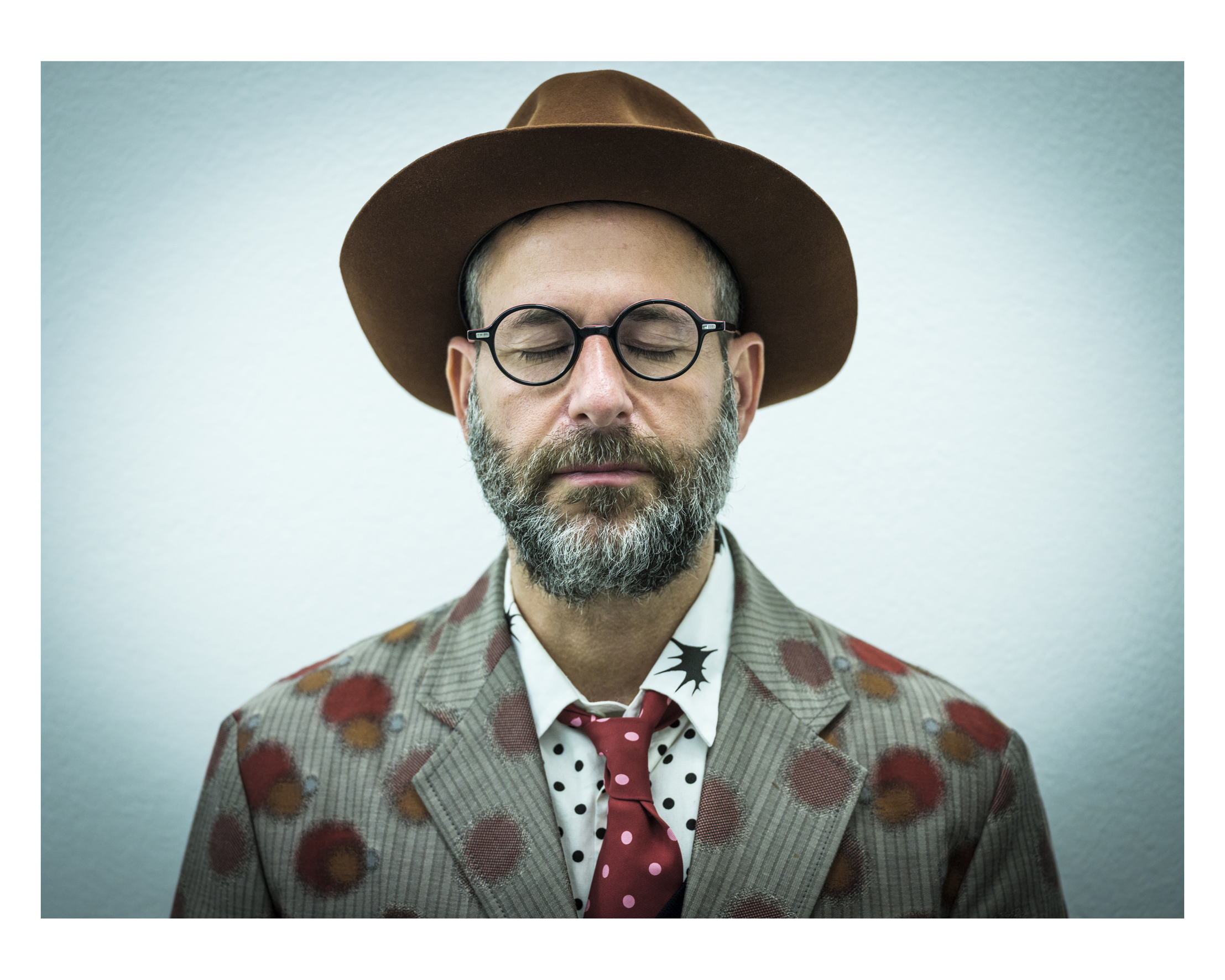
In Uncreative Writing, Kenneth Goldsmith argues that literature in the 21st century is experiencing its equivalent of the crisis painting faced after the invention of photography (a transformation famously analyzed by Walter Benjamin (1892–1940) in The Work of Art in the Age of Mechanical Reproduction). Confronted with an unprecedented volume of digital text, writers no longer need to invent new sentences; instead, they must become curators, programmers, and managers of existing language. By framing plagiarism, copying, and algorithmic sorting as valid artistic procedures, Goldsmith bridges modernist avant-garde traditions with contemporary internet culture.
Core Thesis: The Digital Paradigm Shift
Goldsmith posits that while visual art, music, and cinema spent the 20th century integrating sampling, collage, and readymades into their foundational vocabularies, mainstream literature remained stubbornly wedded to Romantic notions of individual genius and authentic self-expression. The rise of the internet and networked computing, however, has permanently altered our relationship with words, accelerating the shifts in sensory and cognitive ratios diagnosed in Marshall McLuhan's media theory.
The Photography Analogy
Throughout the book, Goldsmith compares the arrival of the World Wide Web to the 19th-century invention of photography. Just as the camera freed—and forced—painters to abandon strict mimetic realism in favor of impressionism, cubism, and conceptualism (the radical turn away from sentimental reflection examined in The Dehumanization of Art), the digital environment compels writers to reconsider the necessity of crafting "original" prose or lyric poetry.
Language as Material and Code
In the digital environment, text is no longer merely a transparent vehicle for narrative or emotional meaning; it is binary code and physical material, embodying the fundamental nature of information in a digital ecology. Because words on a computer are governed by the exact same underlying architecture as MP3 audio files or JPEG images, language can be subjected to the same manipulative techniques:
-
Patchwriting and Sampling: Cutting, pasting, and splicing disparate blocks of found text, echoing the cut-and-paste collage techniques of The Bauhaus School and early Dadaists.
-
Databasing and Sorting: Treating vast repositories of language as raw datasets to be alphabetized, parsed, or filtered.
-
Format Shifting: Moving language across mediums, such as converting text files into image or audio files to observe the resulting glitches and translations.
-
Quantitative Volume: Prioritizing the sheer bulk and physical movement of information over the traditional refinement of individual lines, mirroring the information overload and cultural entropy of the late 20th and 21st centuries.
"How I make my way through this thicket of information—how I manage it, how I parse it, how I organize and distribute it—is what distinguishes my writing from yours."
Key Concepts and Methodologies
Context is the New Content
A foundational pillar of Goldsmith's argument is that the act of reframing existing text is an expressive gesture equivalent to authoring new words. Drawing heavily on Marjorie Perloff's concept of unoriginal genius theorized in Unoriginal Genius-Poetry by Other Means in the New Century, Goldsmith asserts that contemporary writers operate more like computer programmers than solitary, tortured visionaries. Meaning and emotion are not eliminated in uncreative writing; rather, they emerge obliquely through the writer's structural choices, selection criteria, and architectural framing—an insight that directly resonates with Ludwig Wittgenstein's formulation of meaning-as-use and Jacques Derrida's deconstruction of authorial presence and the myth of an unmediated "outside-text" (il n'y a pas de hors-texte).
The Readership of the "Unreadable"
Conceptual writing frequently produces massive, exhaustive volumes of text that resist traditional cover-to-cover reading. Goldsmith distinguishes between reading a text and thinking about a text:
-
Thinkership over Readership: Borrowed from Conceptual Art (such as Sol LeWitt's wall drawings or Lawrence Weiner's statements), the beauty of an uncreative work lies in its governing constraint or concept. Once a reader grasps the rule behind a 900-page transcription, they do not necessarily need to read every page to appreciate the literary intervention—turning reading into an act of conceptual contemplation that actively resists passive consumption and commercial Kitsch.
-
The Analog Archival Impulse: Ironically, while these practices are born from digital abundance, they frequently culminate in printed physical books—turning ephemeral digital flows into monumental, tactile artifacts that interrogate the durability and materiality of media explored in Harold Innis's bias of communication.
Historical Lineage and Avant-Garde Precursors
To defend uncreative writing against charges of mere gimmickry, Goldsmith establishes a deep genealogy connecting 21st-century digital practices to 20th-century modernist and postmodernist experiments in The Avant-Garde.
Visual Art and Music
-
Marcel Duchamp: The invention of the "readymade" (Fountain, 1917), which demonstrated that an artist's choice and institutional framing can transform an ordinary manufactured object into art, initiating the institutional critique central to The Avant-Garde.
-
Andy Warhol: The embrace of mechanical reproduction, repetition, and factory-style production, alongside his unedited tape recordings published as a, A Novel (1968), dissolving high modernist seriousness into Pop art and mass cultural reproduction analyzed in The Work of Art in the Age of Mechanical Reproduction.
-
John Cage and Fluxus: The use of chance operations, indeterminacy, and score-based instructions to remove the artist's personal ego from the composition process.
-
Brion Gysin and William S. Burroughs: The "cut-up" technique, which physically sliced and rearranged newspapers and manuscripts to disrupt linear narrative control, serving as a vital literary weapon for mid-century counter-cultural subversion.
Literary Forebears
-
Walter Benjamin: His monumental, unfinished Arcades Project (Passagenwerk), a sprawling montage consisting almost entirely of collected quotations and historical fragments about 19th-century Paris—a method directly intertwined with Benjamin's philosophy of history and the flânerie described in The flâneur and Baudelaire's modernism.
-
Gertrude Stein and James Joyce: Early 20th-century modernists whose dense, exhaustive works (The Making of Americans and Joyce's Finnegans Wake) foregrounded the materiality, rhythm, and opacity of language itself, breaking from representational conventions as detailed in The Avant-Garde.
-
Oulipo and Georges Perec: The French workshop for potential literature (Ouvroir de littérature potentielle), which utilized strict mathematical and linguistic constraints (such as Perec's La Disparition, a novel written entirely without the letter "e") to generate text through rule-bound mechanics rather than subjective inspiration.
Case Studies Examined in the Book
Goldsmith grounds his theoretical claims by analyzing both his own conceptual projects and those of his contemporaries.
Goldsmith's Own Works
-
Day (2003): A complete, word-for-word retyping of a single issue of The New York Times (September 1, 2000), including every advertisement, stock table, and classified listing, published as an 836-page book.
-
The American Trilogy (The Weather, Traffic, Sports): Transcriptions of a full year of local radio weather reports (2005), twenty-four hours of holiday traffic broadcasts (2007), and the longest nine-inning Major League Baseball game in history (2008)—capturing ambient electronic signals and media noise akin to the informational saturation diagnosed in Don DeLillo's White Noise.
-
Soliloquy (2001): A record of every single word Goldsmith spoke over the course of one week, presented without his interlocutors' responses.
Contemporary Conceptual Works
-
Jonathan Lethem's "The Ecstasy of Influence" (2007): A landmark essay published in Harper's Magazine defending literary appropriation and public commons, which turns out to be stitched together entirely from the unattributed words of other writers.
-
Simon Morris's Retyping of On the Road: A blog project in which Morris retyped Jack Kerouac's famous Beat generation novel at a pace of one page per day, demonstrating how a shift in medium and temporal pacing transforms a classic text (resonating with the spontaneous composition analyzed in Beyond Representation-Shared Epistemology of Thoreau and Kerouac).\n \n \n \n- Flarf Poetry: A collaborative avant-garde movement (including poets like Gary Sullivan and K. Silem Mohammad) that used intentionally awkward Google search queries to harvest bizarre, vulgar, and vernacular internet speech, sculpting the results into poetry.\n \n \n \n- Christian Bök's Eunoia (2001) and The Xenotext: Extreme constraint-based and algorithmic poetics, including Bök's efforts to encode a poem into the DNA of an extremophile bacterium.\n \n \n \n\n## Pedagogy: The Uncreative Writing Classroom\n\nA major section of the book details Goldsmith's pedagogical experiments at the University of Pennsylvania, where he began teaching a course titled "Uncreative Writing" in 2003.\n\n \n\n> [!important]\n> \n> In Goldsmith's classroom, the traditional rules of academia are inverted: students are explicitly penalized for showing any shred of originality or conventional creativity. Instead, they are rewarded for plagiarism, identity theft, repurposing papers, patchwriting, sampling, and deliberate monotony.\n> \n> \n\n### Core Classroom Exercises\n\n1. Retyping Five Pages: Students must select five pages of an existing text and manually retype them word for word. The exercise forces students to slow down and experience the physical labor and micro-decisions (punctuation, spacing, rhythm) embedded in someone else's prose.\n \n \n \n2. Transcribing Audio: Students transcribe a real-world audio recording, confronting the vast gap between spoken language (filled with stutters, pauses, and ambient noise) and standardized written syntax.\n \n \n \n3. Purchasing and Defending a Term Paper: Students are instructed to buy a pre-written paper from an online essay mill or download one from the internet, and then present it to the class as their own work. The grading criteria rest entirely on how convincingly and thoughtfully the student can defend the appropriated text's concepts and choices.\n \n \n \n\nGoldsmith argues that because students already live in a culture of constant digital copying and pasting, bringing these forbidden practices into the open transforms covert recklessness into overt artistic responsibility and critical awareness.\n\n \n\n## Critical Reception and Legacy\n\nUpon its publication in 2011, Uncreative Writing was widely praised by media theorists and experimental critics as a lucid, provocative guide to digital aesthetics. It cemented Goldsmith's high-profile status, culminating in his appointment as the Museum of Modern Art's (MoMA) first Poet Laureate in 2013 and an invitation to present his work at the Obama White House in 2011.\n\n \n\n### Aesthetic and Institutional Critiques\n\nDespite its acclaim, the book sparked intense debate within the broader literary community:\n\n \n\n- The Persistence of Lyricism: Mainstream poets and critics argued that human beings have an innate psychological need for narrative, emotional vulnerability, and lyric originality that conceptualism deliberately starves.\n \n \n \n- The Paradox of the Authorial Ego: Critics noted an irony in conceptual writing: while the methodology claims to erase the individual ego and celebrate "unoriginality," its practitioners often rely heavily on charismatic self-promotion, institutional prestige, and signature conceptual "brands"—mirroring the dynamics of elite cultural gatekeeping discussed in Good Taste and Naïve Realism.\n \n \n \n\n### Political Backlash and the Limits of Appropriation\n\nIn the years following the book's release, the neutral, "anything-goes" ethos of uncreative writing faced severe reckoning regarding the politics of race, trauma, and power.\n\n \n\n> [!warning]\n> \n> While Uncreative Writing celebrates appropriation as a playful, democratic liberation of information, later critics—most notably during the 2015 controversy at Brown University, where Goldsmith read an edited version of the autopsy report of Michael Brown—argued that treating all texts as neutral "data" ignores the real-world violence, systemic racism, and power imbalances embedded in language. Scholars such as Cathy Park Hong and John Keene criticized conceptual poetics for assuming a supposedly universal, post-identity stance that often masked unspoken privilege.\n> \n> \n\n### Relevance in the Era of Generative AI\n\nIn retrospect, Uncreative Writing reads as a prophetic precursor to the era of Large Language Models (LLMs) and generative artificial intelligence. Goldsmith's core observations—that the internet functions as a massive, collective database of language, that writing is increasingly an act of algorithmic curation and prompt-like framing, and that traditional notions of copyright and solitary authorship are destabilized by machine processing—accurately anticipated the central cultural and legal debates surrounding AI-generated text. The blurring boundary between human authorship and algorithmic simulation also engages psychological phenomena like The Eliza Effect, where humans project intentionality and emotional depth into automated linguistic manipulation, while raising structural questions about technological modulation in societies of control and the hyperreal multiplication of Baudrillardian simulacra.\n\n \n\n---\n\n## Resonant Notes\n\nThe following notes in the vault share direct thematic, sociological, and literary connections with Kenneth Goldsmith's Uncreative Writing:\n\n### 🔴 The Avant-Garde, Mechanical Reproduction & Material Poetics\n- The Avant-Garde — Explores the historical trajectory of Dada, Surrealism, Fluxus, and Oulipo, establishing the operational lineage of readymades, algorithmic constraints, and institutional critique that Goldsmith translates into 21st-century digital text management.\n- The Work of Art in the Age of Mechanical Reproduction & Walter Benjamin (1892–1940) — Benjamin’s diagnosis of how mechanical reproduction liquidates the sacred ritual "aura" of the original art object serves as the direct historical antecedent to Goldsmith's claim that digital text processing irreversibly shatters Romantic myths of unique, solitary authorship.\n- The Dehumanization of Art — José Ortega y Gasset’s analysis of modern art's refusal to provide sentimental reflection or mimetic representation parallels Goldsmith's defense of "unreadable" conceptual texts that foreground formal constraints, opacity, and materiality over personal lyricism.\n- James Joyce (1882-1941) — Joyce’s monumental syntactic experiments in Ulysses and Finnegans Wake pioneered the foregrounding of language as dense, rhythmic acoustic material rather than a transparent narrative medium, serving as a primary literary forerunner to conceptual poetics.\n- Kitsch — Clement Greenberg's formulation of kitsch as pre-digested cultural consumption highlights the radical friction generated by uncreative writing; by presenting massive, unreadable transcriptions, conceptual literature aggressively repels easy commodification and sentimental consumption.\n- The Bauhaus School — Bauhaus functionalism and the systematic synthesis of machine production with aesthetic form anticipate Goldsmith's view of the contemporary writer as an informational architect, programmer, and document designer.\n\n### 🟡 Media Ecology, Information Theory & Digital Modulation\n- Marshall McLuhan (1911-1980) & McLuhan's The Medium is the Message — McLuhan’s insight that the sensory and structural properties of the medium govern human cognition far more than transmitted content directly underpins Goldsmith’s dictum that "context is the new content" in networked digital environments.\n- Innis (1951) - The Bias of Communication & Innis (1950) - Empire and Communications — Harold Innis’s distinction between space-binding and time-binding media clarifies the conceptual poetry impulse to bind ephemeral, instantaneous digital data-streams into monumental, archival physical codices.\n- Nature of Information & Entropy — Connects Goldsmith's treatment of text as malleable binary datasets to information theory; the boundless reproduction, sorting, and format-shifting of language reflect the physical dynamics and entropic noise of digital networks.\n- Postscript on the Societies of Control — Gilles Deleuze’s transition from disciplinary enclosures to continuous digital modulation and data profiling illuminates how uncreative writing operates within decentralized computer networks, manipulating the very algorithms that structure contemporary digital behavior.\n- The Eliza Effect & The Auditory Uncanny Valley (Voice & AI Assistants) — Exposes the cognitive tendency to attribute human consciousness, intentionality, and interiority to automated linguistic strings, foreshadowing how conceptual writing and generative LLMs destabilize traditional authorial presence.\n\n### 🟢 Appropriation, Counter-Culture & Postmodern Semiotics\n- Counter-Culture — Examines how underground subcultures mobilize DIY samizdat, mimeograph poetry, zines, and Situationist détournement against corporate media hegemony; Goldsmith draws upon this lineage while confronting the inevitable co-optation of subversive literary tactics by academic and cultural institutions.\n- Don DeLillo Major Themes Analysis — DeLillo's exploration of media "white noise," informational glut ("blur and glut"), and corporate brand mantras provides the fictional and sociological mirror to Goldsmith’s transcriptions of radio traffic, weather reports, and The New York Times.\n- Jack Kerouac (1922-1969) & Beyond Representation-Shared Epistemology of Thoreau and Kerouac — Provides a sharp philosophical contrast: whereas Kerouac's Beat ethos championed spontaneous, uninhibited self-expression and nomadic presence, Simon Morris's daily retyping of On the Road strips the text of expressive spontaneity, transforming it into a disciplined, conceptual endurance ritual.\n- Defining a Simulacrum — Jean Baudrillard's hyperreality—where copies precede and replace originals—provides the epistemological framework for uncreative writing, where language operates as a self-referential circulation of signs devoid of an underlying, authentic source.\n- Jacques Derrida — Derrida's deconstruction of phonocentrism and his insistence that il n'y a pas de hors-texte ("there is no outside-text") philosophically legitimize conceptual appropriation, demonstrating that all writing is an endless deferral and repetition of prior linguistic traces.\n- Ludwig Wittgenstein — Wittgenstein’s later philosophy of language-games and meaning-as-use confirms Goldsmith’s assertion that reframing text creates new meaning; removing a transcription from its mundane utilitarian context and placing it in a literary frame fundamentally alters its rules and significance.\n- The flâneur & The Painter of Modern Life, a seminal 1863 essay by French poet and art critic Charles Baudelaire — Goldsmith’s conceptual writer acts as a digital flâneur, peripatetically drifting not through Parisian arcades, but through the endless corridors of internet search engines, chat rooms, and web archives to harvest vernacular debris.\n\n---\n\n## Backlinks\n\n- Unoriginal Genius-Poetry by Other Means in the New Century — Marjorie Perloff's theoretical treatise on 21st-century citational and conceptual poetics, establishing the academic genealogy of "unoriginal genius" that Goldsmith translates into a practitioner's manifesto.\n- The Avant-Garde — Kenneth Goldsmith tracks the 21st-century digital extension of the avant-garde, updating Oulipo constraints, Dadaist chance, and Duchampian readymade logic into contemporary digital strategies of conceptual copying, appropriation, and algorithmic text management.\n- Counter-Culture — Details how avant-garde literary subversion and DIY underground publishing (from mimeographed samizdat to digital piracy) repurpose existing texts through conceptual appropriation, détournement, and algorithmic rebellion.\n- Don DeLillo Major Themes Analysis — Postmodern examination of how consumer capitalism assimilates artistic dissent and turns shock into spectacle amidst the informational saturation of late capitalism.\n- The Work of Art in the Age of Mechanical Reproduction — Walter Benjamin’s classic materialist analysis of how technological reproduction destroys the ritual aura of art, establishing the conceptual foundation for digital appropriation.\n- McLuhan's The Medium is the Message — Marshall McLuhan's fundamental media ecology thesis that the architecture of communication dictates cultural consciousness, directly informing Goldsmith's "context is the new content."\n- Jack Kerouac (1922-1969) — Beat icon whose romantic, spontaneous prose in On the Road is mechanically retyped and defamiliarized in contemporary conceptual art projects.\n- The Dehumanization of Art — Ortega y Gasset’s diagnosis of modernism turning away from human pathos toward formal self-reflexivity and opacity, mirrored in conceptual "unreadable" texts.\n\n---\n\n## References\n\n[^1]: Kenneth Goldsmith / Uncreative Writing: Managing Language in the Digital Age / cup.columbia.edu\n\n[^2]: Radhika Jones / Uncreative Writing - Bookforum / bookforum.com\n\n[^3]: Maria Popova / Uncreative Writing: Redefining Language and Authorship in the Digital Age / themarginalian.org\n\n[^4]: Kenneth Goldsmith / Uncreativity as a Creative Practice - Electronic Poetry Center / writing.upenn.edu\n\n[^5]: Kenneth Goldsmith / Uncreative Writing Lecture Transcript - Open Transcripts / opentranscripts.org\n\n[^6]: Brown Political Review / Kenneth Goldsmith's Body: Identity and the Politics of Authorship / brownpoliticalreview.org\n