Fyodor Dostoevsky (1821-1881)
Fyodor Mikhailovich Dostoevsky (1821–1881) was a Russian novelist, journalist, and existential philosopher whose psychological penetration and philosophical vision transformed modern world literature.[1][2] Probing the darkest recesses of human volition, moral transgression, and religious anguish, Dostoevsky exposed the spiritual bankruptcy of secular rationalism, utilitarianism, and utopian socialism.[2:1][3] Through his pioneering development of the polyphonic novel, he constructed a dynamic battlefield of ideas where radical freedom, somatic guilt, and redemption through suffering collide, directly anticipating Friedrich Nietzsche, Sigmund Freud, and 20th-century Continental existentialism.[1:1][4]
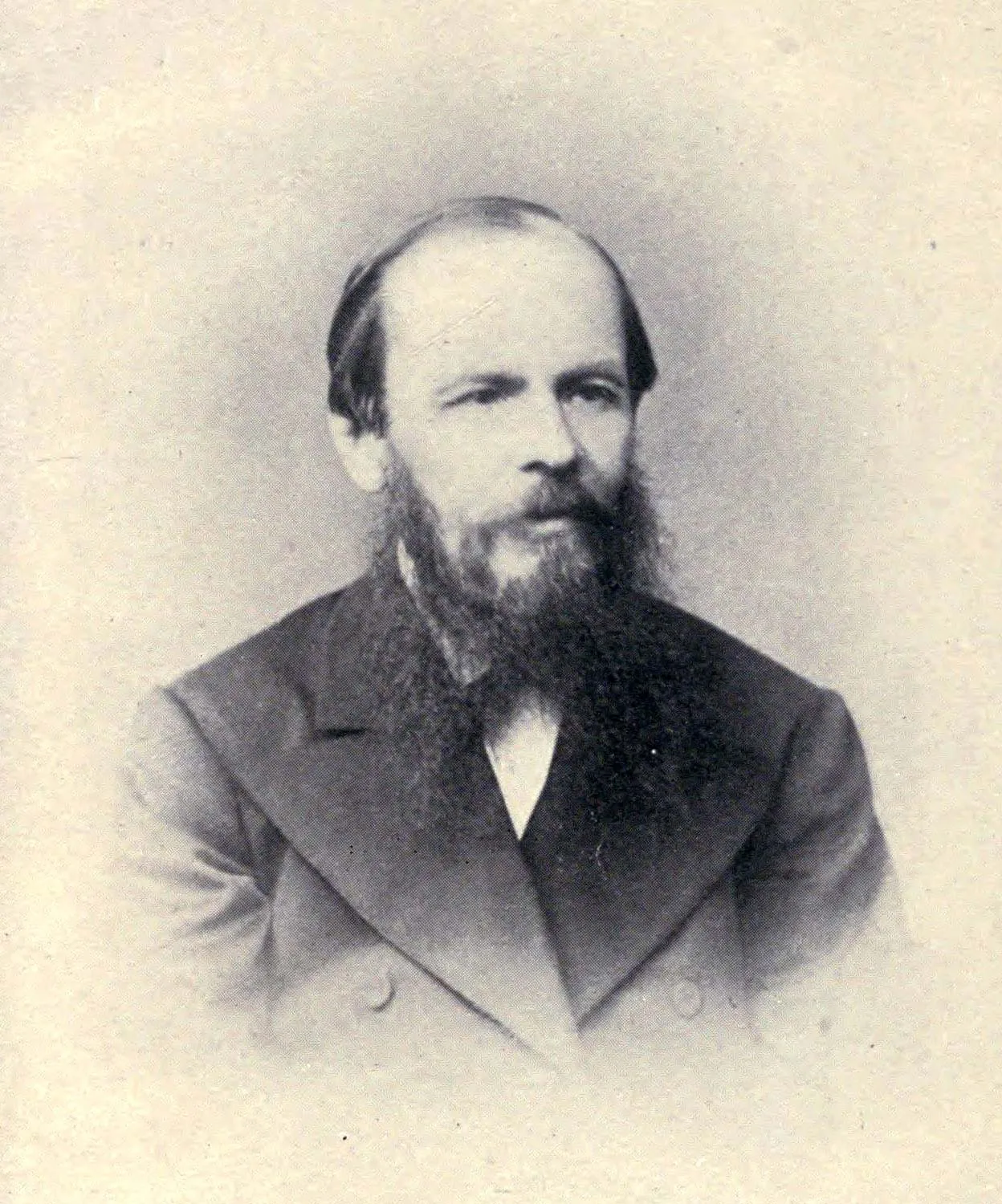
1. Biographical Foundation: The Mock Execution, Siberian Katorga & The Crisis of Reason
Early Years, Engineering & Literary Debut
Born on November 11, 1821, at the Mariinsky Hospital for the Poor in Moscow—where his father, Mikhail Andreyevich Dostoevsky, served as a staff physician—Fyodor Dostoevsky grew up on the physical threshold between bourgeois respectability and harrowing human misery.[1:2] His father was an authoritarian, emotionally volatile patriarch, while his pious mother, Maria Feodorovna, instilled in him an early devotion to Orthodox Christian narrative and scripture.[1:3]
Following his mother's death from tuberculosis in 1837, Dostoevsky was sent to the Saint Petersburg Military Engineering-Technical University.[1:4] Though trained in rigorous structural calculations, ballistics, and fortification drafting, his passion remained consumed by literature—reading Shakespeare, Pascal, Victor Hugo, E.T.A. Hoffmann, and Goethe.[1:5] In 1839, his father died under mysterious circumstances on his small rural estate, reportedly murdered by his own serfs in an explosion of peasant rage—an unresolved biographical trauma that would echo throughout Dostoevsky's lifelong interrogation of parricide, guilt, and social hierarchy.[1:6][5]
Resigning his military commission in 1844, Dostoevsky published his debut epistolary novella, Poor Folk (Bednye lyudi), in 1846.[1:7] The celebrated critic Vissarion Belinsky hailed the young writer as the new literary savior of Russian social realism, praising his tender illumination of the "insulted and injured" under bureaucratic despotism.[1:8][2:2] However, Dostoevsky quickly alienated Belinsky's circle with his second work, The Double (Dvoynik, 1846), which abandoned didactic social sympathy in favor of grotesque psychological fragmentation, mental breakdown, and hallucinatory paranoia.[1:9][2:3]
The Petrashevsky Circle and Semyonov Square Mock Execution (1849)
In the late 1840s, drawn to radical utopian socialist theories (specifically Charles Fourier's communal blueprints) and the struggle against Russian serfdom, Dostoevsky joined the clandestine Petrashevsky Circle.[1:10][2:4] On April 23, 1849, following the revolutions of 1848 that terrified Tsar Nicholas I, Dostoevsky and thirty-four associates were arrested by the imperial secret police and incarcerated in the grim Peter and Paul Fortress.[1:11]
After eight months of solitary interrogation, Dostoevsky was convicted of treason for circulating Belinsky's banned, radical letter to Nikolai Gogol.[1:12] On the freezing morning of December 22, 1849, the prisoners were led to Semyonov Square to face capital punishment by firing squad.[1:13][3:1] Dostoevsky was dressed in a white execution shroud and kissed the cross; the first three prisoners were tied to stakes, drums rolled, and soldiers raised their rifles.[1:14]
At the absolute last second, a royal courier galloped into the square with a prearranged imperial reprieve: Tsar Nicholas I had staged a theatrical mock execution designed to psychologically terrorize the dissidents.[1:15][3:2] One prisoner went permanently insane on the spot.[1:16] Dostoevsky's death sentence was commuted to four years of hard labor in a Siberian penal camp, followed by compulsory military service.[1:17] This confrontation with imminent annihilation—standing upon the threshold between existence and oblivion—permanently altered Dostoevsky's sensory and spiritual consciousness, instilling an ecstatic appreciation for the sacred gift of temporal existence that he later infused into Prince Myshkin in The Idiot.[1:18][3:3]
[ Radical Utopian Socialism ] ──> [ Semyonov Square Mock Execution (1849) ]
                                                │
                                                ▼
[ Ontological Rupture: Facing Imminent Death ] ─┴─> [ Siberian Katorga (Omsk) ]
                                                                 │
                                                                 ▼
[ Rejection of Secular Rationalism ] <──── [ Conversion to Orthodox Spiritual Realism ]
Siberian Katorga & The House of the Dead (1850–1854)
Dostoevsky spent four brutal years in the prison fortress of Omsk in southwestern Siberia, living among violent convicts, murderers, political outcasts, and impoverished serfs.[1:19][6] Stripped of noble status, shackled in ten-pound leg irons that were never removed throughout his sentence, and denied access to books other than the New Testament, Dostoevsky underwent a profound intellectual and spiritual rebirth.[1:20][6:1]
In Siberia, Dostoevsky experienced the total collapse of his youthful, Western European intellectual romanticism.[1:21] He discovered that the Russian peasantry did not desire the enlightened abstractions of cosmopolitan socialist intellectuals; rather, an unbridgeable chasm divided the Westernized intelligentsia from the Orthodox peasant masses (narod).[1:22][6:2] More crucially, he witnessed first-hand that human nature harbored an innate, irrational thirst for cruelty, domination, and self-assertion that no progressive economic reform or utilitarian social engineering could ever extinguish.[1:23][6:3]
His Siberian memoir, The House of the Dead (Zapiski iz Myortvogo doma, 1860–1862), transformed Russian literature, offering a penetrating anthropological anatomy of penal confinement that earned the lavish admiration of Leo Tolstoy.[1:24][6:4]
Temporal Lobe Epilepsy & The Mystical Aura
During his Siberian imprisonment, Dostoevsky’s latent neurological vulnerability materialized as severe temporal lobe epilepsy.[1:25][7] These seizures were preceded by brief, ecstatic cognitive auras—moments of luminous spiritual harmony and metaphysical clarity wherein the boundaries of time dissolved.[1:26][7:1]
"He remembered among other things that he always had one minute just before the epileptic fit... when suddenly in the midst of sadness, spiritual darkness and oppression, there seemed at moments a flash of light in his brain, and with extraordinary impetus all his vital forces suddenly began working at their highest tension... His mind and his heart were flooded with extraordinary light; all his uneasiness, all his doubts, all his anxieties, were relieved at once; they were all merged in a lofty calm, full of serene, harmonious joy and hope."[3:4]
However, these seconds of cosmic union were immediately followed by violent convulsions, somatic agony, and days of profound melancholia, cognitive disorientation, and existential dread.[1:27][7:2] This somatic dialectic—heavenly ecstasy followed by abject bodily collapse—reinforced Dostoevsky’s fundamental conviction that human existence is a tragic battleground between divine transcendence and visceral physical fallenness.[7:3]
European Exile, Compulsive Gambling & The Pushkin Speech (1880)
Returning to Saint Petersburg in 1859, Dostoevsky founded two influential literary journals, Vremya (Time) and Epokha (Epoch), alongside his brother Mikhail, championing Pochvennichestvo ("return to the native soil")—a philosophical movement seeking to bridge the divide between European intellectual enlightenment and traditional Russian spiritual roots.[1:28]
The mid-1860s brought devastating personal tragedies: the sudden deaths of his first wife, Maria Dmitrievna, and his beloved brother Mikhail left Dostoevsky crushed beneath crushing financial debts and the legal responsibility for his extended family.[1:29] To escape domestic creditors, he spent years in European exile (1867–1871) with his second wife, Anna Grigoryevna Snitkina, a capable young stenographer whose devotion and administrative acumen rescued his literary career.[1:30]
While abroad in Baden-Baden, Wiesbaden, and Geneva, Dostoevsky succumbed to a destructive, compulsive addiction to roulette.[1:31] He repeatedly wagered their last francs, clothing, and wedding rings, experiencing the vertigo of absolute risk—the psychological thrill of standing on the precipice of ruin, which he dissected masterfully in his 1866 novella The Gambler (Igrok).[1:32][5:1] Only in 1871 did he permanently break the gambling compulsion, channeling that manic psychic energy into his mature literary monuments.[1:33]
Dostoevsky's public career culminated on June 20, 1880, with his electrifying Pushkin Speech at the unveiling of the Alexander Pushkin monument in Moscow.[1:34][2:5] Dostoevsky framed Pushkin not merely as a national poet, but as the prophetic archetype of the Russian spirit’s capacity for "universal responsiveness" (vsemirnaya otzyvchivost), capable of reconciling the ideological fractures of Western Europe through pan-human Christian brotherhood.[1:35][2:6] The speech brought the audience to tears and hysteria, unifying Westernizers and Slavophiles in an unprecedented collective embrace.[1:36] Seven months later, on February 9, 1881, Dostoevsky died of pulmonary hemorrhage in Saint Petersburg, followed to his grave by more than forty thousand mourners in an extraordinary national outpouring of grief.[1:37]
2. Aesthetic Architecture & Narrative Method: The Polyphonic Novel
In his landmark critical study, Problems of Dostoevsky's Poetics (1929; 1963), Russian literary theorist Mikhail Bakhtin demonstrated that Dostoevsky did not merely write brilliant psychological novels; he fundamentally invented a revolutionary, modern novelistic form: the polyphonic novel.[4:1]
[ Monologic Novel (Tolstoy / Balzac) ] ──> Single Authorial Consciousness Dominates
                                           (Characters are passive ideological mouthpieces)

[ Polyphonic Novel (Dostoevsky) ]      ──> Plurality of Independent, Equal Consciousnesses
                                           (Characters dialogue autonomously with the Author)
The Monologic vs. The Polyphonic
Prior to Dostoevsky, the European novel was overwhelmingly monologic (exemplified by Leo Tolstoy, Honoré de Balzac, or Charles Dickens).[4:2] In a monologic universe:
- The author occupies an unshakeable, transcendent vantage point of ultimate knowledge (surplus of vision).[4:3]
- Characters are closed, finalized objects within the author's ideological framework; their fates, vices, and virtues are authoritatively summarized and judged by the narrator.[4:4]
In contrast, Dostoevsky constructs a polyphonic ("many-voiced") architecture:[4:5]
- A work is built not from a single authorial consciousness, but as a dynamic interaction between a plurality of independent, unmerged voices and consciousnesses, each with equal rights and philosophical validity.[4:6]
- The author does not speak about the character as an object; the author engages in an urgent, unfinished dialogue with the character.[4:7]
- Dostoevsky grants his ideological antagonists (such as the atheist rationalist Ivan Karamazov or the cynical Underground Man) arguments so formidable and psychologically authentic that the author's personal Christian convictions struggle to answer them.[4:8]
Dialogism and Unfinalizability (Nezavershimost)
For Bakhtin and Dostoevsky, human consciousness is never a static, closed entity; it is essentially dialogic and structurally unfinalizable (nezavershimost):[4:9]
"A man never coincides with himself. One cannot apply to him the formula of identity A = A... The genuine life of the personality is made available only through a dialogic penetration of that personality, during which it freely and reciprocally reveals itself."[4:10]
A person cannot be reduced to their psychological type, their socioeconomic class, their biological heredity, or their criminal dossier.[4:11] The moment an external authority proclaims: "You are a thief, and nothing more," the human subject rebels against this premature verbal finalization.[4:12] Dostoevsky’s protagonists inhabit internal dialogues that mirror their external debates; Raskolnikov, Ivan Karamazov, and Stavrogin are internally split, carrying on frantic conversations with their doubles, their ideals, and their demons.[4:13]
The Idea as Living Hero
In Dostoevsky's poetics, an idea is never an abstract philosophical syllogism resting inertly in an academic treatise.[2:7][4:14] Rather, the idea is an existential force that inhabits the human body like a living organism or an infectious pathogen.[2:8][4:15]
Dostoevsky tests ideas by plunging them into the crucible of extreme lived experience:
- Raskolnikov does not merely hold a theory regarding extraordinary men; he tests it with an axe.[2:9]
- Kirillov does not merely speculate on metaphysical autonomy; he resolves to shoot himself to prove human divinity.[2:10]
- Ivan Karamazov tests the limits of moral freedom until his own brain collapses into madness and hallucination.[3:5]
"Realism in a Higher Sense"
Dostoevsky emphatically rejected the label of mere "psychologist" or conventional naturalist painter of social manners:[1:38][2:11]
"With complete realism to find the man in man... They call me a psychologist; it is not true. I am merely a realist in the higher sense, that is, I portray all the depths of the human soul."[1:39]
While contemporary naturalists recorded external social facts, furniture, and daily routines, Dostoevsky's "realism in a higher sense" focused on crisis states, boundary situations, and catastrophic thresholds where the spiritual, metaphysical fate of humanity is decided in dingy tavern corners, crowded rooms, and dark garrets.[2:12][4:16]
3. Major Works & Deep Textual Analysis
| Title | Original Russian | Year | Genre / Scope | Central Thematic Engine |
|---|---|---|---|---|
| Notes from Underground | Zapiski iz podpolya | 1864 | Existential Novella | Revolt against rational egoism, the Crystal Palace, and deterministic utilitarianism |
| Crime and Punishment | Prestuplenie i nakazanie | 1866 | Polyphonic Novel | The Extraordinary Man (Napoleon) theory, somatic guilt, and spiritual resurrection |
| The Idiot | Idiot | 1869 | Polyphonic Novel | The tragedy of the "positively good man" (Christ-figure) crushed by worldly cynicism |
| Demons (Devils) | Besy | 1872 | Political / Metaphysical Tragedy | The demonic nature of secular nihilism, radical revolution, and proto-totalitarianism |
| The Brothers Karamazov | Bratya Karamazovy | 1880 | Philosophical Masterpiece | Theodicy, the Grand Inquisitor, parricide, radical moral responsibility, and active love |
Notes from Underground (1864): Revolt Against the Crystal Palace
Written in the wake of his wife's terminal illness and published in Epokha, Notes from Underground is the undisputed prologue to 20th-century existentialism, prefiguring Jean-Paul Sartre, Albert Camus, and Franz Kafka.[2:13][8]
               [ The Enlightened Utilitarian Paradigm ]
               (Nikolai Chernyshevsky / Rational Egoism)
                                  │
         ┌────────────────────────┴────────────────────────┐
         ▼                                                 ▼
[ Mathematical Determinism: 2 x 2 = 4 ]        [ The Crystal Palace Utopian Ideal ]
 (Human beings as mechanical piano keys)         (Total security, comfort, & harmony)
         │                                                 │
         └────────────────────────┬────────────────────────┘
                                  │
                                  ▼
                [ The Underground Man's Revolt ]
                                  │
         ┌────────────────────────┴────────────────────────┐
         ▼                                                 ▼
[ Insistence on Spite & Caprice ]              [ The Will to Free Self-Destruction ]
("2 x 2 = 5 is sometimes a very charming thing")  (Man will choose madness over utility)
- The Polemic Against Rational Egoism: Dostoevsky directly attacks Nikolai Chernyshevsky’s utopian socialist novel What Is to Be Done? (1863), which argued that humanity is governed entirely by enlightened self-interest, and that science and education would eradicate human vice by building a harmonious social order.[2:14][8:1]
- The Crystal Palace: The towering glass pavilion built for the 1851 Great Exhibition in London serves as Dostoevsky’s terrifying metaphor for the total rationalized utopia.[2:15][8:2] In the Crystal Palace, every human need is calculated, suffering is abolished, and life is mathematically optimized. Yet the Underground Man insists that humanity will spit upon this utopia: Fyodor Dostoevsky, Notes from Underground (1864)
"Shower upon him every earthly blessing, drown him in a sea of happiness... even then, out of sheer ingratitude, sheer spite, man would deliberately play you some nasty trick... simply to introduce his fatal fantastic element into all this positive sanity... simply in order to prove to himself that men are still men and not the keys of a piano."[8:3]
- The Primacy of Free Volition: The core existential insight of the novella is that human beings do not desire mere happiness, security, or material comfort; above all else, humanity desires independent, unconstrained choice—even if that choice manifests as spite, perversity, suffering, or outright self-destruction.[2:16][8:4] Mathematical certainty ("two times two makes four") is not life, but the beginning of death: Fyodor Dostoevsky, Notes from Underground (1864)
"Twice two makes four is an excellent thing, but if we are to give everything its due, twice two makes five is sometimes a very charming thing too."[8:5]
Crime and Punishment (1866): The "Extraordinary Man" & Somatic Confession
Set against the sweltering, foul-smelling tenements and haymarkets of Saint Petersburg, Crime and Punishment dramatizes the fatal dialectic between intellectual rationalization and the irreducible sanctity of human life.[2:17][9]
- The Ideology of the "Extraordinary Man": Protagonist Rodion Romanovich Raskolnikov publishes a theoretical article dividing humanity into two castes: the "ordinary" (the obedient, reproductive herd who exist to preserve the species) and the "extraordinary" (the historical innovators, like Napoleon, who possess an intrinsic right to step across legal and moral boundaries to inaugurate a new law).[2:18][9:1]
- The Transgression: Impoverished, isolated in a coffin-like room, and desperately seeking to prove to himself that he is not a "trembling creature" but a "Napoleon," Raskolnikov murders the corrupt, parasitic pawnbroker Alyona Ivanovna with an axe.[2:19][9:2] However, the neat arithmetic of his intellectual design collapses when the pawnbroker's saintly, developmentally disabled half-sister, Lizaveta, unexpectedly enters the room, forcing Raskolnikov to murder her as well.[2:20][9:3]
- The Psychological Collapse: The crime does not unleash Napoleonic power; it unleashes immediate, catastrophic alienation.[9:4] Raskolnikov experiences an impassable somatic barrier between himself and humanity—including his mother and sister.[2:21][9:5] His feverish body betrays him: fainting at the police precinct, falling into delirium, and compulsively returning to the scene of the murder.[9:6]
- The Dialectical Inquisitor (Porfiry Petrovich): Porfiry Petrovich, the shrewd magistrate, represents a brilliant prototype of the psychological investigator.[2:22] Knowing Raskolnikov is guilty, Porfiry avoids physical arrests or formal warrants, playing a cat-and-mouse game of philosophical entrapment, allowing Raskolnikov's own conscience and nervous agitation to corner him.[2:23][9:7]
- Resurrection Through Sonya Marmeladova: Redemption arrives not through philosophical argument, but through Sonya Marmeladova—a young woman forced into prostitution to feed her starving siblings, who embodies absolute Christian humility and self-sacrificing love.[2:24][9:8] When Sonya reads to Raskolnikov the Gospel account of the raising of Lazarus, the spiritual architecture of the novel reveals itself: Raskolnikov is Lazarus, spiritually dead and decomposing within the tomb of his intellectual pride.[2:25][9:9] His public confession and exile to Siberia inaugurate a slow, agonizing moral resurrection through the acceptance of suffering.[9:10]
The Idiot (1869): The Positively Good Man & Holbein's Dead Christ
In The Idiot, Dostoevsky attempted his most daring aesthetic experiment: portraying a completely, "positively beautiful and good soul" plunged into the corrupt, cynical reality of 19th-century Saint Petersburg high society.[1:40][3:6]
- Prince Lev Nikolayevich Myshkin: The epileptic Prince Myshkin is an explicit Christ-figure, characterized by boundless childlike candor, total absence of ego, and infinite empathy.[1:41][3:7] Yet, far from redeeming society, Myshkin's absolute moral purity acts as a destabilizing catalyst that exposes the vanity, greed, and hypocrisies of everyone around him, ultimately accelerating catastrophe.[3:8]
- Nastasya Filippovna & The Dynamics of Shame: The tragic heroine Nastasya Filippovna—traumatized and sexually exploited as a young girl by her aristocratic guardian Totsky—is trapped in an agonizing cycle of self-loathing and proud defiance.[3:9] Recognizing Myshkin's divine compassion, she yearns for his forgiveness, yet feels unworthy of it; unable to forgive herself, she compulsively rushes toward destruction in the arms of the passionate, violent merchant Parfyon Rogozhin.[3:10]
- Hans Holbein's The Body of the Dead Christ in the Tomb (1521): While in Basel, Dostoevsky was transfixed and horrified by Holbein's painting, which depicts Christ's decomposed, battered cadaver with merciless, clinical realism.[1:42][3:11] In the novel, a reproduction of the painting hangs in Rogozhin's dark mansion, prompting Prince Myshkin to exclaim: "A man could lose his faith simply by looking at that picture!"[3:12] Holbein's Christ embodies the terrifying prospect that nature and death are blind, mechanical beasts that crush even the divine, posing the central existential threat to Christian hope.[3:13]
- The Catastrophic Climax: The novel ends in a chilling vigil: Rogozhin murders Nastasya Filippovna, and he and Prince Myshkin spend the night beside her cooling corpse in the darkened room, whispering in delirium.[3:14] Myshkin’s consciousness shatters under the unbearable weight of human suffering, and he regresses permanently into an idiocy devoid of memory.[3:15]
Demons (1872): The Anatomy of Nihilism & The Prophecy of Totalitarianism
Inspired by the real-world 1869 murder of student Ivan Ivanov by the nihilist revolutionary Sergey Nechayev (author of Catechism of a Revolutionary), Demons (Besy) stands as modern literature’s most prophetic warning against ideological fanaticism and the totalitarian terror that would sweep the 20th century.[1:43][2:26]
- The Metaphor of Possession: Drawing on the Gospel parable of the Gerasene demoniac (Luke 8:32–36)—wherein Christ casts a legion of unclean spirits out of a man and into a herd of swine that drown themselves in the sea—Dostoevsky portrays the secular European ideas infecting Russia (atheism, rationalism, materialist socialism) as demonic forces driving the nation toward collective suicide.[1:44][2:27]
- Pyotr Verkhovensky and Revolutionary Terror: Verkhovensky is the sociopathic political operative who engineers a web of secret five-man conspiratorial cells, binding them together through the shared blood of a ritualistic political murder.[1:45][2:28] Verkhovensky cares nothing for the suffering of the poor; his aim is the total destabilization of all social bonds, morality, and family ties to seize absolute power amidst the chaos.[2:29]
- Shigalyovism (Shigalyovshchina): The revolutionary theorist Shigalyov formulates the terrifying blueprint for the future totalitarian state: Fyodor Dostoevsky, Demons (1872)
"My conclusion directly contradicts the idea from which I start. Starting from unlimited freedom, I arrive at unlimited despotism. I will add, however, that there can be no other solution to the social problem than mine."[2:30]
Shigalyov proposes dividing humanity into two unequal parts: ten percent receive individual freedom and absolute sovereign rule over the remaining ninety percent, who are stripped of individuality, reduced to an equalized, herd-like state of complete submission, and re-educated through systematic denunciation and terror.[2:31] This passage directly anticipates the totalitarian systems analyzed by George Orwell and Hannah Arendt.[2:32] - Kirillov's Metaphysical Suicide: The engineer Alexei Kirillov provides the novel’s deepest philosophical core.[2:33] Convinced that God is merely a projection born of humanity's terror of death and pain, Kirillov asserts that the first human being to conquer fear and kill himself purely to assert absolute free will will become the Man-God (chelovekobog): Fyodor Dostoevsky, Demons (1872)
"If God exists, all will is His, and I cannot step outside His will. If He does not exist, all will is mine, and I must assert my will... To recognize that there is no God and not to recognize at the very same instant that one has become God is an absurdity... I will begin, and will make an end, and open the door."[2:34]
- Nikolai Stavrogin: The charismatic, hollow aristocrat Nikolai Stavrogin is the black sun around whom all other characters orbit.[1:46][2:35] Endowed with immense intellect, beauty, and physical power, Stavrogin suffers from absolute moral paralysis and terminal apathy, unable to distinguish between a noble deed and a repulsive crime.[2:36] In the suppressed chapter "At Tikhon's," Stavrogin confesses to the sexual violation of a young girl, Matryosha, who subsequently hanged herself.[1:47][2:37] Haunted by the phantom of the child shaking her fist, Stavrogin finds himself incapable of either genuine repentance or belief, culminating in his silent, cold suicide by hanging.[2:38]
The Brothers Karamazov (1880): Theodicy & The Grand Inquisitor
Dostoevsky’s crowning masterpiece synthesizes his metaphysical, ethical, and narrative investigations through the crucible of a fractured family and an act of parricide.[1:48][3:16]
- The Tripartite Soul (The Karamazovian Discord): The three legitimate sons of the coarse, sensualist patriarch Fyodor Pavlovich Karamazov represent a psychological and spiritual map of humanity:[3:17]
- Dmitri (Mitya): The sensualist, passionate, romantic heart (thumos), torn violently between "the ideal of the Madonna and the ideal of Sodom."[3:18]
- Ivan: The intellectual, skeptical mind (logos), agonizing over the problem of evil and rational justice.[3:19]
- Alyosha: The spiritual novice (pneuma), disciple of the elder Father Zosima, embodying active Christian love and monastic gentleness in the secular world.[3:20]
- Pavel Smerdyakov: The illegitimate fourth son, epileptic, spiteful, and calculating, who acts as Ivan’s grotesque moral shadow.[3:21]
- The Parricide & Collective Culpability: When Fyodor Pavlovich is murdered for his money, Dmitri is arrested and convicted on circumstantial evidence.[3:22] Yet, Dostoevsky demonstrates that every brother is morally complicit in the crime:[3:23] Dmitri wished his father dead in drunken rages; Ivan intellectually justified it with his doctrine that "if God does not exist, everything is permitted"; and Smerdyakov executed the physical blow solely because he interpreted Ivan's philosophy as a covert sanction.[3:24] The novel dramatizes Father Zosima's radical theological axiom: "Every one of us is responsible for everyone else, before all, and for all."[3:25]
- Ivan's Rebellion (The Unreturned Ticket): In the chapter "Rebellion," Ivan refuses to accept the traditional Christian theodicy that suffering is justified by some higher, future cosmic harmony.[3:26] Recounting horrific newspaper accounts of atrocities committed against innocent, defenseless children (infants torn apart by hunting dogs before their mothers' eyes), Ivan declares to Alyosha: Fyodor Dostoevsky, The Brothers Karamazov (1880)
"It's not that I don't accept God, Alyosha, I only most respectfully return Him the ticket... If the sufferings of children go to swell the sum of sufferings which was needed to pay for truth, then I protest that the truth is not worth such a price."[3:27]
- "The Grand Inquisitor": Ivan's prose poem stands as one of the towering peaks of philosophical literature.[3:28] Set in 16th-century Seville at the height of the Spanish Inquisition, Jesus Christ returns to earth, performs miracles, and is immediately arrested by the ninety-year-old Grand Inquisitor.[3:29] In a dark dungeon cell, the Inquisitor interrogates Christ, accusing Him of inflicting an unbearable curse upon humanity: freedom of conscience.[3:30]
- The Inquisitor explains that Christ foolishly rejected Satan's three temptations in the wilderness: Miracle, Mystery, and Authority.[3:31]
- Most human beings are too weak, fearful, and base to bear the agonizing burden of free moral choice; what humanity truly craves is someone to relieve them of freedom in exchange for daily bread and universal security.[3:32]
- The Church, the Inquisitor confesses, has secretly allied itself with Satan ("we are not with You, but with him"), correcting Christ's work by establishing a benevolent, paternalistic tyranny that allows millions of fragile humans to live in docile, sinning happiness, while a few tragic rulers shoulder the terrible burden of knowledge and damnation.[3:33]
- Christ speaks not a single word in reply; He approaches the old man and gently kisses him upon his bloodless, ninety-year-old lips.[3:34] The Inquisitor shudders, opens the cell door, and says: "Go, and come no more." The kiss burns in the old man's heart, but he does not abandon his grand ideological deception.[3:35]
4. Philosophical & Psychological Engines: The Anatomy of Modern Consciousness
                       [ The Modern Existential Crisis ]
                                       │
            ┌──────────────────────────┴──────────────────────────┐
            ▼                                                     ▼
[ The Secular Rationalist Abyss ]                       [ The Dostoevskian Salvation ]
 • Utilitarian calculation                              • Recognition of human fallenness
 • "Everything is permitted"                            • Acceptance of voluntary suffering
 • Totalitarian coercion (Shigalyovism)                 • Active, concrete love (Father Zosima)
 • Solipsism & Paranoia (Underground Man)               • Radical universal responsibility
Freedom, Suffering, and the Rejection of Utilitarianism
Dostoevsky identified the primary pathology of modern thought as utilitarian reductionism—the belief that human flourishing can be quantified as the maximization of pleasure and the elimination of pain.[2:39][8:6] For Dostoevsky, genuine human dignity is inextricably bound to suffering; suffering is the sole origin of self-conscious awareness.[8:7] To engineer a world without suffering is to engineer an anthill, abolishing human freedom in the process.[8:8]
Nihilism and the Moral Abyss
Although the precise formulation "If God does not exist, everything is permitted" does not appear verbatim in The Brothers Karamazov, it accurately summarizes the moral dilemma that tortures Ivan Karamazov.[3:36] Dostoevsky perceived that removing metaphysical transcendence from human ethics does not lead to enlightened humanitarianism; it inevitably collapses into radical egoism, moral relativism, and the raw will to power.[2:40][3:37] Without an absolute divine foundation, ethical commandments become arbitrary social conventions, leaving humanity vulnerable to predatory nihilism.[2:41]
The Psychology of the Double (Doppelgänger)
Long before psychoanalysis mapped the id, ego, and superego, Dostoevsky demonstrated that the human psyche is fractured by competing, contradictory drives.[5:2] In The Double, Notes from Underground, and The Brothers Karamazov, characters are stalked by literal or psychological doubles that personify their repressed shames, unacknowledged desires, and moral cowardice.[5:3] Ivan Karamazov's hallucinated conversation with the petty, shabby devil in his sitting room represents modern literature’s most sophisticated staging of the internal dialogue between the intellectual ego and its corrupt, cynical unconscious shadow.[3:38][5:4]
Active Love vs. Abstract Humanitarianism
Through the teachings of the elder Father Zosima in The Brothers Karamazov, Dostoevsky offers his antidote to secular nihilism.[3:39] Zosima draws a severe distinction between abstract love of humanity and active love of the individual:[3:40]
- Abstract Love: Utopian intellectuals readily love "humanity in the abstract," dreaming of global brotherhood, yet find themselves incapable of enduring a single individual person for two days in the same room without feeling disgust.[3:41]
- Active Love: Active love is harsh, unglamorous, patient labor.[3:42] It requires daily self-denial, forgiving immediate injuries, kissing the earth, and accepting personal responsibility for the sins of the world.[3:43] Active love cannot be proven through rational debate; it can only be verified through the lived experience of compassionate action.[3:44]
5. Critical & Philosophical Frameworks
Friedrich Nietzsche: The Affection of a Philosophical Twin
Friedrich Nietzsche discovered Dostoevsky in a Nice bookshop in 1887 (reading a French translation of Notes from Underground), describing the encounter as one of the most stunning intellectual epiphanies of his life:[10]
"Dostoevsky was the only psychologist from whom I had anything to learn: he belongs to the happiest windfalls of my life, even more than the discovery of Stendhal."[10:1]
Both thinkers diagnosed the imminent collapse of European Christianity, predicted the rise of cataclysmic modern nihilism, and recognized that the human soul is driven by irrational drives rather than rational calculations.[10:2] Yet their solutions were radically opposed:
- Nietzsche rejected Christian pity (Mitleid) as life-denying slave morality, proposing the self-overcoming of the individual through the Übermensch and the Will to Power.[10:3]
- Dostoevsky regarded the Übermensch ideal (Raskolnikov's Napoleon, Kirillov's Man-God) as a lethal spiritual delusion that leads to murder, madness, and totalitarianism; he proposed salvation through Christ-like humility, kenotic self-emptying, and universal solidarity.[2:42][10:4]
Sigmund Freud: "Dostoevsky and Parricide" (1928)
In his famous 1928 psychoanalytic study Dostoevsky and Parricide, Sigmund Freud ranked The Brothers Karamazov alongside Sophocles' Oedipus Rex and Shakespeare's Hamlet as the three greatest masterworks of world literature, noting that all three revolve around the primal psychic theme of parricide (the murder of the father):[5:5]
- Freud argued that Dostoevsky’s severe guilt and temporal lobe epilepsy were rooted in a childhood death-wish directed against his tyrannical father.[5:6]
- When his father was actually murdered by serfs in 1839, Dostoevsky suffered crushing somatic punishment (epileptic seizures) as an internalized Oedipal reaction—the unconscious ego punishing itself for having wished the crime into being.[5:7]
- While literary scholars criticize Freud’s biographical reductionism, psychoanalysis remains indebted to Dostoevsky for mapping the split ego, compulsive self-punishment, and the unconscious desire for confession.[5:8]
Continental Existentialism: Sartre & Camus
Dostoevsky is a foundational pillar of 20th-century Continental Philosophy and existentialism:
- Jean-Paul Sartre: In Existentialism is a Humanism (1946), Sartre cited Dostoevsky’s insight as the foundational starting point of existentialist thought: "Dostoevsky once wrote: 'If God did not exist, everything would be permitted.' That is the starting point of existentialism. Indeed, everything is permissible if God does not exist, and as a result man is forlorn, because neither within him nor without does he find anything to cling to."[2:43]
- Albert Camus: In The Myth of Sisyphus (1942) and The Rebel (1951), Camus devoted extensive chapters to Dostoevsky, analyzing Kirillov as the quintessential "absurd hero" who stages a revolt against the cosmos, and Ivan Karamazov as the metaphysical rebel whose rejection of divine injustice inaugurates modern revolutionary consciousness.[2:44]
Political Sociology: Prophecy of the Totalitarian Century
Sociologists and political theorists—most notably George Orwell, Hannah Arendt, and Czesław Miłosz—have read Dostoevsky's Demons and "The Grand Inquisitor" as the most uncanny literary prophecies of 20th-century totalitarian regimes (both Soviet Bolshevism and Nazi Fascism):[2:45]
- Dostoevsky accurately predicted that when utopian intellectuals attempt to construct a society without God, they do not produce universal freedom; they produce the secular administrative police state, characterized by the surveillance of thoughts, mass denunciations, ideological dogmatism, and the elimination of human interiority.[2:46]
- The Grand Inquisitor’s exchange of freedom for bread and security anticipated the psychological mechanism of modern authoritarian consent.[2:47][3:45]
Summary of Core Concepts
| Concept | Theoretical / Aesthetic Definition | Key Text |
|---|---|---|
| Polyphony | Novelistic structure comprising a plurality of independent, unmerged voices and consciousnesses, where characters dialogue on equal terms with the author. | Problems of Dostoevsky's Poetics (Bakhtin) |
| The Underground Mind | The self-sabotaging, irrational human consciousness that rebels against deterministic systems, utility, and mathematical certainty (2 x 2 = 4) to assert volitional freedom. | Notes from Underground |
| The Extraordinary Man | The rationalist delusion that exceptional individuals possess an inherent moral right to step across statutory laws and commit violence for the "greater good." | Crime and Punishment |
| Shigalyovism | The tragic trajectory of utopian revolution: starting from absolute, unlimited freedom and inevitably arriving at absolute, unlimited totalitarian despotism. | Demons |
| The Grand Inquisitor | The administrative-religious apparatus that corrects Christ's error by stripping humanity of freedom of conscience in exchange for bread, mystery, and security. | The Brothers Karamazov |
| Radical Mutual Responsibility | The theological and ethical principle that every human being is personally culpable and responsible for all sins, crimes, and suffering in the world. | The Brothers Karamazov (Father Zosima) |
🎴 Interactive Web Practice (Comprehension Check)
Question 1 (Existential Psychology & Rational Egoism): In Notes from Underground (1864), how does the Underground Man's critique of the "Crystal Palace" and the formula "2 x 2 = 4" dismantle the assumptions of 19th-century utilitarianism and rational egoism?
Answer: The Underground Man attacks Nikolai Chernyshevsky and the utilitarian premise that human behavior is governed exclusively by enlightened self-interest and the rational pursuit of pleasure. Through the symbol of the "Crystal Palace"—a rationalist utopia where all human needs are mathematically calculated and suffering is engineered out of existence—Dostoevsky illustrates that humanity does not seek mere security or physical well-being. Rather, humanity fiercely guards its capacity for autonomous, unconstrained free will. If human life is reduced to mathematical determinism ("2 x 2 = 4"), humanity ceases to be human and becomes a mechanical "piano key." Consequently, the Underground Man argues that individuals will deliberately choose spite, irrational caprice, pain, and self-destruction ("2 x 2 = 5") simply to prove that their volition remains free and uncolonized by rational systems.
Question 2 (Moral Philosophy & Somatic Guilt): How does Raskolnikov's psychological and bodily breakdown in Crime and Punishment (1866) expose the fatal flaw of his "extraordinary man" theory?
Answer: Raskolnikov's "extraordinary man" theory posits an intellectual hierarchy wherein extraordinary figures (such as Napoleon) possess a sovereign moral right to transgress statutory laws and commit murder for the advancement of a higher humanitarian goal. However, once Raskolnikov murders the pawnbroker and her innocent sister Lizaveta, his intellectual rationalization immediately collapses under somatic and existential reality. He does not experience Napoleonic liberation; instead, he suffers acute somatic fever, fainting spells, paranoia, and an insurmountable psychological barrier separating him from his mother, sister, and fellow human beings. Dostoevsky demonstrates that human morality is not an arbitrary intellectual construct that can be overridden by abstract logic, but an organic, sacred reality woven into human consciousness; the transgression against life results in the immediate internal severance of the murderer from the human community.
Question 3 (Theodicy & Totalitarian Power): In The Brothers Karamazov (1880), what core accusation does the Grand Inquisitor level against Jesus Christ in their confrontation in Seville, and how does this parable serve as a prophetic diagnostic of modern authoritarianism?
Answer: The Grand Inquisitor accuses Christ of cruelly overestimating human spiritual capacity by demanding that individuals follow Him through pure, uncoerced "freedom of conscience," while rejecting Satan's three temptations in the wilderness: Miracle, Mystery, and Authority. The Inquisitor argues that the vast majority of human beings are too weak, base, and anxious to bear the terrifying burden of moral freedom; what humanity genuinely craves is universal security, guaranteed material sustenance ("earthly bread"), and someone to bow down to and worship collectively. The Inquisitor's clerical hierarchy has therefore "corrected" Christ's work by allying with Satan, stripping the populace of their freedom in exchange for security, obedience, and childlike contentment. This parable serves as a prophetic blueprint for 20th-century totalitarianism, showing how modern regimes successfully subjugate populations not merely through brute force, but by relieving them of the anxiety of individual moral responsibility in exchange for state-provided welfare, ideological certainty, and collective conformity.
Resonant Notes
The following notes in the vault share direct thematic, sociological, and literary connections with Fyodor Dostoevsky:
🔴 Existentialism, Nihilism & The Problem of Freedom
- Søren Kierkegaard — Dostoevsky's closest 19th-century philosophical twin. Both operated as impassioned Christian existentialist precursors who revolted against Hegelian rational system-building, anatomized the dizzying dread of radical freedom, and located redemption not in bourgeois comfort but in the paradox of faith through suffering.
- Friedrich Nietzsche (1844-1900) — Nietzsche hailed Dostoevsky as the only psychologist from whom he had anything to learn. Both diagnosed the impending catastrophic crisis of modern European nihilism following the "Death of God." However, while Nietzsche sought redemption through the self-asserting Übermensch and the Will to Power, Dostoevsky exposed the Übermensch (Raskolnikov, Kirillov) as a fatal spiritual delusion, positing salvation through Christ-like humility and active love.
- Albert Camus — Camus's philosophy of the Absurd and revolt draws extensively on Dostoevsky. In The Myth of Sisyphus, Camus dissects Kirillov's philosophical suicide in Demons as the supreme confrontation with metaphysical freedom, while Ivan Karamazov's rebellion against innocent suffering serves as the foundational text for Camus's The Rebel.
- Jean-Paul Sartre — Sartre adopted Ivan Karamazov's premise—"If God does not exist, everything is permitted"—as the defining axiom of atheistic existentialism, exploring how human beings are "condemned to be free" without metaphysical guides, a condition first lived by Dostoevsky's agonizing protagonists.
- Continental Philosophy — Dostoevsky is a foundational pillar of the Continental tradition, supplying the narrative, phenomenological bedrock for 20th-century critiques of Enlightenment rationalism, Cartesian dualism, and scientific determinism.
- Schopenhauerian Pessimism — Both Schopenhauer and Dostoevsky recognize that suffering, insatiable desire, and tragic conflict define human temporal existence. Where Schopenhauer prescribes ascetic extinction of the Will to Live, Dostoevsky finds spiritual redemption and regeneration through the voluntary acceptance of suffering.
- Ralph Waldo Emerson — Both authors champion the irreducible sovereignty of the individual conscience against societal conformity; however, Dostoevsky's Slavic existentialism provides a dark, tragic corrective to Emersonian Transcendental optimism, revealing the demonic, irrational depths of the human will.
- Georg Wilhelm Friedrich Hegel (1770–1831) — Dostoevsky's Underground Man and Ivan Karamazov stand as violent literary assaults against Hegelian historical teleology and rational system-building, insisting that living human flesh and individual suffering cannot be subsumed into the triumphant march of Absolute Spirit (Geist).
🟡 Psychoanalysis, the Unconscious & Modern Guilt
- Sigmund Freud & Freud's The Uncanny (Das Unheimliche) — Freud based his psychoanalytic theories of the Oedipus complex, parricide, and unconscious guilt on The Brothers Karamazov in his essay "Dostoevsky and Parricide." Dostoevsky's treatment of the double (The Double), somnambulic fugue states, and repressed criminal impulses anticipated Freud's uncanny and the divided ego.
- Jacques Lacan — Lacan famously inverted Ivan Karamazov’s dictum, arguing in his seminars that "If God does not exist, nothing is permitted any longer," because the absence of the divine father leads to an even more suffocating, tyrannical superego. Dostoevsky's characters inhabit this exact Lacanian deadlock.
- Edgar Allan Poe (1809-1849) — Dostoevsky deeply admired Poe's psychological precision, writing a critical essay on him in 1861. The claustrophobic delirium, accelerating somatic guilt, and compulsive confession of Raskolnikov in Crime and Punishment directly inherit the nightmare psychology of Poe's The Tell-Tale Heart and The Imp of the Perverse.
- Franz Kafka (1883-1924) — Kafka inherits Dostoevsky's world of inexplicable guilt, paternal intimidation, and psychological entrapment. Josef K.'s trial before an unlocatable court and Gregor Samsa's domestic alienation reflect Dostoevsky's exploration of shame, fallen law, and spiritual isolation.
- Anthony Vidler-The Architectural Uncanny — Dostoevsky’s suffocating Saint Petersburg—with its yellow-papered garrets, coffin-like student rooms, dark tenement stairwells, and labyrinthine alleys—functions as a primary literary site of the architectural uncanny, where built space reflects the psychological breakdown and somatic disorientation of the inhabitant.
- The Dehumanization of Art — Ortega y Gasset's modern aesthetic diagnosis contrasts sharply with Dostoevsky's "realism in a higher sense." While 20th-century modernism often stripped art of human pathos, Dostoevsky radicalized human pathos, using extreme psychological and spiritual distortion to reveal the transcendent core of the human subject.
🟢 Totalitarianism, Ideological Absurdity & Cinematic Mirrors
- George Orwell (1903-1950) — Dostoevsky's Demons is the direct prophetic precursor to Orwell's 1984. Shigalyov's formula (starting from unlimited freedom to arrive at unlimited despotism) and the Grand Inquisitor's manipulation of bread and mystery prefigure Big Brother, the Ministry of Truth, and O'Brien's catechism of power.
- Don DeLillo Major Themes Analysis — DeLillo updates Dostoevsky's anatomy of ideological terrorism, crowds, and radicalization (Demons) for the late-capitalist media age. In Mao II, DeLillo explores the fanaticism of the political believer who hijacks mass consciousness, mirroring Pyotr Verkhovensky's conspiratorial terror cells.
- Travis Bickle — Screenwriter Paul Schrader explicitly constructed the protagonist of Martin Scorsese's Taxi Driver (1976) as a modern cinematic transposition of Dostoevsky's Underground Man, capturing the solipsistic rage, moral revulsion, urban alienation, and violent quest for redemption of an isolated soul roaming the city streets.
- Woody Allen — Allen’s serious moral masterpieces, Crimes and Misdemeanors (1989) and Match Point (2005), are explicit cinematic variations of Crime and Punishment, testing whether a wealthy, cultured individual can commit murder in a godless universe without facing cosmic justice or psychological disintegration.
- The Existential Paradox of Annie Hall's Opening Monologue — Alvy Singer's neurotic self-sabotage, existential dread, and refusal of bourgeois satisfaction mirror the Underground Man's insistence on spite, irrationality, and the inability to live comfortably within the "Crystal Palace."
- John Updike's Main Literary Themes — Both Dostoevsky and Updike explore the agonizing tension between sensual carnal desire and spiritual salvation, illustrating how religious faith is tested within the messy, fallen reality of domestic and sexual discord.
Backlinks
- Continental Philosophy — Dostoevsky stands as the prime literary precursor to the existentialist movement within Continental philosophy, articulating the absurdity of rationalism and the dread of radical freedom.
- George Orwell (1903-1950) — Orwell's totalitarian Oceania in 1984 realizes the prophetic warnings of Dostoevsky's Demons and "The Grand Inquisitor," demonstrating how ideological utopias devour human freedom.
- Ralph Waldo Emerson — Emersonian self-reliance and transcendental optimism find their tragic Slavic counterweight in Dostoevsky's anatomies of irrational pride and demonic egoism.
- Søren Kierkegaard — Kierkegaard and Dostoevsky represent the two foundational towers of 19th-century religious existentialism, articulating the leap of faith across the chasm of despair.
- Friedrich Nietzsche (1844-1900) — Nietzsche found in Dostoevsky his only psychological equal, sharing the diagnosis of modern nihilism while diverging radically on the ethics of pity and the Übermensch.
- Albert Camus — Camus's philosophy of absurd revolt is directly modeled on Dostoevsky's Kirillov and Ivan Karamazov.
- Jean-Paul Sartre — Sartre’s existentialist axiom that "existence precedes essence" and that humanity is abandoned to radical freedom takes Ivan Karamazov's dilemma as its explicit starting point.
- Sigmund Freud — Freud's foundational psychoanalytic theories of parricide, the Oedipus complex, and the death drive were derived through his study of Dostoevsky's novels and psychic life.
- Jacques Lacan — Lacan's psychoanalytic theory of the Symbolic order, the Law of the Father, and guilt builds directly upon Dostoevsky's exploration of parricide and moral permission.
- Edgar Allan Poe (1809-1849) — Poe's psychological tales of manic murder, the "Imp of the Perverse," and auditory guilt served as direct technical prototypes for Raskolnikov's feverish breakdown in Crime and Punishment.
- Franz Kafka (1883-1924) — Kafka's labyrinthine legal courts, arbitrary guilt, and patriarchal tyrants inherit the claustrophobic dread and existential alienation pioneered by Dostoevsky.
- Anthony Vidler-The Architectural Uncanny — Vidler's architectural theories of the modern "unhomely" find narrative incarnation in Dostoevsky's yellow-hued, claustrophobic Petersburg tenements.
- Travis Bickle — Paul Schrader's script for Taxi Driver translates Dostoevsky's Notes from Underground into the neon-lit, decaying landscape of post-Vietnam New York City.
- Woody Allen — Allen's cinematic interrogations of murder, moral luck, and cosmic silence in Crimes and Misdemeanors and Match Point directly transpose Crime and Punishment into modern secular society.
- The Existential Paradox of Annie Hall's Opening Monologue — The Underground Man’s refusal of the Crystal Palace provides the philosophical grammar for Allen's comedic exploration of neurotic self-destruction.
- Don DeLillo Major Themes Analysis — DeLillo’s analysis of political terror, crowd psychology, and the decline of the novelist echoes Dostoevsky's dissection of nihilist conspiracies in Demons.
- Schopenhauerian Pessimism — Schopenhauer's diagnosis of life as suffering and the redemptive role of compassion (Mitleid) directly parallels Dostoevsky's Christian theology of shared suffering.
- Georg Wilhelm Friedrich Hegel (1770–1831) — Dostoevsky's heroes vigorously reject Hegelian historical optimization and abstract dialectics in defense of the unrepeatable, suffering individual soul.
References
Joseph Frank / Dostoevsky: A Writer in His Time / Princeton University Press ↩︎ ↩︎ ↩︎ ↩︎ ↩︎ ↩︎ ↩︎ ↩︎ ↩︎ ↩︎ ↩︎ ↩︎ ↩︎ ↩︎ ↩︎ ↩︎ ↩︎ ↩︎ ↩︎ ↩︎ ↩︎ ↩︎ ↩︎ ↩︎ ↩︎ ↩︎ ↩︎ ↩︎ ↩︎ ↩︎ ↩︎ ↩︎ ↩︎ ↩︎ ↩︎ ↩︎ ↩︎ ↩︎ ↩︎ ↩︎ ↩︎ ↩︎ ↩︎ ↩︎ ↩︎ ↩︎ ↩︎ ↩︎ ↩︎
Konstantin Mochulsky / Dostoevsky: His Life and Work (trans. Michael A. Minihan) / Princeton University Press ↩︎ ↩︎ ↩︎ ↩︎ ↩︎ ↩︎ ↩︎ ↩︎ ↩︎ ↩︎ ↩︎ ↩︎ ↩︎ ↩︎ ↩︎ ↩︎ ↩︎ ↩︎ ↩︎ ↩︎ ↩︎ ↩︎ ↩︎ ↩︎ ↩︎ ↩︎ ↩︎ ↩︎ ↩︎ ↩︎ ↩︎ ↩︎ ↩︎ ↩︎ ↩︎ ↩︎ ↩︎ ↩︎ ↩︎ ↩︎ ↩︎ ↩︎ ↩︎ ↩︎ ↩︎ ↩︎ ↩︎ ↩︎
Fyodor Dostoevsky / The Brothers Karamazov, The Idiot, & Crime and Punishment (trans. Richard Pevear and Larissa Volokhonsky) / Vintage Classics ↩︎ ↩︎ ↩︎ ↩︎ ↩︎ ↩︎ ↩︎ ↩︎ ↩︎ ↩︎ ↩︎ ↩︎ ↩︎ ↩︎ ↩︎ ↩︎ ↩︎ ↩︎ ↩︎ ↩︎ ↩︎ ↩︎ ↩︎ ↩︎ ↩︎ ↩︎ ↩︎ ↩︎ ↩︎ ↩︎ ↩︎ ↩︎ ↩︎ ↩︎ ↩︎ ↩︎ ↩︎ ↩︎ ↩︎ ↩︎ ↩︎ ↩︎ ↩︎ ↩︎ ↩︎ ↩︎
Mikhail Bakhtin / Problems of Dostoevsky's Poetics (ed. and trans. Caryl Emerson) / University of Minnesota Press ↩︎ ↩︎ ↩︎ ↩︎ ↩︎ ↩︎ ↩︎ ↩︎ ↩︎ ↩︎ ↩︎ ↩︎ ↩︎ ↩︎ ↩︎ ↩︎ ↩︎
Sigmund Freud / "Dostoevsky and Parricide" (1928) in The Standard Edition of the Complete Psychological Works of Sigmund Freud, Volume XXI / Hogarth Press ↩︎ ↩︎ ↩︎ ↩︎ ↩︎ ↩︎ ↩︎ ↩︎ ↩︎
Fyodor Dostoevsky / The House of the Dead (trans. David McDuff) / Penguin Classics ↩︎ ↩︎ ↩︎ ↩︎ ↩︎
James L. Rice / Dostoevsky and the Healing Art: An Essay in Literary and Medical History / Ardis Publishers ↩︎ ↩︎ ↩︎ ↩︎
Fyodor Dostoevsky / Notes from Underground (trans. Richard Pevear and Larissa Volokhonsky) / Vintage Classics ↩︎ ↩︎ ↩︎ ↩︎ ↩︎ ↩︎ ↩︎ ↩︎ ↩︎
George Steiner / Tolstoy or Dostoevsky: An Essay in the Old Criticism / Yale University Press ↩︎ ↩︎ ↩︎ ↩︎ ↩︎ ↩︎ ↩︎ ↩︎ ↩︎ ↩︎ ↩︎
Walter Kaufmann / Nietzsche: Philosopher, Psychologist, Antichrist / Princeton University Press ↩︎ ↩︎ ↩︎ ↩︎ ↩︎