Freud's The Uncanny (Das Unheimliche)
Sigmund Freud's 1919 treatise The Uncanny (Das Unheimliche) represents a revolutionary intervention in psychoanalytic literary criticism, philosophical aesthetics, and cognitive theory.[1] Freud shifts the locus of aesthetic inquiry away from traditional preoccupations with harmony, symmetrical beauty, and the physiological sublime, investigating instead the distressing affective realm of eerie dread and uncanny defamiliarization.[1:1] Through a meticulous philological dissection of the German adjective heimlich (homely, intimate, concealed) and its dialectical convergence with its opposite unheimlich (unhomely, eerie), Freud demonstrates that the uncanny is not an encounter with the fundamentally alien or unknown, but rather the terrifying return of that which was once intimately familiar (heimisch) to the psyche and subsequently subjected to psychological repression.[1:2][2] Across his famous critique of Ernst Jentsch, his textual exegesis of E.T.A. Hoffmann's Gothic masterpiece The Sandman, and his structural taxonomy of the Doppelgänger, repetition compulsion, and animistic remnants, Freud articulates how uncanny anxiety signals the breakdown of psychic defenses against repressed infantile complexes and surmounted archaic worldviews.[1:3][3]
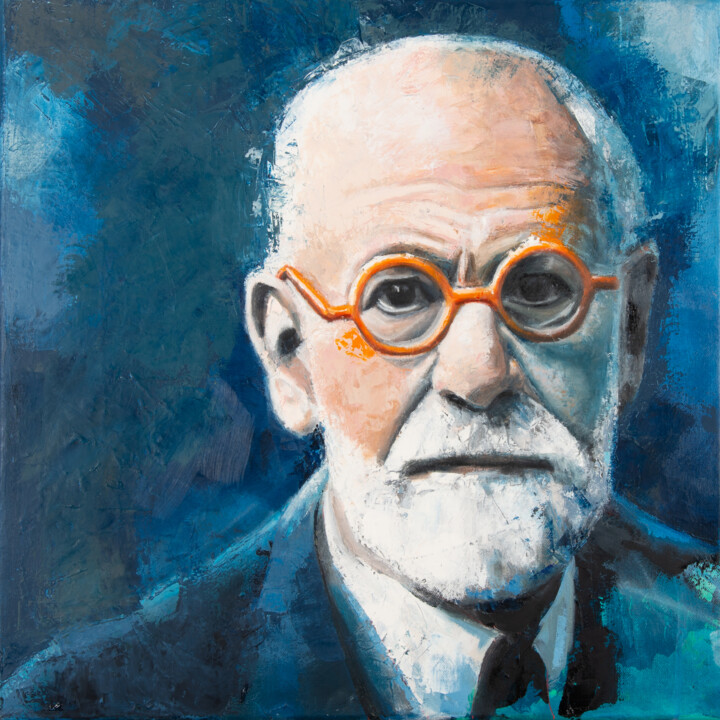
1. Psychoanalytic Aesthetics: Transgressing the Classical Canon
Freud opens The Uncanny by establishing his investigation as an atypical and long-delayed foray of psychoanalysis into the territory of aesthetics.[1:4] Historically, philosophical aesthetics—from Alexander Baumgarten's founding definitions through Immanuel Kant's Critique of Judgment (1790) and Gustav Fechner's psychophysical treatises—had conceptualized the discipline as the study of the beautiful (das Schöne), the harmonious, and the attractive.[1:5][4] When classical aesthetics did address negative or overwhelming affects, it elevated them to the "sublime"—a state of majestic awe, overwhelming vastness, or physiological terror that ultimately reaffirms human moral dignity and cognitive transcendence, as formulated by Edmund Burke and Kant.[4:1][5]
                 [ THE CLASSICAL VS. PSYCHOANALYTIC AESTHETIC PARADIGM ]
                                            │
         ┌──────────────────────────────────┴──────────────────────────────────┐
         ▼                                                                     ▼
[ CLASSICAL PHILOSOPHICAL AESTHETICS ]               [ FREUDIAN PSYCHOANALYTIC AESTHETICS ]
• Theorists: Baumgarten, Kant, Burke, Fechner        • Theorists: Freud, Rank, Lacan, Kristeva
• Focus: The Beautiful, Symmetrical, Sublime         • Focus: The Uncanny, Repulsive, Abject, Grotesque
• Modality: Conscious contemplation & moral judgment • Modality: Involuntary unconscious symptom & dread
• Spatial Logic: Bounded sanctuary / transcendent awe• Spatial Logic: Breach of domestic envelope (*Unheimliche*)
• Epistemology: Harmonious synthesis of faculty      • Epistemology: Collapse of repression & ego-defense
Traditional aesthetic theory largely bypassed the darker, uncomfortable sensations of the repulsive, the distressing, the eerie, and the horrifying.[1:6] Although nineteenth-century thinkers like Karl Rosenkranz had published Aesthetics of the Ugly (Ästhetik des Hässlichen, 1853), the specific psychological mechanism producing creeping dread remained clinically unmapped. Freud intervened to redefine aesthetics not merely as the philosophical theory of beauty, but as the psychoanalytic science of the qualities of feeling (die Lehre von den Qualitäten des Fühlens).[1:7]
Freud's epistemological rupture was founded on two central psychoanalytic propositions:[1:8]
- The Involuntary Origin of Affect: Uncanny dread is not generated by conscious intellectual appraisal or voluntary artistic contemplation. It operates as an involuntary somatic and emotional shudder triggered when an external stimulus bypasses conscious defenses and strikes an unhealed psychic fracture.
- The Specificity of Psychic Mechanisms: Rather than attributing aesthetic dread to vague notions of "artistic mystique," poetic license, or metaphysical mystery, Freud insisted that the uncanny is governed by precise, predictable psychoanalytic dynamics: primarily the return of repressed infantile complexes (such as castration anxiety) and the momentary revival of surmounted primitive beliefs (such as animism and magical omnipotence).[1:9][2:1]
2. Philological & Etymological Archaeology: The Coincidence of Opposites
Before examining clinical case studies or literary narratives, Freud undertakes an extensive linguistic excavation of the German adjective heimlich across dictionaries, idiomatic usages, and international translations (including Latin, Greek, English, French, and Arabic).[1:10] Freud recognized that linguistic evolution frequently preserves unconscious psychological structures, echoing his earlier findings in The Antithetical Meaning of Primal Words (1910).
                 ┌──────────────────────────────────────────────────┐
                 │       DAS HEIMLICHE (PRIMARY LEXICAL MEANING)    │
                 │     Homely, familiar, domestic, friendly, tame   │
                 └─────────────────────────┬────────────────────────┘
                                           │
                                           │  (Semantic Drift & Concealment)
                                           ▼
                 ┌──────────────────────────────────────────────────┐
                 │      DAS HEIMLICHE (SECONDARY LEXICAL MEANING)   │
                 │   Concealed, kept from sight, secret, clandestine │
                 └─────────────────────────┬────────────────────────┘
                                           │
                                           │  (Psychological Repression & Emergence)
                                           ▼
                 ┌──────────────────────────────────────────────────┐
                 │                 DAS UNHEIMLICHE                  │
                 │   The \"Unhomely\": The return of the repressed    │
                 │   intimacy; that which ought to have remained     │
                 │          secret and hidden, yet has emerged      │
                 └──────────────────────────────────────────────────┘
Relying primarily on Daniel Sanders' Wörterbuch der deutschen Sprache (1860) and Karl Gutzkow's literary observations, Freud reveals a fascinating semantic bifurcation within the single word heimlich:[1:11][6]
- The Primary Semantic Trajectory: Belonging to the house (Heim), intimate, comfortably familiar, tame, genial, and offering domestic warmth and protection from external chaos.
- The Secondary Semantic Trajectory: Withdrawn from the knowledge of others, secret, kept hidden from observation, clandestine, and withheld from light.
Freud discovers that through this second trajectory, heimlich undergoes a dialectical transformation until it converges directly with its lexical antonym, unheimlich (the unhomely, uncanny, or eerie). What is heimlich (secret, hidden away in the house) becomes unheimlich the moment that concealed secret breaks through its enclosure and presents itself to view.[1:12]
To anchor this philological insight in philosophical theory, Freud quotes the Idealist philosopher Friedrich Wilhelm Joseph von Schelling:[1:13]
"Unheimlich nennt man alles, was im Geheimnis, im Verborgenen... bleiben sollte und hervorgetreten ist."
("Uncanny is the name for everything that ought to have remained secret and hidden, and yet has come to light.")[1:14]
Schelling’s aphorism provides Freud with the decisive psychoanalytic bridge. The uncanny is not something utterly novel, foreign, or bizarre. It is, on the contrary, something that was once intimately familiar (heimisch) to the psyche, but has been alienated through the mechanism of psychological repression.[1:15][2:2] The negative prefix un- does not signify an absolute external absence of familiarity; rather, the prefix un- functions as the token of repression (die Marke der Verdrängung).[1:16]
3. The Theoretical Antagonism: Freud vs. Ernst Jentsch (1906)
Freud's essay is framed as an explicit critique and rejection of the prevailing psychological model of the uncanny, formulated thirteen years earlier by German psychologist Ernst Jentsch in his seminal 1906 treatise On the Psychology of the Uncanny (Zur Psychologie des Unheimlichen).[7]
+-----------------------------------------------------------------------------------------------+
|                             JENTSCH VS. FREUD: AESTHETICS OF DREAD                            |
+-----------------------------------+-----------------------------------------------------------+
| ERNST JENTSCH (1906)              | SIGMUND FREUD (1919)                                      |
+-----------------------------------+-----------------------------------------------------------+
| • Cognitive / Epistemological     | • Psychoanalytic / Psychosexual Dynamic                   |
| • "Intellectual Uncertainty"      | • Unconscious Certainty (Return of the Repressed)         |
| • Hesitation between categories   | • Reawakening of infantile trauma & surmounted beliefs    |
| • Locus: Lifelike Automaton / Doll| • Locus: The Castrating Sandman / Loss of Eyes            |
| • Superficial conscious dilemma   | • Deep affective dread rooted in repression               |
+-----------------------------------+-----------------------------------------------------------+
Jentsch's "Intellectual Uncertainty"
Jentsch proposed a cognitive, orientation-based theory of the uncanny. According to Jentsch, uncanny sensations arise whenever an individual experiences "intellectual uncertainty" (intellektuelle Unsicherheit):[7:1]
- An acute failure of cognitive orientation occurs when an object resists clear perceptual categorization.
- The preeminent vehicle for this uncertainty, Jentsch argued, is the doubt as to whether an apparently living entity is actually inanimate (e.g., lifelike wax figures, mannequins, and mechanical androids), or conversely, whether an inanimate object might secretly possess organic life, spirit, or consciousness.[7:2]
- Jentsch situated the source of dread in conscious cognitive hesitation—the uncomfortable mental friction of being unable to resolve sensory evidence into an established mental schema.[7:3]
Freud's Psychoanalytic Rebuttal
Freud strongly disputes Jentsch's cognitive framework, declaring it superficial, psychologically naive, and clinically inadequate:[1:17]
- Intellectual Uncertainty is Neither Necessary Nor Sufficient: Freud points out that human beings frequently encounter ambiguous, unfamiliar, or intellectually uncertain phenomena without experiencing the slightest sensation of uncanny dread. Conversely, deeply uncanny experiences often occur when there is zero intellectual doubt regarding what is being perceived.[1:18]
- The Childhood Paradox of the Doll: Freud observes that young children routinely play with inanimate dolls, treat them as living companions, and even wish for them to come alive, without feeling uncanny terror. If the confusion between animate and inanimate were inherently uncanny, children would be perpetually terrified of their toys. The dread only emerges in adulthood, indicating that a dynamic developmental shift—namely, psychological repression—must be operating.[1:19]
- From Cognitive Hesitation to Psychosexual Conflict: Freud insists that the uncanny shudder is not an intellectual puzzle of categorization, but an affective convulsion rooted in the unconscious. The horror does not stem from "not knowing" what an object is; it stems from the unconscious psyche recognizing all too well a repressed childhood fear or discarded belief that has returned to haunt waking reality.[1:20][2:3]
4. Literary Exegesis: E.T.A. Hoffmann's The Sandman (1816)
To demonstrate the superiority of his psychoanalytic model over Jentsch's cognitive theory, Freud presents a comprehensive literary exegesis of E.T.A. Hoffmann's classic Romantic Gothic tale The Sandman (Der Sandmann).[1:21][8]
                  ┌────────────────────────────────────────┐
                  │    THE SPLIT PATERNAL IMAGO IN         │
                  │       HOFFMANN'S THE SANDMAN           │
                  └───────────────────┬────────────────────┘
                                      │
              ┌───────────────────────┴───────────────────────┐
              ▼                                               ▼
    [ THE BENEVOLENT FATHER ]                       [ THE CASTITYING DEMON ]
• Loving, protective biological parent           • Lawyer Coppelius / Giuseppe Coppola
• Sacrifices self in alchemical blast            • Screams: "Eyes here! Eyes here!"
• Defends Nathanael from mutilation             • Threatens to drop red-hot coals into sockets
              │                                               │
              └───────────────────────┬───────────────────────┘
                                      ▼
                     [ OCULAR TERROR AS CASTRATION ANXIETY ]
               The Sandman tears out children's eyes: Symbolic
               displacement of psychosexual genital mutilation
Automaton Olympia vs. The Castrating Sandman
Ernst Jentsch had cited The Sandman as the prime literary confirmation of his theory, pointing to the lifelike female automaton Olympia—the mechanical singing doll crafted by Professor Spalanzani—as the main source of the story's uncanny effect.[7:4]
Freud dismantles Jentsch's reading by demonstrating that Olympia is merely a subordinate, secondary plot device. The true engine of psychological dread across Hoffmann's narrative is not the mechanical doll, but the mythical, menacing figure of The Sandman:[1:22][8:1]
"He is a wicked man who comes to children when they won't go to bed and throws handfuls of sand in their eyes, so that their eyes jump out of their heads, all bleeding; then he puts the eyes into a bag and carries them to the crescent moon to feed his children, who sit in a nest and have crooked beaks, like owls, with which they pick up the eyes of naughty human children." — E.T.A. Hoffmann, The Sandman (1816)[8:2]
Ocular Mutilation as Displaced Castration Anxiety
Freud investigates why the threat of losing one's eyes evokes an intense, uniquely visceral dread. Drawing upon clinical psychoanalytic experience, dream analysis, and classical mythology (notably Sophocles' Oedipus Rex, where Oedipus blinds himself in self-punishment for incest and parricide), Freud asserts that the fear of damaging or losing one's eyes is a direct psychological substitute and symbolic displacement for castration anxiety:[1:23][9]
- The Eye as Genital Substitute: In the unconscious symbolic economy, the precious, vulnerable, and protruding organ of sight represents the male genital organ. An assault upon the eye represents paternal castration.
- The Split Paternal Imago: In Hoffmann's narrative, Nathanael's psychosexual conflict is dramatized through a dual father figure. The paternal imago is split into two antithetical poles:\n 1. The good, loving father who attempts to shield Nathanael from harm during nocturnal alchemical experiments, ultimately dying in an explosion.\n 2. The terrible, sadistic monster—represented by the lawyer Coppelius and later the optical dealer Giuseppe Coppola (both names stemming from coppo, Italian for eye-socket)—who threatens to unscrew Nathanael's hands and feet and burn out his eyes with glowing coals.[1:24]
- Olympia's Narcissistic Function: Freud explains that Nathanael’s obsessive romantic infatuation with the silent, inanimate Olympia is an expression of his severe infantile narcissism. Olympia does nothing but sigh and gaze passively into Nathanael's eyes through Coppola's enchanted spyglass. She functions as a compliant mirror reflecting Nathanael's own unintegrated ego. When Nathanael stumbles upon Spalanzani and Coppola violently wrestling over Olympia—snatching the doll back and forth until Coppola runs off with the eyeless, mechanical torso, leaving her bloody, detached glass eyes on the floor—Nathanael confronts the raw, undisguised castration trauma. This unmediated return of the repressed shatters his fragile sanity, driving him to suicidal psychosis.[1:25][8:3]
5. Taxonomy of Uncanny Triggers: Two Operational Engines
Freud systematically categorizes uncanny phenomena into two distinct psychoanalytic engines, distinguishing between anxieties that stem from repressed individual developmental complexes and those that arise from surmounted collective cultural beliefs.[1:26]
                             [ TAXONOMY OF UNCANNY PHENOMENA ]
                                             │
         ┌───────────────────────────────────┴───────────────────────────────────┐
         ▼                                                                       ▼
[ 1. RETURN OF REPRESSED INFANTILE COMPLEXES ]         [ 2. SURMOUNTED PRIMITIVE / ARCHAIC BELIEFS ]
• The Doppelgänger / Terrifying Double                 • Animism (Inanimate matter possessing soul)
• Repetition Compulsion & The Death Drive              • Omnipotence of Thoughts (*Allmacht der Gedanken*)
• Severed Limbs & Bodily Fragmentation                 • The Evil Eye & Wish-Fulfillment Curses
• The Maternal Womb as Primal *Heim*                   • Involuntary Automatism & Catalepsy / Madness
Engine 1: The Return of Repressed Infantile Complexes
Infantile psychosexual traumas and developmental stages, once repressed beneath conscious latency, can be abruptly reawakened by real-world events, provoking acute panic.[1:27]
1. The Doppelgänger (The Double) and Otto Rank
Drawing directly upon the pioneering 1914 psychoanalytic study Der Doppelgänger by his close disciple Otto Rank, Freud investigates the terrifying motif of the double in folklore, mythology, and literature (e.g., E.T.A. Hoffmann, Dostoevsky's The Double, and Poe's William Wilson).[1:28][10]
- The Narcissistic Origin: In early developmental history and archaic primitive society, the creation of the "double"—manifested in reflections, shadows, guardian spirits, and the concept of an immortal soul—served as an ego-defense mechanism against bodily annihilation. By projecting an identical replica of the self, primary narcissism ensured that the ego could survive physical death.[1:29][10:1]
- The Inversion into Harbinger of Death: As the human ego matures and develops a critical faculty (the conscience or ego-ideal), this primitive narcissistic projection undergoes a radical inversion. The double ceases to be an assurance of eternal life and transforms into a horrifying omen of mortality, psychic fragmentation, and death. Encountering one's physical mirror image acting autonomously confronts the subject with their own repressed vulnerabilities and inevitable demise.[1:30][10:2]
2. Repetition Compulsion (Wiederholungszwang) & The Death Drive (Thanatos)
Freud notes that the involuntary recurrence of identical events, numbers, or spatial coordinates reliably triggers an uncanny dread that borders on demonic terror.[1:31]
- Spatial Entrapment: Freud recounts a vivid autobiographical experience: while walking through the deserted streets of an unfamiliar Italian provincial town on a hot afternoon, he accidentally found himself in a quarter inhabited by courtesans. Hastening away to escape the quarter, he took several winding detours, only to discover himself returning to the exact same street three consecutive times. Rather than feeling mere amusement, Freud experienced a creeping sense of helplessness and uncanny dread.[1:32]
- Numerical Coincidences: Similarly, when an individual repeatedly encounters the same number throughout a single day (on train tickets, cloakroom receipts, and hotel rooms), the mind suspects a sinister, supernatural intentionality.[1:33]
- Anticipating Beyond the Pleasure Principle: Freud explains that this terror arises because involuntary repetition reminds the ego of the unconscious repetition compulsion (Wiederholungszwang). One year later, in Beyond the Pleasure Principle (1920), Freud would formally tie this compulsion to the Death Drive (Thanatos)—the primal, biological urge within all organic life to cast off the tensions of existence and return to the quietude of the inorganic state.[1:34][11] The uncanny sensation in repetition is the sudden, chilling recognition of the unconscious death drive asserting its mechanical mastery over the conscious will.
3. Severed Limbs and Bodily Dismemberment
The sight of severed hands, detached heads, disembodied dancing feet, or arms moving independently routine induces intense uncanny revulsion.[1:35]
- Freud identifies this somatic horror as a direct manifestation of the castration complex.[1:36]
- When an anatomical limb is severed from the organic unity of the body and displays autonomous mechanical vitality, it literalizes the terrifying possibility of psychosexual mutilation, piercing the subject's bodily integrity (anticipating Jacques Lacan's corps morcelé).[1:37]
4. The Mother's Body: The Ultimate Heim
In a renowned and much-debated formulation, Freud addresses the clinical observation that neurotic male patients frequently report finding female genitalia to be uncanny (unheimlich):[1:38]
"It often happens that neurotic men declare that they feel there is something uncanny about the female genital organs. This unheimlich place, however, is the entrance to the former Heim [home] of all human beings, to the place where each one of us once lived... the unheimlich is what was once heimisch, familiar; the prefix 'un' ['un-'] is the token of repression." — Sigmund Freud, The Uncanny (1919)[1:39]
The maternal womb represents the original, universal dwelling place (Heimat) of human consciousness. The sensation of the uncanny toward the female reproductive anatomy arises from the deep repression of infantile incestuous desires and primal birth memories. The former home is transformed by psychic censorship into an estranged, forbidding abyss.[1:40]
Engine 2: The Revival of Surmounted Primitive Beliefs
Civilized humanity has theoretically surmounted primitive, animistic modes of thinking through scientific rationalism; yet these archaic cognitive structures remain preserved in the unconscious, ready to resurface.[1:41][3:1]
+-----------------------------------------------------------------------------------------------+
|                        SURMOUNTED BELIEFS VS. UNCANNY ACTIVATION                              |
+-----------------------------------+-----------------------------------------------------------+
| ARCHAIC / SURMOUNTED COGNITIVE MODE| REAL-WORLD TRIGGER / UNCANNY PHENOMENON                   |
+-----------------------------------+-----------------------------------------------------------+
| 1. Classical Animism              | Lifelike automatons, waxworks, statues appearing to breathe|
| 2. Omnipotence of Thoughts        | Private curse or malicious wish immediately followed by   |
|    (*Allmacht der Gedanken*)      | an accidental real-world disaster or death                |
| 3. The Evil Eye (*Jettatura*)     | Fear that an envious glance can project physical harm     |
| 4. Return of the Dead             | Apparitions, haunted spaces, living corpses, vampires     |
| 5. Involuntary Mechanical Life    | Epileptic seizures, catatonic stupor, sudden madness      |
+-----------------------------------+-----------------------------------------------------------+
1. Animism and Inanimate Vitality
Animism represents the psychological stage wherein primitive humans populated the natural world with souls, attributing living intentionality and agency to trees, rocks, rivers, and handmade artifacts.[1:42] While modern civilized consciousness has intellectually discarded animism, the unconscious mind retains this ancient perceptual pathway. When an inanimate object—a mechanical automaton, a hyper-realistic silicone android, or a lifelike wax figure—exhibits subtle movements or lifelike gazes, the dormant animistic worldview is momentarily validated, producing an immediate uncanny shudder.[1:43][12]
2. The Omnipotence of Thoughts (Allmacht der Gedanken)
Coined by Freud in Totem and Taboo (1913) via an obsessive-compulsive patient ("The Rat Man"), the "omnipotence of thoughts" refers to the magical belief that one's internal mental wishes, fantasies, and curses possess the power to directly alter the physical, external world.[1:44][13]
- The Evil Eye: The ancient dread of the "Evil Eye" (der böse Blick) stems directly from this mode: the fear that private envy harbored in the mind can project tangible ruin upon another.[1:45]
- Coincidental Manifestation: When an individual harbors a secret, momentary flash of anger toward an acquaintance, and that acquaintance coincidentally falls ill or suffers a fatal accident hours later, the rational civilized mind is seized by uncanny dread. The surmounted belief in magical causality is temporarily confirmed, terrifying the ego with the illusion of its own destructive omnipotence.[1:46]
3. Involuntary Automatism, Epilepsy, and Madness
Freud observes that witnessing epileptic seizures, choreic convulsions, or acute manifestations of madness reliably evokes an uncanny sensation in the onlooker.[1:47]
- The uncanny affect does not arise merely from medical sympathy or natural distress.
- Rather, it awakens the observer's buried suspicion that behind the comforting façade of human conscious autonomy, spiritual dignity, and free will, automatic, mechanical, and purely biological processes are secretly pulling the levers of human action.[1:48][7:5] The human being is exposed as an organic automaton, triggering existential panic regarding somatic control.
6. The Ontological Divide: The Uncanny in Reality vs. Literature
In the third and final section of his treatise, Freud introduces a critical epistemological distinction that separates his aesthetic theory from superficial psychological accounts: the profound divergence between the uncanny experienced in real life and the uncanny encountered in imaginative literature.[1:49]
                     [ THE ONTOLOGICAL DOMAINS OF THE UNCANNY ]
                                         │
        ┌────────────────────────────────┴────────────────────────────────┐
        ▼                                                                 ▼
[ THE UNCANNY IN ACTUAL REALITY ]                       [ THE UNCANNY IN CREATIVE LITERATURE ]
• Highly restricted domain                              • Vastly expanded, versatile aesthetic realm
• Requires breakdown of reality testing                 • Author manipulates the reader's reality criteria
• Triggered when surmounted primitive beliefs           • Generates uncanny affects within fictional worlds
  seem verified by material accidents                   • Does NOT occur in fairy tales (*Märchen*)
• Vanishes when rational causality is reaffirmed        • Demands a realistic setting defamiliarized from within
Reality Testing (Realitätsprüfung)
In physical reality, the scope of the uncanny is severely circumscribed. For an event in actual life to feel uncanny, it must challenge our reality testing (Realitätsprüfung):[1:50]
- A material coincidence must occur that makes discarded archaic beliefs (ghosts, telepathy, curses, returning dead) appear to operate in the physical world.
- If the event is instantly explained by natural rational causes (e.g., a gust of wind blowing open a locked door), the uncanny shudder evaporates immediately, replaced by ordinary relief.
The Author's Sovereign Domain
In imaginative literature, however, the author holds absolute sovereignty over the ontological ground rules of the fictional universe:[1:51]
- The Exemption of Fairy Tales (Märchen): Freud points out that pure fairy tales, mythologies, and heroic epics (such as The Arabian Nights or the tales of the Brothers Grimm) are packed with talking animals, flying carpets, severed heads that speak, and magical transformations—yet they evoke zero uncanny dread.[1:52] This occurs because the author explicitly establishes a fictional world where magic and animism are normal, baseline realities. Because the reader never adopts a stance of modern scientific reality testing within a fairy tale, primitive beliefs cannot be "reawakened" as surmounted; they are simply accepted conventions of the genre.[1:53]
- The Realistic Deception: The literary uncanny operates with maximum potency only when the author creates a realistic, naturalistic fictional setting that mimics the reader's everyday world, and then subtly breaches that reality.[1:54] By pretending to play by the rules of ordinary material reality, the author traps the reader into applying standard reality testing. When supernatural, coincidental, or psychologically distorted phenomena subsequently emerge, the reader is plunged into profound aesthetic and psychoanalytic dread.[1:55]
7. Comparative Theoretical Matrix: Models of Aesthetic Disruption
The following matrix synthesizes how key thinkers in aesthetics, psychoanalysis, spatial theory, and robotics have conceptualized the rupture of familiar experience:
| Theorist & Core Text | Primary Affective Trigger | Psychological / Structural Mechanism | Locus of Vulnerability | Landmark Cultural Artifact | Ultimate Psychic Resolution |
|---|---|---|---|---|---|
| Ernst Jentsch Zur Psychologie des Unheimlichen (1906)[7:6] | Intellectual Uncertainty (intellektuelle Unsicherheit) | Cognitive hesitation between incompatible categories (living vs. dead; animate vs. mechanical). | Conscious sensory processing and perceptual schema. | The automaton Olympia in Hoffmann's The Sandman. | Epistemic classification and rational categorization. |
| Sigmund Freud The Uncanny (Das Unheimliche) (1919)[1:56] | Return of the Repressed & Surmounted Beliefs | Breakthrough of repressed infantile complexes (castration anxiety) or archaic animism into consciousness. | Unconscious defenses and ego boundaries (Marke der Verdrängung). | The Sandman (Coppelius/Coppola tearing out eyes). | Psychoanalytic insight, reality testing, and conscious integration. |
| Edmund Burke A Philosophical Enquiry into the Sublime (1757)[5:1] | The Physiological Sublime | Somatic terror provoked by vastness, darkness, obscurity, privation, and uncontrollable power. | The biological preservation drive and bodily nervous system. | Milton's depiction of Death in Paradise Lost; churning stormy seas. | Transcendental awe and moral elevation at safe removal (delightful horror). |
| Jacques Lacan Seminar X: Anxiety (1962–1963)[14] | Puncture of the Real / Extimité | The traumatic collapse of the Symbolic order; the sudden emergence of the objet petit a in the perceptual field. | The split subject ($) and the imaginary ego envelope. | Holbein's anamorphosis in The Ambassadors; the mirror reflection failing to mimic. | Confrontation with fundamental castration and structural lack (manque). |
| Anthony Vidler The Architectural Uncanny (1992)[15] | Spatial Defamiliarization of Shelter | Transposition of unheimlich into the built environment; domestic haven mutating into a claustrophobic trap. | The architectural boundary and domestic security (Heim). | Edgar Allan Poe's House of Usher; Eisenman's House VI; Libeskind's voids. | Deconstructive critique of architectural functionalism and humanism. |
| Masahiro Mori The Uncanny Valley (1970)[12:1] | Anomaly Violation in Human Likeness | Near-perfect anthropomorphism triggering evolutionary pathogen-avoidance and death-salience instincts. | Perceptual facial processing and social cognition. | Hyper-realistic humanoid androids, prosthetics, and wax corpses. | Re-engineering artificial agents to maintain safe, non-humanoid stylization. |
8. Intellectual Legacy, Cultural Transpositions & Interdisciplinary Theory
Freud's conceptualization of the uncanny has transcended pure psychoanalytic clinic work, developing into one of the most productive critical instruments across twentieth- and twenty-first-century thought:[1:57][2:4]
                                [ INTERDISCIPLINARY DISPERSAL OF DAS UNHEIMLICHE ]
                                                        │
          ┌──────────────────────────┬──────────────────┴──────────────────┬──────────────────────────┐
          ▼                          ▼                                     ▼                          ▼
[ LITERATURE & CINEMA ]    [ THE ROBOTIC VALLEY ]               [ ARCHITECTURAL THEORY ]     [ CONTINENTAL PHILOSOPHY ]
• Gothic & Horror fiction  • Masahiro Mori (1970)               • Anthony Vidler (1992)      • Jacques Lacan (*Extimité*)
• Poe, Kafka, Hoffmann     • Androids & CGI animation           • Domestic defamiliarization • Julia Kristeva (Abjection)
• Hitchcock, Lynch, Cronenberg • Synthetic AI voices            • Modernist panoptic glass   • Mark Fisher (Weird & Eerie)
Literature and Cinema: The Grammar of Suspense and Dread
The uncanny serves as the foundational structural grammar of modern horror, the Gothic tradition, and psychological cinema:[1:58][16]
- The Gothic and Postmodern Novel: From Mary Shelley's Frankenstein and Poe's macabre tales to Franz Kafka's The Metamorphosis (where Gregor Samsa awakens transformed into an insect within the intimate space of his family bedroom) and Don DeLillo's White Noise (where everyday supermarket aisles and consumer brands become sinister harbingers of death), literature systematically exploits the dialectic of domestic haven turned nightmare.
- Cinematic Visions of the Double: In the films of Alfred Hitchcock (Vertigo, Psycho), Roman Polanski (Repulsion, The Tenant), and David Lynch (Blue Velvet, Mulholland Drive, Lost Highway), the Freudian uncanny is given vivid audiovisual form. Lynch’s cinema, in particular, operates entirely within the slippage between idyllic mid-century Americana (heimlich) and the festering, violent rot beneath suburban lawns (unheimlich).
Masahiro Mori and the Robotics Uncanny Valley
In 1970, Japanese roboticist Masahiro Mori formulated the hypothesis of The Uncanny Valley (Bukimi no Tani).[12:2] Mori observed that as robots, mannequins, and computer-generated avatars appear increasingly human, human emotional affinity rises steadily. However, when an artificial figure reaches approximately 85–95% human fidelity, affinity abruptly plunges into acute revulsion and creepiness before rising again at 100% human perfection.[12:3] Mori's cybernetic framework directly confirms Freud’s taxonomy:\n- The near-human robot provokes horror because subtle physical anomalies (glassy gaze, unnatural micro-movements, cold silicone skin) activate dormant animistic expectations, reawakening unconscious anxieties surrounding corpses, automatons, and the death drive.[12:4][17]
- Contemporary developments in synthetic AI voice modulation—analyzed in The Auditory Uncanny Valley (Voice & AI Assistants)—extend this dynamic to the acoustic realm, where near-human artificial voices trigger cognitive revulsion when prosodic rhythms subtly falter.
Anthony Vidler: The Architectural Uncanny (1992)
Architectural historian Anthony Vidler transposed Freud's philological dialectic of heimlich and unheimlich directly into spatial criticism in his groundbreaking study The Architectural Uncanny: Essays in the Modern Unhomely.[15:1] Vidler demonstrates that architecture—the historical instrument designed to provide domestic refuge and bodily shelter—became in modernity the primary apparatus for spatial alienation. From the transparent glass grids of The Bauhaus School (which eliminated comforting shadow and exposed domestic privacy to panoptic surveillance) to the warped grids and fragmented walls of Deconstructivism (Peter Eisenman, Daniel Libeskind, Bernard Tschumi), modern architecture renders the subject permanently unhomed (unheimlich).[15:2]
Jacques Lacan: Extimité and the Objet Petit a
French psychoanalyst Jacques Lacan expanded Freud's das Unheimliche during his 1962–1963 seminar on Anxiety (L'angoisse).[14:1] Lacan coined the neologism extimité (extimacy, or "intimate exteriority") to describe that which is simultaneously the most intimate, central core of the subject, yet radically external, alien, and foreign.[14:2] For Lacan, the uncanny occurs when the protective shield of the Symbolic order is breached, and the subject encounters the objet petit a—the unassimilable real object of desire and terror that exposes the fundamental lack (manque) and constitutive division of the human ego.[14:3]
Phenomenological Psychopathology: Louis Sass on Hyperreflexivity
In contemporary clinical psychology and phenomenology, Louis Sass - Phenomenological Psychopathology and the Self utilizes the architecture of the uncanny to illuminate the experiential world of schizophrenia.[18] Sass demonstrates that schizophrenic delusion is not merely an intellectual defect, but an acute disturbance of ipseity (self-presence) characterized by hyperreflexivity: an exaggerated self-consciousness where the tacit, unreflective background of ordinary life becomes an alien, hyper-salient spectacle. The patient experiences the everyday domestic world as artificial, staged, and profoundly uncanny, mirroring the collapse of the Heim into terrifying theatricality.[18:1]
🎴 Interactive Web Practice (Comprehension Check)
Question 1 (Philology & The Dialectic of Repression): How does Sigmund Freud resolve the lexical paradox of the German adjective heimlich (homely/familiar), and what does its convergence with unheimlich reveal about the psychoanalytic etiology of uncanny dread?
Answer: Sigmund Freud resolves the semantic paradox of heimlich by demonstrating that the word evolves along two distinct, diverging lexical trajectories across the German language. In its first and most common usage, heimlich signifies that which belongs to the home (Heim)—denoting what is domestic, comfortable, intimate, friendly, and securely protected from external threats. However, in its second usage, documented in dictionaries by Daniel Sanders and Karl Gutzkow, heimlich comes to mean that which is withdrawn from the sight of strangers, concealed, kept secret, clandestine, and carefully hidden away from observation.
Through this second trajectory, heimlich undergoes an internal semantic inversion until it coincides precisely with its apparent antonym, unheimlich (the unhomely, eerie, or uncanny). Freud adopts Friedrich Schelling's famous philosophical definition—that the uncanny is "everything that ought to have remained secret and hidden, and yet has come to light"—to bridge lexicography with psychoanalysis.
Psychoanalytically, this convergence proves that the uncanny is not an encounter with something completely unknown, bizarre, or foreign to the human mind. Rather, the uncanny is an experience of something that was once deeply familiar (heimisch), intimate, and native to the unconscious psyche, but was subsequently driven out of conscious awareness through the psychic mechanism of repression. When an external perception or event bypasses ego-defenses and causes this repressed material to unexpectedly re-emerge, it is experienced not with warm recognition, but with terrifying defamiliarization. The negative prefix un- does not indicate an absolute absence of familiarity; it functions as the psychoanalytic marker of repression (die Marke der Verdrängung).
Question 2 (Aesthetic Critique: Freud vs. Ernst Jentsch on The Sandman): Why does Freud reject Ernst Jentsch's concept of "intellectual uncertainty" regarding the automaton Olympia, and how does his counter-reading of E.T.A. Hoffmann's The Sandman reframe the origin of the uncanny in psychosexual terms?
Answer: In his 1906 essay On the Psychology of the Uncanny, Ernst Jentsch argued that the uncanny is primarily a cognitive phenomenon caused by "intellectual uncertainty" (intellektuelle Unsicherheit)—specifically, a state of perceptual hesitation when an observer cannot determine whether an apparently living entity is inanimate (such as a lifelike automaton, mannequin, or wax figure), or conversely, whether an inanimate object might secretly possess organic life. Jentsch cited E.T.A. Hoffmann's Gothic tale The Sandman as the prime literary illustration of this effect, locating the uncanny in the lifelike mechanical doll Olympia.
Freud completely rejects Jentsch's cognitive framework on multiple clinical and interpretive grounds:
- Inadequacy of Cognitive Uncertainty: Freud points out that intellectual uncertainty is neither necessary nor sufficient for uncanny dread. Human beings routinely encounter ambiguous or unfamiliar phenomena without experiencing uncanny terror, while deep uncanny shudders frequently strike when there is zero intellectual doubt regarding what is being observed. Furthermore, young children treat inanimate dolls as living beings with complete comfort, showing that the confusion between living and inert matter is not intrinsically terrifying until adulthood, after psychological repression has taken hold.
- The True Source of Dread in The Sandman: Freud demonstrates that Olympia is merely a subordinate plot device reflecting protagonist Nathanael's infantile narcissism. The genuine engine of dread across Hoffmann's narrative is the mythical monster of the Sandman himself (embodied by the abusive lawyer Coppelius and later the optician Coppola), who threatens to tear out children's eyes and feed them to his owl-beaked offspring on the moon.
- Ocular Trauma as Castration Anxiety: Drawing on psychoanalytic clinical findings and classical mythology (such as Oedipus blinding himself in punishment for parricide and incest), Freud asserts that the fear of damaging or losing one's eyes is a symbolic displacement of castration anxiety. The Sandman represents the punitive, terrifying father-figure who threatens sexual mutilation.
Question 3 (Dual Psychological Engines & The Ontological Domain of Literature): How do the "return of the repressed" and the "revival of surmounted primitive beliefs" operate as distinct mechanisms, and why does imaginative literature possess a vastly broader uncanny repertoire than physical reality?
Answer: Freud categorizes uncanny triggers into two distinct psychoanalytic engines:
- The Return of Repressed Infantile Complexes: This mechanism involves repressed individual psychosexual and developmental material. Key examples include:
- The Doppelgänger (The Double): Originally formulated in primary narcissism as an ego-defense against death (the immortal soul), the double in mature adulthood transforms into a horrifying harbinger of mortality and self-alienation.
- The Repetition Compulsion & Death Drive: Involuntary recurrence of identical situations or numbers triggers dread because it signals the unconscious compulsion to repeat (Wiederholungszwang), ultimately tied to the death drive (Thanatos).
- Severed Limbs & Female Genitalia: Dismembered body parts and the female anatomy reawaken repressed castration complexes and the repressed memory of the womb as the original home (Heim).
- The Revival of Surmounted Primitive Beliefs: This mechanism involves archaic, pre-scientific cultural worldviews that humanity has consciously discarded, but which remain dormant in the unconscious mind. Examples include classical animism (matter possessing agency), the omnipotence of thoughts (magical curses or wishes causing physical events), the Evil Eye, and the return of the dead. When an external event in the physical world seems to validate these discarded beliefs, the surmounted primitive worldview temporarily resurfaces, triggering acute uncanny dread.
In physical reality, the uncanny is severely constrained because it requires a breakdown of "reality testing" (Realitätsprüfung). It only occurs when an external accident makes an impossible primitive belief appear true; the moment rational causality is restored, the uncanny evaporates.
In imaginative literature, however, the author holds sovereign control over the ontological rules of the fictional universe:
- In pure fairy tales (Märchen), mythologies, and fantasy, miracles, animated objects, and talking animals do not evoke uncanny dread because the genre explicitly suspends realistic criteria. Primitive beliefs cannot be "reawakened" as surmounted because they were never disavowed within that fictional framework.
- The literary uncanny achieves maximum power when the author establishes a realistic, familiar world mimicking everyday life, and then subtly breaches that reality. By manipulating the reader's expectation of reality testing, the author orchestrates the return of repressed anxieties and surmounted beliefs with far greater versatility, psychological intensity, and durability than actual physical experience allows.
Resonant Notes
The following notes in the vault share direct thematic, psychoanalytic, and aesthetic connections with Sigmund Freud's The Uncanny (Das Unheimliche):
🔴 Psychoanalysis, Repression & The Divided Subject
- Sigmund Freud — The vault's foundational intellectual biography on Freud's psychoanalytic revolution; The Uncanny marks Freud's preeminent contribution to aesthetics, establishing how unconscious defense mechanisms (repression, the repetition compulsion, castration anxiety, and the death drive) govern cultural, literary, and emotional experience.
- Jacques Lacan — Lacan extends Freud's das Unheimliche through his concepts of extimité (intimate exteriority) and the objet petit a, locating the uncanny at the traumatic threshold where the unassimilable Real ruptures the Symbolic order and estranges the divided subject from their own internal core.
- Jokes and Their Relation to the Unconscious — Freud's companion 1905 aesthetic treatise exploring how unconscious processes negotiate psychic censorship; while jokes utilize condensation and displacement to circumvent repression through pleasurable social laughter, the uncanny marks an involuntary, terrifying collapse of repression.
- Louis Sass - Phenomenological Psychopathology and the Self — Sass's phenomenological analysis of schizophrenia and hyperreflexivity—where the tacit, unreflective background of consciousness decontextualizes into an alien, menacing spectacle ("the truth-taking stare")—provides the clinical psychiatric counterpart to Freud's uncanny estrangement of the familiar.
- Fyodor Dostoevsky (1821-1881) — Dostoevsky's novella The Double (Dvoynik) serves as a foundational literary embodiment of Freud and Otto Rank's Doppelgänger thesis, dramatizing Yakov Petrovich Golyadkin's psychological disintegration as his identical duplicate usurps his social identity and drives him into madness.
- Aldous Huxley's Heaven and Hell (1956) — Huxley's exploration of "negative transfiguration" and the infernal antipodes of human consciousness—where familiar perceptual boundaries dissolve into autonomous, terrifying, and claustrophobic forms—directly mirrors Freud's uncanny return of repressed psychic contents.
🟡 Cognitive Science, Animism & The Uncanny Valley
- On the Psychology of the Uncanny (Zur Psychologie des Unheimlichen) — Ernst Jentsch's seminal 1906 essay serves as Freud's primary theoretical antagonist; Jentsch attributes uncanny dread to cognitive "intellectual uncertainty" regarding animate vs. inanimate boundaries, establishing the earliest framework for psychological defamiliarization.
- The Uncanny Valley (不気味の谷現象) & The Auditory Uncanny Valley (Voice & AI Assistants) — Masahiro Mori's cybernetic hypothesis and its acoustic counterpart modernize Freud and Jentsch's insights, mapping how humanoid androids, prosthetics, and synthetic voices plunge into revulsion when subtle anomalies breach expectations of organic human life.
- Animism — Freud identifies classical animism—the archaic belief that inanimate matter possesses soul, spirit, and intentionality—as a surmounted cognitive worldview whose momentary confirmation in material reality provokes acute uncanny terror.
- Déjà Vu & Déjà vu - Psychologists are exploring this creepy feeling of having already lived through an experience before — Both phenomena share the core experiential architecture of the uncanny: an acute cognitive clash between familiarity and strangeness, where a novel perception feels inexplicably pre-experienced and uncomfortably alienated.
- Cognitive Dissonance — Examines the acute psychological tension and affective discomfort generated when an individual encounters contradictory schemas or sensory cues (such as an automaton exhibiting human behavior), mirroring the cognitive rupture underlying uncanny affects.
- Apophenia — The human cognitive compulsion to detect meaningful patterns, conspiracies, and intentional designs in random data reflects the uncanny resurgence of "the omnipotence of thoughts" and primitive magical thinking.
🟢 Aesthetics, Spatial Estrangement & Gothic Literature
- Anthony Vidler-The Architectural Uncanny — Vidler transposes Freud's linguistic dialectic of heimlich and unheimlich directly into architectural and urban theory, demonstrating how modern dwellings, deconstructivist forms, and metropolitan labyrinths evoke spatial dread by subverting domestic sanctuary.
- The Sublime & Edmund Burke-The Physiological Sublime — Classical aesthetic philosophy contrasted beauty with the awe and terror of the sublime; Freud expands the discipline by investigating the uncanny as a distinct, somatically grounded aesthetic category ignored by traditional philosophy.
- The Nightmare — Henry Fuseli's iconic painting physically manifests the uncanny threshold between sleep and waking reality, the incubus as oppressive double, and repressed psychosexual terror, serving as an aesthetic forerunner to psychoanalytic criticism.
- Edgar Allan Poe (1809-1849) — Poe's Gothic fiction (William Wilson, The Fall of the House of Usher) embodies Freud's primary uncanny tropes: the persecutory Doppelgänger, bodily fragmentation, premature burial, and the decaying domestic mansion as an externalized, collapsing psyche.
- Franz Kafka (1883-1924) — Kafka's narratives literalize the uncanny by dismantling the domestic envelope from within—whether through bodily metamorphosis within the family bedroom (The Metamorphosis) or inescapable, irrational bureaucratic architecture (The Trial).
- René Magritte & Giorgio de Chirico (1888-1978) — Surrealist and metaphysical painters who systematically exploit uncanny techniques: de Chirico's deserted Italian piazzas, exaggerated shadows, and faceless mannequins evoke spatial dread, while Magritte defamiliarizes mundane domestic objects to shatter perceptual complacency.
- Henry James (1843—1916) — James's Gothic masterpiece The Turn of the Screw exemplifies the literary uncanny through sustained epistemic hesitation, where ghostly apparitions in a stately English country house blur the boundaries between objective supernatural menace and the subjective projection of repressed sexual hysteria.
- Don DeLillo Major Themes Analysis — DeLillo extends the uncanny into the postmodern landscape of consumer capitalism, revealing how sterile supermarket aisles, corporate brand mantras, and toxic clouds defamiliarize middle-class suburban sanctuary into unhomely existential dread.
- The Dehumanization of Art — José Ortega y Gasset's 1925 analysis of avant-garde art rejecting sentimental humanism in favor of pure, estranging conceptual forms parallels Freud's exploration of artistic defamiliarization.
- The Work of Art in the Age of Mechanical Reproduction & Walter Benjamin (1892–1940) — Benjamin's diagnosis of mass reproduction stripping the art object of its singular "aura" connects with Freud's analysis of mechanical duplicates, the double, and the loss of unique authentic presence.
- Travis Bickle — Scorsese and Schrader's alienated protagonist in Taxi Driver dramatizes the urban uncanny, converting his taxi into a claustrophobic isolation chamber while his confrontational mirror monologue exemplifies the fractured, paranoid Doppelgänger.
References
Sigmund Freud / The Uncanny (Das Unheimliche) (1919) / In The Standard Edition of the Complete Psychological Works of Sigmund Freud, Volume XVII / MIT Press Archive ↩︎ ↩︎ ↩︎ ↩︎ ↩︎ ↩︎ ↩︎ ↩︎ ↩︎ ↩︎ ↩︎ ↩︎ ↩︎ ↩︎ ↩︎ ↩︎ ↩︎ ↩︎ ↩︎ ↩︎ ↩︎ ↩︎ ↩︎ ↩︎ ↩︎ ↩︎ ↩︎ ↩︎ ↩︎ ↩︎ ↩︎ ↩︎ ↩︎ ↩︎ ↩︎ ↩︎ ↩︎ ↩︎ ↩︎ ↩︎ ↩︎ ↩︎ ↩︎ ↩︎ ↩︎ ↩︎ ↩︎ ↩︎ ↩︎ ↩︎ ↩︎ ↩︎ ↩︎ ↩︎ ↩︎ ↩︎ ↩︎ ↩︎ ↩︎
Sigmund Freud / Totem and Taboo: Resemblances Between the Mental Lives of Savages and Neurotics (1913) / W. W. Norton & Company ↩︎ ↩︎
Immanuel Kant / Critique of Judgment (1790) / Translated by Werner S. Pluhar / Hackett Publishing ↩︎ ↩︎
Edmund Burke / A Philosophical Enquiry into the Origin of Our Ideas of the Sublime and Beautiful (1757) / Oxford World's Classics ↩︎ ↩︎
Daniel Sanders / Wörterbuch der deutschen Sprache (1860) / Otto Wigand ↩︎
Ernst Jentsch / On the Psychology of the Uncanny (Zur Psychologie des Unheimlichen) (1906) / Translated by Roy Sellars / Angelaki: Journal of the Theoretical Humanities ↩︎ ↩︎ ↩︎ ↩︎ ↩︎ ↩︎ ↩︎
E.T.A. Hoffmann / The Sandman (Der Sandmann) (1816) / In The Golden Pot and Other Tales / Project Gutenberg ↩︎ ↩︎ ↩︎ ↩︎
Harold Bloom / Sigmund Freud's The Interpretation of Dreams / Chelsea House ↩︎
Otto Rank / The Double: A Psychoanalytic Study (Der Doppelgänger) (1914) / Translated by Harry Tucker Jr. / UNC Press ↩︎ ↩︎ ↩︎
Sigmund Freud / Beyond the Pleasure Principle (1920) / Translated by James Strachey / W. W. Norton & Company ↩︎
Masahiro Mori / The Uncanny Valley (Bukimi no Tani) (1970) / Translated by Karl F. MacDorman and Takashi Minato / IEEE Robotics & Automation Magazine ↩︎ ↩︎ ↩︎ ↩︎ ↩︎
Adam Kotsko / Creepiness / Columbia University Press ↩︎
Jacques Lacan / The Seminar of Jacques Lacan, Book X: Anxiety (1962–1963) / Translated by A. R. Price / Polity Press ↩︎ ↩︎ ↩︎ ↩︎
Anthony Vidler / The Architectural Uncanny: Essays in the Modern Unhomely / MIT Press ↩︎ ↩︎ ↩︎
Ernst Gombrich / The Sense of Order: A Study in the Psychology of Decorative Art / Phaidon Press ↩︎
Karl F. MacDorman and Hiroshi Ishiguro / The uncanny advantage of using androids in cognitive and social science research / Interaction Studies ↩︎
Louis A. Sass / Madness and Modernism: Insanity in the Light of Modern Art, Literature, and Thought / Harvard University Press ↩︎ ↩︎