Virginia Woolf
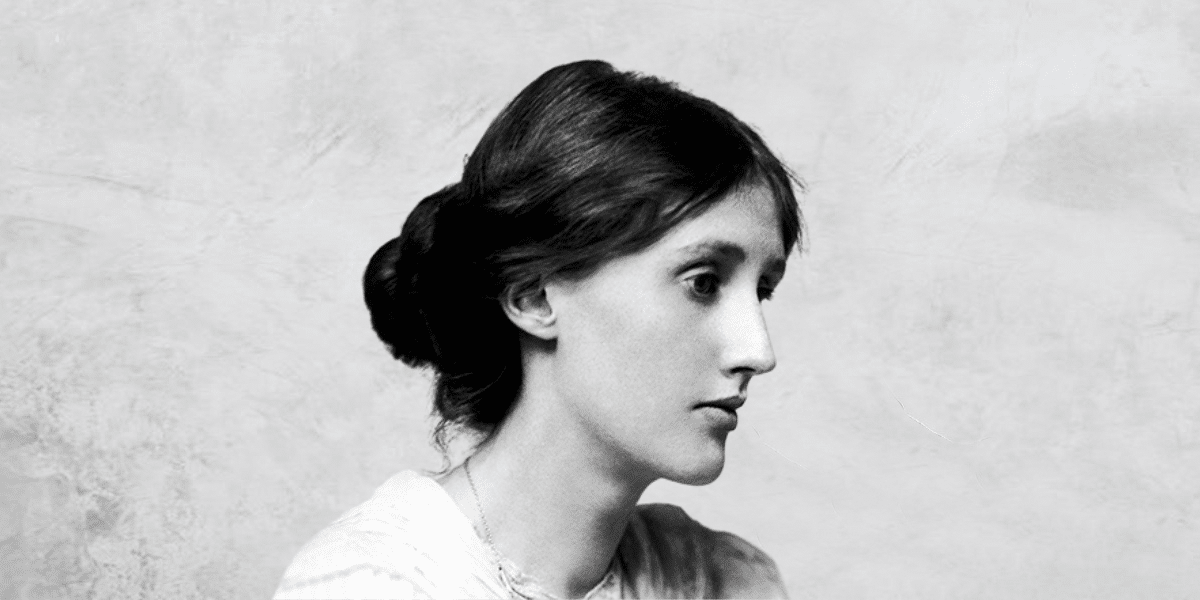
Virginia Woolf (1882–1941) stands as one of the preeminent architects of 20th-century modernist literature, narrative theory, and feminist philosophy.[1] Renowned for dismantling the rigid, plot-driven conventions of 19th-century Victorian realism, Woolf pioneered innovative narrative strategies—including free indirect discourse, the "tunnelling process," and the literary rendering of stream of consciousness—to capture the fluid, atomized reality of human consciousness.[1:1] Beyond her groundbreaking fiction in Mrs Dalloway, To the Lighthouse, and The Waves, her seminal essays—most notably A Room of One's Own and Three Guineas—established an enduring materialist critique of patriarchal institutions, demonstrating how economic disenfranchisement, systemic educational exclusion, and domestic tyranny interlock with imperialist militarism and cultural stagnation.[2]
1. Biographical & Socio-Historical Context
Victorian Domesticity and the Stephen Household
Adeline Virginia Stephen was born in London on January 25, 1882, into an eminent late-Victorian intellectual dynasty.[1:2] Her father, Sir Leslie Stephen, was a towering man of letters, the founding editor of the Dictionary of National Biography, and an outspoken rationalist philosopher. Her mother, Julia Prinsep Stephen (née Jackson), was a celebrated pre-Raphaelite muse and philanthropist who embodied the self-sacrificing Victorian ideal of feminine domesticity.
Woolf's youth unfolded in the family residence at 22 Hyde Park Gate, Kensington—a towering, claustrophobic Victorian townhome dominated by patriarchal authority and social etiquette. While her brothers Thoby and Adrian were sent to formal public schools and subsequently to Trinity College, Cambridge, Virginia and her sister Vanessa Bell were educated strictly at home through private tutors, governesses, and unrestricted immersion in their father's immense personal library.[1:3] This stark institutional exclusion ignited Woolf's lifelong indignation against the masculine monopoly over higher education, a grievance that later formed the intellectual bedrock of A Room of One's Own and Three Guineas.[2:1]
Family summers spent at Talland House in St. Ives, Cornwall, left an indelible mark on Woolf's sensory imagination. The panoramic view of Godrevy Lighthouse across the bay, the rhythmic swell of the Atlantic waves, and the fragile idyll of summer company provided the primary emotional and symbolic raw material for To the Lighthouse and The Waves.[3]
Bereavement, Psychological Trauma, and Illness
The decade between 1895 and 1906 was defined by catastrophic familial loss and emotional rupture:
- In 1895, Woolf's mother died suddenly, precipitating Virginia's first acute nervous breakdown at age thirteen.[1:4]
- In 1897, her beloved half-sister and surrogate maternal figure, Stella Duckworth, died during pregnancy.
- In 1904, Sir Leslie Stephen succumbed to cancer, prompting a prolonged, suicidal breakdown that required institutional convalescence.[1:5]
- In 1906, her eldest brother Thoby contracted typhoid fever during a journey to Greece and died at the age of twenty-six.
Compounding this sequence of domestic bereavement was the pervasive sexual abuse that Virginia and Vanessa suffered in childhood and adolescence at the hands of their older half-brothers, George and Gerald Duckworth—an ongoing trauma that Woolf courageously documented late in life in her autobiographical sketches 22 Hyde Park Gate and A Sketch of the Past.[3:1]
Throughout her adult life, Woolf contended with cyclical manic-depressive illness (now understood as bipolar disorder), enduring recurring bouts of insomnia, intense sensory hallucinations, migraines, and profound depressive paralysis.[1:6] Rather than treating madness as external to her craft, Woolf channeled these acute perceptual states into her fiction—most vividly in her psychological anatomization of the shell-shocked war veteran Septimus Warren Smith in Mrs Dalloway—providing an authentic, phenomenologically rich portrait of trauma and cognitive fragmentation.[1:7]
The Bloomsbury Group & The Hogarth Press
Following Sir Leslie Stephen's death in 1904, Virginia, Vanessa, Thoby, and Adrian made the radical decision to abandon conservative Kensington and relocate to 46 Gordon Square in the bohemian district of Bloomsbury.[1:8] Following Thoby's "Thursday Evenings," their salon quickly crystallized into the Bloomsbury Group—an extraordinary constellation of writers, philosophers, artists, and economists dedicated to intellectual honesty, aesthetic experimentation, and sexual liberalism. Core members included:
- Leonard Woolf: Political theorist, civil servant, and author, whom Virginia married in 1912;
- Vanessa Bell & Clive Bell: Avant-garde post-impressionist painter and art critic;
- Duncan Grant: Radical post-impressionist painter and decorative designer;
- Roger Fry: Visionary curator and art theorist who organized London's pioneering 1910 Post-Impressionism exhibition;
- Lytton Strachey: Biographer who revolutionized the genre with the satirical Eminent Victorians (1918);
- John Maynard Keynes: The era's foremost political economist;
- E. M. Forster: Acclaimed humanist novelist (A Room with a View, Howards End, A Passage to India).
Drawing intellectual inspiration from philosopher G. E. Moore's Principia Ethica (1903)—which asserted that the highest goods in human existence are loving personal relationships and the contemplation of aesthetic beauty—the Bloomsbury circle rejected Victorian moral puritanism, imperialist jingoism, and patriarchal dogma in favor of an egalitarian, secular culture of rational inquiry.[1:9]
                     [ The Bloomsbury Circle ]
             (G. E. Moore's Aesthetics & Social Revolt)
                                 │
     ┌───────────────────────────┼───────────────────────────┐
     ▼                           ▼                           ▼
[ Post-Impressionism ]  [ Literary Innovation ]   [ Materialist Ethics ]
 Roger Fry & Clive Bell   Virginia Woolf &         Leonard Woolf, Keynes &
 (Form, Vision, Color)    Lytton Strachey          Lytton Strachey
     │                   (Tunnelling & Duration)   (Anti-Imperialism & Labor)
     └───────────────────────────┬───────────────────────────┘
                                 ▼
                     [ The Hogarth Press (1917) ]
               Total Artistic and Editorial Autonomy
        (Woolf, T. S. Eliot, Mansfield, Sigmund Freud Translations)
In 1917, seeking therapeutic manual labor for Virginia and complete editorial independence from commercial publishing houses, Virginia and Leonard Woolf purchased a hand-operated printing press and installed it on the dining table of Hogarth House in Richmond.[4] The Hogarth Press evolved from an amateur domestic hobby into one of the most distinguished modernist publishing enterprises in Europe.[4:1]
Crucially, the press liberated Virginia Woolf from the commercial pressures, ideological censorship, and market conservatism of mainstream publishers, enabling her to publish her most daring experimental prose (Jacob's Room, Mrs Dalloway, The Waves). Furthermore, Hogarth introduced seminal avant-garde texts to the Anglophone world, publishing T. S. Eliot's The Waste Land (1923), the stories of Katherine Mansfield, Maxim Gorky's memoirs, and the landmark Standard Edition of the Complete Psychological Works of Sigmund Freud, translated under the supervision of James Strachey.[4:2]
2. Narrative Innovations & Modernist Aesthetic
Woolf's literary theory developed as an explicit revolt against the dominant Edwardian realist novelists—most notably Arnold Bennett, H. G. Wells, and John Galsworthy—whom Woolf labeled "materialists" in her revolutionary manifestos "Modern Fiction" (1919) and "Mr. Bennett and Mrs. Brown" (1924). Woolf argued that Edwardian realism squandered artistic energy on the external apparatus of life—house leases, factory laws, wallpaper patterns, and socio-economic machinery—while completely missing the vital, mercurial essence of human consciousness.[1:10]
"Look within and life, it seems, is very far from being 'like this.' Examine for a moment an ordinary mind on an ordinary day. The mind receives a myriad impressions—trivial, fantastic, evanescent, or engraved with the sharpness of steel. From all sides they come, an incessant shower of innumerable atoms; and as they fall, as they shape themselves into the life of Monday or Tuesday, the accent falls differently from of old... Let us record the atoms as they fall upon the mind in the order in which they fall, let us trace the pattern, however disconnected and incoherent in appearance, which each sight or incident scores upon the consciousness."[1:11]
Stream of Consciousness and the "Tunnelling Process"
While her contemporary James Joyce (1882-1941) deployed an encyclopedic, linguistically acrobatic, and frequently unpunctuated stream of consciousness in Ulysses, Woolf perfected a more lyrical, fluid, and psychological method rooted in free indirect discourse (style indirect libre). Rather than remaining trapped inside a single character's unfiltered soliloquy, Woolf's narrative voice acts as an invisible, porous medium that drifts seamlessly from character to character across physical space, registering external sensory events and internal cognitive responses without abrupt authorial signposts.[1:12]
To construct the psychological architecture of Mrs Dalloway, Woolf devised what she termed in her diary her "tunnelling process":[3:2]
"I have an idea that I will dig out beautiful caves behind my characters; I think that gives exactly what I want; humanity, humour, depth. The idea is that the caves shall connect, & each comes to daylight at the present moment."
Through this tunnelling method, Woolf excavates deep subterranean reservoirs of memory, childhood longing, and repressed dread behind each character. When disparate characters encounter a shared external stimulus in the modern city—the backfiring of a motor car on Bond Street, the skywriting airplane overhead, or the reverberation of Big Ben—their independent cognitive caves interconnect, revealing a shared communal fabric beneath isolated subjective experience.[1:13]
Subjective Duration vs. Chronological Clock Time
Woolf's narrative experiments directly operationalize the temporal philosophy of Henri Bergson. Bergson distinguished between:
- Clock Time (temps): Homogeneous, spatialized, mechanical time measurable by dials, pendulums, and calendars;
- Lived Duration (la durée réelle): Heterogeneous, qualitative, internal consciousness where past, present, and anticipated future seamlessly permeate one another.[1:14]
In Mrs Dalloway (1925), mechanical clock time is relentlessly enforced by the imperial, patriarchal bells of Big Ben, whose chimes strike out across London, dividing lived experience into irrevocable, measurable slices ("First a warning, musical; then the hour, irrevocable"). In diametric opposition to this mechanical grid stands Clarissa Dalloway's subjective mental duration: a single ten-second stroll through Westminster or the sensory act of buying sweet peas expands into decades of nostalgic recollection of her youth at Bourton, her rejection of Peter Walsh, and her unresolved erotic longing for Sally Seton.[1:15]
               [ The Duality of Modernist Time ]
                               │
       ┌───────────────────────┴───────────────────────┐
       ▼                                               ▼
[ Mechanical Clock Time ]                   [ Lived Duration (Durée) ]
  Big Ben / Greenwich Time                    The Stream of Consciousness
  Spatialized, Homogeneous                    Temporal Elasticity & Memory
  Patriarchal, Imperial Authority             Subjective "Moments of Being"
  Linear Progression: 10:00 → 11:00           Past, Present & Future Intermingled
       │                                               │
       └───────────────────────┬───────────────────────┘
                               ▼
            [ Woolfian Narrative Integration ]
    External World Stimulus Interlocks With Subterranean Caves
"Moments of Being" vs. "Moments of Non-Being"
In her posthumously published autobiographical essay A Sketch of the Past (written in 1939), Woolf formulated her central aesthetic and metaphysical concept: the distinction between moments of non-being and moments of being.[3:3]
- Moments of Non-Being: The vast expanse of mundane, unreflective existence—eating breakfast, walking to the post office, mechanical social chatter—which Woolf likened to being wrapped in a protective layer of "nondescript cotton wool."[3:4]
- Moments of Being: Rare, sudden moments of incandescent awareness where the cotton wool tears away, delivering a sudden sensory shock. In these visionary epiphanies, the isolated individual perceives the hidden, organic unity connecting all entities, recognizing that "we are the words; we are the music; we are the thing itself."[3:5]
For Woolf, the supreme obligation of the modernist novelist is not the fabrication of intricate social melodrama, but the precise aesthetic preservation of these luminous moments of being against the indifferent erosion of temporal decay.[3:6]
The Flâneuse and the Poetics of the Metropolis
Rejecting the Victorian domestic confinement that barred respectable women from unescorted public movement, Woolf emerged as a pioneering female stroller—a flâneuse—who reclaimed the modern city as an arena of artistic vision and cognitive liberation. In her brilliant essay "Street Haunting: A London Adventure" (1927), Woolf characterizes the simple pretext of stepping out into the London twilight to buy a pencil as an act of ecstatic spiritual metamorphosis:[1:16]
"The shell-like covering which our souls have concocted to house themselves, which sets us apart from all other people, is broken... As we step out into the street, we shed the self our friends know us by and become part of that vast republican army of anonymous trampers, whose society is so agreeable after the solitude of the room."
This metropolitan wandering directly bridges Woolf's work with The flâneur and The Painter of Modern Life, a seminal 1863 essay by French poet and art critic Charles Baudelaire. For Woolf, the urban stroller becomes a giant, gliding ocular organ—absorbing the sensory kaleidoscope of the modern street, dissolving the bourgeois ego, and reconstructing human empathy through the fleeting observation of strangers.[1:17]
3. Feminist Philosophy & Societal Critique
A Room of One's Own (1929): Materialist Feminist Epistemology
Originating as a series of lectures delivered in October 1928 to the female undergraduates of Newnham and Girton Colleges at Cambridge, A Room of One's Own stands as a foundational masterpiece of materialist feminist theory.[2:2] Refusing to attribute the historical scarcity of great female writers to innate intellectual deficiency or romanticized lack of "genius," Woolf grounds creative production squarely in economic and material reality.[2:3]
                     [ Material Conditions of Art ]
                                 │
     ┌───────────────────────────┴───────────────────────────┐
     ▼                                                       ▼
[ Economic Sovereignty ]                            [ Spatial Privacy ]
 "Five hundred pounds a year"                       "A room with a lock on the door"
 Financial Autonomy from Men                        Immunity from Domestic Interruptions
 Intellectual Fearlessness                         Leisure to Contemplate and Compose
     │                                                       │
     └───────────────────────────┬───────────────────────────┘
                                 ▼
                     [ The Unhindered Mind ]
            Liberation from Gendered Resentment & Bitterness
            Realization of the "Androgynous Mind" (Incandescence)
The core tenets of Woolf's materialist feminist critique include:
- The Materialist Axiom: Woolf famously condenses her thesis into the celebrated axiom: "A woman must have money and a room of her own if she is to write fiction."[2:4] She establishes that poetic genius requires leisure, intellectual freedom, and uninterrupted concentration—luxuries historically monopolized by men of property, while women were legally and financially disenfranchised.
- The Oxbridge Disparity: The essay opens with a brilliant, contrastive sensory tableau: Woolf is served a lavish, decadent luncheon at an all-male Oxbridge college (partridges, wine, rich sauces), financed by centuries of royal and ecclesiastical bequests; this is contrasted with the meager dinner served at the women's college of Fernham (plain soup, beef, greens, prunes, and custard), funded by the hard-won pennies of impoverished women scholars. Woolf demonstrates how physical nourishment, institutional wealth, and intellectual prestige are inextricably linked.[2:5]
- The Thought Experiment of Judith Shakespeare: To explain why no woman in the Elizabethan era produced works comparable to William Shakespeare, Woolf creates the tragic parable of William's imaginary, equally gifted sister, Judith Shakespeare.[2:6] While William attends grammar school, studies Latin, flees to London, finds work in the theater, and receives royal patronage, Judith remains trapped at home, mending socks, beaten by her father for refusing a forced marriage, and barred from schooling. When she escapes to London to seek a life in the theater, actor-managers laugh in her face, she is impregnated by an actor-manager who takes pity on her, and, trapped in an impossible social condition, commits suicide on a winter's night, buried at an unmarked crossroads.[2:7] Woolf shows that systemic institutional violence—not natural incapacity—silenced the female artistic voice.
- The Androgynous Mind: Drawing upon Samuel Taylor Coleridge's dictum that a great mind is androgynous, Woolf argues that the highest state of creative genius is one in which the masculine and feminine faculties of the intellect are harmoniously integrated.[2:8] When a writer writes with self-conscious gender grievance, bitterness, or hyper-masculine aggression, the work suffers from fatal friction; only when the mind achieves androgynous incandescence—exemplified by Shakespeare, Keats, and Proust—does art achieve timeless universality.[2:9]
Gender Fluidity and Biography in Orlando (1928)
Conceived as a playful, affectionate love letter to her aristocratic lover Vita Sackville-West, Orlando: A Biography constitutes one of modernism's most daring interrogations of gender, historical time, and identity.[1:18]
Spanning more than three centuries—from the court of Queen Elizabeth I in 1588 to the exact stroke of midnight on Thursday, October 11, 1928—the protagonist Orlando lives through multiple historical eras without noticeably aging. Halfway through the narrative, while serving as Charles II's ambassador to Constantinople, Orlando falls into a trance and awakens transformed into a biological woman, without experiencing any rupture in mental identity or memory.[1:19]
Through Orlando's transformation, Woolf anticipates modern gender theory (notably Judith Butler's concept of gender performativity) by demonstrating that gender roles, erotic desires, and societal status are socially constructed performances enforced primarily through clothing, legal property codes, and cultural etiquette.[1:20] When Orlando wears breeches, she displays masculine assertiveness and agility; when corseted in heavy Victorian skirts, her mobility and legal rights are curtailed by the patriarchal state.[1:21]
Three Guineas (1938): Pacifism, Patriarchal Fascism, and Institutional Resistance
Published on the precipice of World War II, Three Guineas is Woolf's most politically radical and polemical essay.[1:22] Structured as an epistolary response to an educated barrister who asks how civilized society can prevent war, Woolf examines three requests for a monetary contribution of one guinea each:
- Rebuilding a women's college;
- Supporting an association helping professional women find employment;
- Funding an anti-war, pacifist society.
Woolf establishes an uncompromising structural connection between domestic patriarchal oppression and militaristic European fascism.[1:23] She argues that the authoritarian father who rules the Victorian household with unquestioned tyranny, the public school headmaster who drills boys in bellicose competition, and the pompous military parades of the British Empire stem from the exact same psychological impulse that animates Adolf Hitler and Benito Mussolini in Continental Europe.
Rather than advocating that women join male-dominated institutions on masculine terms, Woolf proposes the formation of "The Outsiders' Society"—an informal network of educated daughters who refuse to participate in military rituals, reject institutional vanity and honors, and resist state violence through passive non-cooperation and intellectual independence.[1:24]
4. Key Works Matrix & Structural Architectures
| Work | Year | Genre | Formal Innovation | Central Thematic Focus |
|---|---|---|---|---|
| Jacob's Room | 1922 | Novel | Fragmentary, indirect portraiture; the protagonist is observed only through empty rooms, letters, and others' eyes. | Post-WWI mourning, the absence of the war dead, critique of Edwardian narrative continuity. |
| Mrs Dalloway | 1925 | Novel | Free indirect discourse, unified twenty-four-hour London timeframe, the subterranean "tunnelling process." | Subjective duration vs. clock time, psychiatric brutality, shell shock, societal repression, Clarissa and Septimus as spiritual doubles. |
| To the Lighthouse | 1927 | Novel | Tripartite architectural design; the lyrical dissolution of narrative agency in "Time Passes." | The transience of life, maternal memory, Victorian domestic dynamics, Lily Briscoe's struggle for artistic form. |
| Orlando: A Biography | 1928 | Novel / Satire | Pseudo-biography spanning 340 years; uninhibited biological sex change and fluid historical consciousness. | Gender as social performance, critique of masculine historiography, erotic fluidity, aesthetic endurance. |
| A Room of One's Own | 1929 | Critical Essay | Persona-driven rhetorical lecturing; the parabolic Judith Shakespeare thought experiment. | Materialist feminism, economic determinants of artistic freedom, institutional misogyny, the androgynous mind. |
| The Waves | 1931 | Experimental Prose Poetry | Six distinct interior monologues interwoven without dialogue or external narrator; cyclic solar/sea interludes. | High modernist ontology, the dissolution of the unified ego, communal consciousness, mortality and language. |
| The Years | 1937 | Chronicle Novel | Blending historical realism with internal monologue across generations (1880–1930s). | Family decay, institutional stagnation, the march of technological and social change in Britain. |
| Three Guineas | 1938 | Political Treatise | Epistolary polemic supported by documentary photographs and extensive investigative endnotes. | Anti-fascism, Christian-patriarchal authoritarianism, pacifism, the Outsiders' Society, institutional militarism. |
| Between the Acts | 1941 | Novel | A communal village historical pageant performed on the eve of World War II. | National memory, historical fragmentation, art as fragile social glue, the impending catastrophe of European war. |
The Double and Shell Shock: Clarissa Dalloway & Septimus Warren Smith
In Mrs Dalloway, Woolf structures the narrative around an invisible, symmetrical relationship between two characters who never meet face-to-face: Clarissa Dalloway, a privileged fifty-two-year-old upper-class society hostess preparing for an evening party, and Septimus Warren Smith, a working-class decorated World War I veteran suffering from catastrophic shell shock (post-traumatic stress disorder).[1:25]
Septimus serves as Clarissa's psychological and spiritual double:
- Clarissa compromises with patriarchal society, represses her illicit passions, and maintains the sparkling, fragile facade of upper-class hospitality;
- Septimus, shattered by the trench warfare that killed his commanding officer Evans, suffers from terrifying cognitive dissociation, hearing birds sing in ancient Greek and seeing visions of the dead;
- His agony is systematically dismissed and pathologized by the medical establishment—personified by the smug Dr. Holmes and the autocratic nerve specialist Sir William Bradshaw—who prescribe isolation, forced rest cures, and intellectual submission to "Proportion" and "Conversion."
When Bradshaw drives Septimus to cast himself from a window onto iron railings rather than surrender his psychological integrity, news of the suicide intrudes upon Clarissa's glittering party. Retiring alone to a small, dark room, Clarissa contemplates Septimus's sacrifice with profound empathy, realizing that his death was not cowardice, but an act of defiance to preserve the sanctuary of the soul:[1:26]
"Death was defiance. Death was an attempt to communicate; people feeling the impossibility of reaching the centre which, mystically, evaded them; closeness drew apart; rapture faded, one was alone. There was an embrace in death... She felt somehow very like him—the young man who had killed himself. She did not pity him; with the clock striking the hour, one, two, three, she did not pity him; she felt his death had been her disaster, her disgrace, her loss."
The Tripartite Architecture of To the Lighthouse
To the Lighthouse (1927) is constructed with the rigorous formal balance of a modernist musical composition, divided into three distinct movements:[1:27]
                  [ Tripartite Structure of To the Lighthouse ]
                                        │
      ┌─────────────────────────────────┼─────────────────────────────────┐
      ▼                                 ▼                                 ▼
PART I: "The Window"         PART II: "Time Passes"          PART III: "The Lighthouse"
One single afternoon/evening  Ten years of abandonment       One single morning
Domestic harmony, childhood   Darkness, winter, decay,       Arrival at the lighthouse;
longing; Mrs. Ramsay's        World War I; Mrs. Ramsay       Reconciliation with the father;
presiding social grace        dies suddenly in brackets [ ]  Lily Briscoe finishes her canvas
      │                                 │                                 │
      └─────────────────────────────────┴─────────────────────────────────┘
                                        ▼
                  "I have had my vision." (Lily Briscoe)
          The Transcendence of Loss Through Modernist Aesthetic Form
- Part I: "The Window": Comprising over half the novel, this section encompasses a single afternoon and evening at the Ramsay family's summer home on the Isle of Skye. It explores the psychological contrast between Mr. Ramsay (an anxious philosopher obsessed with intellectual mortality, measuring genius from A to Z) and Mrs. Ramsay (a maternal presence who unifies disparate human egos through social communion and her famous boeuf en daube dinner).
- Part II: "Time Passes": One of the most daring lyrical passages in Anglophone literature. Human agency is completely excised from the foreground; the narrative voice records the indifferent, corrosive forces of nature—wind, salt air, rust, darkness, and winter damp—as they slowly dismantle the empty vacation home over a decade. Catastrophic human events are delivered as chilling, terse parenthetical asides:
[Mr. Ramsay, stumbling along a passage one dark morning, stretched his arms out, but Mrs. Ramsay having died rather suddenly the night before, his arms, though stretched out, remained empty.][A shell exploded. Twenty or thirty young men were blown up in France, among them Andrew Ramsay, whose death, mercifully, was instantaneous.][Prue Ramsay, who had married in the summer, died that May in some illness connected with childbirth.]
- Part III: "The Lighthouse": Ten years later, the surviving family members and guests return to the dilapidated house. Mr. Ramsay, along with his resentful children James and Cam, finally completes the long-delayed sea voyage to the lighthouse, arriving at an unspoken emotional reconciliation with the memory of Mrs. Ramsay. Simultaneously on the lawn, the unmarried painter Lily Briscoe struggles to complete her canvas. Resisting the patronizing Victorian assertion of Charles Tansley that "women can't write, women can't paint," Lily draws a definitive final line down the center of the canvas, resolving the composition and declaring: "I have had my vision." Art achieves the permanent unification of life that time and death constantly destroy.[1:28]
5. Modern Legacy & Scholarly Reception
Woolf's influence across twentieth- and twenty-first-century literature, critical theory, and gender studies remains foundational:[1:29]
- Modernist Canonization: Alongside James Joyce (1882-1941), Marcel Proust, and William Faulkner, Woolf transformed the possibilities of prose fiction, demonstrating that human reality is constructed not through external mechanics, but within the subterranean currents of cognitive perception.[1:30]
- Feminist Critical Theory: In the 1970s and 1980s, pioneering feminist scholars—such as Sandra Gilbert and Susan Gubar (The Madwoman in the Attic) and Toril Moi (Sexual/Textual Politics)—resurrected Woolf as the foundational architect of Anglo-American and French feminist aesthetics, celebrating her structural deconstruction of phallogocentric language and patriarchal institutions.[2:10]
- Queer and Transgender Theory: Orlando has been embraced as a prophetic precursor to modern queer theory and gender performativity, inspiring generations of scholars to examine the instability of gender categories and the fluidity of desire.[1:31]
- Phenomenological and Cognitive Approaches: Contemporary cognitive literary theorists increasingly analyze Woolf's fiction to understand the neurological and experiential mechanics of theory of mind, sensory perception, and the neural substrates of memory.[3:7]
🎴 Interactive Web Practice (Comprehension Check)
Question 1 (Temporal Mechanics & Subjective Duration): How does Virginia Woolf operationalize Henri Bergson's distinction between mechanical clock time and lived duration in Mrs Dalloway, and what role does the striking of Big Ben play in the narrative?
Answer: In Mrs Dalloway, Woolf directly embodies Henri Bergson's philosophical distinction between mechanical clock time (temps) and lived, qualitative duration (la durée réelle). Mechanical clock time is external, spatialized, and relentlessly chronological; it is embodied by the authoritarian chimes of Big Ben reverberating across London, striking out hours that are described as \"irrevocable.\" This mechanical grid represents patriarchal, state, and imperial authority. In contrast, Woolf reveals that human consciousness operates through lived duration: internal time is fluid, psychological, and non-linear. Within the narrative, a single ten-second pause while Clarissa Dalloway crosses a street or gazes into a florist's window expands to encompass decades of layered memory, childhood sensations from Bourton, and deep existential dread. The tolling of Big Ben functions as a recurring structural pivot that momentarily tethers disparate characters back to the shared physical present, while simultaneously highlighting the infinite depth and elasticity of their private mental worlds.
Question 2 (Materialist Feminism & The Judith Shakespeare Thought Experiment): Why does Woolf argue in A Room of One's Own that creative genius is contingent upon material independence, and how does the parable of Judith Shakespeare prove this thesis?
Answer: Woolf rejects the romantic notion that artistic genius is an ethereal, divine spark that will inevitably triumph regardless of social circumstances. Instead, she articulates a materialist feminist epistemology: intellectual freedom depends upon material things, summarized by her axiom that \"a woman must have money and a room of her own if she is to write fiction.\" Without independent wealth (£500 a year) and private physical space (a lock on the door), an individual remains subject to domestic interruptions, financial subservience to men, and the debilitating psychological friction of resentment. To prove that historical female silence was institutional rather than biological, Woolf invents the thought experiment of Judith Shakespeare, William's equally gifted sister. While William receives grammar school education, family freedom, and theatrical patronage in London, Judith is denied schooling, beaten for resisting an arranged marriage, mocked when attempting to enter the playhouse, and driven to suicide after being impregnated by an actor-manager. Through this tragic parable, Woolf demonstrates that an Elizabethan woman possessing Shakespeare's genius would have been destroyed by the material and patriarchal structures of her society, proving that artistic output is directly determined by economic, educational, and legal emancipation.
Question 3 (War Trauma, The Double & Critique of Psychiatry): In what ways does Septimus Warren Smith function as Clarissa Dalloway's psychological double, and what critique does Woolf level against the psychiatric establishment through his treatment?
Answer: Although Clarissa Dalloway and Septimus Warren Smith never meet, Woolf constructed Septimus as Clarissa's spiritual and psychological double. While Clarissa represents the polished surface of society who has made a workable compromise with upper-class patriarchal expectations, Septimus represents the repressed trauma and madness that society violently rejects. Having returned from World War I suffering from catastrophic shell shock and the death of his friend Evans, Septimus experiences the true horror of European modernity. Through his doctors—the patronizing Dr. Holmes and the autocratic nerve specialist Sir William Bradshaw—Woolf presents a devastating critique of the contemporary psychiatric establishment. Rather than treating Septimus's genuine psychological wounds, the doctors seek to enforce conformity, prescribing enforced rest cures, isolation from books, and absolute submission to Bradshaw's twin idols: \"Proportion\" (social compliance) and \"Conversion\" (the forced reshaping of nonconforming minds). Septimus's suicide is not a surrender to weakness, but an act of supreme defiance to protect his soul from institutional destruction. When Clarissa hears of his death at her party, she intuitively understands his martyrdom, recognizing that his suicide preserved the sacred, unviolated core of human consciousness that society constantly threatens to extinguish.
Resonant Notes
The following notes in the vault share direct thematic, philosophical, and literary connections with Virginia Woolf:
🔴 High Modernism, Epistemology & Temporal Philosophy
- James Joyce (1882-1941) — Woolf and Joyce stand as the twin summits of modernist English prose, simultaneously revolutionizing narrative architecture in the 1920s through the stream-of-consciousness technique. While Joyce achieved mythic maximalism and linguistic pastiche in Ulysses, Woolf perfected free indirect discourse and the subterranean "tunnelling process" in Mrs Dalloway and To the Lighthouse, capturing the iridescent, atomized texture of internal consciousness.
- Henri Bergson & Bergson’s Eliminative Model of Perception and Memory — Bergson's philosophical dichotomy between mechanical clock time (temps) and lived duration (la durée réelle) provides the conceptual foundation for Woolf's narrative design. In Mrs Dalloway, the rigid tolling of Big Ben represents spatialized clock time, contrasted against the expansive subjective duration of Clarissa's memories. Furthermore, Bergson's model of memory—where past experience continually interpenetrates current perception—is directly dramatized in Woolf's characters.
- William James & William James and the Landscape of Eastern Thought — William James coined the term "stream of consciousness" in The Principles of Psychology (1890), articulating the psychological theory of mind as a continuous, flowing river of subjective experience that Woolf translated into high modernist literary technique.
- Henry James (1843—1916) — Henry James's pioneering "central consciousness" method and his architectural metaphor of the "House of Fiction" directly anticipate Woolf's indirect interior monologue, shifting the locus of dramatic conflict from external Victorian melodrama to the granular nuances of perception and psychological reflection.
- Jack Kerouac (1922-1969) — Kerouac's Beat method of Spontaneous Prose ("First Thought, Best Thought") represents an American mid-century descendant of Woolf's stream of consciousness, seeking to bypass the analytical, editing intellect to record the immediate, unfiltered movement of the mind.
🟡 Psychoanalysis, Psychological Trauma & Altered Consciousness
- Sigmund Freud & Freud's The Uncanny (Das Unheimliche) — Virginia and Leonard Woolf's Hogarth Press published the first comprehensive English translations of Freud's works. Woolf's exploration of Septimus Warren Smith's shell shock, repressed bereavement, and the uncanny return of war memories (Das Unheimliche) in Mrs Dalloway mirrors Freud's post-WWI psychoanalytic formulations on war neuroses and the repetition compulsion in Beyond the Pleasure Principle.
- Jacques Lacan — Lacan's psychoanalytic postulation of the "Symbolic Order"—the patriarchal linguistic and social law that governs subjectivity—provides a potent theoretical framework for Woolf's critique in A Room of One's Own and Three Guineas, where masculine institutions impose rigid grammatical and social categories that silence female desire.
- Louis Sass - Phenomenological Psychopathology and the Self — Sass's analysis of schizophrenia as a disorder of "hyper-reflexivity" and altered lived experience rather than mere cognitive deficiency illuminates Woolf's phenomenological depiction of Septimus Warren Smith's madness and her own introspective accounts of manic-depressive breakdown.
- Carl Gustav Jung — Woolf's theory of the "androgynous mind" in A Room of One's Own—the creative necessity of harmonizing masculine and feminine cognitive faculties—directly parallels Jung's psychological concepts of the animus and anima, while the mythic sea interludes of The Waves evoke Jung's collective unconscious.
🟢 Urban Experience, Aesthetics & Political Critique
- The flâneur & The Painter of Modern Life, a seminal 1863 essay by French poet and art critic Charles Baudelaire — Woolf's essay "Street Haunting: A London Adventure" and Clarissa Dalloway's Bond Street stroll represent the birth of the modernist flâneuse. By stepping into the metropolitan crowd, Woolf transforms Baudelaire's male stroller into a female observer who dissolves the bourgeois ego, absorbing the shock and visual kaleidoscope of the modern city.
- Simmel and the Attention Economy — Abstraction, Alienation, and Cognitive Capture & Georg Simmel (1858-1918) — Simmel's classic thesis in The Metropolis and Mental Life—that urban sensory overload generates a protective "blasé attitude" and cognitive abstraction—articulates the sociological condition that Woolf's characters navigate on the bustling streets of post-WWI London.
- Walter Benjamin (1892–1940) & The Work of Art in the Age of Mechanical Reproduction — Benjamin's analysis of the historical "shock" experience of urban modernity, the decay of the aesthetic aura, and the politicization of art in the face of fascism closely mirrors Woolf's pacifist anti-fascist critique in Three Guineas and the collective village performance in Between the Acts.
- The Dehumanization of Art — José Ortega y Gasset's formulation of avant-garde modernism—which rejects 19th-century sentimental melodrama in favor of formal abstraction, forcing the reader to examine the aesthetic lens itself—provides a critical apparatus for understanding Woolf's radical formal departure in The Waves and Jacob's Room.
- George Orwell (1903-1950) — Woolf and Orwell share a profound critique of British imperial hypocrisy, patriarchal authoritarianism, and class stratification. Woolf's dissection of masculine militarism in Three Guineas directly complements Orwell's anti-imperialist essays and his anatomization of totalitarian power structures.
References
Encyclopædia Britannica / Virginia Woolf: Biography, Books, & Facts / britannica.com ↩︎ ↩︎ ↩︎ ↩︎ ↩︎ ↩︎ ↩︎ ↩︎ ↩︎ ↩︎ ↩︎ ↩︎ ↩︎ ↩︎ ↩︎ ↩︎ ↩︎ ↩︎ ↩︎ ↩︎ ↩︎ ↩︎ ↩︎ ↩︎ ↩︎ ↩︎ ↩︎ ↩︎ ↩︎ ↩︎ ↩︎ ↩︎
Encyclopædia Britannica / A Room of One's Own / britannica.com ↩︎ ↩︎ ↩︎ ↩︎ ↩︎ ↩︎ ↩︎ ↩︎ ↩︎ ↩︎ ↩︎
Hermione Lee / Virginia Woolf / Vintage Books / Random House ↩︎ ↩︎ ↩︎ ↩︎ ↩︎ ↩︎ ↩︎ ↩︎