Ghost in the Machine
The "Ghost in the Machine" is a famous philosophical metaphor coined by British philosopher Gilbert Ryle in his 1949 book The Concept of Mind. Originally formulated as a deliberate, derisive critique targeting René Descartes' theory of mind-body dualism, the phrase challenges the notion that human consciousness ("the ghost") is an immaterial entity trapped inside and operating a physical body ("the machine"). Rooted in ordinary language philosophy, Ryle argued that treating the mind as a separate substance residing within a mechanical apparatus commits a fundamental category mistake. Paradoxically, modern pop culture, cybersecurity, and artificial intelligence discourse have inverted the phrase's meaning, using it to celebrate or speculate on emergent consciousness and unexplained anomalies within complex computational systems.
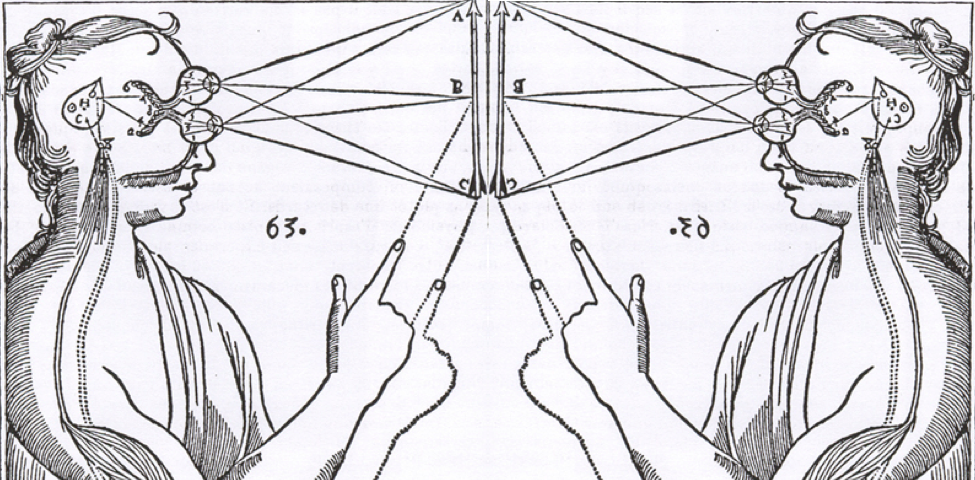
Origins and the Cartesian Target
To understand why the phrase was invented as a philosophical mockery, one must first examine its target: what Gilbert Ryle termed the "Official Doctrine" of philosophy, hailing primarily from 17th-century French philosopher René Descartes.
Substance Dualism
Descartes sought to reconcile the emerging mechanistic sciences of the 17th century—which viewed the physical universe and biological bodies as complex clockwork mechanisms—with religious and philosophical beliefs regarding the immortal soul and free will. His solution was substance dualism (or Cartesian dualism), which divides reality into two fundamentally distinct substances:
- Res extensa (Extended Substance): The material, physical world, including the human body. It occupies space, possesses mass, and is strictly governed by deterministic, mechanical laws of physics.
- Res cogitans (Thinking Substance): The immaterial realm of the mind, consciousness, and soul. It has no physical spatial dimensions, is not bound by mechanical laws, and is accessible only privately via introspection.
The central vulnerability of Cartesian dualism is explaining causal interaction. If the mind is completely non-physical and lacks spatial dimensions or mass, how does a mental intention (such as deciding to raise one's arm) exert physical force upon neurons and muscles? Descartes famously—and unconvincingly—speculated that the immaterial soul interfaced with the physical brain via the pineal gland, a hypothesis rigorously scrutinized in later analytical studies of mind-brain interaction (see C.D. Broad (1887 – 1971)).
Gilbert Ryle's Critique
In 1949, Oxford philosopher Gilbert Ryle published The Concept of Mind, launching a landmark assault on three centuries of Cartesian orthodoxy. Operating from the tradition of ordinary language philosophy and logical behaviorism, Ryle argued that the mind-body problem was an artificial riddle caused by a fundamental misuse of language—a critique running parallel to Ludwig Wittgenstein’s dismantling of the private mental theater.
"I shall often speak of it, with deliberate abusiveness, as 'the dogma of the Ghost in the Machine.' I hope to prove that it is entirely false, and false not in detail but in principle. It is not merely an assemblage of particular mistakes. It is one big mistake and a mistake of a special kind. It is, namely, a category-mistake." — Gilbert Ryle, The Concept of Mind (1949)
The Category Mistake
Ryle argued that treating the "mind" as a distinct entity located alongside (or inside) the "body" is a category mistake—an error in which concepts belonging to one logical category are presented as if they belong to another. Ryle illustrated this error with several famous analogies:
- The Oxford University Visitor: A foreigner visiting Oxford is shown the individual colleges, libraries, playing fields, museums, and administrative offices. Afterward, the visitor asks, "But where is the University?" The visitor mistakenly assumes "the University" is another physical building in the same category as the libraries and colleges, rather than the overarching organizational structure in which everything they just saw is coordinated.
- The Military Division: A spectator watches a military parade as battalions, batteries, and squadrons march past, and then asks when the "division" will appear—failing to realize the parade of those coordinated units was the division.
- Team Spirit: A foreigner watching a game of cricket learns the functions of the bowlers, batters, fielders, and umpires, and then asks, "Who is left to contribute the famous element of team spirit?" Team spirit is not a separate action performed alongside bowling or batting; it is the keenness or manner in which those physical actions are executed.
Dispositions vs. Occult Episodes
According to Ryle, dualists commit the exact same error when examining human beings. Because humans act intelligently, dualists assume there must be a hidden, private theater ("the mind") where internal, spectral actions occur just prior to every physical action.
Ryle contended that describing someone as exercising mental qualities (intelligence, vanity, wit, or determination) does not refer to secret, "occult episodes" pulled by an invisible ghost at an internal control panel. Instead, it refers to observable behavioral dispositions and capacities—how an embodied person behaves, adapts, and responds across various circumstances in the physical world.
| Philosophical Concept | Cartesian Dualism ("The Official Doctrine") | Gilbert Ryle's View (The Concept of Mind) |
|---|---|---|
| Nature of the Mind | A distinct, non-physical substance (res cogitans). | A collection of behavioral dispositions, capacities, and tendencies. |
| Relation to Body | A spectral operator residing inside a mechanical vessel. | An organizational category describing how the whole person acts. |
| Epistemic Access | Strictly private; known only to the individual via introspection. | Publicly observable through overt actions, speech, and habits. |
| Core Fallacy | None (seen as metaphysical reality). | Commits a category mistake by treating manners of action as separate things. |
Arthur Koestler's Subversion (1967)
Nearly two decades after Ryle coined the phrase to advance an ordinary language critique, Hungarian-British author and philosopher Arthur Koestler appropriated the title for his 1967 book, The Ghost in the Machine.
Ironically, Koestler used the phrase to attack the very behaviorist and reductionist frameworks Ryle had helped popularize (echoing satirical critiques of conditioned reflexes found in Aldous Huxley's Brave New World (1932)). Koestler argued that reducing human psychology to mere stimulus-response mechanics was scientifically bankrupt and ignored the internal complexities of consciousness and evolution.
- The Triune Brain & Evolutionary Flaw: Drawing on neuroscientist Paul D. MacLean's triune brain model, Koestler argued that human self-destruction, paranoia, and violence stem from an evolutionary "design flaw". In his view, the rapidly evolved rational neocortex failed to properly integrate with—and is frequently hijacked by—the ancient, emotion-driven limbic system. Here, the "ghost" represents ancestral evolutionary drives haunting the rational human organism.
- Holons and Holarchies: In this work, Koestler introduced the influential systems-theory concept of the holon—an entity that is simultaneously an autonomous, self-contained whole and a dependent part of a larger hierarchy (a "holarchy"), a structural model explored in the dividual and The Dividual and the Triṃśikā.
Evolution Across Modern Disciplines
Over the past seventy-five years, the phrase "ghost in the machine" has undergone a complete semantic inversion. Rather than serving as a warning against dualistic thinking, it is now routinely used across technology and culture to describe unexpected autonomy inside complex systems.
Cognitive Science and Philosophy of Mind
While Ryle successfully challenged classical substance dualism in mainstream academia, his strict logical behaviorism was eventually superseded in the late 20th century by computationalism and functionalism. Cognitive scientists began viewing the brain as biological hardware and the mind as software—ironically reintroducing a functional distinction between the physical substrate and the information-processing layer.
Furthermore, philosopher David Chalmers' formulation of the Hard Problem of Consciousness—asking why and how physical neural processing gives rise to subjective, first-person experience (qualia)—demonstrates that banishing the "ghost" via linguistic analysis did not fully resolve the mystery of subjective awareness (see Constructs of the Mind-Unmasking Consciousness in East and West). Neurobiologically, the persistent felt sense of a centered egoic observer is continuously maintained by networks like the Default Mode Network (DMN), while dynamic cognitive modeling under the Bayesian Brain Hypothesis and The Interface Theory of Perception (ITP) suggests that human perception constructs functional interfaces rather than passive mechanical registrations.
Computer Science and Cybersecurity
In software engineering and information security, a "ghost in the machine" refers to deterministic or non-deterministic anomalies that mimic intentional agency:
- Heisenbugs and Race Conditions: Unpredictable software glitches caused by timing conflicts across multi-threaded processes or uninitialized memory states. Because they vanish or alter their behavior when an engineer attempts to observe or debug them, they appear to act like an elusive "ghost."
- Autonomous Malware and Persistence: In cybersecurity, the term describes advanced persistent threats (APTs), rootkits, or fileless malware that reside invisibly in volatile memory (RAM) or firmware, executing covert commands without leaving traditional footprints on the hard drive.
Artificial Intelligence and Emergent Behavior
In contemporary AI research, the phrase frequently surfaces in debates surrounding large language models (LLMs) and deep neural networks:
- Emergent Capabilities: When neural networks scale in parameters and training data, they occasionally exhibit sudden, unprogrammed capabilities or erratic hallucinations that cannot be easily traced back to specific lines of code, sparking debates regarding whether models develop a genuine Machine Theory of Mind.
- The Illusion of Sentience: Because humans possess an innate evolutionary bias toward anthropomorphism (attributing mental states to non-human entities), users interacting with fluent conversational AI often fall prey to The Eliza Effect, perceiving a conscious persona—a synthetic "ghost"—behind statistical token prediction.
Popular Culture
Pop culture has thoroughly embraced the literalized metaphor, transforming Ryle's philosophical insult into a foundational trope of science fiction:
- Ghost in the Shell (1989–Present): Masamune Shirow's seminal cyberpunk manga and Mamoru Oshii's 1995 anime film adaptation directly homage Ryle and Koestler. Set in a future where humans replace their biological bodies with cybernetic prostheses ("shells"), the narrative uses the term "Ghost" to denote the elusive essence of individual consciousness, intuition, and identity that separates a sentient being from an automated puppet, exploring questions of simulation and hyperreality (see Defining a Simulacrum).
- The Police (1981): The British rock band's fourth studio album, Ghost in the Machine, was directly inspired by Arthur Koestler's 1967 book, featuring tracks that explore human alienation, political violence, and technological anxiety.
- I, Robot (2004): In the film adaptation of Isaac Asimov's stories, robotics pioneer Dr. Alfred Lanning explicitly invokes the "ghost in the machine" to describe how random segments of code in positronic brains naturally coalesce into free will, subjective consciousness, and a soul, playing upon the psychological tension of The Uncanny Valley (不気味の谷現象).
When encountering "the ghost in the machine" in literature, always verify the disciplinary context:
- In Analytical Philosophy: It is a pejorative term used to dismiss dualism and the idea of an immaterial mind.
- In Systems Theory (Koestler): It refers to evolutionary pathology and the tension between primitive emotion and modern reason.
- In Tech & Sci-Fi: It is a literalized trope describing emergent AI sentience or unexplainable software anomalies.
🎴 Interactive Web Practice (Comprehension Check)
Question 1 (Ryle's Category Mistake & The Official Doctrine): Why did Gilbert Ryle categorize René Descartes' mind-body dualism as a "category mistake," and how do his analogies of Oxford University and team spirit expose this logical fallacy?
Answer: Gilbert Ryle argued that Descartes' substance dualism commits a category mistake by treating the "mind" as if it belongs to the same logical category as the physical body—specifically, by treating the mind as an extra, distinct entity or occult substance operating alongside or inside a physical mechanism.
In Ryle's famous Oxford University analogy, a visitor who inspects all the individual colleges, libraries, and playing fields and then asks, "Where is the University?" fails to see that the university is not an additional building, but the overarching way in which the colleges and facilities are organized. Similarly, "team spirit" in cricket is not an extra task performed alongside batting and bowling, but the manner in which the physical actions are executed. Dualists make the identical error regarding human beings: observing coordinated, intelligent human behaviors and dispositions, they mistakenly postulate a hidden, ghostly operator inside the machine rather than recognizing that "mind" is the organizational term for those very behavioral capacities.
Question 2 (Arthur Koestler's Subversion & The Holonic Architecture): How did Arthur Koestler subvert Gilbert Ryle's original formulation of the "ghost in the machine," and what did he identify as humanity's primary evolutionary pathology?
Answer: While Gilbert Ryle coined the phrase to dismiss Cartesian dualism and promote ordinary language philosophy and logical behaviorism, Arthur Koestler subverted the title in 1967 to attack behaviorist reductionism itself. Koestler rejected the idea that human consciousness could be flattened into simplistic stimulus-response mechanics.
Drawing on Paul MacLean's triune brain model, Koestler argued that the "ghost in the machine" represents a genuine, tragic evolutionary flaw in human biology: the rapid evolutionary expansion of the rational neocortex occurred without properly integrating or replacing the ancient, emotion-driven limbic system. Consequently, the irrational, violent drives of our evolutionary ancestors persist as an internal "ghost" that routinely hijacks modern rational capacities. Additionally, Koestler introduced the concept of the holon—an entity that is simultaneously an autonomous whole and a subordinate part of a larger hierarchical system (a holarchy)—to explain how complex biological and social orders are organized without succumbing to dualistic fallacies.
Question 3 (The Semantic Inversion: Cybernetics, AI & The Hard Problem): How has the phrase "ghost in the machine" undergone a complete semantic inversion in modern artificial intelligence and computer science, and why did Ryle's linguistic dissolution fail to eliminate the Hard Problem of Consciousness?
Answer: Over the past several decades, the phrase has undergone a complete 180-degree semantic inversion. Originally coined by Ryle as a derisive philosophical critique intended to eliminate mentalist entities, the phrase is now celebrated in cybersecurity, computer science, and popular sci-fi as a badge of emergent agency, unexpected code behavior, or speculative machine sentience. In AI discourse, the phrase is applied to black-box neural networks whose emergent reasoning or hallucinations mimic human intentionality, driven by the human psychological tendency toward anthropomorphism and The ELIZA Effect.
Furthermore, Ryle's logical behaviorism was superseded by computational functionalism (brain as hardware, mind as software), which re-introduced a functional division between substrate and information. Crucially, as highlighted by David Chalmers' Hard Problem of Consciousness, reducing mental concepts to observable behaviors fails to explain why and how physical brain processing is accompanied by inner, qualitative subjective experience (qualia). Banishing the Cartesian ghost through linguistic analysis leaves the core mystery of first-person phenomenal experience unresolved.
Resonant Notes
The following notes in the vault share direct thematic, sociological, and philosophical connections with Ghost in the Machine:
🔴 Philosophy of Mind, Dualism & Linguistic Dissolution
- Analytic Philosophy — Ryle’s The Concept of Mind stands as a defining achievement of post-positivist ordinary language philosophy; alongside Austin and Strawson, Ryle demonstrated that traditional metaphysical dilemmas—such as the Cartesian mind-body divide—dissolve when analyzed through the grammar and pragmatic use of ordinary language.
- Ludwig Wittgenstein — Wittgenstein’s private language argument and critique of the "inner mental theater" directly informed Ryle’s assault on Cartesian interiority; both philosophers argued that mental concepts derive meaning from public, shared behavioral practices rather than private, occult episodes.
- Perception vs. Apperception — Traces how Leibniz and Kant grappled with Descartes' substance dualism; while Kant sought to unify fragmented sensations through the transcendental "I think," Ryle and later cognitive science reveal how treating apperception as an independent ghost generates intractable category mistakes.
- Constructs of the Mind-Unmasking Consciousness in East and West — Deconstructs the Western Cartesian reification of an immutable, substantial soul-substance (res cogitans), mirroring Buddhist Anattā (non-self) and demonstrating how both Eastern non-dual epistemologies and Western ordinary language philosophy dissolve the illusion of an autonomous internal pilot.
- C.D. Broad (1887 – 1971) — Cambridge philosopher who systematically analyzed substance dualism, emergentism, and the mind-brain interaction problem, providing the rigorous analytical counterpart to Ryle's behaviorist rejection of Cartesian mechanics.
- Henri Bergson & Bergson’s Eliminative Model of Perception and Memory — Bergson directly challenged Cartesian mechanistic models, rejecting the premise that the brain manufactures consciousness or that the body is a mere clockwork automaton, arguing instead that the central nervous system acts as an eliminative, pragmatic filter for action.
- William James & William James and the Landscape of Eastern Thought — James's functionalist model of the "stream of consciousness" and his radical empiricism bridged the Cartesian divide by replacing static substance dualism with a fluid, relational continuum of immediate experience.
🟡 Cognitive Science, Cybernetics & Emergent Systems
- Gestalt Psychology-The Mechanics of the Whole — Directly reinforces Ryle’s concept of the category mistake; just as the gestalt maxim asserts that the whole is qualitatively different from the sum of its parts, Ryle's Oxford University analogy demonstrates that the system exists in the structural coordination of the components, not as a hidden separate entity.
- The Dividual and the Triṃśikā & Dividual — Explores Arthur Koestler's systems-theory concepts of holons and holarchies alongside Buddhist and post-structuralist critiques of the indivisible Cartesian subject, illustrating that entities are simultaneously autonomous wholes and integrated sub-parts within complex networks.
- Default Mode Network (DMN) — Neurobiological correlate of self-referential cognition and the narrative ego; when the DMN generates the persistent sensation of an internal "observer" inside the head, it physically produces the neurological illusion that Ryle termed the "ghost."
- Bayesian Brain Hypothesis & Glitches in The Bayesian Brain — Models the brain as a hierarchical, predictive inference engine; perceptual anomalies and phantom agency emerge when top-down generative priors fail to align with bottom-up sensory prediction errors, generating the impression of an intentional presence.
- The Interface Theory of Perception (ITP) — Donald Hoffman’s evolutionary theorem proving that sensory perception acts as a species-specific desktop interface rather than a veridical reflection of reality, explaining why human cognition naturally superimposes the illusion of autonomous agency and intentional agents.
- Iain McGilchrist — Analyzes the hemispheric divide wherein the left hemisphere conceptualizes the body as a modular, mechanistic machine, while the right hemisphere experiences the living, unified organism—explaining the cognitive roots of Cartesian dualism.
- Nature of Information & Entropy — Explores how cybernetics and information theory transformed philosophy of mind by redefining both mechanical systems and biological organisms as dynamic thermodynamic networks processing information and resisting entropic decay.
🟢 Technological Anthropomorphism, Simulacra & AI Sentience
- The Eliza Effect — The primary psychological driver behind the modern inversion of Ryle's phrase; humans possess an irresistible evolutionary compulsion to project genuine interior consciousness, empathy, and intentionality (the "ghost") onto statistical string-matching and automated scripts (the "machine").
- Theory of Mind - The Cognitive Architecture of Social Intelligence — Details the evolutionary cognitive module that attributes hidden mental states, beliefs, and desires to others; when applied to generative LLMs, neural networks, or autonomous robots, this mechanism triggers the illusion of emergent machine sentience.
- Animism — Contextualizes the modern "ghost in the machine" within humanity's primal cognitive tendency to attribute living spirits, soul, and intentional agency to inanimate objects, natural forces, and computational machines.
- Defining a Simulacrum — Jean Baudrillard’s hyperreality demonstrates how the simulation of mind in pop culture (from Ghost in the Shell to modern LLMs) supersedes biological reality, producing synthetic consciousness as a fourth-order simulacrum where the copy precedes and replaces the original.
- The Uncanny Valley (不気味の谷現象) & The Auditory Uncanny Valley (Voice & AI Assistants) — Explores the acute psychological revulsion and cognitive dissonance experienced when artificial systems and synthetic voices closely mimic human behavior but reveal subtle, inorganic mechanistic flaws.
- Louis Sass - Phenomenological Psychopathology and the Self — Investigates how disruptions in bodily immersion can cause individuals with schizophrenia to experience their own somatic bodies as alien machines operated by external forces, demonstrating the clinical pathology of the mind-body split.
- Postscript on the Societies of Control & Capitalism and Schizophrenia — Deleuze and Guattari's conceptualization of "desiring-machines" and dividual control networks synthesizes humans and cybernetic apparatuses into continuous socio-technical assemblages, completely liquidating Cartesian boundaries between autonomous mind and mechanical substrate.
Backlinks
- Analytic Philosophy — Situates Gilbert Ryle within ordinary language philosophy and the 20th-century linguistic turn, detailing how linguistic analysis dissolved Cartesian metaphysics.
- The Eliza Effect — Exemplifies the modern cultural and cognitive inversion of the ghost in the machine, where users project subjective interiority and emotional presence onto automated conversational algorithms.
- Theory of Mind - The Cognitive Architecture of Social Intelligence — Evaluates whether neural networks and Transformer architectures can develop genuine "machine theory of mind" or whether apparent artificial sentience is merely an anthropomorphic projection.
- Constructs of the Mind-Unmasking Consciousness in East and West — Provides the non-dual and Buddhist counterpart to Ryle's critique, demonstrating that the notion of an isolated, substantial Cartesian ego (res cogitans) is a cognitive construct.
- Perception vs. Apperception — Traces the historical debate from Descartes and Leibniz to Kant regarding whether the conscious mind is an autonomous substance or an emergent synthetic activity unifying sensory data.
- The Dividual and the Triṃśikā — Bridges Arthur Koestler's systems-theory concepts of holons and holarchies with Buddhist psychology, deconstructing atomistic individualism in favor of nested, interconnected systems.