Theory of the Subject - Jacques Lacan
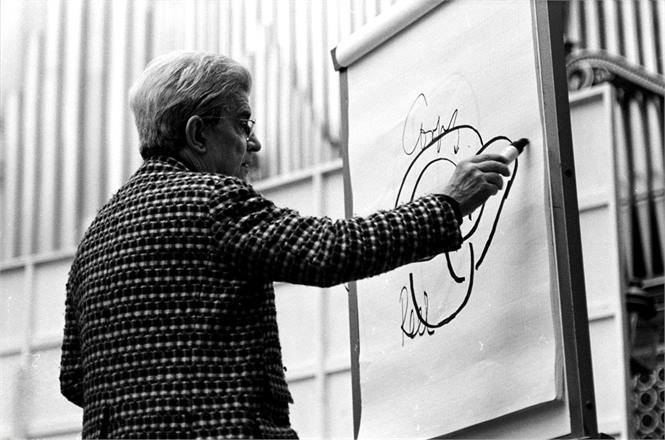
Lacanian psychoanalysis, formulated by French psychiatrist Jacques Lacan, reinterprets Freudian theory through structural linguistics, semiotics, and continental philosophy.[1] Centered on the dictum that "the unconscious is structured like a language," the Lacanian framework replaces biological drive theory with a structural topology composed of three intersecting registers: the Imaginary, the Symbolic, and the Real.[1:1]
1. Epistemological Foundations: The "Return to Freud"
Lacan’s theoretical project originated in the 1950s under the banner of a "Return to Freud" (Retour à Freud).[1:2] Lacan argued that post-Freudian psychoanalysis—specifically Anglo-American Ego Psychology led by Anna Freud, Heinz Hartmann, Ernst Kris, and Rudolph Loewenstein—had fundamentally compromised Sigmund Freud's core discovery.[1:3]
The Critique of Ego Psychology
Where Ego Psychology viewed the ego as an autonomous agency of rational adaptation whose strength should be bolstered to conform the patient to social norms, Lacan asserted that:
- The ego is not the core of conscious autonomy; it is an illusory, alienated construct.[1:4]
- The ego functions as the primary locus of neurosis, defense, and active self-deception (méconnaissance).
- Clinical psychoanalysis should decenter the ego rather than adapt it to societal reality.
The Linguistic and Philosophical Turn
Lacan re-read Freud through three major 20th-century intellectual traditions:
- Ferdinand de Saussure’s Structural Linguistics: Reworking the unconscious processes of condensation and displacement into formal linguistic operations: metaphor and metonymy.[2]
- Claude Lévi-Strauss’s Structural Anthropology: Viewing human culture, kinship, and social taboos as symbolic exchange systems governed by underlying structural rules.[1:5]
- G.W.F. Hegel’s Dialectics: Mediated through Alexandre Kojève’s influential Paris seminars, framing human desire as fundamentally relational—arising from a struggle for recognition by the Other.[1:6]
2. The Three Registers (The ISR Triad)
Lacan mapped psychical reality and human experience across three intertwined registers: the Imaginary, the Symbolic, and the Real.[1:7]
Lacan represented the interdependence of these registers through the Borromean Knot—a topological figure of three interlinked rings arranged so that if any single ring is cut or severed, all three fall apart simultaneously.
       Symbolic
        /    \
       /      \
  Imaginary -- Real
The Imaginary (l'Imaginaire)
The Imaginary is the realm of visual images, specular identifications, dual relationships, and illusions of bodily completeness.[1:8]
- The Mirror Stage (Le stade du miroir): Occurring between 6 and 18 months of age, the human infant—experiencing motor incapacity and perceiving its body as fragmented (corps morcelé)—recognizes and jubilantly identifies with its unified reflection in a mirror or the affirming gaze of the caregiver.[1:9]
- Ego Alienation: This specular identification forms the Ideal Ego (
). The subject becomes permanently alienated from itself by mistaking an external, inverted, static optical image for its authentic internal reality.[1:10]
The Symbolic (l'Symbolique)
The Symbolic is the trans-individual domain of language, the law, kinship networks, and cultural signifiers.[1:11] It transforms the biological human animal into a speaking subject (parlêtre).
- The Big Other (l'Autre,
): The radical alterity of language and symbolic law itself. Unlike the little other (autre, ), which is an imaginary reflection or peer, the Big Other represents the preexisting linguistic and social order that precedes and constructs the subject.[1:12] - The Primacy of the Signifier: Lacan inverted Saussure’s formula, placing the Signifier (
) above the Signified ( ), divided by an impassable bar of repression ( ).[2:1] Meaning is never fixed; it slides continuously along a chain of signifiers.
The Real (le Réel)
The Real is that which resists symbolization and imaginary representation entirely.[1:13]
- It is not everyday physical reality, as our perception of the physical world is always mediated by Symbolic language and Imaginary perceptions.
- It denotes the impossible, unassimilable traumatic residue that cannot be captured in words or enclosed in an image.[1:14]
- The Real erupts during catastrophic trauma, acute psychosis, and severe psychosomatic disruptions where the Symbolic order collapses.
3. The Architecture of Desire and the Subject
Need, Demand, and Desire
Lacan established a precise structural distinction between biological need, vocal demand, and unconscious desire:
| Category | Definition | Modality in Language |
|---|---|---|
| Need | Pure biological drive (e.g., hunger, thirst). | Pre-linguistic; satisfiable by a specific concrete object. |
| Demand | Need formulated and addressed in speech to the Big Other. | Transmutes physical request into an unconditional demand for love and recognition. |
| Desire | The psychic residue left when Need is subtracted from Demand ( | Insatiable and perpetual; cannot be fulfilled by any material object.[3] |
Because desire emerges through the mediation of language addressed to an Other, Lacan formulated his fundamental axiom:
The human subject desires from the structural position of the Other, seeking to discover what the Other desires and longing to be the object that completes the Other's lack.
The Objet Petit a (Object-Cause of Desire)
The
- It is not the desired object itself (such as a partner, a luxury possession, or career prestige).
- It is the object-cause of desire—the phantom, lost residue produced when the pre-linguistic subject is cut by language.[3:2]
- It functions as an elusive void or gap that fuels the subject's ongoing pursuit of satisfaction, sustaining the persistent illusion that wholeness can eventually be retrieved.
4. The Paternal Function & Subjective Clinical Structures
The Name-of-the-Father & Symbolic Castration
Lacan reformatted Freud’s biological Oedipus complex into a structural linguistic process governed by the Name-of-the-Father (Nom-du-Père).[1:15]
- The paternal function intervenes to interrupt the exclusive, dual imaginary union between mother and infant.
- It introduces the law, language, and the incest taboo, instituting Symbolic Castration—the recognition that neither the child nor the mother possesses the universal signifier of completeness (the Phallus).[1:16]
The Diagnostic Triad
Lacan differentiated clinical structures based on how the subject unconsciously defends against Symbolic Castration:
- Neurosis (Repression / Verdrängung):
- The subject accepts the Name-of-the-Father and undergoes symbolic castration.[1:17]
- The law is integrated into the Symbolic register, creating an ongoing conflict between conscious speech and repressed unconscious signifiers.
- Psychosis (Foreclosure / Verwerfung):
- The subject radically forecloses (rejects) the Name-of-the-Father from the Symbolic register altogether.[1:18]
- When an existential event demands this missing paternal signifier, the symbolic scaffolding collapses, triggering an unmediated eruption of the Real in the form of hallucinations and persecutory delusions.[1:19]
- Perversion (Disavowal / Verleugnung):
- The subject simultaneously acknowledges and denies symbolic castration.
- The pervert creates a fetish object to disavow the lack in the Other, attempting to serve as the missing instrument of the Other's enjoyment (jouissance).
5. Clinical Methodology and the Analytic End
Lacanian clinical technique breaks sharply with standardized, timetable-driven therapeutic models and classical IPA (International Psychoanalytical Association) norms.[1:20]
Variable-Length Sessions & Scansion
Rather than abiding by a standard 50-minute clinical hour, Lacanian psychoanalysis utilizes variable-length sessions.[1:21]
- Scansion (Punctuation): The analyst may end the session after twenty minutes or after five minutes, precisely when the analysand produces a significant slip of the tongue, equivocal word, or critical unconscious signifier.[1:22]
- Clinical Rationale: Fixed-length sessions allow the patient's ego to manage conversational time, construct rationalizations, and evade unconscious truths. Abrupt scansion arrests the patient's defenses, compelling them to confront the specific unconscious signifier enunciated at the break.[4]
Traversing the Fundamental Fantasy (Traverser le fantasme)
The ultimate objective of Lacanian psychoanalysis is neither ego adaptation nor standard societal normalization, but the resolution of the fundamental fantasy (
- The Lack in the Other: The analysand comes to recognize that the Big Other is itself incomplete, lacking, and barred (
)—possessing no ultimate secret or guarantee of the subject’s destiny.[3:4] - Subjective Destitution (destitution subjective): Traversing the fantasy requires relinquishing the demand for ultimate wholeness and confronting the constitutive void of existence, transforming the symptom into a creative, workable relation to desire.[3:5]
🎴 Interactive Web Practice (Comprehension Check)
Question 1 (The ISR Registers & Ego Alienation): How does Lacan's conceptualization of the ego in the Imaginary register contrast with traditional Ego Psychology, and why is the Mirror Stage inherently alienating?
Answer: Anglo-American Ego Psychology treated the ego as an autonomous agency of reality-testing, reason, and social adaptation to be strengthened during therapy. In sharp contrast, Lacan situates the ego entirely within the Imaginary register as the locus of illusion, symptom formation, and self-deception. In the Mirror Stage (between 6 and 18 months), an infant—who still experiences its body as uncoordinated and fragmented (corps morcelé)—identifies jubilantly with a unified, external specular image in a mirror or in the gaze of the caregiver. This produces the "Ideal Ego" ($i(a)$). The process is structurally alienating because the child identifies its internal sense of self with a static, inverted, external object outside itself, permanently establishing the ego on a foundation of misrecognition (méconnaissance).
Question 2 (The Dialectic of Desire & Objet Petit a): How does Lacan mathematically and structurally differentiate Need, Demand, and Desire, and what role does the objet petit a play in sustaining human desire?
Answer: Lacan formulates desire through the equation $\text{Desire} = \text{Demand} - \text{Need}$. A Need is a biological, pre-linguistic drive (e.g., hunger) satisfiable by a specific physical object (food). Once a human subject enters language, needs must be addressed to the Other as a Demand (speech). Because demand is addressed to an Other, it inevitably becomes a demand for unconditional love and recognition. The subtraction of quantifiable biological need from total demand leaves an insatiable psychic remainder: Desire. Because desire can never be satisfied by any concrete physical object, it is perpetually sustained by the objet petit a (the object-cause of desire)—the lost residue created when the subject entered language, which forever dangles the illusion that complete wholeness is attainable.
Question 3 (Paternal Function & Clinical Structures): How does the subject's relationship to the "Name-of-the-Father" and Symbolic Castration establish the clinical divide between Neurosis, Psychosis, and Perversion?
Answer: The Name-of-the-Father (Nom-du-Père) is the Symbolic Law that breaks the dual, incestuous imaginary union between infant and mother, enforcing Symbolic Castration (the acceptance that no one possesses the ultimate Phallus or complete wholeness). Lacan defines the three clinical structures by their specific psychic defense against this castration:
- Neurosis (Repression / Verdrängung): The subject integrates the Name-of-the-Father into the Symbolic register, accepts symbolic castration, and experiences ongoing internal conflict between conscious speech and repressed unconscious signifiers.
- Psychosis (Foreclosure / Verwerfung): The subject radically expels or forecloses the Name-of-the-Father from the Symbolic register entirely. When confronted later in life with an existential demand requiring this paternal signifier, the Symbolic network collapses, causing the raw Real to erupt as auditory hallucinations and persecutory delusions.
- Perversion (Disavowal / Verleugnung): The subject intellectually recognizes maternal castration and symbolic limitation, but simultaneously disavows it by erecting a fetish object to imaginary compensate for the lack in the Other.
Resonant Notes
The following notes in the vault share direct thematic, sociological, and literary connections with Jacques Lacan:
🔴 Ego Formation, Alienation & The Divided Subject
- Travis Bickle — Directly applies Lacan’s Mirror Stage and psychosis (specifically the foreclosure of the Name-of-the-Father) to dissect Travis Bickle’s specular narcissism, fragmented ego, and paranoid breakdown in Martin Scorsese’s Taxi Driver.
- Louis Sass - Phenomenological Psychopathology and the Self — Sass's Ipseity-Disturbance Model (IDM) provides a phenomenological account of schizophrenic self-disorder that maps onto Lacan's divided subject and the collapse of the Symbolic register during psychotic foreclosure.
- Gestalt Psychology-The Mechanics of the Whole — The cognitive illusion of the Gestalt—where perceptual synthesis creates a unified form out of disparate parts—parallels Lacan's critique of the ego as an imaginary, synthetic illusion masking the fragmented body (corps morcelé).
- Dividual — The socio-philosophical concept of the dividual—a subject fractured, decomposed, and reassembled across institutional networks—resonates with Lacan’s divided subject (
) constituted by constitutive lack and linguistic alienation.
🟡 Psychoanalytic Roots & Unconscious Language
- Sigmund Freud & Jokes and Their Relation to the Unconscious — Freud's discovery of primary process mechanisms forms the direct groundwork for Lacan's linguistic return; Freud's condensation and displacement are translated by Lacan into the linguistic axes of metaphor and metonymy.
- Freud's The Uncanny (Das Unheimliche) — Freud’s uncanny—the terrifying return of that which ought to have remained hidden—parallels Lacan's Real: the traumatic, unsymbolized remainder that abruptly breaks through the defensive surfaces of the Imaginary and Symbolic.
- Carl Gustav Jung — Jung's archetypal quest for an integrated, complete Self serves as the ultimate theoretical foil to Lacan; where Jung posits an achievable psychic wholeness, Lacan insists that the subject is irremediably divided (
) by language and lack. - William James & William James and the Landscape of Eastern Thought — James's radical empirical distinction between the stream of consciousness and the socially constructed empirical ego parallels Lacan's differentiation between the subject of the unconscious and the alienated ego of the Imaginary.
🟢 Simulation, Media & The Digital Other
- Defining a Simulacrum — Baudrillard's simulacrum originates psychically in Lacan's Mirror Stage: an external image or copy precedes and replaces the fragmented reality of the infant's bodily self, creating an imaginary identity founded upon a simulation.
- The Eliza Effect & The Auditory Uncanny Valley (Voice & AI Assistants) — The psychological propensity to project consciousness, empathy, and meaning onto algorithmic conversational agents demonstrates Lacan’s Big Other in digital form, where users address their insatiable demand for recognition to an empty signifier.
- Postscript on the Societies of Control — Deleuze’s transition from disciplinary enclosures to open, modulatory cybernetic systems mirrors the contemporary dispersion of the Symbolic order, where identity is governed by floating signifiers and digital password controls.
Backlinks
- Jean-Paul Sartre — Sartre’s concept of "The Look" (Le Regard) in Being and Nothingness converges with Lacan’s Mirror Stage on the primacy of the gaze in constituting the subject; while Sartre frames this in existential terms of shame and objectification, Lacan diagnoses it as the structural alienation of mistaking an external specular image for the ego.
- Franz Kafka (1883-1924) — Lacan’s Real—that which resists symbolization and erupts with traumatic arbitrariness—characterizes Kafka’s literary universe, where Josef K. and Gregor Samsa are shattered by the opaque, unyielding, and nonsensical law of the Big Other.
- Georg Wilhelm Friedrich Hegel (1770–1831) — Lacan’s core doctrine that "desire is the desire of the Other" is directly derived from the Hegelian Master-Slave dialectic (transmitted via Alexandre Kojève), asserting that human self-consciousness emerges solely through seeking recognition from another consciousness.
- Continental Philosophy — Lacan occupies a pivotal hinge between structuralism and post-structuralism, overturning the Cartesian cogito ("I think, therefore I am") by demonstrating that the subject does not originate consciousness, but is instead spoken by the Symbolic order ("I think where I am not, therefore I am where I do not think").
- Northrop Frye & Northrop Frye's - Anatomy of Criticism — Lacan's premise that human reality is mediated through an autonomous linguistic network mirrors Frye’s conception of literature as a closed "verbal universe" structured by systemic internal archetypes rather than direct external mimesis.
- René Magritte — Magritte’s The Treachery of Images (La Trahison des images) visually enacts Lacan’s bar of repression between signifier and signified (
): the painted pipe and the statement "Ceci n'est pas une pipe" emphasize the structural fissure between language, representation, and the Real. - Portmanteau (also known as a lexical blend or blend word) — The morphological condensation of language in portmanteau words illustrates Lacan’s structural reformulation of the unconscious, demonstrating how signifiers compress multiple associative chains into single condensed nodes of meaning.
References
Adrian Johnston / Jacques Lacan / Stanford Encyclopedia of Philosophy ↩︎ ↩︎ ↩︎ ↩︎ ↩︎ ↩︎ ↩︎ ↩︎ ↩︎ ↩︎ ↩︎ ↩︎ ↩︎ ↩︎ ↩︎ ↩︎ ↩︎ ↩︎ ↩︎ ↩︎ ↩︎ ↩︎ ↩︎
Jacques Lacan / Écrits: The First Complete Edition in English / W. W. Norton & Company ↩︎ ↩︎ ↩︎ ↩︎
Internet Encyclopedia of Philosophy / Aesthetics in Continental Philosophy / IEP Article ↩︎ ↩︎ ↩︎ ↩︎ ↩︎ ↩︎
UK Therapy Guide / Lacanian Psychoanalysis: A Guide to Therapy, Desire & Self-Discovery / UK Therapy Guide ↩︎