Chesterton's Fence

Chesterton's Fence is a principle of reform and decision-making articulated by G.K. Chesterton in 1929: Do not remove a fence until you understand why it was put there. The principle is a caution against the efficiency-driven impulse to eliminate, optimize, or change something without first understanding its purpose. It is a direct expression of the effectiveness-first logic in Difference Between Efficiency and Effectiveness: before you optimize (do things right), you must first understand whether the thing should exist at all (do the right thing).
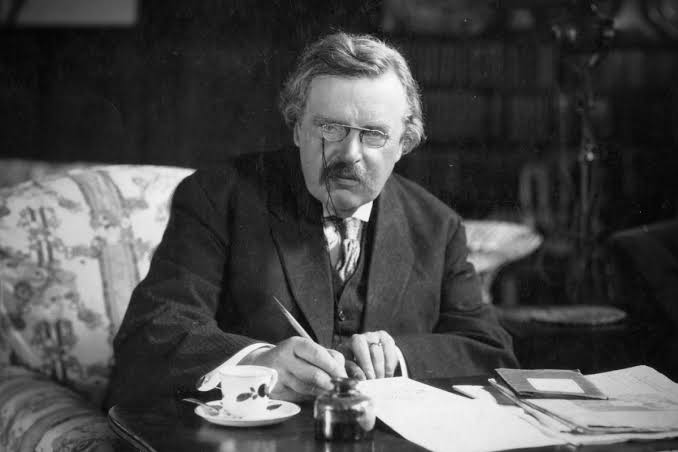
The Original Passage
"In the matter of reforming things, as distinct from deforming them, there is one plain and simple principle; a principle which will probably be called a paradox. There exists in such a case a certain institution or law; let us say, for the sake of simplicity, a fence or gate erected across a road. The more modern type of reformer goes gaily up to it and says, 'I don't see the use of this; let us clear it away.' To which the more intelligent type of reformer will do well to answer: 'If you don't see the use of it, I certainly won't let you clear it away. Go away and think. Then, when you can come back and tell me that you do see the use of it, I may allow you to destroy it.'", G.K. Chesterton, The Thing[1]
The Principle Explained
Chesterton's Fence is not a conservative argument against all change. It is an argument about epistemic humility, the recognition that:
- Institutions and practices often have hidden functions. A rule, process, or structure that seems pointless may serve a purpose that is not immediately visible.
- The burden of proof is on the reformer. If you want to change something, you must first understand it. Ignorance is not a valid basis for reform.
- Understanding precedes action. Effectiveness (choosing the right thing to do) requires understanding the system you are operating in. Efficiency (optimizing) without understanding is dangerous.
Relationship to Efficiency vs. Effectiveness
Chesterton's Fence maps directly onto the Drucker distinction in Difference Between Efficiency and Effectiveness:
The Efficiency Trap
The "modern type of reformer" Chesterton describes is operating in efficiency mode: "I don't see the use of this; let us clear it away." This is the impulse to optimize, streamline, and eliminate without first asking the effectiveness question: "Is this the right thing to be doing?"
The Effectiveness First
The "more intelligent type of reformer" insists on understanding first. This is effectiveness before efficiency, the same logic as Drucker's insight that effectiveness must precede efficiency.
The Four Quadrants
- Remove a fence without understanding it: Efficient but ineffective. You may have saved time and resources while destroying something essential.
- Understand a fence and then remove it: Effective and efficient. You know what you're doing and why.
- Keep a fence without understanding it: Inefficient and potentially ineffective. You're maintaining something whose purpose you don't know.
- Understand a fence and keep it: Effective. You've confirmed its value.
Applications
Business Process
A company has a multi-step approval process that seems bureaucratic and slow. The efficiency-minded manager wants to eliminate it. Chesterton's Fence says: first understand why it exists. It may be a compliance requirement, a risk control, or a legacy of a past failure. Once you understand its purpose, you can decide whether to keep, modify, or remove it.
Software Development
A legacy system has code that appears unused. The efficient impulse is to delete it. Chesterton's Fence says: trace the dependencies first. That "dead code" may be handling an edge case that only arises once a quarter but prevents a catastrophic failure.
Organizational Culture
A company has a ritual that seems pointless, a weekly all-hands meeting, a specific onboarding tradition. The efficient manager cancels it. Chesterton's Fence says: understand what social function it serves. It may be the primary mechanism for cross-team communication or cultural cohesion.
Limitations
- Can be used to block all change. "You don't fully understand it" can be a perpetual excuse for inaction.
- Some fences were badly built. Not every existing practice has a good reason behind it. Some are accidents, superstitions, or the residue of bad decisions.
- Understanding can take too long. In a crisis, you may need to act before you fully understand. Chesterton's Fence is a principle for normal conditions, not emergencies.
🎴 Interactive Web Practice (Comprehension Check)
Question 1 (Core Principle & Epistemic Humility): What is the foundational premise of Chesterton's Fence, and why does Chesterton argue that the burden of proof must fall on the reformer rather than the status quo?
Answer: The foundational premise is that established rules, institutions, and structures often serve latent, complex, or historically evolved functions that are not immediately obvious to an observer. Chesterton argues that ignorance of a structure's purpose is disqualifying: one cannot claim something is useless simply because its utility is not self-evident. Therefore, reformers must first demonstrate a thorough understanding of why the fence was erected and what problems it solved before they are qualified to dismantle or reform it.
Question 2 (Efficiency vs. Effectiveness): How does Chesterton's Fence operationalize the distinction between efficiency and effectiveness, and what characterizes the "Efficiency Trap"?
Answer: Chesterton's Fence operationalizes Peter Drucker's rule that effectiveness ("doing the right things") must precede efficiency ("doing things right"). The "Efficiency Trap" occurs when managers focus solely on speed, streamlining, or cost reduction by immediately clearing away seemingly redundant processes or policies. While removing an unexplained barrier is immediately efficient (saving time or resources), it is deeply ineffective if that barrier was safeguarding the organization against catastrophic risk or system failure.
Question 3 (Managerial Application & Limitations): How should an executive or engineer practically apply Chesterton's Fence without allowing it to degenerate into dogmatic stagnation or analysis paralysis?
Answer: Practical application requires active investigation—such as tracing code dependencies, interviewing legacy team members, or reviewing compliance histories before decommissioning systems or policies. To avoid stagnation (where "you don't understand it completely" becomes a permanent veto), decision-makers must distinguish between legitimate risk mitigations, obsolete legacy solutions, and poorly constructed rules. Chesterton's Fence demands informed intervention rather than uncritical preservation: once the historical rationale is surfaced and weighed against modern conditions, leaders have the mandate to adapt, retain, or remove the structure.
See Also
- Difference Between Efficiency and Effectiveness: The Drucker distinction that Chesterton's Fence operationalizes.
- Goodhart's Law: Another warning about the unintended consequences of optimizing without understanding.
- The McNamara Fallacy: What happens when you measure what is visible (the fence) without understanding its function.
- Satisficing (Herbert Simon): Knowing when you understand enough to act.
References
G.K. Chesterton / The Thing: Why I Am a Catholic / Sheed & Ward, 1929 ↩︎