Stephen Batchelor
Stephen Batchelor (b. April 7, 1953) is a Scottish author, scholar, translator, and meditation teacher recognized as the primary pioneer of Secular Buddhism.[1] Trained for over a decade as an ordained monk in both Tibetan Gelugpa and Korean Son (Zen) traditions, Batchelor advocates stripping traditional Buddhism of its Asian cultural scholasticism, dogmatic metaphysics (such as literal rebirth and karma), and institutional hierarchies. His work proposes an existential, practice-oriented "dharma" that engages directly with modern secular life.[2]
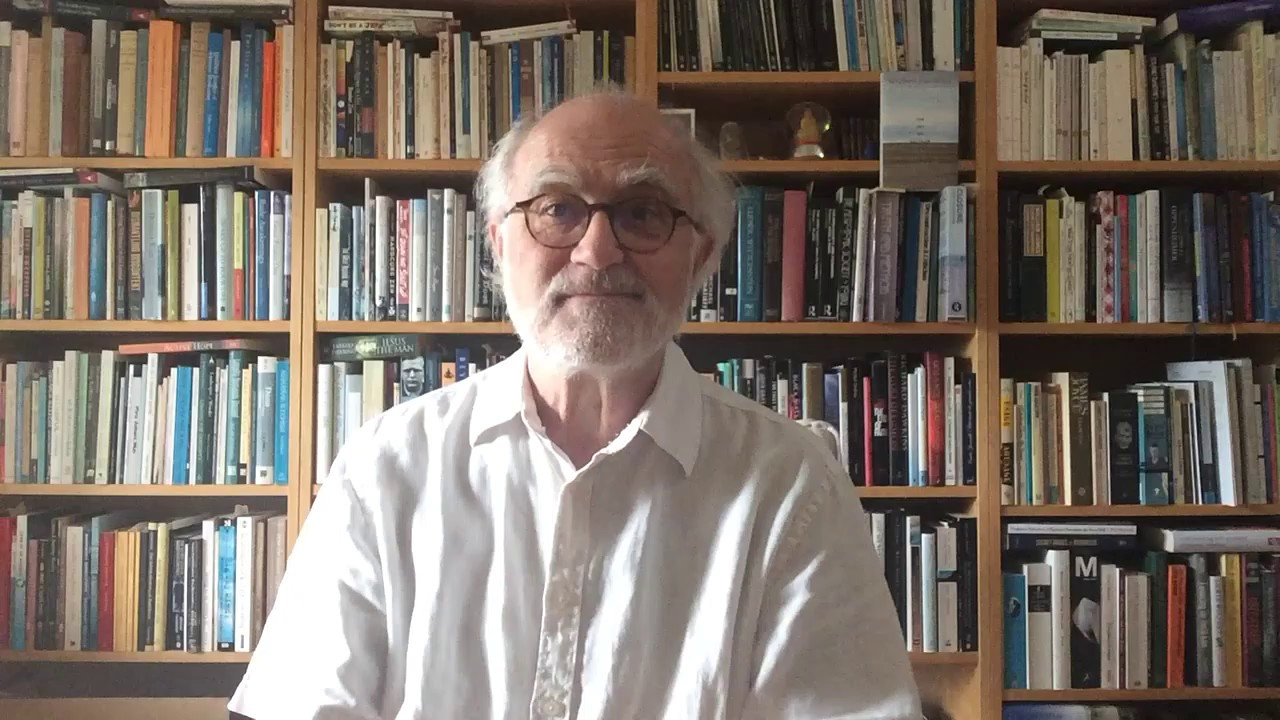
Biographical Evolution
Stephen Batchelor's journey reflects a unique trajectory through monastic traditionalism to modern secular philosophy:
- Early Life & Tibetan Monasticism (1972–1981): At age 19, Batchelor traveled overland to Dharamshala, India, joining the Tibetan exile community.[2:1] He was ordained as a Gelugpa novice monk in 1974 under the tutelage of Geshe Rabten and studied Tibetan language and monastic philosophy.[2:2]
- Transition to Korean Zen (1981–1985): Seeking a practice less reliant on intellectual scholasticism, he moved to South Korea in 1981 to train in Son (Zen) Buddhism at Songgwangsa monastery under Zen Master Kusan Sunim.[2:3]
- Disrobing and Return to the West (1985): Disillusioned by traditional views on cosmology, karma, and unquestioning guru worship, Batchelor disrobed as a monk in 1985.[3] That same year, he married Martine Fages, a former French Zen nun.[3:1]
- Teaching & Institutional Impact: Together with Martine, Batchelor settled in Europe, teaching worldwide at centers like Gaia House and the Barre Center for Buddhist Studies.[3:2] He later co-founded Bodhi College, an educational organization devoted to investigating early Buddhist texts through critical study and contemplative practice.[4]
Core Philosophical Framework: Secular Dharma
Rather than treating Buddhism as a religious belief system to be accepted, Batchelor views the dharma as an existential "operating system" or therapeutic framework designed to foster human flourishing.[5]
The Four Tasks vs. Metaphysical Truths (ELSA)
Batchelor's central intellectual contribution is his reinterpretation of the Four Noble Truths.[5:1] He argues that translating these as "truths" transforms them into metaphysical claims (e.g., "Life is suffering") that require dogmatic belief.[6]
By analyzing early Pāli texts, Batchelor asserts that the Buddha intended them as four practical tasks to be enacted, summarized by the acronym ELSA:[5:2]
- E — Embrace: Embrace the full reality of dukkha (the existential distress, instability, and impermanence of life).
- L — Let go: Let go of reactivity, craving, and defensive grasping.
- S — See: See or behold the cessation of reactivity—noticing moments when the mind is clear, unburdened, and peaceful.
- A — Act / Actualize: Cultivate and act upon an integrated, ethical way of life in the world through ethical action and the Eightfold Path.
Deep Agnosticism
Batchelor champions "profound agnosticism" over religious certainty.[3:3] He encourages practitioners to embrace doubt, radical questioning, and "not-knowing," connecting this attitude to both the skeptical inquiry of Hellenistic philosophy and the radical deconstructive analysis of Nāgārjuna.[3:4] In his view, rejecting doctrines like reincarnation and supernatural realms does not diminish the dharma; rather, it grounds ethics squarely in present, embodied existence.[5:3]
The Ten Theses of Secular Dharma
In After Buddhism (2015), Batchelor articulated ten core principles defining secular practice:[3:5]
- Dharma practice is for this world alone.[3:6]
- Practice consists of enacting the four tasks.[5:4]
- All human beings—regardless of race, gender, or religion—can engage in these tasks.[3:7]
- Dharma practice applies as much to public action and ethics as to private meditation.[3:8]
- Formulations of the dharma are transient human creations contingent on history and culture.[3:9]
Traditional Buddhism vs. Batchelor's Secular Dharma
| Paradigm Dimension | Traditional Religious Buddhism | Batchelor's Secular Dharma |
| :--- | :--- | :--- |
| Foundational View | Metaphysical Truths / Beliefs | Pragmatic Tasks / Enactments |
| Core Cosmology | Rebirth, Karma, Supernatural Realms | Agnostic / Focused on This World |
| Primary Goal | Escape Samsara / Gain Enlightenment | Human Flourishing / Non-reactive Living |
| Authority Model | Monastic Lineage / Guru Devotion | Autonomous, Democratic Peer Community |
| Philosophical Orientation | Asian Scholastic Dogma | Dialogue with Early Texts & Western Thought |\
Key Major Publications
- Buddhism Without Beliefs (1997): The seminal text that introduced agnostic Buddhism to a mainstream Western audience, urging readers to move beyond religious dogma.[3:10]
- Confession of a Buddhist Atheist (2010): Part spiritual memoir, part historical investigation into the human life of Siddhartha Gautama stripped of later mythological additions.[3:11]
- After Buddhism: Rethinking the Dharma for a Secular Age (2015): Batchelor's philosophical magnum opus, outlining the theoretical framework and ten theses of secular dharma.[3:12]
- Secular Buddhism: Imagining the Dharma in an Uncertain World (2017): A collection of essays, lectures, and reflections examining secular practice in contemporary society.[5:5]
- The Art of Solitude (2020): An exploration of aloneness, art, meditation, and living authentically without retreat into dogma.[3:13]
- Buddha, Socrates, and Us: Ethical Living in Uncertain Times (2025): A comparative inquiry placing early Buddhist thought alongside Hellenistic philosophy (e.g., Socrates, Pyrrho) to explore ethics in contingent times.[7]
Reception and Scholarly Debate
While Batchelor's ideas opened the dharma to millions of secular individuals, they have drawn critique from both traditional Buddhist teachers and academic Buddhologists.[6:1]
- Traditional Critique: Critics (such as traditional monastic scholars like Bhikkhu Bodhi or academic scholars like Donald S. Lopez Jr.) argue that removing karma and rebirth distorts the foundational structure of early Buddhism.[6:2] They contend that Batchelor projects modern Western Enlightenment values, existentialism, and secular humanism onto ancient texts.[6:3]
- Secular Response: Batchelor responds that all historical forms of Buddhism (Tibetan, Zen, Theravada) were contingent adaptations to their respective cultural eras.[3:14] Secular Buddhism is simply the necessary modern Western adaptation to address contemporary existential realities.[3:15]
---\n\n## 🎴 Interactive Web Practice (Comprehension Check)
Question 1 (Metaphysical Truths vs. Pragmatic Enactments / The ELSA Model): How does Stephen Batchelor's ELSA framework reconfigure the traditional Four Noble Truths from metaphysical dogmatic propositions into actionable existential tasks, and what philosophical consequence does this shift have for practice?
Answer: Traditional Buddhism historically codified the Four Noble Truths as metaphysical propositions requiring cognitive assent or dogmatic belief (e.g., affirming that phenomenal existence is suffering, that craving is the sole cause, that cessation is achievable in an ultimate nirvanic state, and that a formal path leads there). Batchelor argues that early Pāli suttas originally presented these not as propositional dogmas to believe, but as four phenomenological challenges to enact:
- Embrace: Confronting and leaning into the existential reality of dukkha (contingency, vulnerability, and impermanence) rather than evading or denying it.
- Let go: Relinquishing habitual reactivity, compulsive craving, and defensive grasping as they arise in real time.
- See: Experiencing and beholding the cessation of reactivity—noticing moments when the mind is peaceful, unburdened, and present.
- Act / Actualize: Cultivating an integrated, ethical way of living in the secular world.
The philosophical consequence is profound: spirituality shifts from an otherworldly quest for metaphysical transcendence (escaping the cycle of rebirth) into an immanent therapeutic framework dedicated to ethical living and human flourishing in this life alone.
Question 2 (Deep Agnosticism & The Demarcation from Religious Dogma): How does Batchelor define "profound agnosticism," and how does this stance differentiate Secular Buddhism from both traditional Asian monasticism and reductionist scientism or dogmatic atheism?
Answer: Batchelor defines "profound agnosticism" not as lazy indifference or intellectual indecision, but as an active, disciplined embrace of unknowing, radical questioning, and ontological humility.
- Versus Traditional Monastic Scholasticism: Profound agnosticism rejects the requirement to accept unprovable metaphysical doctrines—such as literal rebirth, karmic debt spanning multiple lifetimes, supernatural realms of existence, and infallible guru authority. Instead, it holds that such doctrines are historical, culturally contingent products of ancient Indian cosmology that are unnecessary for awakening.
- Versus Reductionist Scientism and Dogmatic Atheism: Unlike militant atheism or materialist reductionism, which often asserts absolute epistemic certainty regarding the mechanical nature of reality, Batchelor's agnosticism remains open, contemplative, and phenomenologically receptive. It preserves the existential depth, contemplative silence, moral compassion, and poetic wonder of the contemplative life without needing metaphysical dogma to validate it.
Question 3 (Textual Hermeneutics & Hellenistic Parallels): What hermeneutical method does Batchelor employ to analyze early Buddhist texts, and why does he identify strong historical and philosophical parallels between the early Buddha and Hellenistic thinkers like Socrates and Pyrrho of Elis?
Answer: Batchelor employs a modern historical-critical hermeneutic, peeling back centuries of secondary monastic commentarial scholasticism (such as the Abhidharma literature and Tibetan scholastic dogmatics) to isolate the earliest layers of the Pāli canon. He argues that Siddhartha Gautama was an itinerant, non-dogmatic thinker responding to the urbanization and political upheavals of 5th-century BCE northern India.
This historical-critical recovery reveals striking structural resonances with ancient Greek philosophy:
- Socrates: Both Socrates and Siddhartha operated as democratic street philosophers who challenged priestly orthodoxies, focused relentlessly on practical ethics rather than cosmological speculation, and practiced dialogical cross-examination of human assumptions.
- Pyrrhonian Skepticism: Pyrrho of Elis—who traveled with Alexander the Great's army into northern India—taught that suspending judgment (epochē) regarding unresolved metaphysical assertions brings about unshakeable mental tranquility (ataraxia). Batchelor notes that this precisely parallels the Buddha's refusal to answer metaphysical quandaries (the "unanswered questions" or avyākata) in order to extinguish mental turbulence (nibbāna).
Traditional critics like Bhikkhu Bodhi dispute this hermeneutic, asserting that karma and rebirth were intrinsic to early Buddhism rather than cultural baggage. Batchelor counters that all historical forms of Buddhism are culturally conditioned vehicles, making a secular, Western philosophical synthesis both natural and necessary.
Resonant Notes
The following notes in the vault share direct thematic, sociological, and literary connections with Stephen Batchelor:
🔴 Buddhist Philosophy, Hermeneutics & Ethics
- The Noble Eightfold Path — Batchelor recasts the Eightfold Path from a doctrinal ladder of cosmic purification into the "A" (Act / Actualize) of his ELSA framework, treating its ethical and cognitive limbs as interconnected dimensions of integrated, everyday secular living.
- Sīla - Buddhist Ethics — Batchelor relocates Buddhist ethics from karmic retribution and cosmic merit-making to an immanent, relational responsibility grounded in human vulnerability and social solidarity.
- Nāgārjuna — Batchelor translated and reinterpreted Nāgārjuna's Mūlamadhyamakakārikā (in Verses from the Center), reading Madhyamaka emptiness (śūnyatā) not as mystical absolutism, but as a deconstructive therapy that dissolves metaphysical dogmatism into contingency and radical relationality.
- The Dhammapada — The psychological aphorisms of early Buddhist canonical verse reflect Batchelor’s emphasis on direct, unadorned contemplative observation over secondary scholastic commentaries and ritualistic piety.
- Tibetan Wheel of Life — The visual depiction of the Bhavacakra embodies the traditional cosmology of karma, the six realms, and literal samsaric rebirth that Batchelor explicitly secularizes, interpreting the realms instead as psychological states of grasping, fear, and delusion.
- Epistemology of Preference-Avijjā, Māna, and the Emptiness of Aesthetic Taste in Buddhist Philosophy — Connects directly to Batchelor's deconstruction of identity-clinging (māna) and subjective reactivity, illuminating how aesthetic taste and intellectual dogma are dependently arisen and empty of intrinsic authority.
- Constructs of the Mind-Unmasking Consciousness in East and West — Explores the cross-cultural interrogation of reified ego structures, complementing Batchelor's synthesis of Korean Son (Zen) inquiry with Western critical philosophy.
- Dzogchen — While emerging from Tibetan Vajrayana, Dzogchen's radical emphasis on primordial awareness (rigpa) beyond conceptual fabrication parallels Batchelor's view of "seeing" cessation and resting in naked, unmanufactured presence.
- The Core Instruction - Turning the Gaze Inward — The phenomenological turning inward toward awareness itself mirrors Batchelor's meditation practice, which strips contemplative attention of ritualistic devotion and focuses on unmediated inquiry into experience.
🟡 Existentialism, Skepticism & Hellenistic Thought
- From Mythos to Ataraxia - A Survey of Ancient Greek Philosophy — Batchelor's work (notably Buddha, Socrates, and Us) bridges early Pāli dharma with Greek antiquity, showing how Socrates' ethical questioning and Pyrrho's skeptical suspension of judgment (epochē) achieve an inner tranquility (ataraxia) analogous to Buddhist non-reactivity.
- Albert Camus — Batchelor's secular practitioner resembles Camus's absurd hero: both confront life's inherent contingency, finitude, and lack of cosmic guarantee without fleeing into metaphysical illusions or theological bad faith.
- Jean-Paul Sartre — Sartre’s existentialist principle that "existence precedes essence" directly aligns with Batchelor's rejection of an essentialized, unchanging self (anattā) and his assertion that ethical character is dynamically created through conscious action.
- Søren Kierkegaard — While Kierkegaard responded to existential dread by demanding a "leap of faith" into the transcendent, Batchelor advocates remaining steadfast in profound doubt, utilizing uncertainty itself as fertile ground for ethical flourishing.
- Friedrich Nietzsche — Nietzsche's critique of religious asceticism as life-denying resonates with Batchelor's stripping of world-denying monasticism from the dharma, redirecting spiritual practice toward joyful, this-worldly affirmation and creative flourishing.
- Martin Heidegger — Heidegger's analysis of Dasein as "being-toward-death" and thrownness into temporal finitude underpins Batchelor's claim that fully embracing dukkha requires confronting mortality without relying on comforting doctrines of reincarnation.
- Schopenhauerian Pessimism — Arthur Schopenhauer was the first major Western philosopher to engage deeply with Buddhist thought; however, where Schopenhauer concluded that suffering necessitates ascetic denial of the Will, Batchelor interprets dukkha as an invitation to active, compassionate engagement in the world.
🟢 Consciousness, Pragmatism & Modern Mind
- Jon Kabat-Zinn-Full Catastrophe Living & Jon Kabat-Zinn — Share Batchelor's foundational project of secularizing Buddhist contemplative mechanics, converting the Four Noble Truths and mindfulness into an immanent clinical curriculum to alleviate modern existential distress.
- Default Mode Network (DMN) — Cognitive neuroscience findings on the DMN illuminate the neurobiology of Batchelor's "letting go" and "seeing" cessation, showing how secular mindfulness dampens self-referential narrative loops and rumination.
- William James & William James and the Landscape of Eastern Thought — James's radical empiricism and pragmatic criterion of truth ("cash value" in lived human experience) form the philosophical bedrock of Batchelor's pragmatic dharma, which evaluates teachings solely by their capacity to reduce suffering and enhance flourishing.
- Ludwig Wittgenstein — Wittgenstein's therapeutic view of philosophy—dissolving metaphysical pseudo-problems through attention to ordinary language—parallels Batchelor's project of clearing away metaphysical speculation to reveal the dharma as an ordinary, lived practice.
- Perennial Philosophy & Aldous Huxley's The Perennial Philosophy — Huxley represents the classic modern attempt to universalize Eastern and Western mysticism under a singular transcendental metaphysics; Batchelor provides an anti-metaphysical contrast, arguing that dharma is historically contingent, diverse, and fundamentally immanent.
- Buddhist Themes in Lucky — The cinematic meditation on aging, mortality, and coming to terms with nothingness in Lucky dramatically embodies Batchelor's secular existential Buddhist ethos: greeting the void with serene acceptance and a shared cigarette.
Backlinks
- Dogma vs. Dharma — Direct conceptual companion; contrasts dogma (propositional orthodoxy, external authority, and institutional decree) with dharma (experiential orthopraxy, contextual ethics, and empirical self-verification).
- Jon Kabat-Zinn — Integrates Batchelor's secularization of Buddhist contemplative mechanics into Western clinical medicine (MBSR), adapting Vipassana and Zen into non-dogmatic therapeutic protocols.
- Jon Kabat-Zinn-Full Catastrophe Living — Direct clinical manual parallel; operationalizes Batchelor's existential, practice-oriented dharma to alleviate somatic pain and stress without metaphysical cosmology.
- The Digital Infrastructure of Delusion-A Buddhist Economic and Psychological Analysis of Corporate Culture — Translates Batchelor's secular dharma into organizational sociology, analyzing how early Buddhist psychological insights counter corporate burnout and institutionalized delusion.
- The Noble Eightfold Path — Canonical root of Batchelor's ELSA framework, contrasting classical soteriological purification with secular, this-worldly ethical action.
- Sīla - Buddhist Ethics — Explores the moral architecture of early Buddhism, framing the debate on whether ethical action (śīla) can remain coherent when stripped of literal karmic retribution.
- The Dhammapada — Canonical source of early Buddhist psychological aphorisms that Batchelor reads not as religious scripture, but as an empirical manual for unmasking cognitive reactivity.
- Jay L. Garfield on the Three Turnings — Garfield's non-hierarchical reading of the First Turning echoes Batchelor's treatment of the Four Noble Truths as an active therapeutic diagnosis rather than metaphysical dogma.
- Time as Change — Direct companion note synthesizing Batchelor's secular, task-oriented dharma with Nāgārjunian dependent origination and the relational ontology of time.
- Buddhist Themes in Lucky — Cinematic embodiment of Batchelor's secular existential Buddhist ethos, illustrating how confronting impermanence without supernatural consolation enables authentic equanimity.
- Dystopian Counterpoints - Brave New World vs. Nineteen Eighty-Four — Connects Batchelor's insistence on embracing dukkha to John the Savage's existential defense of human suffering against pharmacological pacification.
References
Counterpoint Press / Stephen Batchelor Author Profile / counterpointpress.com ↩︎
Grove Atlantic / Stephen Batchelor / groveatlantic.com ↩︎ ↩︎ ↩︎ ↩︎
Tricycle: The Buddhist Review / Stephen Batchelor Author Profile / tricycle.org ↩︎ ↩︎ ↩︎ ↩︎ ↩︎ ↩︎ ↩︎ ↩︎ ↩︎ ↩︎ ↩︎ ↩︎ ↩︎ ↩︎ ↩︎ ↩︎
Bodhi College / About Bodhi College / bodhicollege.org ↩︎
Secular Buddhist Network / Reflections on Stephen Batchelor's ELSA / secularbuddhistnetwork.org ↩︎ ↩︎ ↩︎ ↩︎ ↩︎ ↩︎
Eightfold Path / Episode 51: Secular Buddhism - A Discussion with Stephen Batchelor / eightfoldpath.com ↩︎ ↩︎ ↩︎ ↩︎
The American Scholar / The Seeker and the Sought / theamericanscholar.org ↩︎