Unoriginal Genius: Poetry by Other Means in the New Century
Marjorie Perloff's concept of unoriginal genius—formally articulated in her 2010 monograph Unoriginal Genius: Poetry by Other Means in the New Century—theorizes a major paradigm shift in late twentieth- and early twenty-first-century poetics within The Avant-Garde. Moving away from the Romantic ideal of lyric self-expression and ex nihilo invention, "unoriginal genius" locates poetic innovation in the practices of citation, appropriation, transcription, constraint, and compilation within an era of digital hyper-information, reflecting the fundamental Nature of Information in networked society.[1]

Core Thesis: From Originality to Appropriation
For over two centuries, Western literary criticism operated under the Romantic assumption that true poetry is the spontaneous overflow of powerful feelings originating from an autonomous, expressive subject. In Unoriginal Genius: Poetry by Other Means in the New Century, literary critic Marjorie Perloff argues that the digital revolution and the proliferation of hyper-information have fundamentally exhausted this model.[1:1]
Perloff's subtitle—Poetry by Other Means—adapts Carl von Clausewitz's famous dictum that war is the continuation of politics by other means.[2] In an environment saturated by the internet, databases, streaming media, and instant text retrieval, the contemporary poet no longer needs to manufacture entirely "new" phrases to achieve aesthetic force.[1:2] Instead, creative agency shifts from invention (inventio) to arrangement (dispositio), curation, and reframing—an aesthetic repositioning later codified as an operational ethos in Kenneth Goldsmith's conceptual writing manifesto.
The Paradox of the Arrière-Garde
Central to Perloff's thesis is the concept of the arrière-garde (rearguard).[2:1] Rather than claiming that appropriative poetics is a sudden, unprecedented rupture, Perloff demonstrates that twenty-first-century conceptualism fulfills the unfinished project of high modernism and postwar concrete poetry—movements whose radical citational strategies were temporarily sidelined by mainstream confessional lyricism.[2:2] This dynamic complicates linear histories of vanguard progression such as Renato Poggioli's theory of avant-garde succession and Peter Bürger's institutional critique, suggesting that the avant-garde does not simply expire; rather, its deferred technical possibilities are reactivated when media ecologies catch up with its formal demands.
Key Mechanisms of Unoriginal Genius
-
Citationality and Collage: Integrating fragments of pre-existing texts—often across multiple languages—without smoothing over the seams, forcing the reader to confront the friction between historical sources and enacting the non-organic montage structure analyzed in Bürger's theory of the avant-garde artwork.[3]
-
Appropriation and Transcription: Taking entire bodies of non-literary or ephemeral discourse (such as weather reports, traffic broadcasts, or legal documents) and recontextualizing them as poetic works—a strategy directly echoing Walter Benjamin's archival methods and the Marcel Duchamp readymades central to The Avant-Garde.[4]
-
Exophonic and Multilingual Writing: Writing in a non-native language or migrating between linguistic systems to destabilize the illusion of a "natural" mother tongue, exposing the conventional, rule-governed nature of linguistic signifiers explored in Wittgenstein's language-games and Derridean deconstruction.[1:3]
-
Procedural Constraint: Using strict algorithmic or formal rules to generate text from existing databases (what Christian Bök refers to as the déjà dit or "already said"), extending the rule-bound mechanics of Oulipo and engaging the material dynamics of cultural Entropy.[1:4]
Theoretical Lineage and Precursors
Perloff constructs a rigorous genealogy to prove that "originality" as an absolute literary value is historically anomalous—a relatively brief interlude stretching from late eighteenth-century Romanticism to late twentieth-century Lyricism.[3:1] In the eras of Geoffrey Chaucer, Edmund Spenser, William Shakespeare, and Alexander Pope, poetic mastery was judged by how skillfully an author imitated, translated, or re-dressed classical and shared cultural materials.[3:2]
1. High Modernism (Eliot and Pound)
Perloff traces the modern resurgence of citational poetics to the year 1922, marked by T. S. Eliot's The Waste Land and Ezra Pound's Cantos—a monumental watershed alongside James Joyce's polyphonic montage in Ulysses.[1:5] Both works rely heavily on literary allusion, foreign languages, and historical documents. However, while modernist collage still sought to shore up fragments against cultural ruin through the controlling consciousness of a master-poet, twenty-first-century "unoriginal" work often flattens hierarchy entirely, treating mundane data streams and canonical literature as equal raw material.[3:3] In doing so, it fulfills the anti-sentimental, formal purification diagnosed in José Ortega y Gasset's The Dehumanization of Art.
2. Walter Benjamin's The Arcades Project
The foundational theoretical cornerstone of Perloff's book is Walter Benjamin's unfinished masterwork, Das Passagen-Werk (The Arcades Project, 1927–1940).[1:6] Composed almost entirely of thousands of transcribed quotations from nineteenth-century Parisian texts, advertisements, and histories arranged into thematic "convolutes," Benjamin's project pioneered a "citational poetics" inextricably linked to his materialist philosophy, the urban gaze of The flâneur, and the modern streetscape captured in Baudelaire's Paris.
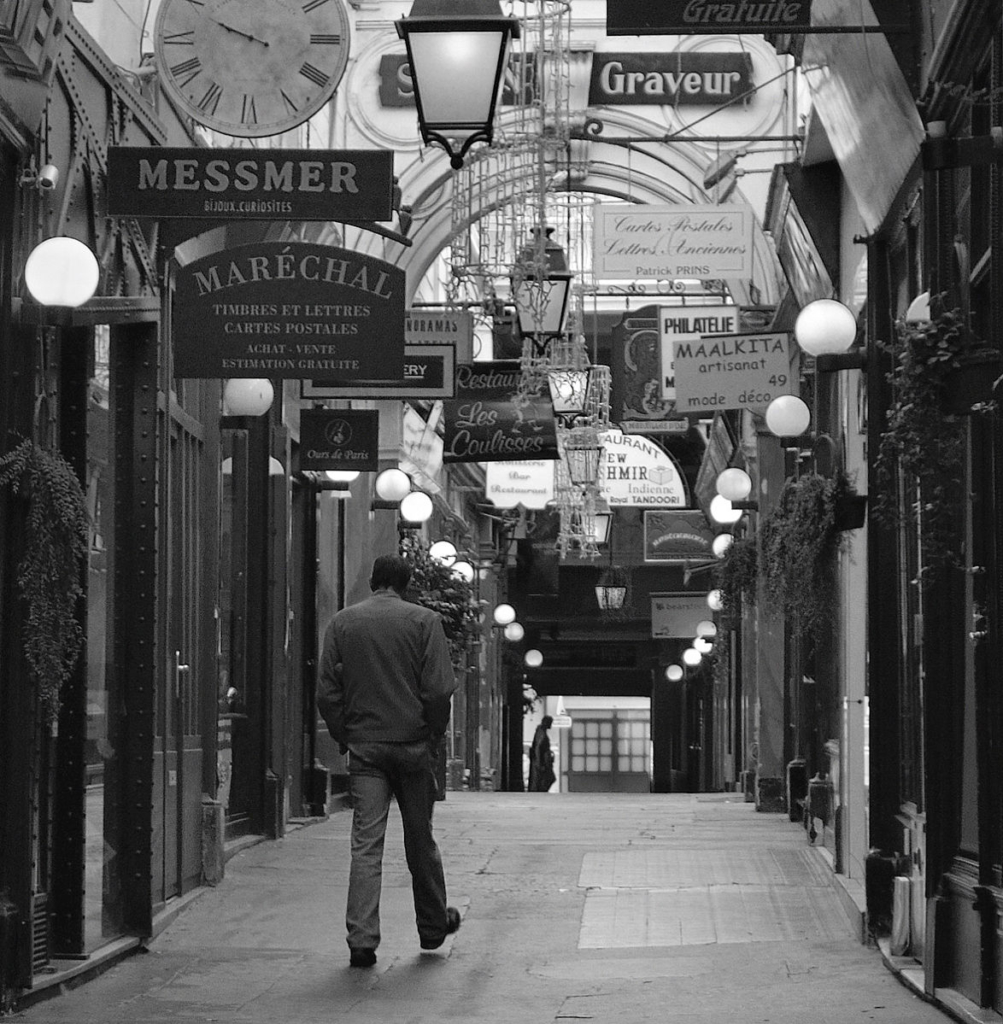
"What is the place of individual genius in a global world of hyper-information—a world in which, as Walter Benjamin predicted more than seventy years ago, everyone is potentially an author?"[1:7]
Perloff reads The Arcades Project not merely as cultural history, but as a proto-hypertextual poem where the brilliance lies in the montage and juxtaposition of found material rather than authorial commentary.[1:8] This method directly embodies the radical transformation of aesthetic reception examined in Benjamin's The Work of Art in the Age of Mechanical Reproduction and his dialectical historiography in Walter Benjamin’s Theses on the Philosophy of History.
3. Brazilian Concrete Poetry (Noigandres)
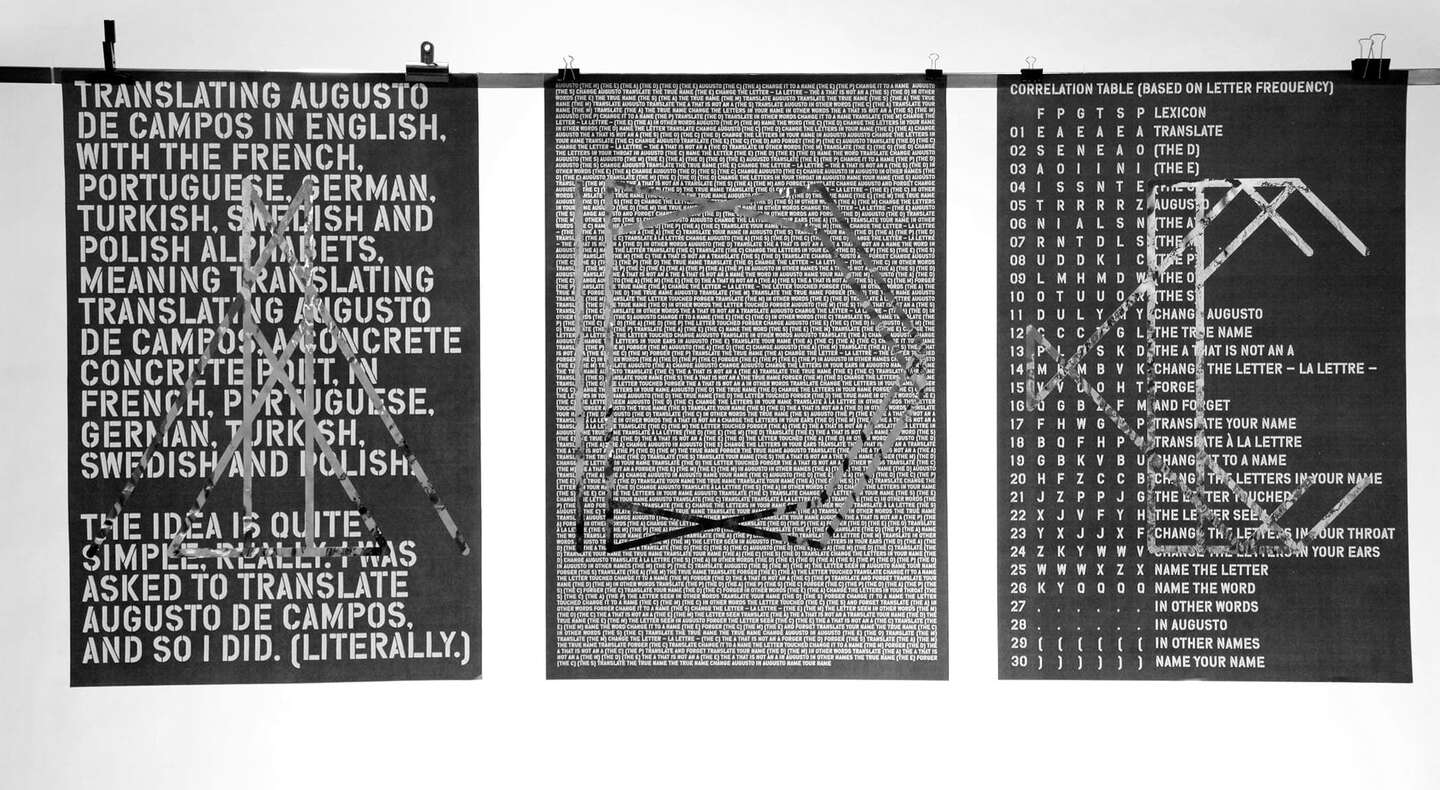
In tracking the transition from mid-century avant-garde to digital poetics, Perloff highlights the 1950s Brazilian Concrete poetry movement, spearheaded by Augusto de Campos, Haroldo de Campos, and Décio Pignatari.[1:9] By treating words as visual, spatial, and phonetic objects ("verbivocovisual") and engaging in "transcreation" (creative translation that cannibalizes the source text), the Brazilian concretists anticipated the visual layout and non-linear reading practices of the digital screen.[2:3] This spatialized poetics drew directly from the typographical breakthroughs of Guillaume Apollinaire's Calligrammes and the functionalist graphic integration of The Bauhaus School.
Case Studies in Unoriginal Genius
Perloff structures her investigation around five distinct contemporary manifestations of unoriginal poetics, moving from historical montage to pure conceptual transcription.[1:10]
Charles Bernstein's Shadowtime
Examining the legacy of Language poetry, Perloff analyzes Charles Bernstein's 2005 opera libretto Shadowtime (composed for music by Brian Ferneyhough), which centers on the life and death of Walter Benjamin (1892–1940).[5] Rather than writing a conventional biographical narrative, Bernstein "writes through" Benjamin, weaving together anagrams, permutations of German and English phrases, philosophical citations, and nursery rhymes to enact Benjamin's theories of history and translation on the stage, dramatizing the dialectical historiography of Walter Benjamin’s Theses on the Philosophy of History.[1:11]
Susan Howe's The Midnight
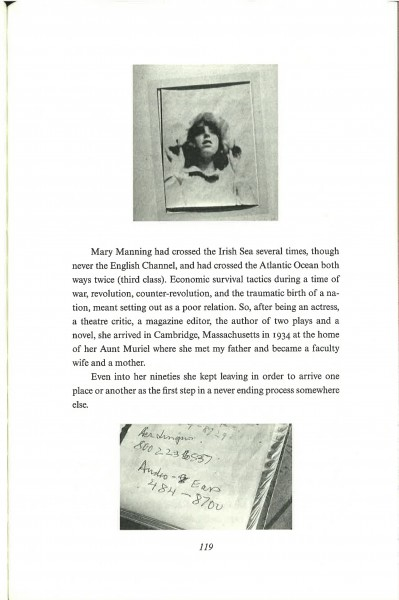
In her chapter on Susan Howe's documentary lyric sequence The Midnight (2003), Perloff explores how archival research becomes poetic form.[1:12] Howe incorporates photographs of title pages, tissue interleafs, marginalia, and found texts inherited from her Irish-American mother's library.[1:13] Perloff demonstrates how the physical materiality of the book—its "rattle of statistical traffic"—allows Howe to construct a deeply personal elegy entirely through the ghosts of other people's texts, highlighting the material durability and media bias explored in Harold Innis's communication theory.[1:14]
Yoko Tawada and Exophonic Writing
Expanding her scope beyond Anglo-American letters, Perloff investigates "language in migration" through the work of Japanese-born writer Yoko Tawada, who writes in both Japanese and German, alongside French-Norwegian poet Caroline Bergvall.[1:15] By operating outside their native tongues, these writers engage in a linguistic estrangement where standard idioms, dictionary definitions, and translation errors become engines for poetic discovery, dismantling essentialist notions of national identity through the kind of mobile, deterritorialized consciousness explored in Deleuzo-Guattarian nomadic thought.[1:16]

Kenneth Goldsmith's Traffic
The culmination of Perloff's trajectory is the rise of Conceptual Writing, exemplified by Kenneth Goldsmith's Traffic (2007)—part of his "American Trilogy" alongside The Weather (2005) and Sports (2008)—which serves as the primary practical case study for his manifesto Uncreative Writing-Managing Language in the Digital Age.[4:1] Traffic consists entirely of transcribed traffic reports from New York radio station WINS 1010 over a twenty-four-hour holiday weekend.[1:17]
Language Poetry vs. Conceptual Poetry
In her 2008 keynote address at the Conceptual Poetry Conference in Tucson (which formed the basis for the book's final chapter), Perloff drew a sharp line between the Language Poetry of the 1970s/1980s and the Conceptual Poetry of the 2000s.[4:2] Whereas Language poets fragmented syntax to critique capitalist ideology at the level of the signifier, Conceptualists like Goldsmith leave syntax completely intact, appropriating massive blocks of everyday discourse to expose the larger systemic architectures of information culture—a shift that mirrors Gilles Deleuze's transition from disciplinary institutions to open digital modulation in Postscript on the Societies of Control.[4:3]
Perloff argues that although Goldsmith does not "invent" a single word in Traffic, his choices regarding frame, duration, editing, and narrative arc transform ephemeral radio chatter into an uncanny reflection on modern gridlock, cyclical time, and American mobility, echoing the ambient electronic "white noise" and media glut diagnosed in Don DeLillo's postmodern fiction and Marshall McLuhan's media ecology.[1:18]
Critical Reception and Debates
Unoriginal Genius catalyzed intense debate across academic and poetic communities, serving as both a legitimizing manifesto for Conceptual Poetics and a lightning rod for critics of appropriation.[2:4]
-
Redefining Reading Practices: Supporters, including scholars like Roland Greene and Brian Reed, praised Perloff for bringing literary criticism into alignment with twenty-first-century media realities—recognizing that in an age of copy-paste and algorithmic search, the act of curation carries profound aesthetic weight.[1:19] Kenneth Goldsmith famously asserted that conceptual writing does not even need to be read in the traditional linear sense; rather, it offers a "thinkership" rather than a "readership," a conceptual stance that aggressively repels passive, sentimental consumption and commercial Kitsch.[4:4]
-
Critiques of Historical Conflation: Some reviewers questioned whether Perloff's broad umbrella of "unoriginality" flattens crucial ideological differences between historical practices.[2:5] Critics in journals such as Modern Philology noted that Walter Benjamin's agonizing, politically urgent archival work under the shadow of fascism operates with a vastly different ethical and aesthetic telos than Kenneth Goldsmith's detached, Duchampian gestures of mechanical transcription—a tension that directly engages Peter Bürger's critique of the neo-avant-garde and the self-referential circulation of signs analyzed in Defining a Simulacrum.[2:6]
-
The Crisis of Conceptualism: In the years following the book's 2010 publication, the pure "uncreative" model championed in its final chapter faced fierce reckoning regarding the politics of identity and appropriation—most notably when white conceptualists appropriated texts related to racial trauma (such as Goldsmith's controversial 2015 performance of Michael Brown's autopsy report). While Perloff's text predates these controversies, later scholarship frequently revisits Unoriginal Genius to debate whether "context is the new content" can ever be politically neutral, interrogating the limits of artistic autonomy and institutional recuperation within modern Counter-Culture.[2:7]
Resonant Notes
The following notes in the vault share direct thematic, sociological, and literary connections with Marjorie Perloff's Unoriginal Genius:
🔴 The Avant-Garde, Modernism & Material Poetics
- Uncreative Writing-Managing Language in the Digital Age — Kenneth Goldsmith's 2011 manifesto functions as the direct conceptual sibling to Perloff's treatise; while Perloff acts as the premier literary theorist charting the historical genealogy of unoriginality, Goldsmith provides the practitioner's playbook, mobilizing transcription, databasing, and patchwriting to challenge Romantic paradigms of authorship.
- The Avant-Garde — Provides the vault's overarching historical framework for the radical vanguard movements (Dada, Russian Constructivism, Oulipo, Fluxus) that dismantled the myth of the solitary genius through readymades, procedural constraints, and non-organic collage.
- Peter Bürger-Theorie der Avantgarde — Bürger's distinction between formalist modernism and the historical avant-garde's attack on the "institution of art" frames the central dilemma of Perloff's case studies: whether 21st-century conceptual writing succeeds in rupturing aesthetic autonomy or merely repeats neo-avant-garde gestures that are effortlessly assimilated into the academy and the museum.
- Renato Poggioli-Teoria dell'arte d'avanguardia — Poggioli's classical sociology of the avant-garde (centered on agonism, futurism, and vanguard alienation) serves as the primary theoretical foil to Perloff's concept of the arrière-garde (rearguard), which demonstrates how contemporary conceptualists retrieve and reactivate the unfinished projects of early 20th-century modernism.
- Guillaume Apollinaire (1880–1918) — Apollinaire's typographical ideograms in Calligrammes and his radical suppression of punctuation in Alcools established the historical foundation for spatialized, visual poetry, directly anticipating the Brazilian Concrete poets (the Noigandres group) analyzed by Perloff.
- The Dehumanization of Art — José Ortega y Gasset's diagnosis of modern art purging sentimental humanism and emotional self-expression in favor of intellectual form and ironic opacity provides the early 20th-century theoretical blueprint for Perloff's critique of the confessional lyric "I".
- The Bauhaus School — The Bauhaus integration of typography, graphic layout, and industrial technology directly influenced Brazilian Concrete poetry and concrete poetics, anticipating Perloff's focus on the physical and digital architecture of textual design.
- James Joyce (1882-1941) — Joyce's polyphonic borrowing, parodic pastiche, and linguistic collage in Ulysses and Finnegans Wake established the high-modernist benchmark for treating language as acoustic and material substance rather than an emotional diary.
- Kitsch — Clement Greenberg's formulation of kitsch as easily consumed, sentimental culture highlights why unoriginal genius champions "unreadable," procedurally constrained texts; by defying immediate emotional consumption, conceptual writing resists commodified sentimentality.
🟡 Media Ecology, Information Theory & Digital Modulation
- Marshall McLuhan (1911-1980) & McLuhan's The Medium is the Message — McLuhan's fundamental insight that the sensory and formal architecture of a medium reshapes human cognition underpins Perloff's core argument: in an environment of digital hyper-information, creative agency naturally migrates from inventing new phrases to managing, framing, and filtering existing data streams.
- Innis (1951) - The Bias of Communication & Innis (1950) - Empire and Communications — Harold Innis's distinction between space-binding and time-binding media clarifies how conceptual poets (such as Kenneth Goldsmith and Susan Howe) harvest instantaneous, space-binding electronic signals (radio broadcasts, digital data) and bind them into durable, time-binding physical codices.
- Nature of Information & Entropy — Connects Perloff's focus on compilation, algorithmic constraint, and transcription to information theory; contemporary poetics operates within an ecology of high informational entropy, where the author acts as a signal processor filtering meaning from background noise.
- Postscript on the Societies of Control — Gilles Deleuze's diagnosis of control societies—governed by continuous digital modulation, databases, and dividual tracking—explains why conceptual poetry leaves syntax intact to interrogate the vast corporate and governmental architectures of information networks.
- Don DeLillo Major Themes Analysis — DeLillo's fictional diagnosis of late-capitalist "white noise," media glut ("blur and glut"), and the commodification of narrative provides the literary and sociological mirror to Goldsmith's Traffic and Perloff's analysis of information saturation.
🟢 Postmodern Semiotics, Citationality & Institutional Critique
- Walter Benjamin (1892–1940) & The Work of Art in the Age of Mechanical Reproduction — Benjamin's foundational concept of the "citational poetics" formulated in The Arcades Project (Das Passagen-Werk) and his analysis of the liquidation of the ritual "aura" through mechanical reproduction provide the indispensable theoretical cornerstone for Perloff's unoriginal genius.
- Walter Benjamin’s Theses on the Philosophy of History — Benjamin's concept of dialectical montage—"brushing history against the grain" by blasting historical fragments out of the continuum of linear progress—serves as the compositional engine for Charles Bernstein's opera libretto Shadowtime.
- The flâneur & The Painter of Modern Life, a seminal 1863 essay by French poet and art critic Charles Baudelaire — The 19th-century urban stroller who drifts through metropolitan arcades harvesting sensory impressions is transformed in Perloff's study into the 21st-century conceptual writer drifting through digital archives and electronic media streams.
- Defining a Simulacrum — Jean Baudrillard's theory of hyperreality and simulation articulates the ontological condition of unoriginal poetics, where text operates as a circulation of pre-existing signifiers without reference to an originary, authentic subject.
- Jacques Derrida — Derrida's deconstruction of the metaphysics of presence and his emphasis on iterability (the structural capacity of any sign to be quoted, severed from its original context, and grafted onto new contexts) philosophically validates Perloff's assertion that citation and reframing generate profound aesthetic friction.
- Ludwig Wittgenstein — Wittgenstein's concept of language-games and meaning-as-use confirms Perloff's analysis of transcription: transposing ordinary utilitarian speech (like traffic reports) into an art frame fundamentally alters the grammar and semantic function of the language.
- Counter-Culture — Traces the historical friction between radical, samizdat literary rebellion and its eventual institutional co-optation, illuminating the debates surrounding the political and racial limits of conceptual appropriation in contemporary academic culture.
Backlinks
- Uncreative Writing-Managing Language in the Digital Age — Kenneth Goldsmith's primary conceptual writing manifesto, building directly on Perloff's theory of unoriginal genius to argue for appropriation, patchwriting, and information management in contemporary literature.
- The Avant-Garde — Vault syllabus note tracing the historical evolution of vanguard aesthetics, contextualizing Perloff's arrière-garde within Dada, Russian Constructivism, Oulipo, and Neo-Avant-Garde lineages.
- Peter Bürger-Theorie der Avantgarde — Peter Bürger's institutional theory of the historical avant-garde, providing the foundational materialist critique of montage, non-organic form, and the institutionalization of anti-art gestures.
- Renato Poggioli-Teoria dell'arte d'avanguardia — Sociological analysis of avant-garde activism, antagonism, and agonism, serving as a comparative foil to Perloff's model of rear-guard retrieval.
- The Work of Art in the Age of Mechanical Reproduction — Walter Benjamin's classic text on the loss of ritual aura and the rise of reproducibility, serving as the foundational antecedent for digital citational poetics.
- Walter Benjamin (1892–1940) — Intellectual profile of Benjamin, whose Arcades Project and montage methodology serve as the central theoretical precursor to Perloff's monograph.
- Guillaume Apollinaire (1880–1918) — Avant-garde poet whose typographical calligrammes and unpunctuated verse in Alcools laid the groundwork for visual poetics and concrete poetry.
- The Dehumanization of Art — Ortega y Gasset's formulation of the modern aesthetic turning away from sentimental lyricism toward pure conceptual form.
- McLuhan's The Medium is the Message — Media ecology thesis establishing that formal medium structures dictate cultural cognition, directly underpinning conceptual writing's dictum that "context is the new content."
- Don DeLillo Major Themes Analysis — Postmodern literary examination of media saturation, informational glut, and ambient white noise that mirrors conceptual poetry's transcriptions of everyday radio chatter.
References
Marjorie Perloff / Unoriginal Genius: Poetry by Other Means in the New Century / University of Chicago Press ↩︎ ↩︎ ↩︎ ↩︎ ↩︎ ↩︎ ↩︎ ↩︎ ↩︎ ↩︎ ↩︎ ↩︎ ↩︎ ↩︎ ↩︎ ↩︎ ↩︎ ↩︎ ↩︎ ↩︎
Peter Robinson / Review of Unoriginal Genius: Poetry by Other Means in the New Century / Modern Philology ↩︎ ↩︎ ↩︎ ↩︎ ↩︎ ↩︎ ↩︎ ↩︎
Mark Scroggins / Unoriginal Genius: Poetry by Other Means in the New Century by Marjorie Perloff / Bookforum ↩︎ ↩︎ ↩︎ ↩︎
Kenneth Goldsmith / Marjorie Perloff's Unoriginal Genius / The Poetry Foundation ↩︎ ↩︎ ↩︎ ↩︎ ↩︎
Stanford Department of English / Unoriginal Genius: Poetry by Other Means in the New Century / stanford.edu ↩︎