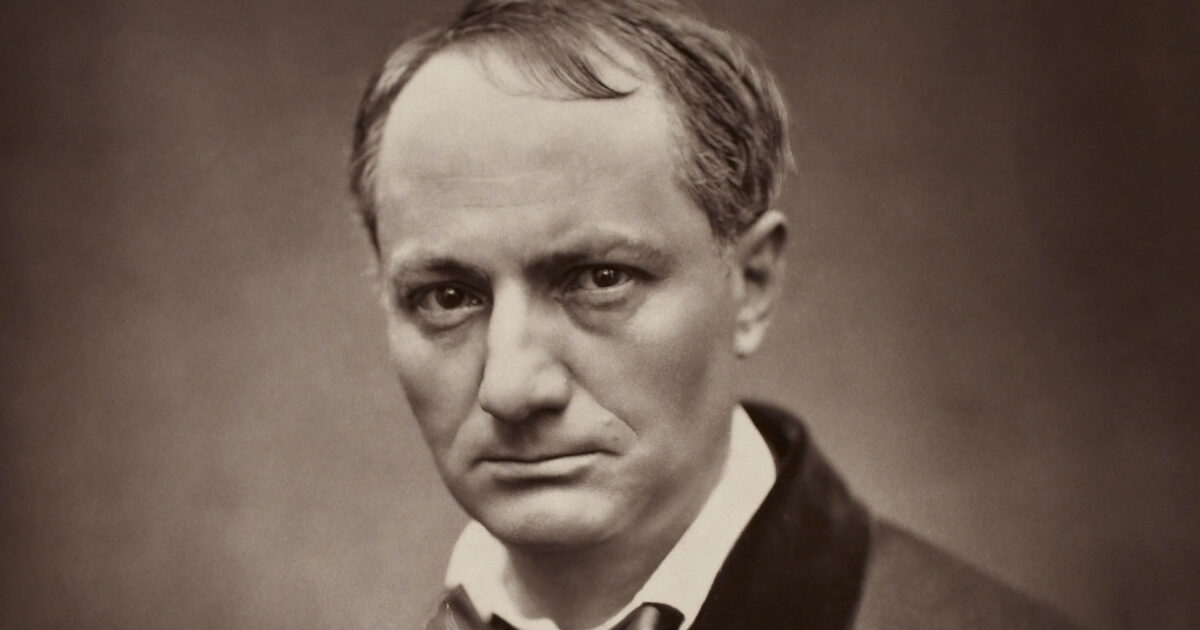
The Painter of Modern Life, a seminal 1863 essay by French poet and art critic Charles Baudelaire
The Painter of Modern Life (French: Le Peintre de la vie moderne) is an 1863 foundational treatise on aesthetics and cultural sociology by French poet and art critic Charles Baudelaire. Written between 1859 and 1860 and published in Le Figaro, the essay dismantles classical academic dogmas of timeless, universal beauty by formulating the dual nature of art and coining the aesthetic concept of "modernity" (la modernité)—defined as the fleeting, contingent present fused with the eternal. Rejecting celebrated Salon masters, Baudelaire examines the swift graphic reportage of illustrator Constantin Guys ("Monsieur G."), elevating the urban observer into the archetype of the flâneur and the dandy. The essay provides an intellectual defense of fashion, cosmetics, and artifice, laying the theoretical foundation for Impressionism, modern literary consciousness, and twentieth-century urban sociology.
Historical Context: Haussmannization, the Second Empire, and the Crimean War
Published in three installments in Le Figaro on November 26, November 29, and December 3, 1863, The Painter of Modern Life emerged during Napoleon III’s Second Empire—a period of dramatic industrial modernization, economic expansion, and aggressive urban restructuring.[1]
Baron Georges-Eugène Haussmann was systematically tearing through the labyrinthine, medieval fabric of Paris. In place of dark, insalubrious alleys, Haussmann engineered wide, gas-lit boulevards, public squares, expansive parks, and uniform neoclassical facades. This architectural surgery opened the city to light, military mobility, and capital circulation, creating an intoxicating urban spectacle characterized by bustling café terraces, omnibus traffic, grand department stores, and anonymous, mobile crowds.[2]
     [ Medieval Enclosed Paris ] ──▶ Haussmann's Radical Demolition & Reconstruction
                                                   │
                                                   ▼
     ┌────────────────────────────────────────────────────────────────────────┐
     │                      The Second Empire Metropolis                      │
     │      Gaslight, Wide Boulevards, Department Stores, Accelerating Crowds │
     └───────────────────────────────────┬────────────────────────────────────┘
                                         │
                 ┌───────────────────────┴───────────────────────┐
                 ▼                                               ▼
     [ The Academic Salons / Beaux-Arts ]            [ The Baudelairean Modernist ]
       Clings to classical antiquity,                  Immerses in metropolitan shock;
       mythological allegories, Roman togas;           extracts eternal beauty from fashion,
       rejects contemporary city life                  omnibuses, uniforms, and courtesans
                                         │
                                         ▼
                 ┌───────────────────────────────────────────────┐
                 │       The Modernist Epistemological Shift     │
                 │      Art as the Ephemeral Fused to the Eternal│
                 └───────────────────────────────────────────────┘
Concurrently, the rapid growth of the daily illustrated press and visual reportage—accelerated by conflicts such as the Crimean War (1853–1856)—demanded a new graphic immediacy. Traditional history painters labored for months or years in hermetic studios over monumental canvases depicting ancient mythological or biblical scenes. In contrast, graphic draftsmen on the front lines and urban journalists had to record events with lightning speed before the scene dissolved. Baudelaire recognized that this pressure of velocity and transience was not a journalistic handicap, but the defining condition of modern perception itself.[3]
The Core Theoretical Framework: La Modernité and the Dual Nature of Beauty
Baudelaire’s most enduring contribution to aesthetic theory is his coining and definition of modernity (la modernité). In Section IV of the essay, Baudelaire formulates his immortal proposition:
"Modernity is the transient, the fleeting, the contingent; it is one half of art, the other being the eternal and the immovable."
— Charles Baudelaire, The Painter of Modern Life[1:1]
                      ┌────────────────────────────────────────┐
                      │          THE COMPLETE ART OBJECT       │
                      │          (Baudelairean Synthesis)      │
                      └───────────────────┬────────────────────┘
                                          │
                  ┌───────────────────────┴───────────────────────┐
                  ▼                                               ▼
      [ THE EPHEMERAL HALF ]                          [ THE ETERNAL HALF ]
      • The transient and contingent                  • Pure, invariable beauty
      • Contemporary fashion and dress                • Universal aesthetic harmony
      • Current gestures, carriages, makeup           • Classical balance and soul
      • Fleeting metropolitan moment                  • Trans-historical artistic essence
                  │                                               │
                  └───────────────────────┬───────────────────────┘
                                          │
                                          ▼
                      ┌────────────────────────────────────────┐
                      │    L'Art Moderne / The Authentic Ideal │
                      │  Extracting the Eternal FROM the Real  │
                      └────────────────────────────────────────┘
The Inseparable Duality of Beauty
Baudelaire vigorously attacks the academic orthodoxy taught at the École des Beaux-Arts, which posited an absolute, timeless, and uniform ideal of beauty modeled exclusively on Greco-Roman antiquity. For Baudelaire, such an ideal is an abstraction that suffocates living creativity:[4]
- The Invariable, Eternal Element: The general soul of art that renders a work legible and resonant across epochs and civilizations.
- The Variable, Relative Element: The specific historical embodiment provided by the artist’s own era—its fashions, moral attitudes, physiognomies, technologies, and social rituals.
Without the variable half, art degenerates into an unpalatable, sterile academic exercise. Baudelaire warns that an artist who dresses contemporary figures in classical Roman togas or Greek tunics out of reverence for the "antique" betrays both the past and the present:
"Woe to him who studies the antique for anything else but pure art, logic and general method! By steeping himself too thoroughly in it, he will lose all memory of the present; he will renounce the rights and privileges offered by circumstance; for almost all our originality comes from the stamp that time imprints upon our sensations."
— Charles Baudelaire, The Painter of Modern Life[1:2]
Every historical epoch possessed its own distinctive modernity, its unique rhythm of gestures, coiffures, and fabrics. For Baudelaire, the mission of the modern painter is not to flee contemporary life into nostalgic antiquarianism, but to distill the eternal from the transitory (tirer l'éternel du transitoire).[5]
The Portrait of Constantin Guys ("Monsieur G."): The Man of the World
To embody his aesthetic ideal, Baudelaire chose not a celebrated Salon master such as Eugène Delacroix (whom he revered elsewhere as a tragic romantic genius) or Jean-Auguste-Dominique Ingres, but a modest, self-taught draftsman and watercolorist: Constantin Guys (1802–1892), whom Baudelaire tactfully designates throughout the essay as "Monsieur G."[6]
Guys worked as an illustrator for the Illustrated London News, dispatching rapid pen-and-wash field sketches of the Crimean War, military parades, Parisian boulevards, carriages, courtesans, and diplomatic pageants. Guys adamantly refused to let Baudelaire use his full name in print, preserving his modesty and independence.
       [ The Salon Specialist / Academic ]           [ Monsieur G. / The Man of the World ]
       • Confined to the hermetic studio             • Roams the metropolitan streets and battlefields
       • Obsessed with technical pedigree            • Driven by insatiable curiosity for life
       • Treats art as a narrow trade or profession  • Treats art as an expressive medium of existence
       • Preoccupied with timeless classicism        • Transcribes the immediate electric present
"Artist" vs. "Man of the World"
Baudelaire draws a sharp analytical distinction between the narrow, studio-bound "artist" and the expansive "man of the world" (homme du monde):
- The Narrow Artist: A technician imprisoned within the specialized shop-talk and narrow professional rivalries of his trade, looking at the universe solely through the lens of paints, brushes, and academic prizes.
- The Man of the World: A cosmopolitan citizen of the globe whose primary interest is the whole of human life—its passions, politics, ceremonies, and vices. Guys takes up drawing not as an end in itself, but as the swiftest instrument to capture his visual appetite for contemporary existence.[7]
The Convalescent and Childhood: The Reborn Gaze
To describe Guys’s peculiar perceptual temperament, Baudelaire constructs one of his most celebrated psychological metaphors: the artist as a perpetual convalescent endowed with the genius of childhood recovered at will.[8]
"Genius is nothing more nor less than childhood recovered at will—a childhood now equipped for self-expression with adult capacities and a power of analysis which enables it to order the mass of raw material which it has involuntarily accumulated."
— Charles Baudelaire, The Painter of Modern Life[1:3]
The Convalescent's Ecstatic Perception
A person recovering from a prolonged, life-threatening illness steps back into the world with heightened sensory acuity. Everyday sights—a street corner, a passing carriage, the flutter of a skirt—strike the convalescent with intense novelty and wonder. While the jaded adult walks through the city anesthetized by habit, the convalescent, like the child, experiences the world as pristine, vivid, and endlessly fascinating.[9]
The Debt to Edgar Allan Poe's The Man of the Crowd
Baudelaire’s formulation draws explicitly on Edgar Allan Poe (1809-1849)—whose tales Baudelaire translated into French throughout the 1850s. Specifically, Baudelaire references Poe’s 1840 short story The Man of the Crowd.
In Poe's tale, an unnamed narrator sits in a London coffee-house recovering from illness, peering through the window at the surging pedestrian crowds. The narrator is seized by an obsessive curiosity to classify the social types streaming past, eventually following a mysterious elderly man through the night streets. Baudelaire adopts Poe's protagonist as the psychological prototype of the modern spectator: a mind reborn through convalescence, plunged into the surging metropolitan multitude.[10]
The Archetype of the Flâneur: The Passionate Spectator
Baudelaire permanently immortalized the figure of the flâneur—transforming what had been a colloquial Parisian term for an aimless boulevard stroller into a towering sociological and philosophical concept.[11]
                       ┌────────────────────────────────────────┐
                       │          THE BAUDELAIREAN FLÂNEUR      │
                       │          (Aesthetic Spectatorship)     │
                       └───────────────────┬────────────────────┘
                                           │
                   ┌───────────────────────┴───────────────────────┐
                   ▼                                               ▼
       [ ABSOLUTE IMMERSION ]                          [ TOTAL DETACHMENT ]
       • Plunges into the physical crowd               • Remains an incognito observer
       • Sets up home in the multitude                 • Preserves sovereign intellectual distance
       • Absorbs metropolitan electric energy          • Avoids utilitarian social entanglements
                   │                                               │
                   └───────────────────────┬───────────────────────┘
                                           │
                                           ▼
                       ┌────────────────────────────────────────┐
                       │      The Mirror as Vast as the Crowd   │
                       │    A Kaleidoscope Gifted with a Soul   │
                       └────────────────────────────────────────┘
The Habitat and Mechanics of Flânerie
For the flâneur, the crowd is not an oppressive mob to be avoided, but his natural home and native element:
"The crowd is his element, as the air is that of birds and water of fishes. His passion and his profession are to become one flesh with the crowd. For the perfect flâneur, for the passionate spectator, it is an immense joy to set up house in the heart of the multitude, amid the ebb and flow of movement, in the midst of the fugitive and the infinite. To be away from home and yet to feel oneself everywhere at home; to see the world, to be at the centre of the world, and yet to remain hidden from the world..."
— Charles Baudelaire, The Painter of Modern Life[1:4]
Baudelaire compares the flâneur to:
- A Mirror as Vast as the Crowd: A reflective consciousness that registers every tremor and shade of urban life.
- A Kaleidoscope Gifted with Consciousness: A responsive prism that reorganizes the fragmented, kinetic impressions of the boulevard into fleeting geometric harmonies.
- An Electric Battery: Immersing himself in the crowd as though plugging into an inexhaustible reservoir of electrical energy, absorbing the kinetic vitality of thousands of unknown souls.[12]
Critically, the flâneur maintains a stance of aesthetic detachment. He does not engage in political agitation, economic commerce, or domestic obligations. He observes with impassioned curiosity while remaining completely incognito, gliding through the modern city as an invisible visual sovereign.[11:1]
The Dandy: The Last Heroism of a Decadent Age
In Section IX, Baudelaire examines the figure of the dandy—distinguishing him from the mere fashionable fop or clothes-horse. Dandyism, Baudelaire insists, is not an obsession with money, luxury, or clothes, but a rigorous spiritual and existential discipline.[13]
     [ Feudal Aristocracy ]  (Declining Traditional Hierarchies)
               │
               ▼
     ┌────────────────────────────────────────────────────────────────────────┐
     │               The 19th-Century Bourgeois Interregnum                   │
     │      Ascendance of Utilitarianism, Mediocrity, and Mass Democracy       │
     └───────────────────────────────────┬────────────────────────────────────┘
                                         │
                                         ▼
     ┌────────────────────────────────────────────────────────────────────────┐
     │                             THE DANDY                                  │
     │      Cult of the Self; Cold Stoicism; Heroic Resistance to Vulgarity   │
     └───────────────────────────────────┬────────────────────────────────────┘
                                         │
                                         ▼
     [ The Modern Mass Society ] (The Inevitable Democratic Leveling)
Dandyism as a Secular Religion
For Baudelaire, dandyism is a stoic, aristocratic rebellion against the triumph of bourgeois mediocrity, utilitarianism, and democratic egalitarianism. It emerges specifically in transition periods where traditional aristocracies have fallen, but democratic mass conformity is not yet complete:[14]
- The Cult of the Self: The dandy’s life is governed by an unwritten, inflexible code that demands perpetual elegance, emotional self-control, and absolute composure under all circumstances.
- The Unshakable Demeanor: A true dandy must never appear hurried, vulgar, or emotionally unhinged. Even when bleeding to death, a dandy maintains cold impassivity.
- Resistance to the Market: The dandy refuses to engage in profitable labor. His labor consists entirely in molding his own body, wardrobe, and demeanor into a sovereign work of art.
- The Setting Sun: Baudelaire melancholically characterizes dandyism as "the last spark of heroism amid decadence"—a dying twilight struggling against the rising tide of industrial standardization.[1:5]
Éloge du maquillage (In Praise of Cosmetics): The Inversion of Nature
Section XI of the essay, titled "In Praise of Cosmetics" (Éloge du maquillage), represents Baudelaire’s radical theoretical assault on eighteenth-century Enlightenment philosophy—specifically the romantic naturalism of Jean-Jacques Rousseau.[15]
     [ 18th-Century Rousseauian Naturalism ] ──▶ Nature is intrinsically pure, innocent, and good;
                                                 Artifice, civilization, and luxury corrupt mankind.
                                                               │
                                                               ▼ (Baudelairean Inversion)
     [ 19th-Century Baudelairean Aesthetics ] ─▶ Nature is brutal, cruel, and selfish (Original Sin);
                                                 Virtue, beauty, and artifice represent humanity's
                                                 deliberate moral triumph over animal baseness.
The Theological Inversion of Rousseau
Rousseau and the eighteenth-century moralists asserted that nature is the fountainhead of all good, while civilization, artifice, and luxury are corrupting vices. Baudelaire inverts this doctrine entirely, anchoring his argument in a secularized theology of Original Sin:[16]
"Nature teaches us nothing, or practically nothing; that is to say, she compels man to sleep, to eat, to drink, and to arm himself against the inclemencies of the weather. It is nature, too, that drives man to kill his fellow-man, to eat him, to torture him... Review, analyze everything that is natural—all the actions and desires of the purely natural man—and you will find nothing but the horrible. Everything beautiful and noble is the result of reason and calculation."
— Charles Baudelaire, The Painter of Modern Life[1:6]
Makeup as Moral Elevation
From this premise, Baudelaire rehabilitates fashion, makeup, and artificial self-presentation:
- Fashion: Far from being an empty feminine vanity, fashion is an outward sign of humanity's yearning for the Ideal. It represents a continuous, desperate attempt to reform the flawed natural body.
- Powder and Rouge: Facial powder is not designed to create a vulgar illusion of youth or deceive the spectator; rather, it unites the flesh into a luminous, sculptural surface akin to a statue or porcelain. Rouge evokes the incandescent fire of passion.
- Black Kohl around the Eye: Bestows upon the gaze a profound, enigmatic, and magical framing, turning the eye into an open window onto infinity.[17]
By applying makeup and donning sophisticated garments, human beings proclaim their refusal to remain mere animals. Artifice is humanity's conscious, heroic correction of crude nature.[15:1]
Mnemonic Art (L'art mnémonique): Memory, Velocity, and the Line
In Section V, Baudelaire investigates Constantin Guys’s technical working method, which he designates as mnemonic art (l'art mnémonique)—the art of drawing from memory.[18]
     [ Traditional Studio Method ]  ──▶ Painter forces live model into agonizing, artificial poses;
                                        Obsesses over static anatomical trivia; loses the vital spark.
                                                      │
                                                      ▼ (The Mnemonic Alternative)
     [ Constantin Guys / Monsieur G. ] ─▶ Absorbs the kinetic urban scene in the field;
                                        Returns to studio; paints rapidly from vivid mental memory;
                                        Distills the essential rhythm, silhouette, and movement.
The Tyranny of the Posed Model
Baudelaire launches a scathing critique against academic painters who chain themselves to the live studio model:
- The academic painter forces a human model to freeze into an unnatural, exhausting posture for hours under artificial skylights.
- By obsessing over minute musculature, individual pores, and literal shadows, the academic artist loses the living energy, the spontaneous gesture, and the overarching harmony of the scene. The result is a dead, pedantic canvas.[18:1]
Painting from the Reservoir of Memory
In contrast, Constantin Guys operates in two distinct, complementary stages:
- The Day (Passive Absorption): Guys roams the boulevards, battlefields, or ballrooms with tiny notebooks, recording only stenographic pencil traces and visual shorthand. His eye acts like a sponge, drinking in the kinetic flow of horses, dresses, and light.
- The Night (Active Resuscitation): Back in his lodgings, late at night, Guys works in a fever of creation. He paints not from the model, but from the memory image printed upon his brain.
Because human memory naturally discards irrelevant trivia and preserves the vital silhouette, the expressive gesture, and the emotional resonance of the scene, mnemonic drawing produces an image vibrating with life, urgency, and synthetic truth.[19]
Comparative Matrix: Classical Academicism vs. Baudelairean Modernity
| Analytical Dimension | Classical Academicism (École des Beaux-Arts) | Baudelairean Modernity (La Modernité) |
|---|---|---|
| Aesthetic Ideal | Timeless, absolute, immutable beauty modeled on Greco-Roman antiquity. | Dual beauty: the eternal fused indissolubly to the ephemeral, fleeting present. |
| Subject Matter | Mythological allegories, biblical history, ancient Roman and Greek heroes. | Contemporary boulevards, omnibus carriages, military uniforms, courtesans. |
| Sartorial Representation | Antique togas, idealized classical drapery, biblical vestments. | Modern Parisian frock coats, crinolines, top hats, and contemporary tailoring. |
| Artistic Prototype | The Academic Specialist: studio-bound, chasing medals and official prizes. | The Man of the World ("Monsieur G."): passionate spectator, curious traveler. |
| Observational Stance | Hermetic studio staging with artificial lighting and frozen posed models. | The Flâneur: incognito immersion in the teeming, kinetic metropolitan multitude. |
| View of Nature | Rousseauian / Classical: nature is harmonious, perfect, and the source of truth. | Anti-Rousseauian: nature is base, cruel, and brutish; virtue and beauty are artificial. |
| Role of Artifice & Makeup | Condemned as dishonest deception, vanity, or moral decline. | Celebrated as humanity's moral elevation of biological flesh toward the Ideal. |
| Technical Execution | Smooth academic finish (le fini), meticulous anatomical rendering. | L'art mnémonique: rapid graphic execution, synthetic silhouette, memory drawing. |
| Existential Stance | Complacent bourgeois moralism or conservative monumentalism. | The Dandy: stoic, cold, aristocratic rebellion against democratic mediocrity. |
Legacy and Influence: From Impressionism to Cultural Sociology
Baudelaire's essay acted as a cultural reagent that reshaped European visual art, modernist literature, and twentieth-century critical theory:
- The Birth of Impressionism: Baudelaire’s insistence that modern Parisian life was worthy of monumental artistic representation directly inspired Édouard Manet—a personal friend of Baudelaire whose Music in the Tuileries (1862) stands as the literal pictorial realization of The Painter of Modern Life.[20] Claude Monet, Edgar Degas, and Camille Pissarro abandoned academic mythologies to paint train stations, café-concerts, racetracks, and rain-slicked boulevards.
- Walter Benjamin and The Arcades Project: German philosopher Walter Benjamin (1892–1940) positioned Baudelaire at the absolute center of his massive, unfinished study of nineteenth-century Paris, The Arcades Project (Das Passagen-Werk). Benjamin famously declared Baudelaire to be "a poet in the era of high capitalism," theorizing the flâneur as a dialectical figure who commodifies his own gaze and experiences the shock-collisions (Chockerlebnisse) of the metropolitan crowd.[21]
- The Modernist Literary Consciousness: The archetype of the urban wanderer experiencing the fragmented, kaleidoscopic rhythms of the modern street became the fundamental structural spine of high-modernist fiction, directly informing the Dublin perambulations of Leopold Bloom in James Joyce's Ulysses and Clarissa Dalloway’s London walks in Virginia Woolf's Mrs. Dalloway.[22]
- Urban Sociology and Media Theory: Baudelaire’s analysis of metropolitan sensory overload and urban anonymity directly anticipated Georg Simmel's landmark 1903 sociological essay The Metropolis and Mental Life, as well as Marshall McLuhan's insights into how modern communication environments alter human sensory ratios.
🎴 Interactive Web Practice (Comprehension Check)
Question 1 (The Duality of Beauty & La Modernité): How does Baudelaire define "modernity" (la modernité), and why does he argue that classical academic artists who clothe contemporary figures in ancient Greek or Roman garments fail to achieve authentic art?
Answer: Baudelaire defines modernity in Section IV of the essay as "the transient, the fleeting, the contingent; it is one half of art, the other being the eternal and the immovable." According to Baudelaire, all authentic beauty is composed of two inseparable elements: an invariable, eternal component (which provides universal artistic harmony and trans-historical resonance) and a relative, circumstantial component (derived from the specific era's fashions, gestures, moral climate, technologies, and social rituals).
Academic painters trained at the École des Beaux-Arts believed in an absolute, timeless ideal of beauty abstracted exclusively from classical antiquity. When depicting modern subjects, they frequently dressed them in antique togas, Roman armor, or Greek drapery to confer supposed nobility upon them. Baudelaire argues that this practice is a fatal artistic failure because it strips art of its vital historical half. The variable, ephemeral element—the distinct cut of a frock coat, the crinoline of a dress, the tempo of a modern boulevard—is the very vehicle through which the eternal soul of beauty is incarnated in living time. By attempting to bypass the contemporary moment out of reverence for the past, the academic artist produces only bloodless, dead archeological exercises, forfeiting the original genius that the present era imprints upon human sensations.
Question 2 (The Flâneur, the Crowd, and Mnemonic Art): What psychological and observational characteristics define Baudelaire's flâneur, and how does Constantin Guys's technique of "mnemonic art" (l'art mnémonique) complement the flâneur's urban experience?
Answer: Baudelaire's flâneur is characterized as the "passionate spectator" who resolves a central modern paradox: he immerses himself completely in the roaring multitude while preserving sovereign intellectual detachment and absolute anonymity. Unlike the provincial tourist or the utilitarian commuter, the flâneur "sets up house in the heart of the multitude," using the crowd as an inexhaustible electrical reservoir that charges his senses. Baudelaire describes him as a "mirror as vast as the crowd" and a "kaleidoscope gifted with consciousness," adopting the psychological perspective of the convalescent or the child—a mind for whom everyday reality is perpetually reborn in ecstatic, vivid detail (a motif Baudelaire adopted from Edgar Allan Poe's The Man of the Crowd).
This observational stance directly dictates Constantin Guys's artistic methodology, which Baudelaire terms mnemonic art (l'art mnémonique). Academic painters relied on static, frozen studio models who held artificial poses for hours, causing the artist to become bogged down in minor anatomical minutiae while losing the spontaneous energy and motion of life. In contrast, Guys roams the boulevards by day, recording only rapid, stenographic pencil impressions. At night, he retreats to his room to paint entirely from memory. Because human memory naturally filters out irrelevant trivia while preserving the essential contour, expressive silhouette, and emotional rhythm of the scene, mnemonic painting allows Guys to capture the kinetic velocity, vital gestures, and fugitive essence of modern life that escape traditional studio academicism.
Question 3 (In Praise of Cosmetics & The Critique of Nature): How does Baudelaire's defense of cosmetics (Éloge du maquillage) and the cult of the dandy dismantle 18th-century Rousseauian naturalism?
Answer: Throughout the 18th century, Enlightenment thought—spearheaded by Jean-Jacques Rousseau—propagated the dogma that nature is intrinsically good, pure, and virtuous, while civilization, luxury, artifice, and social institutions corrupt humanity's innate nobility. Baudelaire's essay executes a radical theological and aesthetic inversion of this Rousseauian premise. Anchoring his critique in a secularized doctrine of Original Sin, Baudelaire asserts that pure nature is cruel, brutish, and horrible: nature compels human beings to murder, torture, and satisfy base biological drives. Everything noble, virtuous, and beautiful—from justice and courtesy to spiritual love—is not natural, but the artificial creation of human reason, moral calculation, and deliberate craft.
From this anti-naturalist foundation, Baudelaire rehabilitates fashion and cosmetics:
- Cosmetics as Elevation: Makeup is not a deceptive vanity designed to feign biological youth; rather, it represents humanity's heroic effort to elevate the biological face into an autonomous, sacred work of art. Facial powder creates a sculptural, luminous abstraction that removes animal blotches, while kohl frames the eye to evoke a window onto the infinite.
- Fashion as the Pursuit of the Ideal: Sartorial elegance is an outward symptom of the human soul's perpetual striving toward an aesthetic Ideal beyond crude biological necessity.
- The Dandy as Stoic Aristocrat: The dandy embodies this triumph of artifice over nature. By treating his own deportment, elegance, and emotional impassivity as a secular religion ("the cult of the self"), the dandy heroically resists the vulgar utilitarianism of bourgeois commerce and the leveling conformity of modern mass democracy.
Resonant Notes
The following notes in the vault share direct thematic, sociological, and literary connections with Charles Baudelaire's The Painter of Modern Life:
🔴 Urban Modernity, Spectatorship & The Flâneur
- The flâneur — The foundational vault note on the urban observer, detailing Baudelaire's transformation of the casual boulevard stroller into the archetype of modern spectatorship, later expanded by 20th-century cultural critics.
- Walter Benjamin (1892–1940) & Walter Benjamin’s Theses on the Philosophy of History — Benjamin placed Baudelaire at the center of The Arcades Project, analyzing how the flâneur, the collector, and the ragpicker embody the commodification of perception and the historical shocks of urban industrial capitalism.
- The Work of Art in the Age of Mechanical Reproduction — Benjamin's landmark diagnosis of the decay of the ritual "aura" and the rise of distracted mass spectatorship directly extends Baudelaire’s insight into the ephemeral, reproducible visual culture of the modern metropolis.
- Georg Simmel (1858-1918) & Georg Simmel's concept of The Stranger — Simmel's analysis of metropolitan mental life—specifically the development of the "blasé attitude" as a psychic defense mechanism against urban sensory overstimulation—provides the sociological framework that underpins Baudelaire's detached spectator.
- Anthony Vidler-The Architectural Uncanny — Examines how Haussmann's surgical demolition of old Paris and the creation of open, surveillance-friendly boulevards generated deep spatial anxieties, estrangement, and the uncanny metropolitan conditions witnessed by Baudelaire and Guys.
- Edgar Allan Poe (1809-1849) — Baudelaire’s psychological model of the passionate spectator recuperating from illness directly transposes the narrator of Poe's The Man of the Crowd, whom Baudelaire translated and championed as the supreme analyst of urban fascination.
🟡 Aesthetic Modernism, Artifice & The Rupture from Mimesis
- The Dehumanization of Art — Ortega y Gasset traces the philosophical evolution inaugurated by Baudelaire: the progressive rejection of 19th-century academic realism and sentimental mimesis in favor of pure formal autonomy, medium reflexivity, and the triumph of human artifice over organic nature.
- Guillaume Apollinaire (1880–1918) — Apollinaire inherited Baudelaire’s lyrical urban gaze, transmuting the fleeting imagery of 20th-century Paris into the modernist free verse of Zone and revolutionary typographical calligrams that celebrated speed, technology, and contemporary life.
- The Bauhaus School — Walter Gropius and the Weimar avant-garde realized Baudelaire’s call to dismantle antiquarian historical ornament, establishing an uncompromising functional aesthetic that embraced the industrial materials, serial production, and velocity of modern life.
- Giorgio de Chirico (1888-1978) — De Chirico inverted Baudelaire's kinetic, gas-lit Parisian boulevards into desolate, silent Italian piazzas, transforming the fleeting shock of modernity into frozen, uncanny metaphysical enigmas.
- Virginia Woolf — Woolf’s modernist essays (such as Street Haunting: A London Adventure) and novels (Mrs. Dalloway) adapt Baudelaire's masculine flânerie into female metropolitan consciousness, dissolving linear narrative into a stream of transient street impressions.
- James Joyce (1882-1941) — In Ulysses, Joyce transforms Leopold Bloom into a twentieth-century Dublin flâneur, transcribing the ephemeral advertisements, transient street sights, and kinetic debris of the modern city into mythic literary consciousness.
🟢 Alienation, Media Ecology & The Decadent Dandy
- Travis Bickle — Martin Scorsese and Paul Schrader's Taxi Driver presents the late-capitalist, pathological inversion of the Baudelairean flâneur: an alienated, nocturnal taxi driver gliding through the neon-lit, decadent rot of New York City, turning spectatorship into armed vigilante paranoia.
- Marshall McLuhan (1911-1980) & McLuhan's The Medium is the Message — Baudelaire’s portrayal of the modern crowd as an electrical reservoir charging the observer’s sensory apparatus directly anticipates McLuhan’s analysis of how electronic media networks reconfigure human perception and sensory ratios.
- Don DeLillo Major Themes Analysis — DeLillo explores the postmodern aftermath of Baudelairean modernity, examining how the fleeting street impressions of the 19th-century city have expanded into late-capitalist media saturation, corporate image consumerism, and informational glut.
- Jack Kerouac (1922-1969) — The Beat generation's roving highway counterpart to the European flâneur, roaming post-war America to record spontaneous, mnemonic sketches of jazz clubs, boxcars, and transient neon nights.
References
Charles Baudelaire / The Painter of Modern Life and Other Essays / Translated and edited by Jonathan Mayne / Phaidon Press ↩︎ ↩︎ ↩︎ ↩︎ ↩︎ ↩︎ ↩︎
T. J. Clark / The Painting of Modern Life: Paris in the Art of Manet and His Followers / Princeton University Press ↩︎
Tate / Modernity: Art Term / Tate Glossary ↩︎
Kirk Varnedoe / A Fine Disregard: What Makes Modern Art Modern / Harry N. Abrams ↩︎
The Metropolitan Museum of Art / Constantin Guys (1802–1892) / Met Museum Collection ↩︎
Jonathan Mayne / Introduction to Baudelaire's Art Criticism / Phaidon Press ↩︎
Robert B. Ray / How a Film Does What It Does / Oxford University Press ↩︎
Michele Hannoosh / Baudelaire and Caricature: From the Comic to an Art of Modernity / Penn State University Press ↩︎
Edgar Allan Poe / The Man of the Crowd / The Edgar Allan Poe Society of Baltimore ↩︎
Marshall Berman / All That Is Solid Melts Into Air: The Experience of Modernity / Penguin Books ↩︎
Ellen Moers / The Dandy: Brummell to Beerbohm / Viking Press ↩︎
Rhonda K. Garelick / Rising Star: Dandyism, Gender, and Performance in the Fin de Siècle / Princeton University Press ↩︎
Charles Baudelaire / The Painter of Modern Life (Section XI: In Praise of Cosmetics) / Project Gutenberg ↩︎ ↩︎
Georges Poulet / The Metamorphoses of the Circle / Johns Hopkins University Press ↩︎
Lois Oppenheim / The Painted Word: The World of Charles Baudelaire / Rowman & Littlefield ↩︎
Michael Fried / Manet's Modernism, or, The Face of Painting in the 1860s / University of Chicago Press ↩︎ ↩︎
Richard Brettell / Modern Art 1851-1929: Capitalism and Representation / Oxford University Press ↩︎
Musée d'Orsay / Édouard Manet and Modern Paris / Musée d'Orsay ↩︎
Walter Benjamin / The Arcades Project / Translated by Howard Eiland and Kevin McLaughlin / Harvard University Press ↩︎
Susan Buck-Morss / The Dialectics of Seeing: Walter Benjamin and the Arcades Project / MIT Press ↩︎