Bergson's Eliminative Model of Perception and Memory
In his 1896 treatise Matter and Memory, French philosopher Henri Bergson proposed a radical biological inversion: the brain is not a generator of consciousness or an archival storage repository for memory traces, but an eliminative filter evolved to suppress non-essential information for bodily survival.[1] Rather than producing mental representations, the nervous system acts as an instrument of action (solliciteur d'action), winnowing down an infinite field of pure perception and pure memory (souvenir pur) into a narrow utilitarian stream.[1:1] Modern cognitive neuroscience has uncovered a striking functional candidate for this theoretical "reducing valve" in the Default Mode Network (DMN) and hierarchical predictive processing.[2][3] Operating at the apex of the cortical hierarchy, the DMN enforces rigid top-down predictive constraints, stabilizes the egoic self-model, and gates incoming sensory and limbic memory flows to protect the organism from cognitive paralysis.[4][3:1]
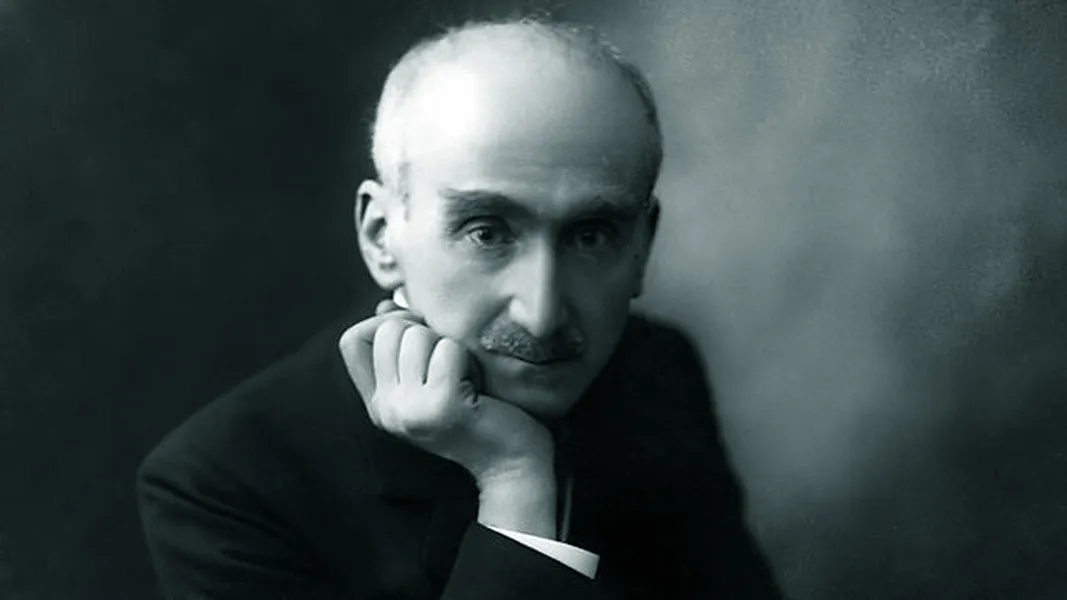
The Philosophical Genesis: Matter and Memory (1896)
The Epistemological Inversion: Production vs. Elimination
In late 19th-century associationist psychology (represented by Théodule Ribot, Hippolyte Taine, and Paul Broca) and orthodox contemporary physicalist neuroscience, the brain is modeled as a productive apparatus: sensory receptors transmit physical energy to cortical centers, which somehow manufacture conscious perception, while experiences are etched into biological substrate as physical traces or engrams (souvenir-traces).[1:2]
Henri Bergson challenged this reductionist orthodoxy in Matter and Memory (Matière et mémoire, 1896) by introducing an eliminative and transmissive model of mind.[1:3] Bergson argued that consciousness does not need to be produced because reality is already composed of an aggregate of luminous "images" coextensive with matter itself. The fundamental problem of biology is therefore not how the brain generates awareness, but why awareness is so severely limited.[1:4]
               Orthodox Materialist Model (Production):
  [ Physical Stimulus ] ──> [ Brain / Engram Storage ] ──> [ Conscious Awareness ]

               Bergsonian Filter Model (Elimination):
  [ Infinite Reality /  ] ──> ┌─────────────────────────┐ ──> [ Action-Oriented ]
  [ Totality of Memory  ]     │   Brain / Eliminative   │     [ Conscious Waking ]
                              │   Gating Mechanism      │     [ State            ]
                              └─────────────────────────┘
For Bergson, if an organism were conscious of every incoming wave of environmental information and every event of its past history simultaneously, it would experience total cognitive paralysis.[1:5] To facilitate biological survival, the central nervous system acts as a specialized screening mechanism: it isolates the physical organism from the vast ocean of potential experience, admitting only those sensory inputs and memories that provide actionable affordances for bodily movement.[1:6]
"The brain is an organ of action, not of representation... Its function is to limit our mental life to what is useful for practical life, to eliminate unnecessary memories and sensory perceptions, and to keep our attention fixed on the present moment." [1:7]
The Tripartite Architecture of Mind
To dismantle the confusion between matter and mind, Bergson established a rigorous triadic taxonomy distinguishing between perception, memory-images, and pure memory:[1:8]
  ┌────────────────────────────────────────────────────────────────────────┐
  │ 1. PURE PERCEPTION (Perception pure): Objective, unbounded presence    │
  │    coextensive with the physical world; reality prior to selection.    │
  └───────────────────────────────────┬────────────────────────────────────┘
                                      │
                         [ Filtered by Bodily Needs ]
                                      │
                                      ▼
  ┌────────────────────────────────────────────────────────────────────────┐
  │ 2. MEMORY-IMAGE (Image-souvenir): Pure memory actualized into concrete │
  │    sensory-motor representations to inform present physical action.    │
  └───────────────────────────────────▲────────────────────────────────────┘
                                      │
                         [ Drawn from Non-Local Past ]
                                      │
  ┌────────────────────────────────────────────────────────────────────────┐
  │ 3. PURE MEMORY (Souvenir pur): Indelible, unextended preservation of   │
  │    the entire past; immaterial, non-spatial, and entirely non-local.   │
  └────────────────────────────────────────────────────────────────────────┘
- Pure Perception (Perception pure): Perception in its theoretical, pristine state is not subjective or internal; it exists within the objects themselves.[1:9] The body does not create perception; it carves out a subjective zone of interest by discarding everything in the perceptual field that does not concern its immediate motor capacities.[1:10]
- Pure Memory (Souvenir pur): Pure memory is completely immaterial, non-spatial, and unextended.[1:11] It records every moment of lived duration automatically, effortlessly, and in its exhaustive totality. It does not decay, nor is it stored in physical cerebral vaults. It persists passively in the past, awaiting activation.[1:12]
- The Memory-Image (Image-souvenir): When a past experience is summoned to guide a current physical dilemma, pure memory condenses into an active, spatialized memory-image. It enters the nervous system, adopts a sensory-motor posture, and participates directly in current action.[1:13]
The Two Forms of Memory: Habit vs. True Memory
Bergson identified a fundamental ontological divide between two cognitive faculties that materialist psychology routinely conflates under the single term "memory":[1:14]
| Dimension | Habit-Memory (Mémoire d'habitude) | True / Pure Memory (Mémoire pure) |
|---|---|---|
| Ontological Status | Somatic, physical, and motor-based.[1:15] | Immaterial, psychological, and spiritual.[1:16] |
| Acquisition Mode | Acquired through repetitive muscular drills and bodily training (e.g., reciting a poem by rote, riding a bicycle, swimming).[1:17] | Inscribed spontaneously in a single instant; captures unique, unrepeatable autobiographical events.[1:18] |
| Temporal Dynamic | Oriented exclusively toward the future; acts the past rather than representing it.[1:19] | Dwells purely in the past; preserves the historical texture and temporal context of lived experience.[1:20] |
| Neural Substrate | Inscribed in neuromuscular pathways, striatal motor loops, and reflex arcs.[1:21] | Non-local; requires the brain only as a transmissive needle for physical actualization.[1:22] |
| Pathological Vulnerability | Often preserved in neurological amnesias and cortical aphasias.[1:23] | Access is blocked when cerebral indexing machinery is damaged, though the memory itself remains intact.[1:24] |
Bergson argued that aphasiacs and amnesiacs who lose the ability to recall names or events have not suffered the physical erasure of their memory traces. Rather, their cerebral motor apparatus—the physical "switchboard" required to insert immaterial memories into current muscular action—has been damaged.[1:25]
The Inverted Cone of Memory (Schema SAB)
In Chapter 3 of Matter and Memory, Bergson presented his most celebrated geometrical schema: the Inverted Cone of Memory (
                          Base A ───────────── Base B
                          │                         │
                          │   Totality of the Past  │
                          │   (Pure Memory /        │
                          │    Souvenir pur)        │
                          │                         │
                           \                       /
                            \                     /
                             \   Intermediate    /
                              \  Contractions   /
                               \  of Memory    /
                                \             /
                                 \           /
                                  \         /
                                   \       /
                                    \     /
                                     \   /
                                      \ /
                                       ▼
  Plane P (The Present / ──────────────S────────────── Plane P (Sensory-Motor
           Actionable Reality)                         Bodily Surface)
- Base
(Pure Memory): The wide, immobile base of the cone represents the unextended, non-spatial totality of all past experiences preserved in pure duration.[1:27] Base is completely detached from the demands of bodily survival. - Apex
(The Present Bodily Needle): The sharp apex represents the biological body and its sensory-motor apparatus, positioned upon Plane (the moving plane of current physical reality). Apex is in perpetual motion, touching only that minuscule point of space and time where immediate physical action is required.[1:28] - The Dynamic Contraction of Mind: Normal waking consciousness consists of a continuous, fluid movement between the base and the apex. When the mind needs to solve a problem, the entire cone contracts toward apex
, condensing relevant layers of the past into sharp memory-images that fit precisely into the sensorimotor socket of present action.[1:29] - The Brain as the Mobile Point: Crucially, the cone of memory is not stored inside the apex
. The brain is merely the mobile point of contact between memory and physical matter—the steering mechanism that drives the cone through duration.[1:30]
Duration (La Durée) vs. Spatialized Clock Time
Central to Bergson's eliminative model is his foundational metaphysical distinction between duration (la durée) and spatialized time (le temps spatialisé):[1:31]
[ Qualitative Duration (La Durée) ]          [ Spatialized Clock Time ]
Continuous, indivisible, heterogeneous       Discrete, juxtaposed, homogeneous
Past and present interpenetrate organically  Divided into identical, static seconds
Incommensurable inner conscious flow         Abstract spatial metric for measurement
Domain of free will and pure memory          Domain of mechanistic utility and physics
- Spatialized Time as a Utilitarian Construction: Physics, commerce, and mechanical clocks divide time into discrete, uniform, juxtaposed units (seconds, minutes, hours). Bergson demonstrated that this is not time at all, but a spatial projection of time—treating temporal succession as if it were a line drawn across space. This spatialization is invented by the intellect solely for measurement, industrial coordination, and practical utility.[1:32]
- Duration as Indivisible Flow: Real time is la durée—an undivided, flowing qualitative multiplicity where past states continuously interpenetrate the present without spatial boundaries. In la durée, the past is never dead; it actively swells into the present.
- The Brain as a Spatializing Gasket: The biological function of the brain's eliminative apparatus is to freeze and fracture this fluid, indivisible duration into static, manageable frames. By spatializing the world, the brain allows the organism to project motor vectors, aim weapons, seize food, and navigate physical terrain.[1:33]
The Brain as a "Solicitor of Action" and the Reducing Valve
Bergson posited that perception is intrinsically wide, unbounded, and rich. The brain acts as an instrument of action (solliciteur d'action), filtering out any perceptual field or historical memory that does not offer a direct vector for bodily movement or survival.[1:34]
Decades later, novelist Aldous Huxley adopted Bergson's philosophy in The Doors of Perception (1954), coining the famous metaphor of the brain as a "reducing valve" that compresses an infinite "Mind at Large" into a narrow trickle of pragmatic sensory data.[5]
               [ Unfiltered Reality / Pure Memory / Mind at Large ]
                                        │
                                        ▼
  ┌───────────────────────────────────────────────────────────────────────────┐
  │   Biological Reducing Valve (Brain & Central Nervous System)              │
  │   ──> Suppresses 99% of reality; gates non-utilitarian sensory/memory data│
  └─────────────────────────────────────┬─────────────────────────────────────┘
                                        │
                                        ▼
  ┌───────────────────────────────────────────────────────────────────────────┐
  │   Semantic Reducing Valve (Language, Concepts, & Cultural Schemas)        │
  │   ──> Condenses qualitative phenomena into rigid symbolic counters        │
  └─────────────────────────────────────┬─────────────────────────────────────┘
                                        │
                                        ▼
               [ Biologically Conditioned Action Consciousness ]
Huxley argued that each human being is theoretically capable of remembering everything that has ever occurred to them and perceiving the immense, self-luminous totality of reality.[5:1] However, if conscious awareness were exposed to this boundless sea, physical survival would be impossible; the organism would starve or fall prey to predators in a state of ecstatic contemplation. To keep the animal alive, the central nervous system acts as an organ of elimination.[1:35][5:2]
Neuroanatomy of the Default Mode Network
Discovered by Marcus Raichle and colleagues in 2001 via baseline positron emission tomography (PET) and functional magnetic resonance imaging (fMRI) studies, the Default Mode Network (DMN) is a set of interconnected high-level cortical regions.[2:1] It exhibits elevated metabolic activity when an individual is engaged in passive rest, daydreaming, or unconstrained self-reflection, and downregulates during externally focused, goal-directed tasks.[2:2][6]
                      ┌─────────────────────────────┐
                      │ Medial Prefrontal (mPFC)    │
                      └──────────────┬──────────────┘
                                     │
                                     ▼
┌─────────────────────────┐   ┌──────────────────────┐   ┌──────────────────────────┐
│ Inferior Parietal       │──>│ Posterior Cing.      │<──│ Medial Temporal Lobe     │
│ Lobe / Angular Gyrus    │   │ (PCC) / Precun.      │   │ (MTL / Hippocampus)      │
└─────────────────────────┘   └──────────────────────┘   └──────────────────────────┘
Key Anatomical Hubs and Subsystems
The DMN comprises three distinct yet tightly synchronized functional subsystems:[6:1]
- Posterior Cingulate Cortex (PCC) & Precuneus (Core Structural Hub): The central structural core of the network. It exhibits the highest metabolic rate and vascular flow in the resting brain, integrating autobiographical memory, self-location, spatial perspective, and temporal projection (past/future travel).[2:3][6:2]
- Medial Prefrontal Cortex (mPFC Subsystem): Mediates self-referential cognition, meta-cognition, social valuation, moral judgment, and top-down emotional regulation.[6:3]
- Medial Temporal Lobe (MTL Subsystem / Hippocampus & Parahippocampus): Controls episodic memory access and scene construction, supplying the raw historical narrative used by the PCC and mPFC to construct the stable ego.[2:4][6:4]
- Angular Gyrus / Inferior Parietal Lobe (IPL): Serves as a semantic and multi-sensory integration hub, connecting autobiographical self-concepts with language, spatial coordination, and perceptual categories.[6:5]
Topographical Isolation and the Cortical Gradient
Landmark macroscale gradient-mapping studies by Daniel Margulies and colleagues (2016) demonstrated that the DMN sits at the maximal functional and anatomical distance from primary sensory and motor cortices.[6:6]
  Primary Sensory-Motor Cortices ──> Association Cortices ──> Default Mode Network
  (Direct Environmental Contact)     (Multimodal Processing)  (Transmodal Apex Hub)
  [ Low Abstraction / Immediate ]                             [ Maximal Distance ]
This extreme topographical isolation allows the DMN to operate independently of real-time environmental input, enabling abstract thought, autobiographical narrative creation, and top-down cognitive modulation.[6:7] By residing at the apex of the cortical hierarchy, the DMN is uniquely positioned to act as the primary gating mechanism governing which sensory and limbic signals are allowed to penetrate conscious awareness.[3:2][6:8]
The DMN as the Biological Reducing Valve
The convergence of modern neuroimaging and cognitive science provides a concrete bio-computational mechanism for Bergson's filter model: top-down predictive processing orchestrated by the DMN.[3:3]
Formulated by Karl Friston, predictive coding posits that the brain is an active prediction machine rather than a passive sensory receiver.[3:4] High-level cortical hierarchies continuously project "top-down" predictions (priors) about the world to lower sensory cortices. Incoming "bottom-up" sensory signals are compared against these predictions; only the difference—the prediction error—is passed up the hierarchy to update the internal model.[3:5]
The REBUS Model and Top-Down Gating
In 2019, Robin Carhart-Harris and Karl Friston introduced the REBUS model (Relaxed Beliefs Under Psychedelics), explicitly identifying the DMN as the primary structural network enforcing high-level top-down priors.[3:6]
       Top-Down Constraints (DMN)                     Bottom-Up Signal Flow
┌─────────────────────────────────────────┐   ┌─────────────────────────────────────────┐
│ High-Level Egoic Priors                 │   │ Raw Sensory Inputs &                    │
│ (mPFC / PCC / Precuneus)                │   │ Limbic Memory Signals                   │
└────────────────────┬────────────────────┘   └────────────────────┬────────────────────┘
                     │                                             │
                     │ [Suppression / Filtering]                   │ [Escapes Gating]
                     ▼                                             ▼
┌─────────────────────────────────────────┐   ┌─────────────────────────────────────────┐
│ Ordinary Waking State:                  │   │ Psychedelic / Altered:                  │
│ Reality compressed to                   │   │ High cortical entropy,                  │
│ functional survival model               │   │ unconstrained richness                  │
└─────────────────────────────────────────┘   └─────────────────────────────────────────┘
- Egoic Narrative as a Filter: The DMN encodes deeply entrenched beliefs regarding identity, cause-and-effect, and spatiotemporal boundaries.[3:7] By applying strong prior beliefs downward, it suppresses raw, unconstrained neural noise from lower-level sensory regions and the limbic system.[4:1][3:8]
- Gating Limbic Memory: The DMN regulates access to the hippocampal formation. By modulating hippocampal firing, the DMN filters out non-utilitarian, hyper-detailed episodic memories, bringing forward only those memories that fit the immediate action context—exactly as Bergson described in his analysis of apex
.[1:36][3:9] - Serotonergic Receptor Mechanics: Deep layer V pyramidal neurons within high-level association cortices are densely populated with serotonin
receptors. Activation of these receptors destabilizes the synchronized oscillations of the DMN, collapsing top-down predictive constraints and opening the biological reducing valve.[3:10]
Empirical Evidence of Filter Disruption
When the structural integrity or functional coupling of the Default Mode Network is disrupted, the brain's reducing valve opens, revealing the unconstrained perceptual and memory states Bergson theorized.[1:37][4:2]
Psychedelic Neuroimaging: The "Psychedelic Paradox"
Neuroimaging studies using fMRI and magnetoencephalography (MEG) on subjects under the influence of psilocybin, LSD, and DMT have demonstrated marked decreases in blood flow and functional connectivity within primary DMN hubs (mPFC and PCC).[4:3]
Classical physicalist models predict that decreased metabolic activity in a master network should lead to cognitive impairment, sedation, or unconsciousness. Instead, DMN deactivation produces an expansion of subjective conscious experience—including ego dissolution, hyper-vivid sensory perception (synesthesia), unconstrained emotional flow, and the surfacing of long-suppressed autobiographical memories.[4:4][3:11]
With the DMN downregulated:
- Cross-Network Hyper-Connectivity: Primary visual, auditory, and motor networks establish direct, unmediated communication channels, bypassing top-down DMN gating.[4:5]
- Cortical Entropy: Brain activity shifts toward a state of higher informational entropy, increasing signal diversity and unlocking latent perceptual bandwidth.[3:12]
Neurological Pathologies and Lesions
- Frontotemporal Dementia (FTD) and Acquired Savant Syndrome: In patients suffering from localized degeneration of the left anterior temporal and dorsolateral frontal lobes, researchers led by Bruce Miller observed the sudden, spontaneous emergence of extraordinary artistic, musical, or calculative genius.[7] As the frontal inhibitory filtering apparatus degrades, latent perceptual processing networks in the posterior cortex become uninhibited, granting direct access to raw visual and spatial configurations.[7:1]
- Terminal Lucidity: Transient episodes of profound cognitive clarity, comprehensive memory recall, and ego restoration in late-stage Alzheimer's, severe stroke, or brain tumor patients immediately prior to death present a severe anomaly for materialist production models.[1:38] From an eliminative perspective, as the damaged, failing cerebral architecture collapses, its restrictive filtering mechanism weakens, briefly granting uninhibited consciousness access to latent memory structures before physiological cessation.[1:39]
- Déjà Vu as Temporal Desynchronization: As examined in contemporary anomalistic psychology, déjà vu represents a transient micro-failure of the brain's eliminative filter. In normal cognition, the brain maintains a precise temporal delay between incoming sensory perception and memory registration; when this gating momentarily stutters, real-time perception is routed directly into memory recognition pathways, causing the immediate present to feel like an ancient, pre-recorded memory.[1:40]
Contemplative Practice and Meditation
Neuroimaging of expert meditators (e.g., long-term practitioners of Theravada, Zen, and Dzogchen traditions) by Judson Brewer and colleagues shows significant functional downregulation of mPFC and PCC nodes during meditation.[8]
Downregulating the DMN attenuates self-referential narrative loops, leading to reports of "pure awareness"—a state closely matching Bergson's concept of "pure perception" (perception pure), where reality is experienced directly without the utilitarian filter of the ego.[1:41][8:1]
Comparative Matrix: Neuro-Physicalism vs. Eliminative Filter Theory
| Feature | Standard Neuro-Physicalism | Bergson-Huxley Filter Theory (DMN Alignment) |
|---|---|---|
| Ontology of Mind | Physicalist epiphenomenalism; consciousness is generated by complex neural computation.[1:42] | Transmissive/eliminative; consciousness and pure memory (souvenir pur) are primary and unbounded.[1:43][5:3] |
| Brain Role | Generator: Creates mental states and records memories as localized physical engrams.[1:44] | Transducer/Filter: Constrains, translates, and selects action-relevant mind states.[1:45][5:4] |
| DMN Function | Integrates higher cognition, creates the narrative self, and coordinates brain networks.[2:5][6:9] | Enforces top-down constraints, compresses reality into survival schemas, and gates non-utilitarian input.[1:46][3:13] |
| DMN Suppression | Should produce cognitive deficits, unconsciousness, or disorganized delirium.[4:6] | Relaxes top-down priors, allowing uninhibited sensory and memory flow (visionary states, "Mind at Large").[4:7][3:14] |
| Memory Storage | Localized engram complexes inscribed in synaptic weights and hippocampal-cortical circuits.[1:47] | Non-local and coextensive with duration; the brain acts merely as a motor needle for actualization.[1:48] |
| Predictive Processing | Error-minimization architecture optimizing an internal simulation of the external world.[3:15] | The biological implementation of the reducing valve, filtering out raw entropy in favor of pragmatic heuristics.[1:49][3:16] |
| Acquired Savant Syndrome | Compensatory hyper-connectivity or structural reorganization.[7:2] | Disinhibition resulting from the structural degradation of the frontal inhibitory reducing valve.[7:3] |
Philosophical Synthesis: Interface vs. Generator
The neuroscience of the Default Mode Network and predictive coding provides rigorous empirical grounding for Henri Bergson's nineteenth-century philosophical intuition.[1:50][4:8] Whether consciousness is generated by physical brain structures or filtered through them, the functional architecture of the brain is demonstrably eliminative.[1:51][3:17]
The Default Mode Network serves as the biological conductor of this elimination.[2:6][3:18] By maintaining rigid top-down priors, enforcing temporal continuity, and gating lower-level sensory and limbic signals, the DMN compresses the vast complexity of reality into a narrow, ego-driven model optimized for physical survival.[1:52][3:19][5:5]
This biological reality converges directly with Donald Hoffman's findings explored in The Interface Theory of Perception (ITP): perceptual systems evolved to guide adaptive action and fitness payoffs rather than to reproduce objective metaphysical reality (Fitness Beats Truth Theorem). The brain is not a transparent window onto the cosmos, but an evolutionary desktop interface. When this central hub is downregulated—whether through pharmacology, meditation, aesthetic absorption, or neuropathology—the reducing valve opens, offering a glimpse into the unconstrained perceptual and mnemonic landscape that lies beneath waking awareness.[1:53][4:9][5:6]
🎴 Interactive Web Practice (Comprehension Check)
Question 1 (Bergson's Metaphysics of Memory & The Inverted Cone): In Matter and Memory (1896), how does Henri Bergson invert the materialist paradigm of memory storage, and how does his geometrical schema of the inverted cone ($SAB$) illustrate the brain's role as an instrument of action rather than representation?
Answer: Standard materialism assumes that the brain acts as an archival storehouse where past experiences are recorded as physical engrams in cortical tissue. Bergson inverts this by positing that pure memory (souvenir pur) is immaterial, unextended, and completely preserved in its exhaustive entirety in lived duration (la durée). The brain's challenge is not how to store memories, but how to eliminate and suppress them so the organism is not overwhelmed. In Bergson's inverted cone schema ($SAB$), the broad, immobile base $AB$ represents the unextended totality of the past, while the sharp apex $S$ represents the body moving along Plane $P$ (the sensory-motor plane of present physical action). The brain is located exclusively at apex $S$; it does not contain the cone within itself. Instead, the brain functions as a dynamic needle or filter, allowing only those specific past memories to contract into memory-images that provide direct motor utility for immediate bodily survival.
Question 2 (The Default Mode Network & Predictive Processing): How do modern discoveries regarding the Default Mode Network (DMN) and Karl Friston's predictive coding (particularly the REBUS model) provide an empirical bio-computational mechanism for Bergson's theoretical "reducing valve"?
Answer: Marcus Raichle's discovery of the Default Mode Network (mPFC, PCC, Precuneus, Angular Gyrus) revealed a top-level cortical network positioned at the maximal anatomical and functional distance from primary sensory-motor cortices. Under Karl Friston's predictive processing framework, the DMN acts as the top-level prior-generating engine that projects rigid top-down constraints downward, heavily weighting egoic expectations and suppressing unconstrained bottom-up sensory and limbic prediction errors. In Robin Carhart-Harris and Friston's REBUS model (Relaxed Beliefs Under Psychedelics), classical psychedelics stimulate serotonin $5\text{-HT}_{2\text{A}}$ receptors on layer V pyramidal neurons, selectively suppressing DMN metabolic activity and functional connectivity. This downregulates the precision-weighting of high-level priors, allowing raw sensory streams and unconstrained limbic memories to escape top-down censorship and flood conscious awareness—providing a direct neuro-computational validation of Bergson's and Huxley's biological reducing valve.
Question 3 (Clinical and Pharmacological Filter Collapse): How do the empirical phenomena of acquired savant syndrome in frontotemporal dementia, terminal lucidity, and psychedelic deactivation challenge orthodox neurological "production" models and substantiate an eliminative filter theory?
Answer: Orthodox production models predict that when brain structures suffer damage, metabolic depression, or tissue degeneration, conscious capacity and cognitive output should decline proportionally into deficit or coma. However, several clinical anomalies contradict this: (1) In frontotemporal dementia (FTD), Bruce Miller demonstrated that degeneration of frontal and anterior temporal inhibitory networks often triggers the spontaneous emergence of extraordinary visual, musical, or mathematical genius (acquired savants), proving that advanced perceptual and artistic capacities were previously suppressed by inhibitory gating. (2) In terminal lucidity, patients with profound, irreversible cortical damage from Alzheimer's or stroke suddenly regain full autobiographical memory, coherent communication, and lucidity hours before death, suggesting that the collapsing brain tissue has ceased to enforce its restrictive filter. (3) In psychedelic fMRI studies, profound increases in subjective conscious richness and cross-network communication occur alongside decreases in cerebral blood flow and connectivity in master DMN hubs. Together, these phenomena demonstrate that the brain acts as an eliminative constraint rather than a sole producer of awareness.
Resonant Notes
The following notes in the vault share direct thematic, cognitive, and philosophical connections with Henri Bergson's eliminative model of perception and memory:
🔴 Cognitive Architecture, Gating & Predictive Processing
- Default Mode Network (DMN) — Operates as the contemporary bio-computational counterpart to Bergson's reducing valve; neuroimaging demonstrates that DMN activity enforces high-level top-down priors that gate raw sensory and limbic memory inputs.
- The Interface Theory of Perception (ITP) — Donald Hoffman's evolutionary theorem (Fitness-Beats-Truth) formalizes Bergson's eliminative thesis through evolutionary game theory, proving mathematically that natural selection tunes sensory perception to survival fitness payoffs rather than the veridical structure of objective reality.
- Gestalt Psychology-The Mechanics of the Whole — Illustrates how cognitive processing organizes sensory inputs into holistic, actionable figures while discarding background ground; aligns with Bergson's argument that perception selects only actionable vectors.
- Apophenia — When top-down predictive constraints or dopamine gating mechanisms are altered, the eliminative filter allows background environmental noise to force itself forward with aberrant salience and false meaningfulness.
- Cognitive Dissonance — Demonstrates the friction that occurs when incoming sensory or conceptual data contradicts entrenched top-down priors maintained by the egoic filter, prompting defensive filtering to protect behavioral equilibrium.
- Entropy — Connects to the Entropic Brain Hypothesis; downregulating the brain's eliminative filter shifts neural dynamics from rigid criticality into elevated informational entropy, expanding subjective conscious bandwidth.
🟡 Altered States, Clinical Neuropsychology & Anomalous Perception
- Aldous Huxley's The Doors of Perception (1954) — Huxley's foundational philosophical memoir directly adopts Bergson's Matter and Memory to formulate the "reducing valve" hypothesis, explaining how mescaline inhibits cerebral glucose metabolism to unleash "Mind at Large."
- Aldous Huxley's Heaven and Hell (1956) — Explores the negative polarity of filter downregulation, detailing how the lowering of the reducing valve under physiological distress or existential dread produces terrifying visionary states and acute psychopathology.
- Déjà Vu — Represents an involuntary, transient micro-failure of the brain's sensory-motor needle (apex
), wherein incoming real-time perception is erroneously routed into memory recognition circuits, creating an uncanny temporal overlap. - Louis Sass - Phenomenological Psychopathology and the Self — Examines hyperreflexivity and ipseity disturbance in schizophrenia, showing how the collapse of tacit background filtering turns unreflective experience into an alien, hyper-salient spectacle.
- William James — James's transmission theory of consciousness and his famous declaration in The Varieties of Religious Experience—that normal waking consciousness is merely one special type parted by the filmiest of screens—directly parallels Bergson's eliminative metaphysics.
- Sigmund Freud & Jacques Lacan — While psychoanalysis models memory through dynamic repression and the unconscious, Bergson provides an ontological foundation where the past is never lost, and Lacan's Symbolic order acts as a cultural reducing valve constraining the raw Real.
🟢 Philosophy of Duration, Process Metaphysics & Literature
- Henri Bergson — The biographical and philosophical hub note detailing Bergson's life, his 1922 debate with Albert Einstein over the nature of time, élan vital, and the metaphysical distinction between intuition and intellect.
- Beyond Representation-Shared Epistemology of Thoreau and Kerouac — Explores how Henry David Thoreau's "Wildness" and Jack Kerouac's "Spontaneous Prose" operationalize Bergson's critique of static representation, striving for an unmediated, embodied immersion in pure duration.
- Virginia Woolf — Woolf's modernist stream-of-consciousness technique in Mrs Dalloway and To the Lighthouse directly embodies Bergsonian duration, contrasting the rigid clock time of Big Ben with the continuous, qualitative interpenetration of memory and perception.
- James Joyce (1882-1941) — Joyce's temporal experiments in Ulysses collapse an entire epic into a single day, demonstrating how the totality of autobiographical memory and history converges at the sensory-motor apex of everyday Dublin life.
- Ludwig Boltzmann (1844-1906) — Boltzmann's statistical mechanics and coarse-graining demonstrate that physical macroscopic observations discard microscopic microstates—providing a thermodynamic analogy for the brain's coarse-grained eliminative filter.
References
Henri Bergson / Matter and Memory (Matière et mémoire, 1896) / Translated by N.M. Paul & W.S. Palmer / Zone Books / Internet Archive ↩︎ ↩︎ ↩︎ ↩︎ ↩︎ ↩︎ ↩︎ ↩︎ ↩︎ ↩︎ ↩︎ ↩︎ ↩︎ ↩︎ ↩︎ ↩︎ ↩︎ ↩︎ ↩︎ ↩︎ ↩︎ ↩︎ ↩︎ ↩︎ ↩︎ ↩︎ ↩︎ ↩︎ ↩︎ ↩︎ ↩︎ ↩︎ ↩︎ ↩︎ ↩︎ ↩︎ ↩︎ ↩︎ ↩︎ ↩︎ ↩︎ ↩︎ ↩︎ ↩︎ ↩︎ ↩︎ ↩︎ ↩︎ ↩︎ ↩︎ ↩︎ ↩︎ ↩︎ ↩︎
Marcus E. Raichle et al. / A default mode of brain function / PNAS ↩︎ ↩︎ ↩︎ ↩︎ ↩︎ ↩︎ ↩︎
Robin L. Carhart-Harris & Karl J. Friston / REBUS and the anarchic brain: toward a unified model of the brain action of psychedelics / Pharmacological Reviews ↩︎ ↩︎ ↩︎ ↩︎ ↩︎ ↩︎ ↩︎ ↩︎ ↩︎ ↩︎ ↩︎ ↩︎ ↩︎ ↩︎ ↩︎ ↩︎ ↩︎ ↩︎ ↩︎ ↩︎
Robin L. Carhart-Harris et al. / Neural correlates of the psychedelic state as determined by fMRI studies with psilocybin / PNAS ↩︎ ↩︎ ↩︎ ↩︎ ↩︎ ↩︎ ↩︎ ↩︎ ↩︎ ↩︎
Aldous Huxley / The Doors of Perception / Harper & Row ↩︎ ↩︎ ↩︎ ↩︎ ↩︎ ↩︎ ↩︎
Jonathan Smallwood et al. / The default mode network in cognition: a topographical perspective / Nature Reviews Neuroscience ↩︎ ↩︎ ↩︎ ↩︎ ↩︎ ↩︎ ↩︎ ↩︎ ↩︎ ↩︎
Bruce L. Miller et al. / Emergence of artistic talent in frontotemporal dementia / Neurology ↩︎ ↩︎ ↩︎ ↩︎
Judson A. Brewer et al. / Meditation experience is associated with differences in default mode network activity and connectivity / PNAS ↩︎ ↩︎