Metaphysics of Henry David Thoreau
The metaphysics of Henry David Thoreau is a dynamic synthesis of American Transcendental idealism, intense naturalistic empiricism, and Eastern monism. Rather than strictly dividing the spiritual from the physical, Thoreau viewed the natural world as the direct, living manifestation of divine spirit. His metaphysical project was rooted in discovering universal, eternal truths through the acute, intentional observation of the localized and the mundane.
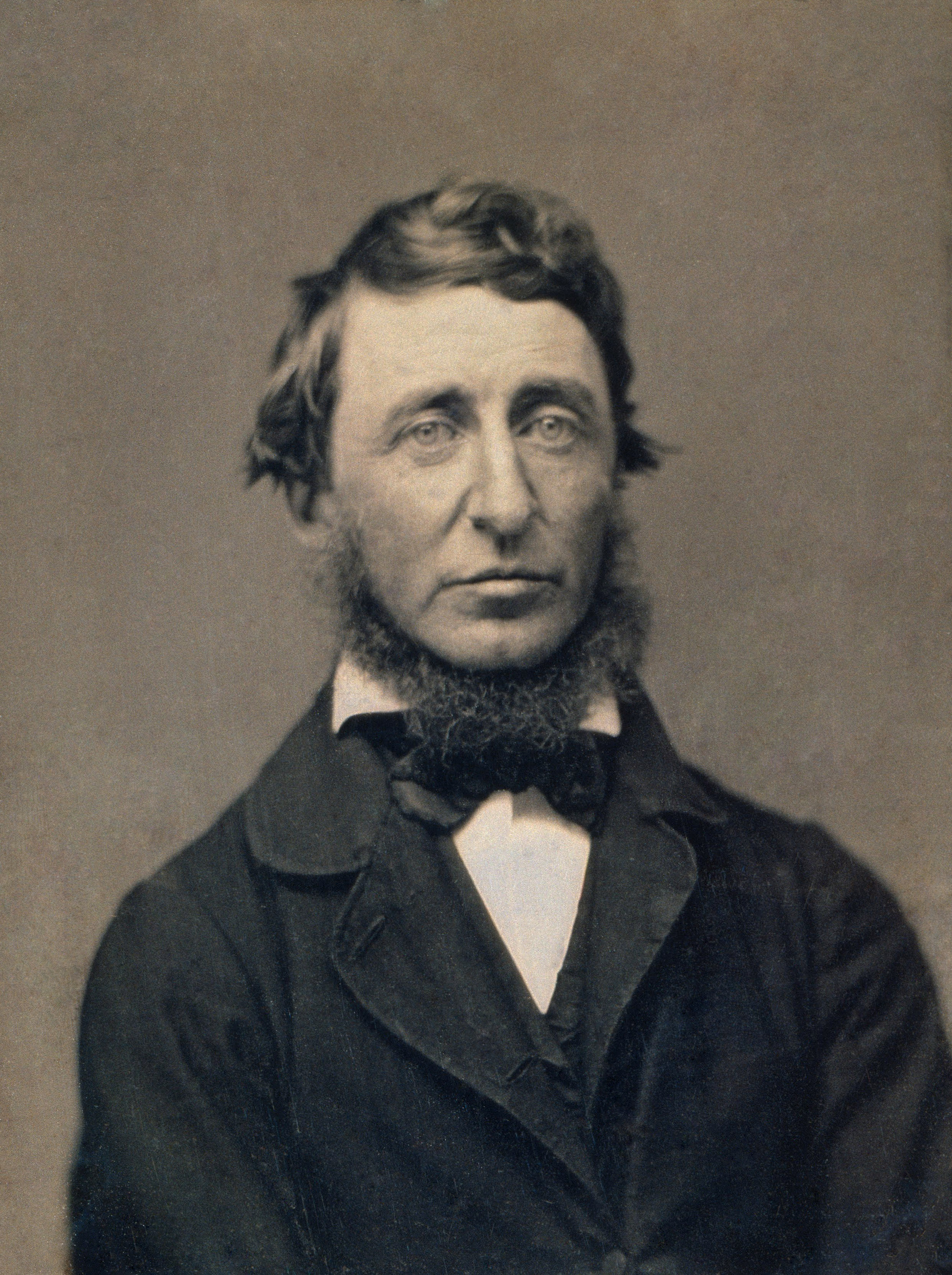
Foundations: Transcendental Idealism and Natural Empiricism
Thoreau's metaphysical framework originated in the American Transcendentalist movement, heavily influenced by his mentor Ralph Waldo Emerson, as well as European Romanticism and Kantian idealism. However, Thoreau diverged from orthodox idealism—which often treats the physical world as a mere shadow of the spiritual—by elevating the physical world to an ontological equal.[1]
For Thoreau, matter was not "dead" or mechanical, as conceptualized by Enlightenment-era Cartesian dualism or Lockean empiricism. Instead, he proposed a universe of Immanence, where God or the "Oversoul" permeates every particle of nature.
-
Rejection of strict dualism: Thoreau refused to separate the mind from the body, or nature from spirit. He sought the spiritual through the physical, engaging in a rigorous empirical study of biology, botany, and phenology to decode the metaphysical laws of the universe.
-
The divine in the mundane: A central tenet of his ontology is that the ultimate reality is accessible not through abstract theological speculation, but through direct, sensuous contact with the immediate environment.[2]
"The earth is not a mere fragment of dead history, stratum upon stratum like the leaves of a book, to be studied by geologists and antiquaries chiefly, but living poetry like the leaves of a tree, which precede flowers and fruit—not a fossil earth, but a living earth..."[3]
The Epistemology of the "Seer"
If Thoreau’s ontology posits a universe shimmering with immanent meaning, his epistemology revolves around the act of perception. How do we know what is real?
Thoreau argued that standard intellectualism and scientific categorization, while useful, often obscure true reality. He advocated for a mode of knowing that combined intense empirical observation with intuitive spiritual synthesis.
The Correspondential Vision
Influenced by Emanuel Swedenborg (via Emerson), Thoreau practiced a "correspondential" vision, where natural facts are seen as symbols of spiritual facts. However, Thoreau radicalized this: the natural fact was not just a symbol; it possessed its own intrinsic, sacred reality.[4]
"Sauntering" and Intentional Awareness
To access ultimate reality, Thoreau cultivated specific practices of awareness. His concept of "sauntering," famously explored in his essay Walking, is a metaphysical exercise designed to strip away societal illusions and domestic conditioning, allowing the individual to encounter the raw, unmediated reality of the "Wild."[5] Where Baudelaire's urban The flâneur immersed himself in the metropolitan crowd with aesthetic detachment, Thoreau's rural saunterer moved into the forest to dissolve the domesticated ego and engage with pristine nature.
In Thoreauvian metaphysics, the "Wild" is not merely a biological ecosystem; it is the vital, chaotic, and animating force of the universe—the ontological ground of all existence. As he wrote, "In Wildness is the preservation of the World."
Eastern Influences and Monistic Time
A complete understanding of Thoreau's metaphysics requires acknowledging his deep engagement with Eastern philosophy, specifically the Bhagavad Gita, the Upanishads, and the Laws of Manu, positioning his work close to the Perennial Philosophy and comparative Eastern metaphysics (see William James and the Landscape of Eastern Thought).
The Illusion of Time (Maya)
Eastern texts profoundly shaped Thoreau’s metaphysical conception of time. He rejected the linear, historical progress narratives of 19th-century America. Instead, he viewed the present moment as the only true metaphysical reality, an intersection of past and future eternities.[6]
-
Eternal Now: Thoreau believed that ultimate reality (Brahman, in Hindu terms) does not exist in a distant heaven or a future utopia, but is immediately present.
-
Waking from Sleep: A recurring motif in Walden is "waking up." Thoreau viewed the standard, unreflective life of mid-19th century society as a state of ontological sleep or illusion (akin to the Hindu concept of Maya). To "live deliberately" was to pierce this illusion and make contact with the Absolute.[7]
Ethics as Applied Metaphysics
For Thoreau, metaphysics was never an armchair philosophy; it demanded a corresponding way of life. If the universe is a living, interconnected moral order, then human action must align with this reality.
-
Higher Laws: In the Walden chapter "Higher Laws," Thoreau outlines the moral imperatives dictated by his ontological views. Because the universe is fundamentally spiritual, the individual must cultivate purity, self-discipline, and a diet/lifestyle that minimizes harm to the interconnected web of life.[8]
-
Civil Disobedience: Even his political philosophy stems from his metaphysics. Because ultimate truth resides in the individual soul's connection to the universal Spirit, human-made laws (which are temporary and often unjust) must be subordinated to the eternal "higher law" apprehended by the individual conscience (an ethical imperative echoed in tax resistance case studies such as The Ethics of Taxes).[9]
Thoreau’s metaphysics asserts that reality is not bifurcated into heaven and earth, or mind and matter. It is a singular, living continuum. By refining one's perception and living intentionally, the individual can transcend social illusions and experience the eternal, divine reality perfectly encapsulated in a single leaf, a pond, or the present moment.
Resonant Notes
Core Lineage & Transcendental Context
- American Transcendentalism — The foundational New England movement. While Emerson supplied the movement's architectural philosophy, Thoreau grounded it in tangible ecology, deliberate living at Walden Pond, and radical conscience.
- Ralph Waldo Emerson — Thoreau's mentor and close friend. Emerson introduced Thoreau to the concept of the Over-Soul, nature as divine metaphor, and Hindu philosophical texts, though Thoreau placed far greater weight on physical immersion and field observation.
- Emanuel Swedenborg — The Swedish mystic whose doctrine of correspondences (natural objects reflecting spiritual realities) laid the groundwork for Transcendental epistemology. Thoreau accepted correspondences while rejecting Swedenborg's rigid allegories in favor of nature's direct, sacred presence.
Epistemology & Aesthetic Wandering
- Beyond Representation-Shared Epistemology of Thoreau and Kerouac — Explores how Thoreau's concept of "Wildness" as epistemological openness and spectator consciousness directly links to Jack Kerouac's "Spontaneous Prose" method.
- Jack Kerouac (1922-1969) — The Beat writer whose "Dharma Vagabond" and search for ecstatic "IT" on the open road directly descended from Thoreau's sauntering and sacralization of the wilderness.
- The flâneur — The urban counterpart to Thoreau's saunterer. Where Baudelaire and Benjamin's flâneur observes metropolitan streets and arcades with aesthetic detachment amidst alienation, Thoreau's walker steps deliberately beyond civilization to commune with unmediated wild reality.
Comparative Metaphysics & Eastern Thought
- Perennial Philosophy — Thoreau's conviction that universal spiritual truths underlie localized nature and ancient scriptures aligns with the perennialist "Highest Common Factor" and the divine immanence within all things.
- William James and the Landscape of Eastern Thought — Explores the American philosophical engagement with Eastern non-dualism, consciousness, and mystical experience that began with Emerson and Thoreau.
Applied Ethics & Conscience
- The Ethics of Taxes — Connects contemporary ethical tax dilemmas to Thoreau's foundational act of civil disobedience in refusing to pay his Massachusetts poll tax to protest slavery and war.
Backlinks
- American Transcendentalism — Details Thoreau's life, his experiment at Walden Pond, and his doctrine of civil disobedience as practical realizations of Transcendental principles.
- Ralph Waldo Emerson — Identifies Thoreau as Emerson's key protégé and intellectual counterpart who translated Transcendental idealism into direct physical and natural immersion.
- Beyond Representation-Shared Epistemology of Thoreau and Kerouac — Directly examines Thoreau's epistemology of "Wildness" and non-evaluative witness consciousness alongside Beat prose poetics.
- Emanuel Swedenborg — Swedenborg's doctrine of correspondences provided the philosophical scaffold that Thoreau radicalized into an immanent natural theology.
- Jack Kerouac (1922-1969) — Traces Kerouac's "Dharma Vagabond" back to Thoreau's saunterer and deliberate simplification of life.
- Perennial Philosophy — Connects Thoreau's monism and engagement with Vedic and Vedantic literature to the universalist tradition of perennial wisdom.
References
Laura Dassow Walls / Henry David Thoreau: A Life / University of Chicago Press ↩︎
Robert D. Richardson / Henry Thoreau: A Life of the Mind / University of California Press ↩︎
Henry David Thoreau / Walden (Chapter: Spring) / Project Gutenberg ↩︎
Lawrence Buell / The Environmental Imagination: Thoreau, Nature Writing, and the Formation of American Culture / Harvard University Press ↩︎
Henry David Thoreau / Walking / Project Gutenberg ↩︎
Arthur Versluis / American Transcendentalism and Asian Religions / Oxford University Press ↩︎
Henry David Thoreau / Walden (Chapter: Where I Lived, and What I Lived For) / Project Gutenberg ↩︎
Henry David Thoreau / Walden (Chapter: Higher Laws) / Project Gutenberg ↩︎
Henry David Thoreau / Civil Disobedience / Project Gutenberg ↩︎