Group of Seven (also known as the Algonquin School)
The Group of Seven (also known as the Algonquin School) was a pioneering collective of Canadian landscape painters active between 1920 and 1933. Rejecting the conservative 19th-century European academic traditions and pastoral conventions that dominated Canadian institutions, they forged a distinct national visual idiom defined by bold color, graphic simplification, expressive impasto, and direct somatic engagement with the rugged northern wilderness. Across their geographic expeditions—from Algonquin Park and the Algoma Shield to the Rocky Mountains and the High Arctic—the Group transformed Canadian visual culture, crafting a mythic iconography of settler nationalism while simultaneously pioneering early 20th-century aesthetic modernism and spiritual abstraction in North America.
Historical Genesis and Origins
The ideological and practical foundations of the Group of Seven took shape between 1911 and 1913 in Toronto.[1] The core members were commercial illustrators and designers employed at the commercial design firm Grip Ltd., where senior artist J.E.H. MacDonald mentored younger draughtsmen including Arthur Lismer, Frank Johnston, Franklin Carmichael, and Fred Varley.[1:1] Meeting regularly at the Arts and Letters Club of Toronto, these artists discovered a shared frustration with the conservative art establishment—typified by the Royal Canadian Academy of Arts—which prioritized imported Victorian conventions, muted Dutch Hague School pastoralism, and sentimentalized European agrarian landscapes entirely unsuited to Canada's physical terrain.[1:2]
The group gained essential financial and institutional momentum through the partnership of Lawren S. Harris, heir to the Massey-Harris agricultural implement fortune, and Dr. James MacCallum, an ophthalmologist and art collector.[1:3] In 1913, MacCallum offered to finance sketching expeditions to the north for artists willing to dedicate themselves to Canadian subjects. Harris and MacCallum subsequently co-funded the construction of the Studio Building in Toronto's Rosedale ravine (completed in 1914), providing inexpensive, purpose-built studio and living spaces that became the collective's permanent creative headquarters.[1:4]
                  [ Grip Ltd. Design Staff ]
         (MacDonald, Lismer, Johnston, Carmichael, Varley)
                             │
            Arts & Letters Club Discussions (1911–1913)
                             │
        ┌────────────────────┴────────────────────┐
        │                                         │
[ Lawren Harris & Dr. MacCallum ]         [ Tom Thomson ]
   (Patronage & Studio Building)       (Algonquin Guide & Plein-Air
                                            Sketching Catalyst)
        │                                         │
        └────────────────────┬────────────────────┘
                             │
            World War I Interruption (1914–1918)
          (Overseas service & War Artists Program)
                             │
             Formal Organization (March 1920)
                             │
         Inaugural Exhibition at Art Gallery of Toronto
                          (May 1920)
The momentum of the informal circle was abruptly disrupted by World War I (1914–1918). A.Y. Jackson enlisted in the Canadian Infantry and was wounded before serving as an official war artist alongside Frederick Varley and Arthur Lismer under Lord Beaverbrook's Canadian War Memorials Fund.[1:5] Varley's searing frontline canvases, such as For What? (1918), exposed him to industrial carnage, an existential shock that later radicalized his expressionist handling of color and human isolation.
The circle suffered a devastating blow in July 1917 when Tom Thomson drowned under mysterious circumstances in Canoe Lake, Algonquin Park.[1:6] Thomson had been the outdoorsman and instinctive visionary who initially drew the urban commercial artists into the boreal wilderness.
Following demobilization and the return of Jackson and Varley, the artists reconvened in Toronto. In March 1920, they formally organized as the Group of Seven, selecting an unpretentious numerical title to emphasize collective solidarity and egalitarian modernism.[1:7] Their inaugural exhibition opened on May 7, 1920, at the Art Gallery of Toronto (now the Art Gallery of Ontario). While academic critics initially derided their vibrant canvases as "the Hungarian goulash school" and "a freakish display of paint-slinging," the exhibition marked the decisive arrival of modern art in English Canada.[1:8]
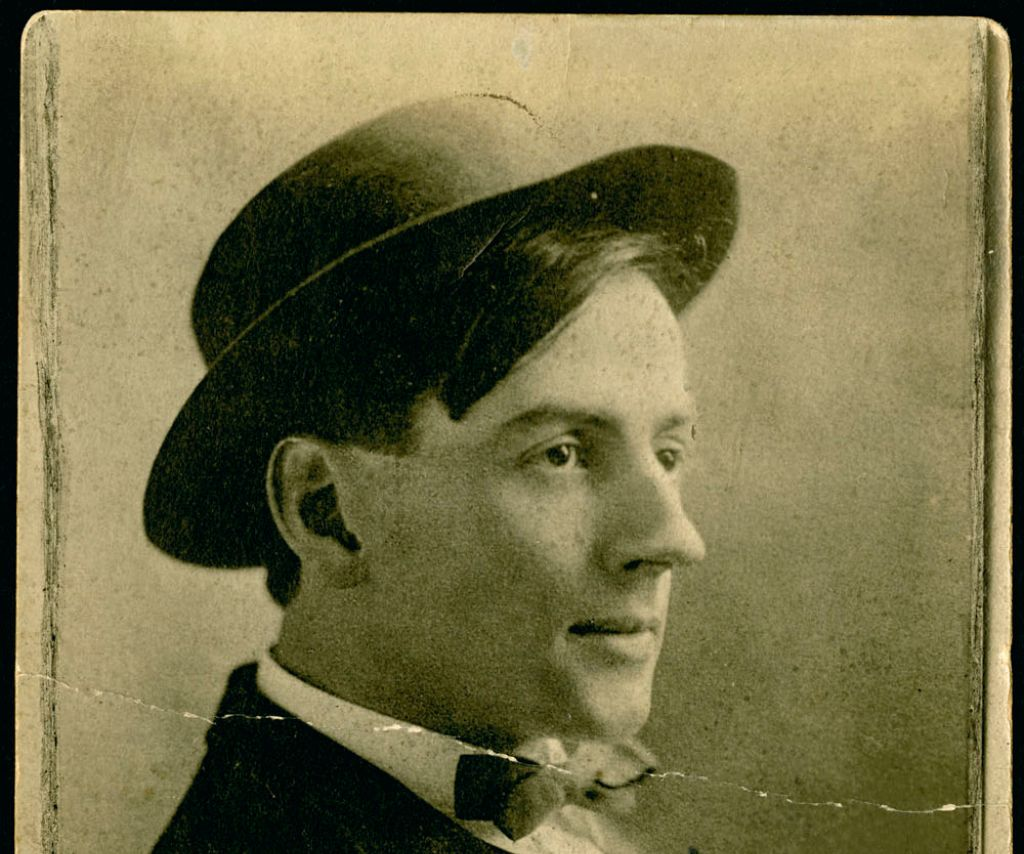
Though Tom Thomson died three years before the Group's official founding, he remains the foundational spirit and aesthetic benchmark of the movement.[1:9] A master woodsman, guide, and intuitive colorist, Thomson developed the signature technique of executing rapid, spontaneous oil sketches on small 8½ × 10½-inch birch and composite boards directly from his canoe or tent in Algonquin Park.[1:10] Masterpieces such as The Jack Pine (1916–17) and The West Wind (1917) crystallized the iconic visual motifs of the Canadian north—contorted, wind-sheared pines standing sentinel against sweeping horizons of water and Precambrian rock.[2]
Core Aesthetic, Modernist Influences, and Artistic Philosophy
The Group of Seven's visual revolution was not an isolated, provincial phenomenon, but a deliberate translation of international modernist currents into the specific ecology of the Canadian Shield.[1:11]
1. The 1913 Scandinavian Art Exhibition in Buffalo
In January 1913, Lawren Harris and J.E.H. MacDonald traveled to the Albright Art Gallery in Buffalo, New York, to view the Exhibition of Contemporary Scandinavian Art.[1:12] The exhibition showcased works by Nordic painters including Harald Sohlberg (Norway), Otto Hesselbom (Sweden), and Ferdinand Boberg (Sweden). The encounter proved revelatory:
"Here was a whole exhibition of paintings of the northern world, vibrant with color, rugged in form, clear, clean, and intense. It was like seeing our own north country through the eyes of artists who knew how to paint it... We were on our way."[1:13]
The Scandinavian painters demonstrated that northern light, subarctic topography, and pine forests could not be rendered through French Impressionist pastel atmospheric dissolves or the golden brown chiaroscuro of European academicians.[1:14] What was required was a decorative, graphic synthesis: heightened tonal saturation, rhythmic linearity, structural silhouettes, and bold planar flattening.
2. Commercial Graphic Design and Art Nouveau
The founding members' training at Grip Ltd. fundamentally conditioned their aesthetic approach.[1:15] Unlike traditional academy-trained painters who built up layers of transparent glazes, the Grip designers were skilled in commercial lithography, typography, and poster design. They brought distinct techniques to the easel:
- Graphic Contours and Flattened Planes: Trees, waves, and mountain ridges were treated as rhythmic, calligraphic silhouettes, echoing the organic ornamentalism of Art Nouveau.[1:16]
- Direct Somatic Plein-Air Fieldwork: Traveling by canoe, snowshoe, and rail, the artists sketched rapidly on small wooden panels (pochade boxes), capturing transient meteorological conditions before synthesizing the sketches into monumental oil canvases in the Toronto Studio Building.[1:17]
- Tactile Impasto: Moving away from smooth academic surfaces, artists like Jackson, Lismer, and MacDonald applied paint with heavy, energetic brushstrokes and palette knives, mimicking the rough physical textures of granite, muskeg, lichen, and rushing water.[1:18]
3. Lawren Harris, Theosophy, and Spiritual Abstraction
While Jackson and MacDonald remained anchored in atmospheric, observational landscape, Lawren Harris steered the group's intellectual and philosophical trajectory toward spiritual abstraction and mystical philosophy.[1:19] Deeply influenced by Theosophy (Madame Blavatsky, Annie Besant) and Wassily Kandinsky's 1911 treatise Über das Geistige in der Kunst (Concerning the Spiritual in Art), Harris came to view the northern landscape not as mere physical geography, but as a metaphysical sanctuary capable of purging humanity of materialist vulgarity.[1:20]
Between 1921 and 1930, Harris systematically purged narrative detail, human presence, foliage, and temporal ephemera from his canvases. Depicting Lake Superior, the Rocky Mountains, and the Arctic, Harris reduced mountains and icebergs to crystalline, geometric monuments illuminated by celestial rays of light, transforming landscape painting into an austere iconography of cosmic contemplation and the transcendent Sublime.[1:21]
The Ideological Paradox: Settler Nationalism vs. The Myth of Terra Nullius
The cultural ascent of the Group of Seven was intimately tied to the post-World War I rise of Canadian cultural nationalism.[1:22] Following the catastrophic sacrifice of Canadian soldiers at Vimy Ridge and Passchendaele, the emergent Dominion sought a sovereign identity distinct from both the British imperial metropole and American commercial hegemony.[1:23] The Group positioned their landscapes as the visual bedrock of this new national consciousness.
However, contemporary art historians and postcolonial theorists have identified a profound ideological contradiction at the heart of the Group's enterprise:
┌────────────────────────────────────────────────────────┐
│             The Myth of "Pristine Wilderness"          │
│       • Landscape framed as wild, ancient, empty       │
│       • Virgin cradle of sovereign Canadian identity   │
│       • Direct spiritual communion with nature         │
└───────────────────────────┬────────────────────────────┘
                            │
                  Ideological Repression
                            │
┌───────────────────────────┴────────────────────────────┐
│              The Material & Historical Reality         │
│       • Algoma & Nickel Belt: heavy mining & logging   │
│       • Rail access via Algoma Central Railway boxcar  │
│       • Erasure of Indigenous presence (Terra Nullius) │
└────────────────────────────────────────────────────────┘
- The Construction of Terra Nullius (Empty Land): The Group's canvases consistently portray Northern Ontario and the Arctic as uninhabited, pristine, and timeless primeval wilderness.[1:24] By systematically excising Indigenous settlements, seasonal portage routes, hunting camps, and human labor, their art visually reinforced the colonial doctrine of terra nullius—erasing millennia of Indigenous stewardship to present the land as an unencumbered visual territory ready to be claimed by the settler imagination.[1:25]
- Industrial complicity in the Wilderness Myth: Far from penetrating an untouched primeval void, the artists' northern expeditions relied heavily on modern industrial infrastructure.[1:26] Their famous trips into the Algoma wilderness between 1918 and 1920 were conducted aboard an outfitted Algoma Central Railway (ACR) boxcar, shunted onto sidings by industrial locomotives.[1:27] Many of their chosen sketching sites—such as the Algoma hills, Sudbury's Nickel Belt, and Georgian Bay—were working frontier zones undergoing aggressive resource extraction, clear-cut timber logging, and industrial shaft mining.[1:28]
As cultural critic Northrop Frye later observed, the Canadian imagination historically engaged the wilderness through psychological defense and myth-making. The Group of Seven resolved settler anxieties not by confronting the social and environmental costs of resource capitalism, but by idealizing a sublime, uninhabited North that could serve as a pristine national altar.
Membership and Roster Evolution
The Group of Seven was never a static brotherhood; it operated as a dynamic, evolving network of painters that expanded its roster to address regional exclusions before dissolving into a larger national body.[1:29]
Founding Members (1920)
- Lawren S. Harris (1885–1970): The ideological catalyst, organizer, and financial benefactor. His oeuvre shifted from early decorative depictions of Toronto's working-class slums (The Ward) and vibrant autumn forests to monumental, stylized, and spiritual geometric abstractions of Lake Superior, the Rockies, and the Arctic.[1:30]
- J.E.H. MacDonald (1873–1932): The elder statesman, head designer at Grip Ltd., and later principal of the Ontario College of Art. Celebrated for his rich impasto and dramatic, orchestral compositions of the Algoma canyon country (The Solemn Land, Forest Wilderness).[1:31]
- A.Y. Jackson (1882–1974): The tenacious, peripatetic ambassador of Canadian modernism. Jackson traveled constantly, bridging Ontario with the rural habitant villages of Quebec's St. Lawrence Shore, the Peace River district of Alberta, and the Northwest Territories.[1:32]
- Franklin Carmichael (1890–1945): The youngest founding member. A virtuoso watercolorist and printmaker who elevated watercolor to monumental scale, capturing the sweeping light, rolling hills, and industrial mine heads of the La Cloche range and Georgian Bay.[1:33]
- Arthur Lismer (1885–1969): English-born draughtsman, painter, and pioneering international art educator. Lismer focused on the turbulent, tangled energy of the northern forest, wind-tossed coastal trees, and the Atlantic maritime shore, advocating for progressive, child-centered art education.[1:34]
- Frederick H. Varley (1881–1969): The primary figurative painter and color theorist within the group. Traumatized by his work as an official WWI war artist, Varley resisted pure landscape, mastering expressive psychological portraiture and later capturing the mystical, mist-shrouded rainforests and fjords of British Columbia.[1:35]
- Franz Johnston (1888–1949): A skilled, highly decorative commercial artist who exhibited in the 1920 inaugural exhibition before resigning in late 1920 to pursue independent commercial gallery representation and head the Winnipeg School of Art.[1:36]
Later Official Members
- A.J. Casson (1898–1992): Invited into the group in 1926 to replace Franz Johnston. Casson brought a precise, graphic clarity to his depictions of rural Ontario architecture, historic timber mills, and small pastoral crossroads villages.[1:37]
- Edwin Holgate (1892–1977): Joined in 1930. A key member of Montreal's Beaver Hall Group, Holgate introduced solid figurative draughtsmanship and wood engraving, integrating the human nude directly into the rugged Canadian landscape.[1:38]
- Lionel LeMoine FitzGerald (1890–1956): Joined in 1932. Based in Winnipeg, FitzGerald expanded the Group's geographical horizon to Western Canada, painting quiet, meticulously structured, pointillist-inflected compositions of prairie domestic backyards, trees, and expansive skies.[1:39]
Key Associated Artists
- Tom Thomson (1877–1917): The peer and precursor whose tragic drowning in Algonquin Park canonized him as Canada's foremost artistic martyr and the visual architect of northern landscape painting.[1:40]
- Emily Carr (1871–1945): The Victoria-based visionary painter of the Pacific Northwest. Isolated and unrecognized for decades, Carr met Lawren Harris and the Group in Toronto in 1927 at the Exhibition of Canadian West Coast Art: Native and Modern.[1:41] Deeply encouraged by Harris—who welcomed her as an artistic equal—Carr experienced a late creative resurgence, fusing Indigenous totem motifs, coastal cedar rainforests, and soaring, rhythmic skies into an internationally recognized masterwork canon.[1:42]
Regional Topography, Expeditions, and Key Masterworks
| Geographic Region | Primary Expedition Dates | Key Artists | Representative Masterworks | Formal & Stylistic Hallmarks |
|---|---|---|---|---|
| Algonquin Park & Georgian Bay | 1912–1920 | Tom Thomson, Arthur Lismer, F.H. Varley, J.E.H. MacDonald | The Jack Pine (Thomson), The Red Maple (Jackson), A September Gale (Lismer) | Wind-swept jack pines, dynamic fall colors, expressive brushwork, Art Nouveau silhouettes against water. |
| Algoma & Agawa Canyon | 1918–1922 | Lawren Harris, J.E.H. MacDonald, Frank Johnston | The Solemn Land (MacDonald), Algoma Waterfall (Harris), Fire-Swept Algoma (Johnston) | ACR boxcar expeditions; rich autumnal tapestries, dramatic vertical rock gorges, atmospheric light shafts. |
| Lake Superior (North Shore) | 1921–1928 | Lawren Harris, A.Y. Jackson, Franklin Carmichael | North of Lake Superior (Harris), Pic Island (Harris), First Snow, North Shore (Jackson) | Bare, fire-scarred tree stumps; smooth granite hills; radical reduction toward planar geometric form and cosmic solitude. |
| Rocky Mountains | 1924–1929 | Lawren Harris, F.H. Varley, J.E.H. MacDonald | Mt. Lefroy (Harris), Maligne Lake (Harris), Dead Tree, Garibaldi Park (Varley) | Monumental pyramidal snow peaks, cool celestial palettes (blues, whites, silvers), transcendental architectural massing. |
| Canadian Arctic & High North | 1930 | Lawren Harris, A.Y. Jackson | Icebergs, Davis Strait (Harris), Labrador Coast (Jackson), Pangnirtung (Jackson) | Two-month voyage aboard the SS Beothic; austere, crystalline ice formations, stark polar lighting, complete elimination of terrestrial foliage. |
| Pacific Northwest & B.C. Coast | 1926–1933 | F.H. Varley, Emily Carr (associated) | Stormy Weather, Georgian Bay (Varley), Church at Yuquot Village (Carr) | Damp, emerald-green coastal rainforests, monumental cedar trunks, expressionist light, fusion of spiritual animism and Indigenous carving. |
Dissolution and the Founding of the Canadian Group of Painters (1933)
By the early 1930s, the Group of Seven's initial objective—disrupting academic conservatism and establishing an authentic national landscape idiom—had been completely achieved.[1:43] However, their overwhelming institutional success had inadvertently spawned a new orthodoxy: Canadian galleries were inundated with derivative northern landscapes and wind-bent pine trees, while critics in Montreal and Vancouver criticized the group as an exclusionary, Toronto-centric boys' club that ignored the human figure, urban life, and the social catastrophes of the Great Depression.[1:44]
Following the death of J.E.H. MacDonald in autumn 1932, the surviving members recognized that the seven-man brotherhood had run its course.[1:45] In February 1933, they announced the formal dissolution of the Group of Seven. In its place, they founded the Canadian Group of Painters (CGP), an expansive, pan-Canadian organization comprising 28 artists from across the country.[1:46]
The CGP deliberately embraced diverse aesthetic directions, including social realism, urban commentary, portraiture, surrealism, and non-objective abstraction, featuring prominent women modernists such as Prudence Heward, Pegi Nicol MacLeod, Yvonne McKague Housser, and Emily Carr.[1:47]
Today, the Group's foundational collections reside in the National Gallery of Canada (Ottawa), the Art Gallery of Ontario (Toronto), and the McMichael Canadian Art Collection (Kleinburg, Ontario), where six founding members—Lawren Harris, A.Y. Jackson, J.E.H. MacDonald, Arthur Lismer, Frederick Varley, and Frank Johnston—are interred on the gallery grounds amidst the northern woodland they memorialized.[3] [2:1]
🎴 Interactive Web Practice (Comprehension Check)
Question 1 (Nationalist Modernism & Aesthetic Rupture): How did the Group of Seven's commercial graphic background and their encounter with the 1913 Scandinavian Exhibition in Buffalo synthesize into a revolutionary visual language that broke with 19th-century academic traditions?
Answer: Prior to the Group of Seven, Canadian art institutions were dominated by European academic conventions—principally British Victorian sentimentality and Dutch Hague School pastoralism—which relied on muted earth tones, delicate chiaroscuro, and tranquil agrarian subject matter (such as cattle and tilled fields). The artists of the Group, trained as commercial illustrators at Grip Ltd., possessed strong graphic design sensibilities: an instinct for bold compositional framing, expressive silhouette, and planar color application.
When Lawren Harris and J.E.H. MacDonald visited the 1913 Exhibition of Contemporary Scandinavian Art in Buffalo, they observed how Nordic artists (such as Harald Sohlberg and Otto Hesselbom) captured their subarctic terrain through intense color saturation, rhythmic decorative lines, and stylized topographical simplification. Synthesizing these Scandinavian techniques with Art Nouveau contouring and direct plein-air oil sketching on wooden boards, the Group abandoned European academic realism in favor of a vibrant, tactile modernism tailored to the Precambrian granite, rugged spruce, and harsh northern light of the Canadian Shield.
Question 2 (Spiritual Abstraction & Lawren Harris's Theosophy): How did Lawren Harris's engagement with Theosophy and Wassily Kandinsky's aesthetic theory transform his landscape paintings from observational depictions into transcendental, geometric abstractions?
Answer: Lawren Harris was deeply committed to Theosophical mysticism and the spiritual theories articulated in Wassily Kandinsky's 1911 treatise Concerning the Spiritual in Art. For Harris, the Canadian North was not merely a physical topography or resource storehouse, but a pure, unpolluted spiritual realm capable of catalyzing moral and metaphysical elevation.
Throughout the 1920s and early 1930s—most visibly in his expeditions to Lake Superior, the Rocky Mountains, and the Arctic aboard the SS Beothic—Harris systematically eliminated narrative ephemera, seasonal foliage, and human habitation from his canvases. He distilled physical topography into austere, mathematical geometries: mountains became monumental pyramids, icebergs formed crystalline monoliths, and clouds were stylized into rhythmic, celestial halos illuminated by transcendent light rays. Harris treated painting not as a mimetic mirror of nature, but as an aesthetic instrument of spiritual contemplation, anticipating pure non-objective abstraction.
Question 3 (The Myth of Untouched Wilderness & Ideological Contradictions): What ideological tensions exist between the Group of Seven's public myth of "pristine, untamed wilderness" and the historical reality of early 20th-century Northern Ontario?
Answer: The Group of Seven promoted their work as the unmediated encounter of heroic individual artists with an unmapped, virgin, and uninhabited primeval wilderness—a narrative that served the post-WWI project of Canadian cultural nationalism. However, contemporary scholarship highlights two profound ideological contradictions:
- The Erasure of Indigenous Presence (Terra Nullius): The Group's landscapes systematically omitted Indigenous communities, portages, settlements, and sacred geographies, framing the land as an empty void (terra nullius) awaiting settler-nationalist claiming and aesthetic consecration.
- Industrial Complicity: Far from traversing an untouched wilderness, the artists relied directly on industrial capitalism. Their famous Algoma expeditions were made possible by an outfitted boxcar provided by the Algoma Central Railway, shunted along industrial trackbeds. Many of the rugged landscapes they depicted—including Algoma, Georgian Bay, and the Sudbury Nickel Belt—were active, heavily exploited industrial extraction zones undergoing intensive commercial logging, railway construction, and shaft mining. The Group aestheticized and sublimated these industrial work zones into timeless spiritual sanctuaries.
Resonant Notes
The following notes in the vault share direct thematic, sociological, and literary connections with the Group of Seven:
🔴 Canadian Nationalism, Landscape & The Garrison Mentality
- English-language Canadian Literature (English CanLit) — The direct visual arts counterpart to CanLit's cultural nationalism. Both movements emerged out of the post-colonial impulse to define an autonomous Canadian identity through confrontation with the rugged northern landscape, reflecting the aesthetic tension between human vulnerability and an unyielding wilderness.
- Northrop Frye & From Walls of Wood to Walls of Glass - Northrop Frye’s Geography of Isolation — Frye's foundational concept of the "garrison mentality" provides the psychological framework for the Group's work: settler outposts building ideological and moral fortifications against an indifferent, terrifying wilderness, which the Group resolved by converting that threatening void into a mythic national altar.
- Northrop Frye's - Anatomy of Criticism — Frye's archetypal literary taxonomy illuminates how the Group of Seven's visual narrative shifts between the Romance quest of the artist-explorer penetrating the northern labyrinth and the High Mimetic/Irony of industrial nature.
- American Transcendentalism — The primary North American ideological foil. While Emerson and Thoreau celebrated untamed nature as an ecstatic, benevolent sanctuary of divine individual communion and self-reliance, the Canadian tradition historically confronted northern geography as a vast, indifferent force requiring collective endurance and psychological fortification.
🟡 Aesthetic Theory, Modernism & The Sublime
- The Dehumanization of Art — Ortega y Gasset's 1925 thesis that modern art systematically extracts human sentimentalism and mimetic realism in favor of pure formal vision directly illuminates the Group of Seven's evolution, particularly Lawren Harris's transition from expressive depiction to cold, geometric, and dehumanized crystalline abstraction.
- The Sublime & Edmund Burke-The Physiological Sublime — Burke's somatic sublime—defined by terror, vastness, obscurity, and the overwhelming power of nature—theoretically underpins the Group's encounters with the Canadian Shield, explaining how terrifying scale and meteorological brutality are aestheticized into awe.
- Immanuel Kant-The Transcendental Sublime — Kant's formulation of the dynamical sublime—wherein the human mind confronts nature's overwhelming physical power yet discovers its own rational, supersensible superiority—mirrors Lawren Harris's Theosophical canvases, where severe mountain peaks and icebergs become vehicles for spiritual transcendence.
- Aldous Huxley's Heaven and Hell (1956) — Huxley analyzes how visionary landscapes and the strategic use of luminous color and negative space transport consciousness beyond the mundane ego to the "Mind at Large," echoing Harris's and Thomson's mystical treatment of northern light and horizon lines.
- The Work of Art in the Age of Mechanical Reproduction & Walter Benjamin (1892–1940) — Benjamin's analysis of the loss of the aura and the mass dissemination of iconic cultural images explains how the Group's paintings were institutionalized via school prints, stamps, and museum reproductions into sacred emblems of Canadian national identity.
🟢 Political Economy, Media Ecology & Modernity
- Innis (1950) - Empire and Communications & Innis (1951) - The Bias of Communication — Harold Innis's "staples thesis" and imperial communication theories map directly onto the Group's geography: the Group operated from the Toronto metropolitan financial core while drawing raw visual "staples" from the northern hinterland, traveling along the very railway corridors that extracted fur, timber, and nickel.
- Durkheimian Sociology — Émile Durkheim's theories of collective consciousness and sacred totems explain the Group of Seven's nation-building function. In the wake of World War I, their paintings operated as collective totemic symbols that united a sprawling, geographically fragmented settler society around a shared symbolic order.
- Don DeLillo Major Themes Analysis — DeLillo explores the cultural myth-making of landscape and the aestheticization of industrial waste (such as Klara Sax's desert installation in Underworld), providing a modern critical mirror to the Group's aesthetic sublimation of industrial logging and railway corridors into "untouched" northern nature.
- Why Canada Will Never Have a WeChat — Examines Canadian spatial culture, regional fragmentation, and resistance to monolithic systems, mirroring the institutional tensions that forced the Group of Seven to dissolve in 1933 into the decentralized Canadian Group of Painters.
- Defensive communication tactics — The Group's early aggressive manifesto rhetoric—framing their work as an embattled vanguard resisting colonial academic stagnation—functions sociologically as a defensive posture to insulate emerging modernism against reactionary public criticism.
References
Charles C. Hill / The Canadian Encyclopedia: The Group of Seven / thecanadianencyclopedia.ca ↩︎ ↩︎ ↩︎ ↩︎ ↩︎ ↩︎ ↩︎ ↩︎ ↩︎ ↩︎ ↩︎ ↩︎ ↩︎ ↩︎ ↩︎ ↩︎ ↩︎ ↩︎ ↩︎ ↩︎ ↩︎ ↩︎ ↩︎ ↩︎ ↩︎ ↩︎ ↩︎ ↩︎ ↩︎ ↩︎ ↩︎ ↩︎ ↩︎ ↩︎ ↩︎ ↩︎ ↩︎ ↩︎ ↩︎ ↩︎ ↩︎ ↩︎ ↩︎ ↩︎ ↩︎ ↩︎ ↩︎ ↩︎
McMichael Canadian Art Collection / The Group of Seven, Tom Thomson & Their Contemporaries / mcmichael.com ↩︎ ↩︎
McMichael Canadian Art Collection / Celebrating 100 Years of the Group of Seven / mcmichael.com ↩︎