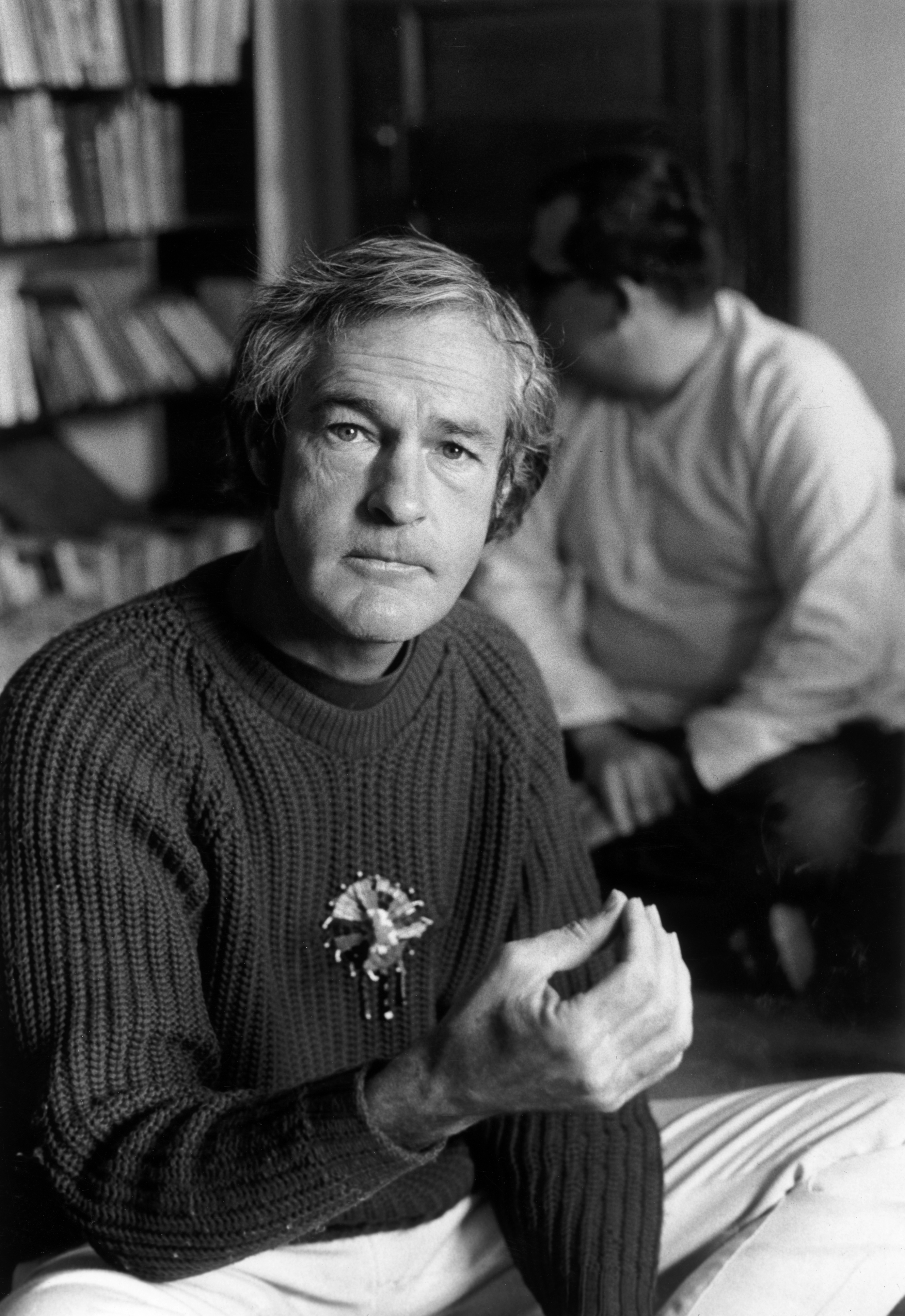
Timothy Francis Leary (October 22, 1920 – May 31, 1996) was an American clinical psychologist, writer, and counterculture figure renowned for his advocacy of psychedelic drugs. Initially an influential academic researcher in interpersonal personality theory, Leary shifted his focus to consciousness expansion after ingesting psilocybin in 1960. As the co-founder of the Harvard Psilocybin Project alongside Richard Alpert (later Ram Dass), he pioneered modern clinical perspectives on "set and setting" before his controversial dismissal from Harvard University in 1963. Throughout the 1960s and beyond, Leary became a polarizing cultural icon—popularizing the phrase "Turn on, tune in, drop out," enduring imprisonment and international exile, and later championing cybernetics, space migration, and transhumanism.[1][2]
Early Life and Academic Foundations
Born in Springfield, Massachusetts, Timothy Leary briefly attended the College of the Holy Cross and the United States Military Academy at West Point before earning his bachelor's degree in psychology from the University of Alabama in 1943 while serving in the U.S. Army Medical Corps.[1:1] He subsequently obtained a Master of Science from Washington State College in 1946 and completed his Ph.D. in clinical psychology at the University of California, Berkeley in 1950.[1:2][3]
Before his involvement with psychedelics, Leary was regarded as a rising star in mainstream clinical psychology. As the Director of Psychiatric Research at the Kaiser Foundation Hospital in Oakland, California, he sought to bring empirical rigor and mathematical objectivity to psychotherapy.[1:3][4]
The Leary Circumplex and Interpersonal Diagnosis
In 1957, Leary published his seminal academic work, Interpersonal Diagnosis of Personality: A Functional Theory and Methodology for Personality Evaluation.[4:1] The book introduced the Leary Circumplex, a two-dimensional circular model that mapped human interpersonal behavior along two primary orthogonal axes:
- Dominance vs. Submission (Power/Control)
- Love vs. Hate (Affiliation/Hostility)
By categorizing overt actions, verbal expressions, and symbolic disclosures into sixteen distinct interpersonal variables across five levels of personality, Leary demonstrated how clinicians could use Minnesota Multiphasic Personality Inventory (MMPI) scores to predict social interactions.[1:4][4:2] This framework directly prefigured Eric Berne's transactional analysis and remains a foundational text in interpersonal psychology.[1:5]
The Harvard Psilocybin Project (1960–1963)
In 1959, David McClelland recruited Leary as a lecturer in clinical psychology at Harvard University's Center for Research in Personality.[3:1] During the summer of 1960, while vacationing in Cuernavaca, Mexico, Leary consumed Psilocybe caerulescens—sacred mushrooms traditionally used in indigenous Mazatec ceremonies.[2:1]
"I learned more about my brain and its possibilities, and more about psychology, in the five hours after taking these mushrooms than I had in the preceding fifteen years of studying and doing research in psychology." — Timothy Leary[2:2]
Returning to Cambridge that autumn, Leary partnered with assistant professor Richard Alpert to establish the Harvard Psilocybin Project, ordering pharmaceutical-grade synthesized psilocybin (Indocybin) and LSD from Sandoz Laboratories in Switzerland.[5]
Set and Setting
Leary, Alpert, and graduate colleague Ralph Metzner formulated the hypothesis of set and setting, which remains the cornerstone of contemporary psychedelic-assisted therapy.[2:3] They argued that psychedelic substances do not produce a specific, predetermined pharmacological reaction; rather, the experience is governed by two primary non-drug variables:
- Set (Mindset): The internal psychological state of the subject, including personality structure, preparation, expectations, mood, and underlying intentions.[2:4]
- Setting (Environment): The physical, social, and cultural atmosphere in which the experience takes place, including the presence of trusted guides and soothing aesthetics.[2:5][5:1]
Contemporary cognitive neuroscience confirms that set and setting determine how top-down predictive constraints within the Default Mode Network (DMN) are lowered, modulating whether the subject undergoes therapeutic breakthrough or destabilizing distress (a dynamic explored in Aldous Huxley's Heaven and Hell (1956)).
Landmark Experiments
Under the umbrella of the Harvard Psilocybin Project, Leary oversaw two major empirical studies before institutional friction halted his work:
- The Concord Prison Experiment (1961–1963): Conducted at a maximum-security prison in Concord, Massachusetts, this study evaluated whether psilocybin-assisted group psychotherapy could reduce criminal recidivism by helping inmates recognize and alter destructive behavioral scripts.[1:6][5:2] Leary initially reported a dramatic reduction in parole violations among participants, though subsequent long-term methodological reviews by Rick Doblin in the 1990s revealed that statistical reporting flaws and the absence of post-release support groups meant recidivism rates were not significantly lower than the control average.[1:7][2:6]
- The Marsh Chapel ("Good Friday") Experiment (1962): Designed and executed by physician and divinity student Walter Pahnke under Leary's supervision, this double-blind study examined whether psilocybin could occasion genuine mystical experiences in religiously predisposed subjects.[2:7] Twenty Protestant divinity students at Boston University's Marsh Chapel received either 30 mg of psilocybin or an active niacin placebo prior to a Good Friday liturgy.[2:8] Applying diagnostic criteria rooted in William James's taxonomy of religious experience in The Varieties of Religious Experience (such as ineffability, noetic quality, and transiency), nearly all subjects in the psilocybin group reported profound mystical states—results validated by a 25-year follow-up study confirming enduring positive changes in life perspective.[2:9]
Academic Dismissal
By late 1962, faculty members and university administrators grew alarmed by the project's unorthodox methodologies.[3:2] Critics noted that researchers frequently ingested psilocybin alongside test subjects, impairing objective scientific observation, and that an informal black market for hallucinogens had emerged around campus.[1:8][2:10]
In the spring of 1963, Harvard President Nathan Pusey and the university administration formally dismissed both Leary and Alpert—marking the first time in the twentieth century that Harvard fired faculty members.[1:9][2:11] Officially, Leary was terminated for abandoning his scheduled classroom duties in Cambridge without authorization, while Alpert was dismissed for violating an explicit agreement not to administer psilocybin to undergraduate students.[2:12]
Millbrook and the Counterculture Era
Following their departure from Harvard and brief attempts to establish a research commune in Zihuatanejo, Mexico, Leary, Alpert, and Metzner relocated in late 1963 to a 2,500-acre estate in Millbrook, New York, leased to them by Mellon family heirs Peggy, Billy, and Tommy Hitchcock.[2:13] Operating under the Castalia Foundation, the group transformed the 64-room mansion into a center for consciousness exploration, meditation, and communal living.[2:14]
The Psychedelic Experience (1964)
In 1964, Leary, Alpert, and Metzner published The Psychedelic Experience: A Manual Based on the Tibetan Book of the Dead.[6] The manual reinterpreted the Bardo Thödol—a traditional Buddhist liturgical text meant to guide souls through death and rebirth (explored conceptually in the Tibetan Wheel of Life and Constructs of the Mind-Unmasking Consciousness in East and West)—as a psychological roadmap for navigating ego dissolution and cognitive restructuring during high-dose LSD sessions.[2:15][6:1] The text divided the psychedelic experience into three distinct phases (Chikhai Bardo, Chönyid Bardo, and Sidpa Bardo) and provided practical instructions for avoiding panic when confronting hallucinations.[6:2]
"Turn On, Tune In, Drop Out"
As LSD seeped into mainstream public awareness, Leary transitioned from clinical investigator to public proselytizer.[6:3] Encouraged by conversations with media theorist Marshall McLuhan (1911-1980)—who advised Leary that mass electronic media required memorable slogans and advertising jingles to penetrate public consciousness (a principle central to McLuhan's The Medium is the Message)—Leary coined his most enduring catchphrase.[6:4] In September 1966, after the federal criminalization of LSD, he founded the League for Spiritual Discovery, attempting to protect psychedelic consumption under the First Amendment's guarantee of religious freedom.[1:10]
Speaking alongside Beat Generation poet Allen Ginsberg and countercultural figures shaped by Jack Kerouac's road mysticism at the Human Be-In before 30,000 people in San Francisco's Golden Gate Park in January 1967, he popularized his signature maxim, "Turn on, tune in, drop out."[6:5]
In his 1983 autobiography Flashbacks, Leary clarified that his famous slogan was frequently misinterpreted as an invitation to hedonistic apathy:
- Turn on: Activate your neural and genetic equipment; become sensitive to the many and various levels of consciousness.
- Tune in: Interact harmoniously with the world around you; externalize, materialize, and express your new internal perspectives.
- Drop out: Encourage an active, selective, graceful process of detachment from involuntary or unconscious commitments, fostering self-reliance and mobility.[1:11][6:6]
Legal Battles, Escape, and Exile
Leary's high public profile made him a primary target for law enforcement, with President Richard Nixon famously labeling him "the most dangerous man in America."[6:7]
- Laredo Arrest and Supreme Court Victory (1965–1969): In December 1965, Leary was arrested at the international border in Laredo, Texas, for possession of marijuana and sentenced to 30 years in prison under the Marihuana Tax Act of 1937.[1:12][6:8] Leary appealed the conviction to the U.S. Supreme Court in Leary v. United States (1969), successfully arguing that the law required self-incrimination in violation of the Fifth Amendment, which resulted in the statute being struck down as unconstitutional.[1:13][6:9]
- Laguna Beach Conviction and Prison Escape (1968–1970): Following a December 1968 arrest in Laguna Beach, California, for possession of two marijuana roaches (which Leary maintained were planted by the arresting officer), he was sentenced in early 1970 to up to twenty years in prison.[1:14] Before his incarceration, Leary briefly campaigned against Ronald Reagan for Governor of California, prompting John Lennon to compose the campaign song "Come Together."[1:15] Assigned to a minimum-security facility at the California Men's Colony in San Luis Obispo, Leary used his encyclopedic knowledge of psychological evaluations—several of which he had designed himself—to secure a low-risk outdoor work assignment.[1:16] In September 1970, paid operatives from the radical left-wing Weather Underground helped him scale a utility cable over the prison fence and escape.[6:10]
- International Exile and Recapture (1970–1976): Leary and his wife, Rosemary Woodruff, were smuggled out of the United States to Algeria, where they briefly sheltered with Eldridge Cleaver's exiled Black Panther Party faction before tensions forced them to flee to Switzerland.[1:17][6:11] After traveling through Vienna and Beirut, Leary was apprehended by U.S. federal agents at the airport in Kabul, Afghanistan, in January 1973.[6:12] He served the remainder of his sentence in solitary confinement at Folsom State Prison and other facilities until California Governor Jerry Brown authorized his release in April 1976.[1:18][6:13]
Futurism, Cybernetics, and Transhumanism
During his years in prison and throughout the 1970s and 1980s, Leary pivoted his theoretical work toward evolutionary neurobiology, space colonization, and emerging digital technologies.[6:14][7]
The SMI²LE Philosophy
First articulated in fragments such as Terra II and Exo-Psychology (1977), Leary championed the SMI²LE framework as the inevitable next stage of human evolution:[1:19]
- Space Migration (
): Transitioning humanity off Earth into high-orbital space habitats (inspired by physicist Gerard K. O'Neill) to expand ecological and evolutionary frontiers.[1:20] - Intelligence Increase (
): Augmenting human cognitive capacity through neurochemistry, psychological self-reprogramming, and human-computer symbiosis. - Life Extension (
): Achieving radical longevity and biological immortality via biotechnology, genetics, and cryonics.[1:21]
The Eight-Circuit Model of Consciousness
Developed by Leary in works like Neurologic (1973) and Exo-Psychology (1977)—and later expanded by philosopher Robert Anton Wilson and writer Antero Alli—the Eight-Circuit Model of Consciousness proposes that the human nervous system consists of eight distinct evolutionary "circuits" or information-processing gears.[7:1][8] The first four circuits govern terrestrial survival and social organization, while the upper four represent post-terrestrial, evolutionary capacities activated by yoga, meditation, psychoactive catalysts, or zero-gravity environments.[1:22][7:2]
| Circuit | Name | Core Evolutionary Function | Associated Catalyst / Modality |
|---|---|---|---|
| I | Bio-Survival | Physical safety, approach/avoidance, maternal bonding | Opiates, basic physical comfort |
| II | Emotional-Territorial | Dominance hierarchies, territorial politics, status | Alcohol, adrenaline |
| III | Semantic / Time-Binding | Symbolic logic, language, toolmaking, conceptual thought | Caffeine, cocaine, amphetamines |
| IV | Socio-Sexual | Cultural morality, social reproduction, tribal roles | MDMA, hormonal imprinting |
| V | Neurosomatic | Sensory bliss, somatic awareness, holistic mind-body flow | Cannabis, Hatha yoga, floating |
| VI | Neuroelectric / Metaprogramming | Awareness of the nervous system constructing subjective reality tunnels (anticipating The Social Construction of Reality - A Treatise in the Sociology of Knowledge and Apophenia) | Psilocybin, peyote, cybernetics |
| VII | Neurogenetic | Evolutionary memory, archetypal DNA archives, and the Jungian collective unconscious | LSD, Raja yoga |
| VIII | Psycho-Atomic / Non-Local Quantum | Post-biological consciousness, non-local quantum awareness (resonating with relational physics in Carlo Rovelli) | Ketamine, DMT, out-of-body states |
Cyberpunk and the Digital Frontier
In the 1980s and 1990s, Leary embraced personal computing and virtual reality as the non-chemical heirs to the psychedelic movement, famously declaring that "the PC is the LSD of the 1990s."[1:23] Reinterpreting consciousness through the lens of information theory and cybernetics, Leary argued that digital personal computers allowed individuals to reprogram their own cognitive software without pharmacological intervention.[1:24] Through his software venture, Futique Inc., he designed early interactive psychological programs—including the 1986 interactive autobiographical computer game Mind Mirror, which allowed users to simulate behavioral scenarios based on his 1950s circumplex personality models.[1:25]
Final Years and Legacy
Diagnosed with inoperable prostate cancer in January 1995, Leary approached his death as a public performance and philosophical exploration regarding voluntary "designer dying."[1:26] He documented his final months through daily webcasts from his Beverly Hills home, transforming his estate into an early internet studio.[1:27][6:15] Although he long planned to have his brain cryopreserved, he revoked those arrangements shortly before his death on May 31, 1996.[1:28][6:16] In 1997, in accordance with his lifelong fascination with space migration, seven grams of his cremated remains were launched into Earth orbit aboard a Pegasus rocket via a Celestis memorial spaceflight.[1:29]
Modern historians and clinical researchers view Timothy Leary's legacy as paradoxical.[6:17] On one hand, his pre-1963 empirical formulations—particularly the Leary Circumplex and the protocol of "set and setting"—established critical therapeutic paradigms that underpin the 21st-century renaissance in clinical psychedelic medicine at institutions like Johns Hopkins and Imperial College London (particularly neuroimaging investigations into the Default Mode Network (DMN) and eliminative neural gating pioneered conceptually in Aldous Huxley's The Doors of Perception (1954)).[2:16][4:3] On the other hand, critics within the scientific community (including LSD discoverer Albert Hofmann) frequently argued that Leary's flamboyant countercultural evangelism provoked a severe political backlash, precipitating a multi-decade regulatory freeze on legitimate psychiatric research into hallucinogens.[6:18] Furthermore, where thinkers like Aldous Huxley warned in Aldous Huxley's Brave New World (1932) that pharmacological substances could be deployed as instruments of totalitarian pacification, Leary insisted to the end that psychedelic consciousness expansion was the ultimate antidote to bureaucratic control (a struggle later theorized in Gilles Deleuze's Postscript on the Societies of Control and Capitalism and Schizophrenia).[1:30][6:19]
Resonant Notes
The following notes in the vault share direct thematic, sociological, and literary connections with Timothy Leary:
🔴 Psychedelic Science, Cognitive Architecture & Ego Dissolution
- Aldous Huxley's The Doors of Perception (1954) — Huxley's mescaline inquiry and Bergsonian "reducing valve" hypothesis provided the primary intellectual bridge for Leary's early research; while Huxley viewed psychedelics through the prism of contemplative aesthetics and "gratuitous grace," Leary radicalized the substances into instruments of mass social transformation and spiritual rebellion.
- Aldous Huxley's Heaven and Hell (1956) — Investigates the terrifying opposite pole of visionary experience—paralyzing dysphoria and spatial estrangement—supplying the clinical rationale for Leary, Alpert, and Metzner's insistence on establishing rigorous "set and setting" protocols to prevent traumatic psychological distress.
- Default Mode Network (DMN) — Modern neuroimaging (Marcus Raichle, Robin Carhart-Harris) validates Leary's insights into ego death; classical psychedelics desynchronize the DMN's core hubs (mPFC and PCC), weakening top-down predictive constraints and releasing bottom-up sensory entropy in a manner that mirrors the ego dissolution described in The Psychedelic Experience.
- Bergson’s Eliminative Model of Perception and Memory & Henri Bergson — Bergson's philosophical thesis that the brain is an eliminative filter (solliciteur d'action) evolved to narrow down Mind at Large for practical survival underpins Leary's claim that psychoactive molecules de-condition the nervous system and open latent channels of consciousness.
- The Interface Theory of Perception (ITP) — Donald Hoffman's mathematical theorem that evolutionary perception operates as an adaptive user interface rather than a mirror of objective truth directly substantiates Leary's assertion that ordinary cultural reality consists of socially conditioned "reality tunnels."
- William James & William James and the Landscape of Eastern Thought — James's famous formulation in The Varieties of Religious Experience—that waking consciousness is surrounded by entirely different forms of potential experience parted by the filmiest of screens—formed the epistemological bedrock for Walter Pahnke and Leary's Marsh Chapel Good Friday experiment.
🟡 Eastern Philosophy, Contemplative Psychology & Reality Tunnels
- Tibetan Wheel of Life — Leary, Alpert, and Metzner explicitly adapted the Bardo Thödol (Tibetan Book of the Dead) to construct The Psychedelic Experience, mapping the phases of ego breakdown and cognitive rebirth onto the Buddhist cosmology of cyclic existence (saṃsāra) and liberation.
- Constructs of the Mind-Unmasking Consciousness in East and West — Synthesizes Western psychological models with Eastern contemplative traditions, analyzing how meditative deconstruction and chemical ego dissolution converge on the insight that the reified personal self is a constructed illusion.
- The Dividual and the Triṃśikā & Vasubandhu's-Triṃśikā-vijñaptimātratā — Vasubandhu’s Yogācāra analysis of consciousness (vijñāna) and the storehouse consciousness (ālaya-vijñāna) provides a sophisticated non-Western theoretical framework that parallels Leary's higher circuits of consciousness (the neurogenetic and non-local quantum circuits).
- The Social Construction of Reality - A Treatise in the Sociology of Knowledge — Berger and Luckmann’s classic sociological demonstration that everyday reality is an institutionalized social construct directly mirrors Leary's Circuit VI (Metaprogramming), which posits that human minds can learn to observe and consciously rewrite their own conditioning scripts.
- Carl Gustav Jung — Jung's formulation of the collective unconscious and primordial archetypes served as the primary conceptual foundation for Leary's Circuit VII (Neurogenetic Circuit), which posits that high-dose psychedelic catalysts unlock ancestral evolutionary memory encoded within human biological architecture.
- Jon Kabat-Zinn — Represents the successful, institutionalized second wave of legitimizing Eastern contemplative practices within mainstream Western medicine, achieving through secularized mindfulness what Leary's Harvard Psilocybin Project sought to accomplish before its controversial collapse.
🟢 Media Ecology, Cybernetics & Countercultural Politics
- Marshall McLuhan (1911-1980) & McLuhan's The Medium is the Message — McLuhan acted as Leary's key media advisor, urging him during their meetings in New York to formulate commercial-style jingles to propagate his philosophy, resulting in the famous maxim "Turn on, tune in, drop out"; Leary later transposed McLuhan's media theories to argue that digital computers would become the electronic successor to chemical catalysts.
- Jack Kerouac (1922-1969) & Beyond Representation-Shared Epistemology of Thoreau and Kerouac — Beat Generation spontaneous poetics, road mysticism, and Buddhist exploration prefigured the cultural ecology of the 1960s psychedelic revolution; Beat icons such as Allen Ginsberg and William S. Burroughs were early visitors to Leary's research circles at Harvard and Millbrook.
- Capitalism and Schizophrenia & Postscript on the Societies of Control — Gilles Deleuze and Félix Guattari’s concepts of deterritorialization, lines of flight, and the breakdown of institutional enclosures provide a trenchant political lens for evaluating Leary’s prison breaks, nomadic exile, and anti-state resistance against disciplinary control.
- Aldous Huxley's Brave New World (1932) & Dystopian Counterpoints - Brave New World vs. Nineteen Eighty-Four — Offers a critical sociopolitical foil: where Huxley envisioned soma as a state-mandated narcotic engineered to pacify subjects and eliminate dissent, Leary viewed psychedelics as deconditioning catalysts designed to dismantle authoritarian social control and foster radical intellectual autonomy.
- Apophenia — Explores the cognitive tendency to detect hyper-interconnected patterns, intentional conspiracies, and transcendent meanings in stochastic data, illuminating both the revelatory leaps and the epistemic traps that characterized Leary's later cosmic frameworks and countercultural theories.
- Nature of Information & Entropy — Intersects directly with Leary's cybernetic pivot in the 1980s, wherein human consciousness was re-theorized as informational processing operating against thermodynamic noise, inspiring his declaration that "the PC is the LSD of the 1990s."
Backlinks
- Aldous Huxley's The Doors of Perception (1954) — Serves as the pivotal intellectual precursor to Leary's psychedelic investigations; where Huxley framed psychedelic experience as an aristocratic, solitary philosophical sacrament, Leary translated it into an egalitarian, mass-cultural catalyst for social revolution.
- Default Mode Network (DMN) — Provides the contemporary neurobiological mechanism underpinning Leary's formulations of "ego dissolution" and "set and setting," showing how 5-HT2A receptor agonists suppress midline regulatory hubs to elevate cortical entropy.
- Marshall McLuhan (1911-1980) — Functions as Leary's primary media-theoretical mentor, shaping his countercultural evangelism and guiding his late-career transition from chemical psychedelics to personal computing and virtual reality.
- Tibetan Wheel of Life — Anchors Leary's psychological adaptation of the Bardo Thödol in The Psychedelic Experience, supplying the classical Buddhist map of death, intermediate states (bardos), and cognitive rebirth.
- The Social Construction of Reality - A Treatise in the Sociology of Knowledge — Operates as the sociological mirror to Leary's Circuit VI (Metaprogramming), illustrating how societal consensus reality is institutionalized and how individuals can break through cognitive conditioning.
References
Wikipedia Contributors / Timothy Leary / en.wikipedia.org ↩︎ ↩︎ ↩︎ ↩︎ ↩︎ ↩︎ ↩︎ ↩︎ ↩︎ ↩︎ ↩︎ ↩︎ ↩︎ ↩︎ ↩︎ ↩︎ ↩︎ ↩︎ ↩︎ ↩︎ ↩︎ ↩︎ ↩︎ ↩︎ ↩︎ ↩︎ ↩︎ ↩︎ ↩︎ ↩︎ ↩︎
Magic Mushrooms Shop / Timothy Leary and Ram Dass: Harvard, Psilocybin & Legacy / magic-mushrooms-shop.com ↩︎ ↩︎ ↩︎ ↩︎ ↩︎ ↩︎ ↩︎ ↩︎ ↩︎ ↩︎ ↩︎ ↩︎ ↩︎ ↩︎ ↩︎ ↩︎ ↩︎
Harvard University Department of Psychology / Timothy Leary (1920-1996): The Effects of Psychotropic Drugs / psychology.fas.harvard.edu ↩︎ ↩︎ ↩︎
Timothy Leary / Interpersonal Diagnosis of Personality: A Functional Theory and Methodology for Personality Evaluation / archive.org ↩︎ ↩︎ ↩︎ ↩︎
Wikipedia Contributors / Harvard Psilocybin Project / en.wikipedia.org ↩︎ ↩︎ ↩︎
Encyclopædia Britannica / Timothy Leary: Biography, Books, & Facts / britannica.com ↩︎ ↩︎ ↩︎ ↩︎ ↩︎ ↩︎ ↩︎ ↩︎ ↩︎ ↩︎ ↩︎ ↩︎ ↩︎ ↩︎ ↩︎ ↩︎ ↩︎ ↩︎ ↩︎ ↩︎
Wikipedia Contributors / Eight-circuit model of consciousness / en.wikipedia.org ↩︎ ↩︎ ↩︎
Stefan J. Kasian, Rachel Turetzky, and Douglas S. Wingate / Exploring the Eight-Circuit Model of Consciousness: A Pathway to Enhanced Mind-Body Health / scirp.org ↩︎