Shinise Companies — The 200-Year Business Model
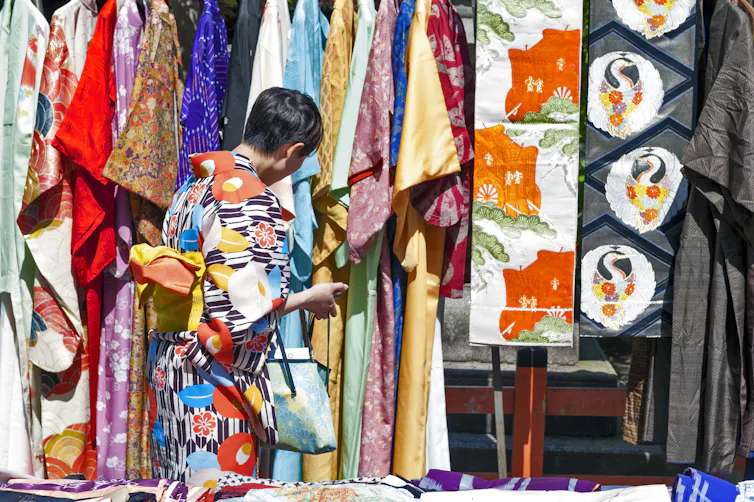
How to build a business that lasts more than 200 years — lessons from Japan's shinise companies
The Conversation — Centuries-old shinise businesses have withstood Westernisation, changing tastes and increasing competition by prioritising community, tradition, and long-term continuity over short-term profit.

Summary
"How to build a business that lasts more than 200 years — lessons from Japan's shinise companies" Innan Sasaki, The Conversation (June 6, 2019)
The article examines Japan's shinise firms — family-owned businesses that have survived for centuries — and identifies the cultural, organisational, and community-based practices that enable their extraordinary longevity.
What are shinise?
Shinise is a Japanese term for companies that have survived for more than a century, retained ownership within the same family, and continued plying the same trade. Japan is home to over 56% of the world's companies older than 200 years. Kyoto holds the highest concentration of these firms, which operate in traditional sectors such as sake brewing, sweet making, and arts and crafts.
Social standing and community embeddedness
A key part of shinise success is maintaining high social standing in the local community. These firms do more than produce traditional goods — they embody and reproduce local community values, acting as custodians of local traditions. Culturally, there is a love of tradition in Japan that gives these firms a cachet with consumers. Many owner-managers contribute to community life, such as supporting Kyoto's famous Gion festival.
Long-term focus over short-term profit
Shinise firms prioritise longevity and tradition over rapid growth or shareholder returns. Most remain privately held, avoiding the pressure of quarterly earnings targets. They are cautious about swerving from their original focus, constantly balancing opportunities to innovate with maintaining tradition. As the president of Unsoudou, a 128-year-old wood block print company, explained:
"If there is a business opportunity, I do not reject it. However, I do not think exploiting this opportunity is always the best option, because it is just a small part of a long history. What is important is to create a business that can live for a long time."
The dark side of longevity
The article also reveals significant personal and organisational costs. At least half of the 17 companies interviewed spoke of hardships in maintaining their high social status. They experienced peer pressure not to innovate and had to make personal sacrifices to maintain family and business continuity. As the vice president of Shioyoshiken, a sweets company established in 1884, stated:
"In a shinise, the firm is the same as the family. We need to sacrifice our own will and our own feelings and what we want to do … Inheriting and continuing the household is very important."
Innovations were sometimes discouraged by either the older family generation or peer shinise firms who cared about maintaining the tradition of the industry as a whole.
The good news
Despite these pressures, shinise firms demonstrate that a business model centred on community stewardship, craft mastery, and intergenerational thinking is viable over centuries. Their success challenges the modern assumption that rapid growth and short-term returns are the only path to business health. Through their commitments, shinise firms performed a cultural function in preventing cultural erosion at the local community level, and in exchange were endorsed with high social standing that brought them custom in the face of market pressures.
Vault connections
- Shinise — The companion mental note providing broader context on Japan's ancient businesses, including the concepts of ie (household) and mukoyoshi (adult adoption) that explain the structural mechanisms behind shinise longevity.
- Difference Between Efficiency and Effectiveness — The article's core tension between short-term profit maximisation (efficiency) and multi-generational continuity (effectiveness) mirrors the distinction between these two concepts.
- Corporate Social Responsibility (CSR) and Environmental, Social, and Governance (ESG) — Shinise firms' deep community embeddedness and commitment to local welfare anticipates modern CSR/ESG frameworks, but from a tradition-based rather than compliance-driven motivation.
- Circular Economy — Both frameworks challenge the conventional growth-at-all-costs business model; shinise emphasis on steady continuity over centuries parallels the circular economy's rejection of planned obsolescence and short-term resource extraction.