The Nightmare (1781)
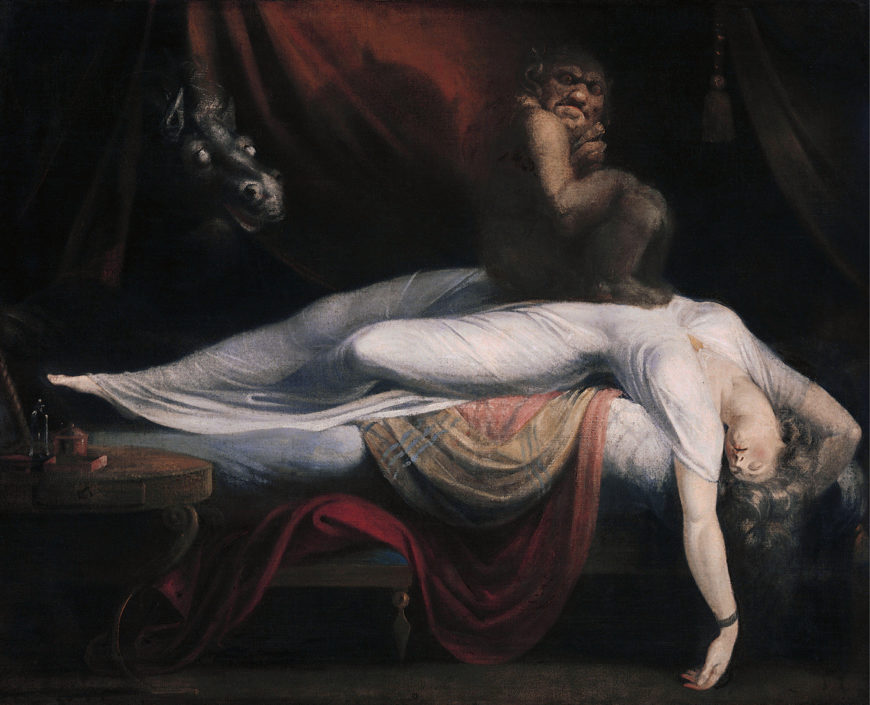
The Nightmare (1781) is a seminal oil painting by Swiss-born British painter Henry Fuseli (Johann Heinrich Füssli). First exhibited at London's Royal Academy in 1782, the canvas staged a radical aesthetic and psychological rupture with Enlightenment rationalism and Neoclassical decorum. Rejecting moralizing historical allegories and biblical didacticism in favor of visceral oneiric terror, uninhibited erotic vulnerability, and demonic oppression, the work established itself as a defining masterpiece of Gothic Romanticism. Anticipating modern clinical descriptions of sleep paralysis by more than a century and prefiguring Freudian dream analysis, The Nightmare visualizes the violent intrusion of the repressed subconscious into mortal awareness.
Artwork Metadata
- Artist: Henry Fuseli (born Johann Heinrich Füssli, 1741–1825)
- Year of Creation: 1781
- First Exhibition: Royal Academy of Arts, London, 1782 (Catalogue No. 64)
- Medium: Oil on canvas
- Dimensions: 101.6 cm × 127 cm (40.0 in × 50.0 in)
- Current Location: Detroit Institute of Arts, Detroit, Michigan
- Movement: Gothic Romanticism / Pre-Romanticism (Sturm und Drang)
- Subject: Somnambulic distress, oneiric mythology, sleep paralysis, and repressed erotic longing
Historical Genesis and the 1782 Royal Academy Sensation
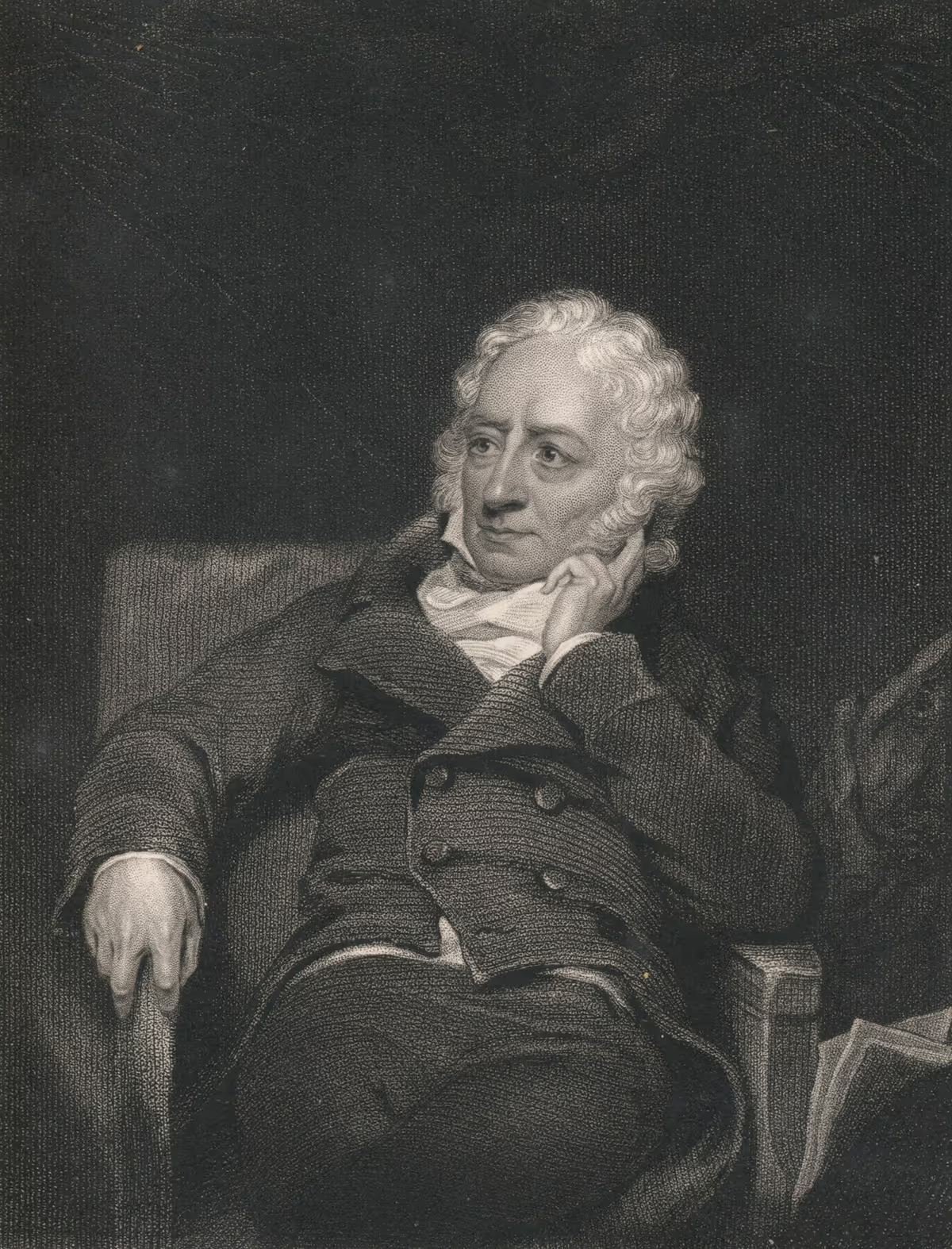
Henry Fuseli painted The Nightmare in the autumn of 1781 following his return to London after an eight-year immersion in the artistic atmosphere of Rome. In Italy, Fuseli had bypassed the restrained Neoclassical academicism championed by Johann Joachim Winckelmann, gravitating instead toward the turbulent mannerism of Rosso Fiorentino, Parmigianino, and the monumental, hyper-muscular figures of Michelangelo's Sistine Chapel.
When Fuseli submitted The Nightmare to the 1782 Royal Academy summer exhibition, it detonated an immediate aesthetic scandal:
- Rupture with Academic Hierarchy: Under the presidency of Sir Joshua Reynolds, academic painting adhered to a rigid hierarchy of genres. At the summit stood History Painting—elevated, didactic depictions of classical antiquity, heroic virtue (exemplum virtutis), or biblical scripture designed to edify the moral conscience of the citizen. Fuseli's canvas blatantly defied this convention. It possessed no classical literary source, no moral lesson, and no theological redemption. It was an autonomous invention of subjective, nocturnal fantasy.
- Critical Sensation and Public Shock: Contemporary reviews oscillated between horrified disgust and obsessive fascination. While conservative critics condemned the canvas as grotesque, indecent, and medically pathological, the public mobbed the exhibition. Fuseli became an overnight celebrity.
- Mass Reproduction and Commercial Virality: Recognizing the immense public fascination, Fuseli partnered with printmaker Thomas Burke in 1783 to produce a stipple engraving of the painting. The prints sold thousands of copies across Great Britain and continental Europe. The image circulated so broadly that it quickly entered the political bloodstream, spawning celebrated satirical caricatures by James Gillray and George Cruikshank, who substituted the sleeping maiden with Britannia or political figures such as Charles James Fox, William Pitt, and Napoleon Bonaparte, with the oppressive incubus representing crushing national debts or tyrannical regimes.
Visual Composition and Iconographic Anatomy
Fuseli constructs the canvas with severe theatrical economy, utilizing a compressed foreground, suffocating dark backgrounds, and stark, Caravaggesque chiaroscuro to evoke the claustrophobia of a nocturnal panic attack.
                  [ Heavy Crimson Velvet Drapery ]
                                  │
          ┌───────────────────────┴───────────────────────┐
          │                                               │
    [ The Spectral Mare ]                         [ The Incubus / Mara ]
    (Phosphorescent eyes,                        (Gargoyle posture, ape-like mass,
     herald of nocturnal void)                    direct confrontational gaze)
          │                                               │
          └───────────────────────┬───────────────────────┘
                                  │
                       [ The Recumbent Sleeper ]
                      (Alabaster luminosity,
                    paralytic cervical extension,
                     interlocking Eros & Thanatos)
The Recumbent Sleeper
The composition is anchored by an ethereal young woman collapsed across an elevated, curtained bed. Her posture violates classical rules of female grace:
- Cervical Hyper-Extension: Her head and neck drape backward over the edge of the mattress into near-limp dislocation, exposing her bare throat in complete physical defenselessness.
- Eros and Thanatos: Cloaked in diaphanous, shimmering white silk that clings tightly to her torso and thighs, she radiates a luminous, alabaster brilliance against the surrounding void. Her sprawling position evokes both the post-coital languor of erotic exhaustion and the rigor mortis of a fresh corpse. The painting blurs the threshold between ecstatic abandon and mortal vulnerability.
The Incubus (Mara / Ephialtes)
Perched squatly atop the maiden's diaphragm and stomach sits a demonic, ape-like homunculus. In European demonology, this is the incubus—a predatory spirit believed to sexually assault sleeping women:
- Weight and Dyspnea: The creature's heavy, condensed mass directly compresses the sleeper's sternum, visually personifying the sensation of suffocating weight and labored breathing characteristic of nocturnal seizures.
- The Defiant Fourth-Wall Gaze: Rather than attending to the unconscious body beneath its claws, the incubus turns its leering, gargoyle-like visage directly outward to meet the viewer's eyes. This gaze shatters comfortable aesthetic detachment, implicating the spectator as a voyeuristic accomplice in the violation.
The Spectral Mare
Bursting through the heavy crimson bed-curtains in the murky background is the disembodied head of a ghostly horse:
- Iconographic Wordplay: The mare provides a literal visual pun on the linguistic term "night-mare," even though the word's etymology stems from the Anglo-Saxon and Scandinavian mara (a suffocating demon) rather than the equine female horse. Fuseli deliberately conflated the folklore of the spirit with the equine visual signifier.
- Pupilless, Phosphorescent Gaze: The horse features milky, vacant, phosphorescent globular eyes and flared, quivering nostrils. Emerging from the impenetrable darkness, it functions as the chthonic harbinger of the supernatural—the beast carrying the nightmare into the domestic bedchamber.
Lighting and Chromatic Tension
Fuseli abandons naturalistic illumination in favor of an uncanny, internal stage lighting. The woman is bathed in a harsh, cold white brilliance that reveals every contour of her drapery, while the surrounding chamber is drowned in oppressive shades of blood red, ochre, sulfurous yellow, and bitumen black. The crimson drapery hangs like stage curtains parting on a psychological theater of terror.
Aesthetic and Philosophical Frameworks
   [ Enlightenment Rationalism ]            [ The Counter-Enlightenment ]
   • Empirical Order (Locke, Newton)       • Visceral Terror (Burkean Sublime)
   • Academic Neoclassicism (Reynolds)  vs  • The Irrational & Erotic (Fuseli)
   • Harmony, Proportion, Reason           • Sturm und Drang (Goethe, Schiller)
                 │                                       │
                 └───────────────►◄──────────────────────┘
                                  │
                   [ Synthesis in The Nightmare ]
                    Subverting Enlightenment hubris
                    through somatic, nocturnal dread
The Burkean Physiological Sublime
The Nightmare stands as the supreme pictorial manifestation of Edmund Burke-The Physiological Sublime. In his 1757 treatise A Philosophical Enquiry into the Origin of Our Ideas of the Sublime and Beautiful, Edmund Burke severed the sublime from classical notions of moral elevation, anchoring it instead in biology, the instinct for self-preservation, and physical terror.
Burke identified specific triggers that induce the physiological tension of the sublime, almost all of which Fuseli systematically operationalizes:
- Obscurity: The dark, indeterminate depths of the bedroom conceal the boundaries of space, leaving the imagination unguided and panicked.
- Privation: Silence, darkness, and isolation overwhelm the senses, suggesting the ultimate privation: death.
- Power and Terror: The heavy incubus and spectral mare wield unnatural power over an incapacitated mortal, exciting ideas of pain and danger that yield "delightful horror" in the safe observer.
Sturm und Drang and the Counter-Enlightenment
Culturally, Fuseli belonged to the generation of the Germanic Sturm und Drang ("Storm and Stress"), moving in intellectual circles alongside Johann Caspar Lavater and maintaining close ties to the emotional rebellion that produced Goethe's The Sorrows of Young Werther and early drafts of Goethe's Faust.
Where the Enlightenment championed the sovereignty of human reason, scientific classification, and daylight empiricism, The Nightmare asserts that human beings remain helpless captives of subterranean, archaic drives. The canvas acts as a visual counter-manifesto: reason is not an absolute sovereign, but a fragile daylight façade easily dismantled the moment the eyelid closes.
Medical Pathology and Demonic Folklore
The Phenomenology of Sleep Paralysis
From a medical and neuropsychological perspective, Fuseli produced the most clinically accurate cultural representation of Isolated Sleep Paralysis with Hypnagogic Hallucinations prior to the advent of modern polysomnography:
- REM Atonia vs. Conscious Awakening: Sleep paralysis occurs when the brain awakens from REM (Rapid Eye Movement) sleep while muscle atonia (the biological paralysis mechanism preventing sleepers from physically acting out dreams) remains fully engaged. The patient is mentally alert but physically immobilized.
- Hyper-Vigilance and Intruder Hallucinations: The persistence of REM-state brain activity during waking consciousness sparks the amygdala into hyper-vigilance, prompting vivid multimodal hallucinations. Sufferers consistently report sensing a malevolent presence entering the room—an experience Fuseli externalizes as the curtain-parting horse.
- Incubus Syndrome (Chest Pressure): The brain registers the inability to take voluntary deep breaths (due to muscle paralysis and shallow REM respiratory rhythm), which the conscious ego interprets as an external physical weight crushing the thorax. Fuseli's ape-demon sitting squarely on the chest is the literal personification of this somatic distress (dyspnea).
The Folkloric Continuum: Mara and Ephialtes
Before medical science categorized sleep paralysis, global folklore explained the phenomenon through demonology:
- Scandinavian and Germanic Folklore: The Norse mara was an ethereal spirit or witch that visited sleepers at night, sitting on their chests to induce suffocating nightmares ("hag-riding" or "mare-riding").
- Classical Antiquity: Greek physicians described the condition as ephialtes (from the Greek ἐφάλλομαι, meaning "to leap upon"). Soranus of Ephesus and Galen debated whether ephialtes was a supernatural assault or a gastric/vascular affliction.
- Fuseli's Synthesis: Fuseli achieves a historic synthesis: he strips the demon of medieval Christian moralism (there are no crucifixes, holy waters, or prayers to ward off evil) and instead depicts it as a raw, amoral phenomenon of bodily and psychic existence.
Psychoanalytic Anticipation and the Eroticized Unconscious
Decades before Sigmund Freud published The Interpretation of Dreams (1899) and formulated his theory of the unconscious, Fuseli grasped that dreams are the primary arena where repressed desires, sexual anxieties, and mortal dread collide.
Freud and the Berggasse Engraving
Sigmund Freud was deeply fascinated by Fuseli's canvas, keeping a framed reproductive engraving of The Nightmare in his Vienna consulting room at Berggasse 19. For Freud, the painting served as an intuitive visual archetype of the psychoanalytic model:
- The Erotic Core of Neurosis: The sleeping woman's contorted, sensual posture reveals that nightmare terror is inextricably bound to repressed libidinal longing. The incubus acts as the physical surrogate for illicit sexual drives that the conscious ego (Ich) represses during waking life.
- The Return of the Repressed: The monsters do not invade from an external hell; they emerge from the sleeper's own psychic interior. As explored in Freud's The Uncanny (Das Unheimliche), terror is ignited when something intimately familiar (heimlich) undergoes repression and unexpectedly resurfaces in alien, terrifying form (unheimlich).
Jungian Archetypes and the Chthonic Instinct
Analyzed through the analytical psychology of Carl Gustav Jung, The Nightmare depicts the ego overwhelmed by archetypal contents from the collective unconscious:
- The Incubus as Shadow: The crouching creature embodies the unintegrated Shadow—the primordial, instinctual, and grotesque aspects of the psyche that civilized consciousness disowns.
- The Horse as Instinctual Libido: In Jungian symbolism, the horse represents the chthonic animal soul, instinctual life energy, and the unbridled momentum of the unconscious mind. Its glowing eyes represent the terrifying phosphorescence of autonomous archetypal complexes breaking through the thin curtain of the personal ego.
Biographical Undercurrents: The Anna Landolt Obsession
Art historians, beginning with H.W. Janson in the twentieth century, uncovered a deeply personal, obsessive trauma buried beneath the universal iconography of The Nightmare.
   [ Zürich, 1779: Anna Landolt ] ──► [ Rejection & Forced Marriage ]
                 │                                      │
                 ▼                                      ▼
   [ Fuseli's Violent Erotic Fantasy ] ──► [ Painting The Nightmare (1781) ]
                 │                                      │
                 └───────────────►◄─────────────────────┘
                                  │
                 [ The Palimpsest on Canvas Verso ]
                  Unfinished portrait of Anna Landolt
                  discovered on reverse of DIA canvas
In 1779, during his visit home to Zürich, Fuseli fell desperately in love with Anna Landolt, the niece of his close friend Johann Caspar Lavater. Fuseli proposed marriage, but Landolt's wealthy father sternly rejected the eccentric, impoverished artist. Shortly thereafter, Landolt was married to a prosperous Zürich merchant, Bartholomäus Wegmann.
Fuseli was consumed by jealous rage, emotional devastation, and obsessive sexual frustration. In a feverish letter to Lavater written in 1779, Fuseli confessed to violent, erotic dream-fantasies involving Landolt:
"Last night I had her in bed with me—tossed my bedclothes around huggermugger—wound my hot and tight-clasped hands about her—fused my body and soul together with hers—poured into her my spirit, my breath and my power. Whoever is now touching her commits adultery and incest! She is mine, and I am hers. And have her I will..."
When The Nightmare was cleaned and analyzed by conservators at the Detroit Institute of Arts, they discovered an unfinished portrait of a young woman on the reverse side (verso) of the canvas, conclusively identified as Anna Landolt. In this light, the sleeping maiden is a psychological surrogate for Landolt, and the brooding incubus crouched possessively upon her chest is a dark, vengeful projection of Fuseli himself, holding her in perpetual nocturnal dominion.
Literary and Cultural Legacy
The Nightmare cast a colossal shadow across nineteenth-century Gothic literature and modern cinematic visual tropes:
- Mary Shelley's Frankenstein (1818): Mary Wollstonecraft Shelley was the daughter of Mary Wollstonecraft, with whom Fuseli had had a notorious romantic affair in the early 1790s. Shelley grew up intimately familiar with Fuseli's art. In Frankenstein, the climactic scene where the Creature murders Victor Frankenstein's bride, Elizabeth Lavenza, on their wedding night directly transcribes Fuseli's canvas into prose:
"She was there, lifeless and inanimate, thrown across the bed, her head hanging down, and her pale and distorted features half covered by her hair."
- Edgar Allan Poe: In Edgar Allan Poe's The Fall of the House of Usher (1839), Roderick Usher's phantasmagoric, non-representational paintings are directly compared to Fuseli's work. Poe writes that Usher's canvases provoked an "incubus of utterly causeless alarm," utilizing Fuseli's visual lexicon to explore psychological entombment and hereditary madness.
- Nineteenth-Century Vampire Fiction: John William Polidori's The Vampyre (1819) and Sheridan Le Fanu's Carmilla (1872) adopted Fuseli's staging of nocturnal predation, where the predatory monster invades the maiden's bedroom to feed upon her immobilized form.
- Cinematic Expressionism and Modern Horror: The visual composition of the maiden draped backward over the bed with an inhuman figure looming above became a foundational trope in cinema, seen in F.W. Murnau's Nosferatu (1922), James Whale's Frankenstein (1931), and Ken Russell's Gothic (1986).
Comparative Iconographic and Thematic Matrix
| Visual Element | Medical & Somatic Lens | Folkloric & Demonological Lens | Psychoanalytic Lens | Aesthetic (Sublime) Lens |
|---|---|---|---|---|
| The Recumbent Maiden | REM muscle atonia; state of motor paralysis and vulnerable sleep. | The helpless mortal target of demonic torment; bewitched victim. | Repressed sexual longing; the ego overwhelmed by unconscious drives. | Burkean "Beauty" subjected to violence; extreme somatic passivity. |
| The Crouching Incubus | Severe dyspnea; sensation of heavy thoracic/epigastric weight. | Malevolent mara or ephialtes; predatory medieval night-demon. | The Libidinal Id; unintegrated Shadow; Fuseli's vengeful sexual surrogate. | Terror and malevolent power; confrontational destruction of safe distance. |
| The Spectral Mare | Hypnagogic/hypnopompic hallucination of an invasive presence. | Equine folk herald of nocturnal terror; chthonic creature of the underworld. | Chthonic animal instinct; unbridled archetypal libido breaking bounds. | Obscurity, glowing phosphorescence, and unnatural physiological shock. |
| Crimson Chamber & Void | Disorientation of sensory deprivation and sleep-waking boundary. | Liminal witching hour; demonic realm intersecting mortal domestic space. | The claustrophobic enclosure of the subconscious mind. | Burkean privation, vast darkness, and overwhelming atmospheric dread. |
🎴 Interactive Web Practice (Comprehension Check)
Question 1 (Aesthetics & The Burkean Sublime): How does Henry Fuseli operationalize Edmund Burke's concept of the physiological sublime in The Nightmare, and why did the painting represent a radical break from the Royal Academy's Neoclassical standards?
Answer: Fuseli directly incorporates Burke's criteria for the sublime—specifically obscurity, darkness, terror, and the threat to self-preservation. Rather than depicting harmonious beauty, Fuseli plunges the scene into suffocating chiaroscuro and claustrophobic gloom, confronting the viewer with physical peril and demonic oppression that provoke somatic tension and \"delightful horror.\" This marked an unprecedented break from Royal Academy orthodoxy under Sir Joshua Reynolds, which privileged Neoclassical history painting grounded in uplifting civic virtue (exemplum virtutis), biblical scripture, or classical literature. Fuseli offered neither moral instruction nor didactic redemption, inventing an autonomous, uncommissioned scene of raw psychological distress and irrational horror.
Question 2 (Neuropsychology & Demonological Folklore): In what ways does The Nightmare anticipate modern clinical understandings of sleep paralysis, and how did Fuseli synthesize somatic pathology with traditional folklore?
Answer: Fuseli visualizes the three primary clinical components of Isolated Sleep Paralysis: (1) REM atonia, depicted in the maiden's limp, paralyzed posture and backward-draped neck; (2) dyspnea and chest oppression, manifested physically as the heavy, condensed weight of the incubus perched atop her sternum; and (3) hypnagogic intruder hallucinations, represented by the spectral mare parting the curtains and the incubus staring outward. Fuseli synthesized these somatic neurochemical symptoms with Germanic and Scandinavian folklore, which attributed sleep suffocations to the mara (a crushing spirit) and conflated the term with equine folklore (\"night-mare\"), transforming clinical pathology into an iconic mythological tableau.
Question 3 (Psychoanalysis, The Uncanny & Erotic Ambivalence): Why did Sigmund Freud display a reproduction of The Nightmare in his Vienna apartment, and how does the canvas embody Freud's concept of the \"Uncanny\" (Das Unheimliche)?
Answer: Freud recognized The Nightmare as an intuitive visual precursor to psychoanalytic dream theory. The canvas reveals that nightmares are driven by repressed erotic impulses rather than purely external terrors: the maiden's diaphanous gown and contorted posture evoke sexual abandon alongside mortal agony, showing that the incubus is an externalized projection of taboo libidinal desire. Furthermore, the painting illustrates the Freudian uncanny (Das Unheimliche)—the terror experienced when something secretly familiar and intimate (the private domestic bedchamber, heimlich) undergoes repression and re-emerges in monstrous, alien, and predatory form (unheimlich). The terror does not originate from outside, but from the unmasking of the sleeper's own subconscious drives.
Resonant Notes
The following notes in the vault share direct thematic, aesthetic, and psychological connections with Henry Fuseli's The Nightmare:
🔴 Gothic Romanticism, Sturm und Drang & Counter-Enlightenment
- Goethe's Faust & Johann Wolfgang von Goethe (1749-1832) — Both Fuseli's canvas and Goethe's dramatic masterpiece emerged from the rebellious Sturm und Drang crucible, rejecting sterile Enlightenment rationalism to explore chthonic forces, demonic wagers, and the irrational nocturnal impulses of the human soul (most vivid in the spectral horrors of the Walpurgis Night).
- Edgar Allan Poe (1809-1849) — Poe serves as the literary twin to Fuseli's visual Gothicism, explicitly referencing Fuseli in The Fall of the House of Usher and translating the painting's suffocating somatic dread, claustrophobic interiors, and sleep-state paralysis into foundational psychological horror tales.
- Sehnsucht — The painful, unfulfillable yearning at the core of German Romanticism shares Fuseli's affective terrain, capturing the tragic tension between conscious human limitations and the boundless, terrifying depths of nocturnal longing.
🟡 Somatics, The Burkean Sublime & Aesthetic Dread
- Edmund Burke-The Physiological Sublime — The foundational aesthetic blueprint for Fuseli's composition. Burke's empirical derivation of sublimity from terror, obscurity, privation, and bodily contraction provides the operational mechanics for the painting's oppressive chiaroscuro and suffocating incubus.
- The Sublime — Synthesizes the historical transition from classical rhetorical elevation to Gothic terror and existential dread; Fuseli's canvas marks the definitive moment when the sublime abandoned celestial grandeur to explore the terrifying abyss of the human psyche.
- Immanuel Kant-The Transcendental Sublime — While Kant argued that the terrifying sublime ultimately awakens Reason's supersensible moral supremacy over nature, Fuseli's canvas offers no rational triumph, leaving the conscious ego completely overpowered and immobilized by irrational phenomena.
- The Dehumanization of Art — Ortega y Gasset's critique of Romanticism's reliance on raw somatic contagion, visceral shock, and physiological arousal describes the exact painterly mechanisms Fuseli deploys to bypass intellectual contemplation in favor of visceral, bodily dread.
🟢 Depth Psychology, The Uncanny & Oneiric Consciousness
- Freud's The Uncanny (Das Unheimliche) & Sigmund Freud — Fuseli's composition visually anticipated the central psychoanalytic discovery: the dream as an arena of repressed libido and the uncanny as the terrifying return of the repressed within the familiar domestic sanctuary of the bed.
- Carl Gustav Jung — Provides the archetypal key to the canvas: the heavy incubus personifies the predatory, unintegrated Shadow, while the phosphorescent horse represents the chthonic, instinctual libido erupting from the collective unconscious into the vulnerable individual psyche.
- Aldous Huxley's Heaven and Hell (1956) — Huxley's exploration of the "Infernal Antipodes" of the mind—where heightened, visionary perception inverts into claustrophobic demonology, panic, and temporal paralysis—directly parallels Fuseli's visual geography of the nightmare realm.
- From Walls of Wood to Walls of Glass - Northrop Frye’s Geography of Isolation — Frye's concept of the "garrison mentality"—the precarious, terror-filled boundary between the fortified self and the menacing, chaotic wilderness outside—mirrors the sleeper's fragile bedroom sanctuary besieged by nocturnal predatory monsters.