Husserl's Internal Time-Consciousness
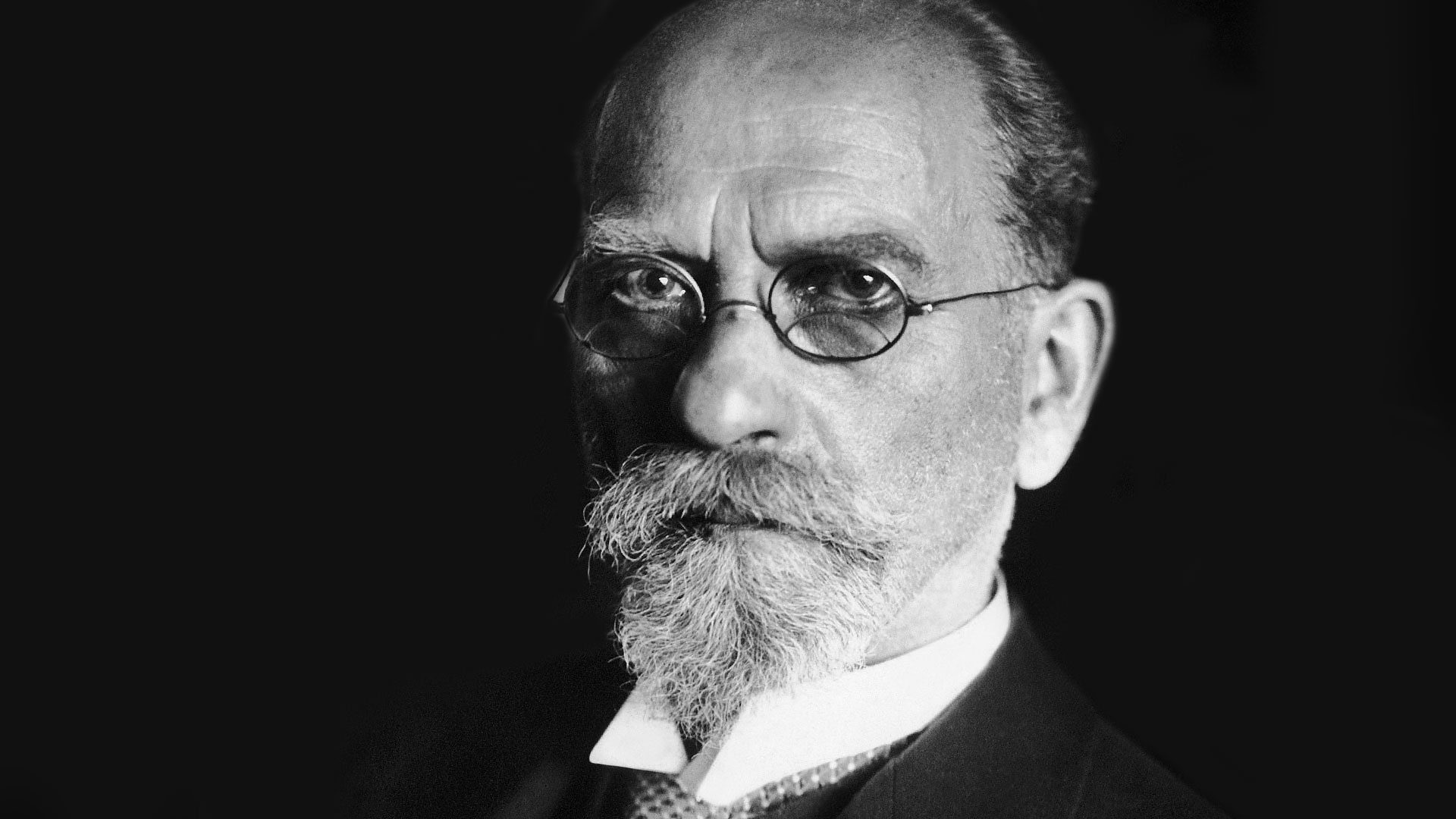
Edmund Husserl (1859–1938), the founder of phenomenology, formulated his theory of internal time-consciousness to uncover how temporal continuity is constituted within subjectivity itself. Rejecting both physical clock time and psychological associationism, Husserl showed that human experience never occurs within an instantaneous, knife-edge "now." Instead, consciousness operates through an enduring tripartite intentional structure: Primal Impression (Urimpression), Retention (primäre Erinnerung), and Protention. Anchored in his broader phenomenological framework—the epoché, intentionality, and the lifeworld (Lebenswelt)—Husserl's temporal architecture provides the foundational bedrock for Martin Heidegger's existential temporality, Alfred Schütz (1899–1959)'s phenomenological sociology, and Henri Bergson's philosophy of lived duration (la durée).
I. The Phenomenological Project & The Problem of Time
Prior to Edmund Husserl's breakthrough lectures in 1905, Western accounts of time were divided between two unsatisfactory poles:
- Physical / Objective Time: The Galilean and Newtonian metric of time as an infinite, homogeneous background coordinate (
), spatialized across linear points on a clock face or mathematical axis.[1] - Psychological Associationism: The empiricist claim (associated with David Hume and John Locke) that temporal succession is simply an external association of discrete, isolated sense data strung together like beads on a necklace.
Husserl recognized that neither framework could explain the actual phenomenon of temporality: how a conscious subject perceives a unified temporal object, such as a musical melody, a moving object, or a spoken phrase, without experiencing it as a disjointed sequence of atomized snapshots.[2]
| Temporal Framework | Model & Structure | Nature of Experience |
|---|---|---|
| Objective Clock Time | Atomized snapshots along an external mathematical coordinate ( | |
| Phenomenological Flow | Retention | Continuous "thick present" synthesizing elapsed past, nascent actuality, and imminent horizon. |
To access this lived dynamic, Husserl redirected philosophy from metaphysical speculation to descriptive phenomenological analysis: "To the things themselves!" (Zu den Sachen selbst!).
II. Foundational Phenomenological Concepts
Husserl's analysis of time is embedded in three foundational tenets of phenomenological method:
1. The Phenomenological Epoché and Reduction (Einklammerung)
In everyday life, humans operate within the "natural attitude"—the taken-for-granted conviction that a physical world exists objectively outside consciousness, possessing self-evident properties independent of observation.
Through the epoché (from the ancient Greek for "suspension" or "bracketing"), the phenomenologist does not deny the external world, but sets aside all ontological assumptions and scientific dogmas regarding its independent reality.[3] Bracketing objective time allows the researcher to analyze how time is given to and constituted within immanent consciousness—the domain of the transcendental ego.
2. Intentionality (Intentionalität)
Inherited from Franz Brentano and radically reconfigured by Husserl, intentionality asserts that all consciousness is directed: consciousness is always consciousness of something.[2:1]
Intentionality is structured by a strict correlative polarity:
- Noesis (Noëse): The intentional act of consciousness (e.g., perceiving, remembering, doubting, imagining).
- Noema (Noëma): The intended object precisely as it is meant or experienced (its ideal sense, meaning, and temporal appearance).
In temporal perception, intentionality is not a static bridge between a detached mind and an exterior world; it is an ongoing, self-synthesizing intentional flow.
3. The Lifeworld (Lebenswelt)
Formulated comprehensively in his late masterwork, The Crisis of European Sciences and Transcendental Phenomenology (1936), the lifeworld is the pre-reflective, intuitable realm of everyday human experience.[4] Husserl argued that mathematical physics and quantitative sciences had constructed an idealized, "clothed" geometric universe that forgot its own historical origin in the concrete, bodily, perceptual lifeworld. Internal time-consciousness is the primordial temporal rhythm animating this pre-scientific lifeworld.
III. The Tripartite Structure of Internal Time-Consciousness
In his 1905 Göttingen lectures—later collected, edited, and published in 1928 by his former assistant Martin Heidegger as On the Phenomenology of the Consciousness of Internal Time (Vorlesungen zur Phänomenologie des inneren Zeitbewusstseins)—Husserl proved that the perceptual present is never a zero-dimensional point.[5]
Instead, every living "now" is a thick, dynamic field composed of three simultaneous intentional phases:
| Intentional Phase | Phenomenological Designation | Temporal Direction & Function | Conscious Character |
|---|---|---|---|
| Retention | Primäre Erinnerung (Primary Memory) | Echo of the Just-Past: Continuous trailing grasp of the immediately elapsed moment. | Passive, non-reproductive "comet's tail" (Kometenschweif); retains prior phases without requiring mental imaging. |
| Primal Impression | Urimpression (Nascent Zero-Point) | Point of Actuality: Source point where raw perceptual novelty continuously bursts forth. | Maximal perceptual intensity; instantaneous core of the living present before sinking into retentional modification. |
| Protention | Primary Anticipation | Horizon of the Impending Future: Pre-reflective intentional leaning toward the next phase. | Implicit expectation and cadence-readiness; experiences phenomenological shock (Enttäuschung) when violated. |
1. Primal Impression (Urimpression)
The primal impression is the punctual core of the living present—the exact locus where raw, unrepeatable perceptual novelty first bursts into consciousness.[5:1] It is the point of maximal perceptual intensity and actuality.
However, a primal impression cannot exist in isolation. The split second a tone sounds, it immediately sinks away into retentional modification to yield its place to a fresh primal impression.
2. Retention (Primäre Erinnerung / Primary Memory)
Retention is the continuous, passive holding-in-grasp of the moment that has just slipped away. Husserl described it as the "comet's tail" (Kometenschweif) attached to the primal impression.[5:2]
Crucially, retention is not an active act of remembering; it is an intrinsic part of ongoing perception itself:
- Retention (Primary Memory): A passive, non-reproductive modification. When you hear the end of a spoken sentence, the beginning of that sentence is still directly retained in your conscious grasp as an immediately elapsed datum without your needing to summon an internal mental image.
- Recollection / Secondary Memory (Sekundäre Erinnerung or Wiedererinnerung): An active, reproductive re-presentation (Vergegenwärtigung) of a past event that is completely gone from the present field (e.g., recalling your high school graduation or what you ate for dinner yesterday). In recollection, consciousness re-enacts a whole former stream of retention-primal impression-protention as having occurred in the past.[5:3]
3. Protention
Protention is the intentional counterpart to retention, representing the immediate, pre-reflective anticipation leaning toward the nascent future.[5:4]
Protention is not explicit intellectual planning or conscious forecasting; it is the implicit horizon of expectation woven into the present moment. When you listen to a melodic phrase, your consciousness is already poised for the impending harmonic resolution; when someone pauses mid-sentence, protentive intentionality is held in suspense. If the tone suddenly changes abruptly or breaks off, protentive expectation experiences a sudden shock (Enttäuschung—phenomenological disappointment).
The Classical Melody Example
Husserl famously demonstrated this tripartite architecture through the hearing of a musical melody:
Suppose a melody consists of tones
- When tone
sounds, it is perceived as a Primal Impression. - When tone
sounds, it becomes the new Primal Impression, while tone does not vanish into nothingness; rather, is preserved within consciousness as an immediate Retention, modified into a "just-past" tone. - When tone
sounds as the new Primal Impression, becomes a first-order retention, and sinks into a second-order retention (the retention of a retention). Simultaneously, Protention anticipates the melodic cadence or next rhythmic pulse.
If consciousness consisted solely of isolated primal impressions without retention and protention, you would never hear a melody; you would only ever register an atomized, disconnected pulse of instantaneous acoustic sensations, devoid of musical form, intervals, or continuity.[5:5]
IV. The Three Levels of Temporal Constitution
Husserl discovered that temporality is not uniform; it is constituted through a profound three-tiered hierarchy of intentional depth:
| Constitutive Level | Temporal Dimension | Exemplar Phenomena | Ontological Character |
|---|---|---|---|
| Level 1: Objective / Empirical Time | Transcendent / World Time | Physical clocks, world history, calendar dates, spatial objects. | Spatialized, measurable time of the natural world and empirical science. |
| Level 2: Immanent Time | Temporal Objects (Zeitobjekte) | Subjective duration, hearing a melody, internal cognitive acts. | Pre-empirical temporal appearances constituted within conscious awareness. |
| Level 3: The Absolute Flow | Time-Constituting Flux (Der absolute Fluss) | Pure self-manifesting flux; transverse and longitudinal intentionality. | Primordial awareness that constitutes all time while standing beyond temporal succession. |
- Objective Empirical Time: The time of the natural world, measured by clocks, planetary orbits, and physical changes. This is the domain of natural science and social calendars.
- Immanent Time (Temporal Objects): The internal subjective time in which psychological events (sensations, emotions, thoughts, perceptions of tones) endure and pass.
- The Absolute Flow of Consciousness (Der absolute zeitkonstituierende Bewusstseinsfluss): The most fundamental, radical discovery of Husserlian phenomenology. The stream of consciousness constitutes both immanent and objective time, yet the absolute flow itself cannot be situated at a specific point on the clock. It is self-manifesting, non-objectifiable awareness that makes temporality itself possible.[5:6]
V. Philosophical Continuum: Connections & Divergences
Husserl's internal time-consciousness stands at the epicenter of 20th-century continental thought, directly informing subsequent revolutions across sociology, existential ontology, and process philosophy:
| Thinker / Lineage | Core Theoretical Concept | Primary Theoretical Domain | Transformation of Husserlian Temporality |
|---|---|---|---|
| Henri Bergson | Lived Duration (La Durée) & Élan Vital | Metaphysics & Vitalism | Contrasts qualitative, undivided duration against spatialized clock time through intuitive contemplation. |
| Martin Heidegger | Ecstatic Temporality (Zeitlichkeit) of Dasein | Fundamental Ontology | Ontologizes the triad: Retention becomes Thrownness (Geworfenheit), Primal Impression becomes the Moment (Augenblick), and Protention becomes Projection (Entwurf). |
| Alfred Schütz (1899–1959) | Intersubjective Lifeworld & Motives | Phenomenological Sociology | Applies time-consciousness to social action: retrospective meaning constitution on completed acts (actum) and protentive planning (in-order-to motives). |
1. Alfred Schütz: Grounding Phenomenological Sociology
Alfred Schütz (1899–1959) recognized that Max Weber's interpretive sociology lacked a rigorous philosophical foundation for human action and subjective meaning (Verstehen). Schütz adopted Husserl's model of internal time-consciousness to explain how social actors construct meaning:[6]
- The Flow of Action vs. The Act Completed: While an individual is acting, consciousness is immersed in the ongoing flux of retention, impression, and protention. Meaning (Sinn) is only constituted retrospectively, when the actor turns their intentional gaze backward upon an already elapsed action (actum).
- Protentive Planning (In-Order-To Motives): Human projects are conceptualized in the future perfect tense (modo futuri exacti)—picturing an action as already completed in protentive imagination to guide current steps.
- Typification in the Lifeworld: Schütz translated Husserl's Lebenswelt into the everyday shared social lifeworld, where reciprocal typifications and recipes structure intersubjective communication.
2. Martin Heidegger: From Transcendental Ego to Ecstatic Temporality
While editing Husserl's 1905 lectures, Martin Heidegger recognized the brilliant intuition of Husserl's tripartite model but rejected his mentor's commitment to a detached, Cartesian "transcendental ego." In Being and Time (1927), Heidegger ontologicalized Husserl's temporal schema:[7]
- Retention becomes Thrownness (Geworfenheit): The past is not a passive mental trace in consciousness, but the existential reality that human existence (Dasein) is always already thrown into an unchosen historical world and cultural situation.
- Protention becomes Projection (Entwurf): The future is not a cognitive horizon of expected notes, but Dasein's authentic existential projection toward its own possibilities, bounded fundamentally by mortality (Being-toward-death / Sein-zum-Tode).
- Primal Impression becomes Falling / The Moment (Augenblick): The present is transformed from a perceptual sensory instant into the existential decision (resoluteness) to disclose Being authentically amid the pressures of the anonymous crowd (das Man).
3. Henri Bergson: Lived Duration (La Durée)
Both Husserl and Henri Bergson waged war against the spatialization of time in 19th-century positivism. However, while Bergson championed intuitive, qualitative duration (la durée) as a dynamic metaphysical force (élan vital) resisting intellectual dissection, Husserl insisted on rigorous, conceptual phenomenological description of the intentional structures making temporal perception possible.[8]
4. Modern Cognitive Science & Neurophenomenology
Husserl's tripartite model has enjoyed a dramatic revival in 21st-century cognitive science:
- Francisco Varela's Neurophenomenology: Cognitive scientist Francisco Varela utilized Husserl's time-diagram to map neural synchrony across three distinct biological scales: the 1/10-second micro-scale (elementary events), the 1-to-3-second scale (the phenomenological living present), and the macro-scale of narrative memory.[9]
- Predictive Processing & Computational Horizons: Contemporary neuroscience models the brain as an active inference machine. Protention corresponds directly to the brain's top-down generative predictions, primal impression to incoming sensory prediction error, and retention to the updated precision weightings of prior perceptual priors.[10]
VI. Comparative Matrix: Models of Time & Consciousness
| Theoretical Model | Primary Metric of Time | Conception of the "Present" | Core Theoretical Focus |
|---|---|---|---|
| Husserlian Phenomenology | Lived internal time-consciousness (immanenter Zeitstrom). | A dynamic intentional triad: Primal Impression, Retention, and Protention. | How temporal continuity and immanent objects are constituted by transcendental consciousness. |
| Classical Newtonian Physics | Absolute mathematical coordinate ( | A zero-dimensional geometric point on a linear timeline. | Measuring spatial displacement and mechanical motion across an independent, uniform grid. |
| Heideggerian Fundamental Ontology | Ecstatic temporality (Zeitlichkeit) of Dasein. | The authentic Moment (Augenblick) of resolute existential disclosure. | Time as the horizon for understanding the question of Being, bounded by death and thrownness. |
| Bergsonian Metaphysics | Undivided qualitative duration (la durée). | An uninterrupted, qualitative flow of interpenetrating psychological states. | Resisting spatialized clock time in favor of direct intuition and evolutionary vital impulse (élan vital). |
| Schützian Phenomenological Sociology | Subjective stream of consciousness within the Lifeworld. | The boundary between unreflective lived action and reflective retrospective meaning. | How intersubjective actors typify experiences and coordinate social interactions through time. |
| Modern Relational Physics / Time as Change | Relational transformation without fundamental temporal coordinates ($\hat | \Psi\rangle = 0$). | The localized thermodynamic boundary of interaction and physical change. |
🎴 Interactive Web Practice (Comprehension Check)
Question 1 (Husserlian Methodology): Why is the phenomenological epoché necessary before one can accurately analyze the structure of internal time-consciousness?
Answer: In everyday life, human beings operate within the uncritical "natural attitude," which dogmatically assumes that time is an objective, external coordinate ticking away on clocks and calendars independent of conscious observation. The epoché (phenomenological bracketing) suspends this metaphysical assumption. By bracketing the existence of physical, objective clock time, the phenomenologist is able to isolate and describe the purely immanent, subjective structures of lived duration—examining how time is constituted, synthesized, and experienced from the first-person perspective of the transcendental ego.
Question 2 (Tripartite Model Differentiation): What is the crucial phenomenological distinction between Husserl's concept of Retention (primary memory) and Recollection / Secondary Memory (*Wiedererinnerung*)?
Answer: Retention is an automatic, passive, non-reproductive modification that belongs intrinsically to the ongoing perceptual present; it is the immediate "comet's tail" holding the just-elapsed sensory moment in direct grasp without requiring an act of mental imaging (such as retaining the beginning of a musical tone while hearing its end). In contrast, Recollection (*Wiedererinnerung*) is an active, reproductive re-presentation (*Vergegenwärtigung*) of a past event that is completely absent from the current perceptual field. Recollection constructs a secondary intentional act that summons a past temporal horizon and re-presents it to the mind as having already concluded.
Question 3 (Continental Evolution): How did Alfred Schütz and Martin Heidegger respectively transform Husserl's tripartite model of time into their own philosophical systems?
Answer: Alfred Schütz applied Husserl's temporal model to sociological action theory, showing that an individual cannot assign meaning (*Sinn*) to an action while immersed in the retentive flow of ongoing performance; meaning only emerges retrospectively when consciousness turns its reflective gaze backward on an already completed act. Furthermore, Schütz showed that actors use protentive intentionality to plan projects in the future perfect tense (*in-order-to* motives).
Martin Heidegger ontologicalized Husserl's tripartite structure in Being and Time, replacing the cognitive transcendental ego with existential Dasein: Husserl's retention became Dasein's existential thrownness (*Geworfenheit* into a pre-existing historical world); protention became Dasein's existential projection (*Entwurf*) toward future possibilities bounded by mortality (*Being-toward-death*); and the primal impression became the authentic Moment of vision (*Augenblick*).
Resonant Notes
The following notes in the vault share direct thematic, sociological, and philosophical connections with Husserl's Internal Time-Consciousness:
🔴 Phenomenology, Continental Philosophy & Existential Temporality
- Continental Philosophy — Surveys the foundational trajectory from German Idealism through Husserlian phenomenology, existentialism, and hermeneutics, highlighting the central revolt against mechanistic scientism in favor of lived human subjectivity and temporal experience.
- Martin Heidegger — Husserl's student and successor at Freiburg, who radicalized Husserlian retention, impression, and protention into Dasein's ecstatic temporality—grounding human existence in thrownness (Geworfenheit), projection (Entwurf), and authentic Being-toward-death (Sein-zum-Tode).
- Alfred Schütz (1899–1959) — Integrated Husserl's internal time-consciousness and Lebenswelt with Max Weber's sociology, demonstrating how social actors constitute subjective meaning retrospectively and organize collaborative social reality through shared typifications and in-order-to motives.
- Louis Sass - Phenomenological Psychopathology and the Self — Applies Husserlian and Heideggerian phenomenological analysis to the minimal self and ipseity-disturbances, revealing how psychiatric pathologies like schizophrenia involve subtle disintegrations of temporal synthesis and pre-reflective self-awareness.
🟡 Duration, Cognitive Processing & Relational Physics
- Henri Bergson & Bergson’s Eliminative Model of Perception and Memory — Formulated the concept of lived qualitative duration (la durée), mounting a direct parallel critique against the spatialization of clock time and viewing the physical brain as a utilitarian filter designed to constrain pure memory for practical action.
- Time as Change — Explores relational time across quantum gravity, phenomenology, and contemplative mindfulness, demonstrating how Husserl's tripartite model directly dismantles the Newtonian absolute timeline and aligns with modern relational physics.
- William James and the Landscape of Eastern Thought & William James — Formulated the famous psychological concept of the "specious present" and the continuous "stream of thought," providing an American pragmatist counterpart to Husserl's retentive-protentive intentional architecture.
- Default Mode Network (DMN) — The neurobiological substrate mediating mental time travel, retrospective autobiographical reflection, and prospective future simulation, providing an empirical parallel to Husserl's retentive and protentive horizons.
🟢 Contemplative Traditions, Emptiness & Non-Attachment
- Internal Time-Consciousness and Buddhist Psychology — Direct vault sister note conducting a comprehensive side-by-side comparative analysis between Husserl's tripartite temporal model and Buddhist psychology (Abhidharma kṣaṇavāda, Yogācāra ālaya-vijñāna, and Madhyamaka śūnyatā).
- Nāgārjuna — Developed the Madhyamaka doctrine of dependent origination (pratītyasamutpāda), establishing that time, past, present, and future possess no independent, inherent existence (svabhāva), echoing Husserl's insight that time exists solely as a relational, constituted phenomenon.
- The Core Instruction - Turning the Gaze Inward & Dzogchen — Outlines contemplative phenomenology wherein consciousness suspends discursive conceptuality and temporal projections to rest directly in naked, non-dual awareness (rigpa), unhooking the mind from retentive rumination and protentive anxiety.
- Gottfried Wilhelm Leibniz and Perennial Philosophy — Connects Leibniz's relational critique of absolute space and time to the broader perennial metaphysical insight that phenomenal temporal succession unfolds within a transcendent, unified ground.
Backlinks
- Internal Time-Consciousness and Buddhist Psychology — Direct comparative study contrasting Husserl's intentional architecture of retention, primal impression, and protention with Buddhist Abhidharma, Yogācāra karmic seeds, and the radical deconstruction of the transcendental ego through anattā.
- Time as Change — Directly references Husserl's tripartite model of Primal Impression, Retention, and Protention to establish why human perception cannot be reduced to a mechanical, knife-edge present.
- Alfred Schütz (1899–1959) — Identifies Husserl's phenomenology, intentionality, and concept of the Lebenswelt as the foundational building blocks of phenomenological sociology.
- Martin Heidegger — Details Heidegger's intellectual apprenticeship under Husserl, his editing of Husserl's 1905 time lectures, and his subsequent transformation of Husserlian phenomenology into fundamental ontology in Being and Time.
- Continental Philosophy — Features Husserl alongside Heidegger and Merleau-Ponty as the founder of phenomenology and a decisive architect of 20th-century European philosophy.
- The Social Construction of Reality - A Treatise in the Sociology of Knowledge — Berger and Luckmann draw directly on the Schützian-Husserlian lifeworld and temporal typification to articulate how everyday social institutions are legitimated.
References
Newton, Isaac. Philosophiae Naturalis Principia Mathematica. 1687. Book I, Scholium on Space and Time. ↩︎
Moran, Dermot. Introduction to Phenomenology. Routledge, 2000. Comprehensive treatment of Husserl's break with psychologism, intentionality, and noetic-noematic correlation. ↩︎ ↩︎
Husserl, Edmund. Ideas Pertaining to a Pure Phenomenology and to a Phenomenological Philosophy - First Book: General Introduction to Pure Phenomenology (Ideas I). Translated by F. Kersten, Martinus Nijhoff, 1983 [orig. 1913]. ↩︎
Husserl, Edmund. The Crisis of European Sciences and Transcendental Phenomenology: An Introduction to Phenomenological Philosophy. Translated by David Carr, Northwestern University Press, 1970 [orig. 1936]. ↩︎
Husserl, Edmund. On the Phenomenology of the Consciousness of Internal Time (1893–1917). Edited by Martin Heidegger (1928), translated by John Brough, Kluwer Academic Publishers / Springer, 1991. ↩︎ ↩︎ ↩︎ ↩︎ ↩︎ ↩︎ ↩︎
Schütz, Alfred. The Phenomenology of the Social World. Translated by George Walsh and Frederick Lehnert, Northwestern University Press, 1967 [orig. 1932]. ↩︎
Heidegger, Martin. Being and Time. Translated by John Macquarrie and Edward Robinson, Harper & Row, 1962 [orig. 1927]. ↩︎
Bergson, Henri. Time and Free Will: An Essay on the Immediate Data of Consciousness. Translated by F.L. Pogson, George Allen & Unwin, 1910 [orig. 1889]. ↩︎
Varela, Francisco J. "The Specious Present: A Neurophenomenology of Time Consciousness." In Naturalizing Phenomenology: Issues in Contemporary Phenomenology and Cognitive Science, edited by Jean Petitot et al., Stanford University Press, 1999, pp. 266–314. ↩︎
Clark, Andy. Surfing Uncertainty: Prediction, Action, and the Embodied Mind. Oxford University Press, 2016. ↩︎