Joseph Campbell and the Hero's Journey
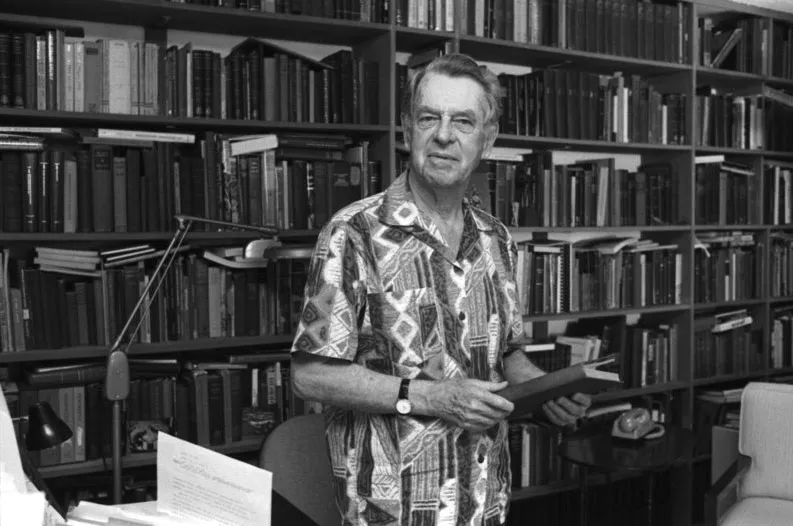
Joseph Campbell (1904—1987) was an American mythologist, scholar, and lecturer whose comparative studies transformed narrative theory and depth psychology. His most famous concept, the monomyth or Hero's Journey, synthesizes structural anthropology, comparative religion, and Jungian analytical psychology into a universal seventeen-stage narrative cycle. First codified in The Hero with a Thousand Faces (1949), Campbell argues that all heroic mythologies share a unified psychological architecture: the protagonist is separated from the mundane social world, undergoes transformative trials in a supernatural realm of death and rebirth, and returns to revitalize the collective community with the boon of transcendent wisdom.
Intellectual Lineage and Theoretical Foundations
Campbell did not formulate the monomyth in isolation; rather, his work represents a monumental mid-twentieth-century convergence of modernist literary experimentation, processual anthropology, and depth psychoanalysis.[1]
1. James Joyce and the Origin of the "Monomyth"
Campbell borrowed the term monomyth directly from James Joyce's monumental, polyglot dream-novel Finnegans Wake (1939):
"The keys to. Given! A way a lone a last a loved a long the / ...passencore rearrived from North Armorica on this side the scraggy isthmus of Europe Minor to wielderfight his penisolate war... the monomyth."[2]
Prior to publishing The Hero with a Thousand Faces, Campbell co-authored A Skeleton Key to Finnegans Wake (1944) with Henry Morton Robinson. Through this exhaustive textual unravelling, Campbell recognized that Joyce's cyclical vision of history—borrowed from Giambattista Vico's Scienza Nuova—used archetypal figures (Humphrey Chimpden Earwicker as the eternal fallen father; Anna Livia Plurabelle as the rejuvenating river of life) to demonstrate that the personal unconscious reflects the entire historical memory of the human species. For Campbell, Joyce proved that all local cultural mythologies are variations of a singular human drama.[2:1]
2. Arnold van Gennep and the Rites of Passage
The structural backbone of the Hero's Journey is derived from French ethnographer Arnold van Gennep (1873–1957) and his landmark 1909 study Les Rites de Passage.[3] Van Gennep observed that all traditional cultures manage vital social and developmental transitions (birth, puberty, marriage, death) through a tripartite ceremonial architecture:
- Separation (Rites de séparation / Pre-liminal) — The initiate is stripped of former identity and isolated from the familiar social matrix.
- Transition (Rites de transition / Liminal) — The "threshold" state (limen), where the initiate is betwixt and between established categories, undergoing symbolic death, vulnerability, and transformative tests.
- Incorporation (Rites d'incorporation / Post-liminal) — The initiate re-enters society bearing an elevated status and new social responsibilities.
Campbell mapped Van Gennep's ritual triad directly onto dramatic narrative: Departure (Separation), Initiation (Transition), and Return (Incorporation).[1:1]
3. Carl Gustav Jung and Archetypal Depth Psychology
While Sigmund Freud interpreted myths as repressed infantile wish-fulfillments and neurotic fixations, Campbell embraced the analytical psychology of Carl Gustav Jung.[4] Jung posited that beneath the personal unconscious lies the collective unconscious—an inherited, transpersonal layer of the human psyche housing universal psychic structures called archetypes (the Shadow, the Anima/Animus, the Wise Old Man, the Mother, the Self).
In Campbell's formulation, myth is externalized dream, and dream is personalized myth:
- The monsters, abysses, and labyrinths encountered by the mythic hero are projections of the unintegrated Shadow and repressed contents of the unconscious.
- The supernatural helpers and goddesses represent the integration of the contrasexual soul-image (Anima/Animus).
- The ultimate goal of the quest—the "Ultimate Boon"—is an allegory for individuation, the lifelong psychological journey whereby the conscious ego confronts, integrates, and reconciles with the total psychic Self.[4:1]
The Architecture of the Monomyth
The monomyth operates as a continuous, circular journey that traverses two distinct realms of reality: the Known World (the ordinary sphere of diurnal consciousness, daylight reason, and societal taboos) and the Unknown World (the subterranean realm of night, the unconscious, supernatural peril, and transcendent power).
               [ THE KNOWN WORLD / CONSCIOUS EGO ]
                       The Ordinary World
                      ┌──────────────────┐
     (17) Freedom     │   (1) Call to    │     (2) Refusal
        to Live       │    Adventure     │       of Call
                      └────────┬─────────┘
         ▲                     │                    │
         │                     │                    ▼
(15) Return Threshold          │          (3) Supernatural Aid
  =============================╪=============================
  [ THRESHOLD OF ADVENTURE ]   │   [ CROSSING OF THRESHOLD ]
  =============================╪=============================
         ▲                     │                    │
         │                     ▼                    ▼
  (12) Refusal of     (4) First Threshold   (5) Belly of
      Return           & Threshold Guardian    the Whale
         │                                          │
         │                                          ▼
   (11) Ultimate ◄─────────────┬────────────► (6) Road of
       Boon                    │                 Trials
                      (10) Apotheosis &             │
                      (9) Atonement with            ▼
                          the Father          (7) Meeting with
                                                  Goddess /
                                              (8) Temptress
              [ THE UNKNOWN WORLD / COLLECTIVE UNCONSCIOUS ]
Campbell articulates seventeen granular stages distributed across the three major movements:[1:2]
Act I: Departure (Separation)
- The Call to Adventure — A rupture occurs in the hero's everyday world. A herald (often loathsome, strange, or accidental) appears, alerting the hero that the current social order has stagnated and that psychic growth demands venturing into the unknown.
- Refusal of the Call — Overcome by fear, security, social obligations, or unworthiness, the protagonist hesitates. In mythic terms, refusing the call turns the hero into a victim; the unlived life turns inward as neurosis or wasteland stagnation.
- Supernatural Aid — Once the hero accepts the journey, a protective figure (the Wise Old Man or Crone) appears, providing protective amulets, secret knowledge, or psychological fortitude necessary for the coming ordeal.
- The Crossing of the First Threshold — The hero reaches the extreme boundary of known territory, guarded by a Threshold Guardian (a monster, sphinx, or sentinel) representing the limits of the ego's current understanding. The hero must outwit, defeat, or submit to this guardian to enter the magical realm.
- The Belly of the Whale — The decisive entry into the zone of metamorphosis. Swallowed into the belly of the beast, the underworld, or the tomb, the hero experiences ego-annihilation; the old identity dies so that a transformed self can gestate.
Act II: Initiation (The Trials and Transmutation)
- The Road of Trials — The hero traverses a dream landscape of tests, monsters, labyrinths, and ordeals. Aided by talismans or mentors, the protagonist systematically purges petty personal desires and confronts unexamined psychic repressions.
- The Meeting with the Goddess — Having survived the initial ordeals, the hero encounters the supreme feminine archetype—the queen of the world, mother, sister, and lover. Symbolizing the totality of life, she offers boundless grace and unconditional love, rewarding the hero's courage with spiritual union.
- Woman as Temptress — The hero is tempted by sensory pleasures, physical comfort, or the illusion of ease to abandon the spiritual trajectory of the quest. This stage represents the temptation to revert to infantile dependency or physical indulgence at the expense of higher consciousness.
- Atonement with the Father — The core climactic trial (at-one-ment). The hero confronts the terrifying, judging, and seemingly tyrannical father figure—the archetype of absolute power, historical law, and the cosmic order. The hero discovers that the father's terrifying visage was a projection of their own immature ego; when met with open trust and sacrifice, the father reveals mercy and initiates the son into divine understanding.
- Apotheosis — A period of profound realization and transcendent peace. The illusion of duality (life vs. death, good vs. evil, male vs. female) dissolves; the hero experiences a divine, timeless consciousness, realizing their underlying unity with all being.
- The Ultimate Boon — The objective of the entire quest is attained. Whether depicted as the Holy Grail, the Golden Fleece, the elixir of immortality, or spiritual illumination, the boon represents the restorative truth needed to regenerate the suffering world.
Act III: Return (Reintegration and Mastery)
- Refusal of the Return — Having achieved cosmic beatitude and enlightened peace in the otherworldly realm, the hero often balks at returning to the dull, petty, and uncomprehending world of mortal men.
- The Magic Flight — If the boon was obtained through trickery or against the opposition of gods and demons, the hero must flee, engaging in a dangerous, magical chase back to the mundane border.
- Rescue from Without — Just as the hero required supernatural aid to cross into the supernatural realm, they may need an external shock or community intervention to pull them out of otherworldly immersion and drag them back into ordinary reality.
- The Crossing of the Return Threshold — The hero must pass the threshold guardians in reverse, returning to the everyday realm while preserving the elusive metaphysical wisdom discovered in the deep.
- Master of the Two Worlds — The hero learns to balance the spiritual dimensions of the transcendent realm with the pragmatic, material necessities of daily life, moving effortlessly between the temporal and the eternal.
- Freedom to Live — Conscious that death has lost its terror and that life is a dynamic flow of becoming, the hero lives fully in the present moment, untethered from existential guilt about the past or anxious dread of the future.[1:3]
Comparative Archetypal Stages Matrix
| Stage Name | Movement | Psychological Correlate (Jung / Van Gennep) | Classical & World Mythological Exemplar |
|---|---|---|---|
| The Call to Adventure | Departure | Rupture of conscious equilibrium; stirrings of unconscious drive | Prince Siddhartha witnessing the Four Sights (Old Age, Sickness, Death, Asceticism) |
| Belly of the Whale | Departure | Ego-death; pre-liminal dissolution into primal matrix | Jonah in the Great Fish; Dante entering the Dark Wood (Inferno) |
| Road of Trials | Initiation | Confrontation with the personal and collective Shadow | Heracles' Twelve Labors; Psyche sorting the seeds for Aphrodite |
| Atonement with Father | Initiation | Reconciliation with the Superego / Transcendent Law | Gilgamesh confronting Utnapishtim; Luke Skywalker facing Darth Vader |
| Apotheosis | Initiation | Transcendent realization of psychic wholeness; integration of Self | The Buddha achieving Enlightenment beneath the Bodhi Tree |
| The Ultimate Boon | Initiation | Retrieval of the Lapis Philosophorum (Elixir / Transcendent Insight) | Jason securing the Golden Fleece; Prometheus bringing fire to humanity |
| Crossing Return Threshold | Return | Re-entry into social collective; post-liminal incorporation | Odysseus returning to Ithaca in beggar's rags |
| Master of Two Worlds | Return | Synthesis of conscious ego and collective unconscious | Jesus Christ resurrected; Krishna instructing Arjuna in the Bhagavad Gita |
Mythological Individuation vs. Literalism
A central tenet of Campbell's scholarship is the distinction between metaphorical mythology and literalized dogma. In The Power of Myth (1988) with Bill Moyers, Campbell insisted that when religious or mythic narratives are read as historic, factual occurrences, their psychic potency is extinguished:
"Half the people in the world think that the metaphors of their religious traditions, for example, are facts. And the other half contends that they are not facts at all. As a result we have folks who consider themselves believers because they accept metaphors as facts, and we have others who classify themselves as atheists because they think religious metaphors are lies."[5]
Campbell identified four vital functions that living mythologies perform for human civilization:
- The Mystical / Metaphysical Function — Awakening and maintaining a sense of awe and gratitude before the impenetrable mystery of the universe.
- The Cosmological Function — Formulating an image of the universe that harmonizes with contemporary scientific understanding.
- The Sociological Function — Validating and maintaining a specific moral and legal social order.
- The Psychological Function — Guiding the individual, stage by stage, through the unavoidable crises of life—from dependency to autonomy, from creative vigor to aging, and ultimately into graceful death.[5:1]
When the sociological function is overemphasized at the expense of the psychological and mystical functions, myth calcifies into institutional authoritarianism. Conversely, when societies discard myth entirely—as Campbell argues modern industrial civilizations have done—individuals are left without psychological roadmaps, resulting in widespread alienation, existential dread, and neurosis.
Modern Adaptations, Media, and Narrative Design
Campbell's codification of the monomyth exerted an unparalleled influence on twentieth-century cinema, storytelling, and marketing communications.[6]
                     ┌───────────────────────────┐
                     │   Campbell's Monomyth     │
                     │  (17-Stage Mythic Model)  │
                     └─────────────┬─────────────┘
                                   │
              ┌────────────────────┴────────────────────┐
              ▼                                         ▼
   [ Hollywood Screenwriting ]               [ Strategic Branding ]
   (Vogler's 12-Stage Arc)                  (Brand Storytelling)
   - Luke Skywalker / Star Wars             - Customer as Hero
   - Neo / The Matrix                       - Brand as Supernatural Mentor
   - Frodo / Lord of the Rings              - Elixir = Problem Resolution
1. Cinematic Mythmaking: George Lucas and Christopher Vogler
The most celebrated modern application of Campbell's work occurred when filmmaker George Lucas utilized The Hero with a Thousand Faces as the explicit structural scaffolding for Star Wars: Episode IV – A New Hope (1977). Lucas openly credited Campbell with rescuing his space opera from narrative incoherence:
- Luke Skywalker receives the Call to Adventure via R2-D2's holographic projection of Princess Leia.
- The Refusal of the Call occurs when Luke insists he must return to his uncle's farm for the harvest.
- Obi-Wan Kenobi serves as the classical Supernatural Mentor, bestowing the father's lightsaber (talisman).
- The cantina in Mos Eisley operates as the First Threshold, guarded by alien sentinels.
- The Death Star functions as the Belly of the Whale, requiring a physical descent into the trash compactor (symbolic bowels of the beast) and culminating in Obi-Wan's sacrifice and Luke's trench run (Road of Trials and Ultimate Boon).
In 1992, Hollywood development executive Christopher Vogler formalized Campbell's 17 stages into a streamlined, twelve-stage screenwriting paradigm titled The Writer's Journey: Mythic Structure for Writers.[6:1] Vogler translated Campbell's esoteric, psychoanalytic vocabulary into actionable screenwriting beats (e.g., "The Ordinary World," "Meeting the Mentor," "Ordeal," "The Road Back"), cementing the monomyth as the standard narrative architecture of contemporary commercial cinema.
2. Strategic Narrative: Customer-Centric Brand Architecture
In modern communications and DM - Brand Storytelling, the monomyth provides the foundational model for engaging consumers in late-capitalist media ecosystems. Rather than positioning the corporate enterprise as the heroic conqueror, sophisticated narrative frameworks invert the hierarchy:
- The customer is cast as the Luke Skywalker figure—the vulnerable protagonist grappling with an existential conflict or operational impasse in their ordinary world.
- The brand or enterprise adopts the posture of the Supernatural Guide (Yoda or Gandalf), offering proprietary methodology, technological tools, or strategic counsel.
- The purchase or implementation of the solution represents the Ultimate Boon, enabling the customer to vanquish the organizational monster and return as a transformed, self-actualized master of their market domain.
Critical Appraisals and Theoretical Limitations
Despite its immense popularity, Campbell's monomyth has attracted rigorous critique across literary theory, structural anthropology, and feminist scholarship.[7]
- Anthropological Universalism vs. Cultural Particularism: Anthropologists such as Claude Lévi-Strauss and Franz Boas cautioned against Campbell's cross-cultural harmonizing. Critics argue that Campbell extracted indigenous folktales and rituals from their specific historical, material, and geopolitical contexts, forcing disparate traditions into a monocultural template that reflects post-war Western, middle-class individualist values.
- Literary Structuralism vs. Psychological Essentialism: In literary criticism, Northrop Frye and his monumental Northrop Frye's - Anatomy of Criticism pursued a parallel mapping of narrative archetypes, yet Frye rejected Campbell's reliance on the Jungian unconscious. Frye treated archetypes as purely structural, autonomous conventions internal to the universe of literature itself, categorizing myths into seasonal cycles (mythoi: Comedy, Romance, Tragedy, Satire) rather than viewing them as psychological symptoms of psychic anatomy.
- Feminist Critiques and the "Heroine's Journey": Feminist scholars and psychoanalysts, notably Maureen Murdock (The Heroine's Journey: Woman's Quest for Wholeness, 1990), criticized Campbell's framework as heavily androcentric.[7:1] In The Hero with a Thousand Faces, female figures appear almost exclusively as archetypal prizes, temptresses, maternal thresholds, or passive muses ("The Meeting with the Goddess") rather than active questing subjects. Campbell himself notoriously claimed in seminar recordings that "woman doesn't need to make the journey... all she has to be is where the hero is." Murdock and others reformulated the quest cycle to address the female developmental challenge of healing the internal rift between the masculine drive for external achievement and the feminine desire for psychic integration.
- Narrative Homogenization: The wholesale adoption of Vogler's Campbellian screenwriting formula has contributed to structural predictability in mainstream Hollywood cinema, frequently reducing the deep metaphysical terror of mythic transformation to a formulaic, three-act mechanical checklist.
🎴 Interactive Web Practice (Comprehension Check)
Question 1 (Anthropological and Psychological Lineage): How does Joseph Campbell adapt Arnold van Gennep's sociological rites of passage and Carl Gustav Jung's analytical psychology to construct the monomyth?
Answer: Campbell synthesized Van Gennep's three-part ritual process—Separation (pre-liminal), Transition (liminal), and Incorporation (post-liminal)—into the overarching narrative architecture of the monomyth: Departure, Initiation, and Return. However, whereas Van Gennep examined these stages as external sociological mechanisms that stabilize communities during life crises, Campbell psychologized them through Carl Gustav Jung's analytical framework. Campbell mapped the mythic descent into the underworld onto the ego's confrontation with the collective unconscious. The monsters and trials represent unintegrated aspects of the personal and collective Shadow, the meeting with the goddess represents the integration of the contrasexual archetype (Anima/Animus), and the Ultimate Boon represents the attainment of psychological individuation—the reconciliation of the conscious ego with the total Self.
Question 2 (Apotheosis and Atonement): What is the specific symbolic function of \"Atonement with the Father\" and \"Apotheosis\" within the Initiation phase, and why must the hero experience both before attaining the Ultimate Boon?
Answer: In Campbell's monomyth, \"Atonement with the Father\" (etymologically understood as at-one-ment) requires the hero to confront the ultimate symbol of cosmic authority, moral judgment, and the historical order. The terrifying, destructive aspect of the father is revealed to be a projection of the hero's own immature, ego-bound defenses; once the hero surrenders their ego, the father's merciful, forgiving face is revealed. This reconciliation triggers \"Apotheosis\"—the divine realization of non-duality, wherein the hero experiences the transcendence of oppositions (life vs. death, sacred vs. profane). Only by shattering ego-centered consciousness and discovering their identity with the eternal ground of being can the hero possess the spiritual maturity required to hold the \"Ultimate Boon\" without being corrupted by hubris or using it for petty personal aggrandizement.
Question 3 (Narrative Distortion and Commercialization): In what ways does contemporary commercial storytelling—such as corporate brand marketing and the cinematic anti-hero—diverge from or distort Campbell's original metaphysical purpose for the monomyth?
Answer: Campbell conceived the monomyth as an instrument of spiritual transformation and ego-transcendence, designed to awaken metaphysical awe and guide the human psyche through mortal crises. Contemporary corporate brand storytelling adapts this structure pragmatically: it casts the consumer as the hero and the enterprise as the wise supernatural mentor, but replaces spiritual illumination with commercial problem-resolution and consumer fulfillment. Furthermore, when narrative traditions abandon the spiritual necessity of Apotheosis and ego-death, the mythic structure can become perverted into pathological heroism. As seen in analyses of modern anti-heroes like Taxi Driver's Travis Bickle, an alienated protagonist enters the \"Road of Trials\" and embraces violent trials, but refuses ego-death or communal reconciliation—weaponizing the mythic pattern to legitimize nihilistic destruction and personal narcissism rather than collective renewal.
Resonant Notes
The following notes in the vault share direct thematic, psychological, and literary connections with Joseph Campbell and the Hero's Journey:
🔴 Archetypal Psychology & Psychoanalytic Foundations
- Carl Gustav Jung — Campbell's master theoretical foundation; Jung's concepts of the collective unconscious, universal archetypes (Shadow, Anima/Animus, Wise Old Man), and the individuation process provide the psychological anatomy that Campbell maps onto world mythologies.
- Arnold van Gennep (1873–1957) — The anthropological architect of the tripartite rites of passage (Separation, Transition/Liminality, Incorporation); Campbell adopted Van Gennep's threshold model directly to establish the three macro-movements of Departure, Initiation, and Return.
- James Joyce (1882-1941) — Campbell co-authored A Skeleton Key to Finnegans Wake and borrowed the term "monomyth" directly from Joyce's text, exploring how cyclical mythological structures order modern human consciousness.
- Sigmund Freud & Freud's The Uncanny (Das Unheimliche) — While Campbell preferred Jungian archetypes over Freudian psychosexual drives, the encounter with threshold guardians and monsters mirrors Freud's concept of the uncanny (das Unheimliche)—the terrifying return of repressed psychic material disguised in mythological symbolism.
🟡 Mythological Criticism, Philosophy & Literary Tropes
- Northrop Frye & Northrop Frye's - Anatomy of Criticism — Frye's ambitious taxonomic mapping of universal narrative structures through seasonal mythoi (Comedy, Romance, Tragedy, Satire) provides the preeminent structuralist counterpart to Campbell's psychological quest cycle.
- Goethe's Faust & Johann Wolfgang von Goethe (1749-1832) — Faust's unceasing striving (Streben), his pact with Mephistopheles (the Shadow), his descent into the primordial Realm of the Mothers, and his final spiritual redemption dramatize the monumental Western literary embodiment of the Hero's Journey.
- The Sublime — The psychological experience of terror, vastness, and awe that seizes the hero when confronting cosmic forces at the threshold of adventure and during the trial of Apotheosis.
- Sehnsucht — The profound, unquenchable longing for the transcendent that serves as the internal catalyst triggering the hero's Departure and awakening them from mundane complacency.
- Albert Camus — The existential foil to Campbell's monomyth; where Campbell posits a universal cosmic order that responds meaningfully to heroic trial, Camus insists on the absurd silence of the universe, framing heroic defiance without metaphysical reconciliation or supernatural boons.
🟢 Modern Narrative Design, Anti-Heroes & Sociological Tropes
- DM - Brand Storytelling — The commercial and executive adaptation of Campbell's monomyth; brand strategists structure marketing funnels by positioning the customer as the heroic protagonist, the brand as the guiding mentor, and the offering as the transformative elixir.
- Travis Bickle — The psychological profile of Martin Scorsese and Paul Schrader's protagonist in Taxi Driver demonstrates a catastrophic corruption of the Hero's Journey: Travis accepts a violent call and enters the Road of Trials, but circumvents genuine Apotheosis, substituting psychopathic vigilantism for spiritual rebirth.
- David Émile Durkheim (1858–1917) & Durkheimian Sociology — The institutional counterweight to Campbell's individualistic hero; Durkheim emphasizes the absolute supremacy of collective social facts and institutions over individual agency, clarifying the sociological tensions that heroes face upon their Return.
- English-language Canadian Literature (English CanLit) — Explores how Canadian frontier literature inverts the triumphant Campbellian quest; rather than conquering monsters and mastering nature, the CanLit protagonist confronts Frye's "garrison mentality," surviving a terrifying wilderness where the landscape resists heroic mastery.
References
Joseph Campbell / The Hero with a Thousand Faces (1949; Commemorative Edition 2004) / Princeton University Press ↩︎ ↩︎ ↩︎ ↩︎
Joseph Campbell & Henry Morton Robinson / A Skeleton Key to Finnegans Wake (1944) / New World Library ↩︎ ↩︎
Arnold van Gennep / The Rites of Passage (1909; English Translation 1960) / University of Chicago Press ↩︎
C.G. Jung / The Archetypes and the Collective Unconscious (Collected Works, Vol. 9, Part 1) / Princeton University Press ↩︎ ↩︎
Joseph Campbell with Bill Moyers / The Power of Myth (1988) / Anchor Books ↩︎ ↩︎
Christopher Vogler / The Writer's Journey: Mythic Structure for Writers (3rd Edition, 2007) / Michael Wiese Productions ↩︎ ↩︎
Maureen Murdock / The Heroine's Journey: Woman's Quest for Wholeness (1990) / Shambhala Publications ↩︎ ↩︎