Aesthetics in Religion
Aesthetics in religion extends far beyond decorative art or liturgical ornament; it serves as a foundational epistemological and experiential framework through which the transcendent is mediated into human consciousness. Drawing from its Greek root aisthesis (sensory perception, explored in Aisthesis and Aesthetics), religious aesthetics investigates how embodied sensation, material culture, sacred architecture, sound, and visual forms make the invisible sacred tangible, immediate, and communal—bridging the gap between collective institutional worship and individualized interiority analyzed in Religion vs. Spirituality.
Theoretical Foundations: From Beauty to Aisthesis
In contemporary religious studies and theology, the study of aesthetics has undergone a major paradigm shift. Historically, post-Enlightenment Western scholarship reduced religious aesthetics to the philosophy of "fine art" and abstract theories of beauty (examined in Aesthetics), largely treating material and sensory elements as secondary expressions of internal, cognitive beliefs. Over the past three decades, scholars have reclaimed the Aristotelean notion of aisthesis—our total corporeal and sensory engagement with the world—to understand how religion actually happens in lived experience.
Sensational Forms and Material Mediation
Anthropologist Birgit Meyer argues that religion must be understood primarily as a practice of mediation between humans and the professed transcendent.[1] Because the transcendent is by definition beyond ordinary reach, it requires material media to become experienced as real and immediate.[1:1] Meyer introduces the concept of sensational forms: relatively fixed, authorized modes of invoking and organizing access to the transcendental that shape both religious content (beliefs, doctrines) and norms.[1:2]
In this view, material objects, rituals, and sensory environments are not mere outward symbols added onto pre-existing religious ideas; they are inextricable from how religion is constituted.[1:3] As S. Brent Plate notes, religious history is fundamentally bound to human bodies interacting with physical things—such as stones, incense, drums, crosses, and bread—which bring the spiritual to our senses, echoing the primal material sacrality explored in Animism.[2]
The Numinous and the Sublime
In his seminal phenomenological study The Idea of the Holy, Rudolf Otto sought to isolate the non-rational, experiential core of religion, which he termed the numinous (from the Latin numen, meaning spirit or divine presence).[3] Otto characterized the encounter with the numinous as a mysterium tremendum et fascinans—a reality that is experienced as "wholly other" (mysterium), evoking awe, dread, and creaturely insignificance (tremendum), while simultaneously captivating the soul with irresistible wonder and bliss (fascinans).[3:1]
"The feeling of it may at times come sweeping like a gentle tide, pervading the mind with a tranquil mood of deepest worship. It may burst in sudden eruption up from the depths of the soul with spasms and convulsions, or lead to the strangest excitements, to intoxicated frenzy, to transport, and to ecstasy."[4]
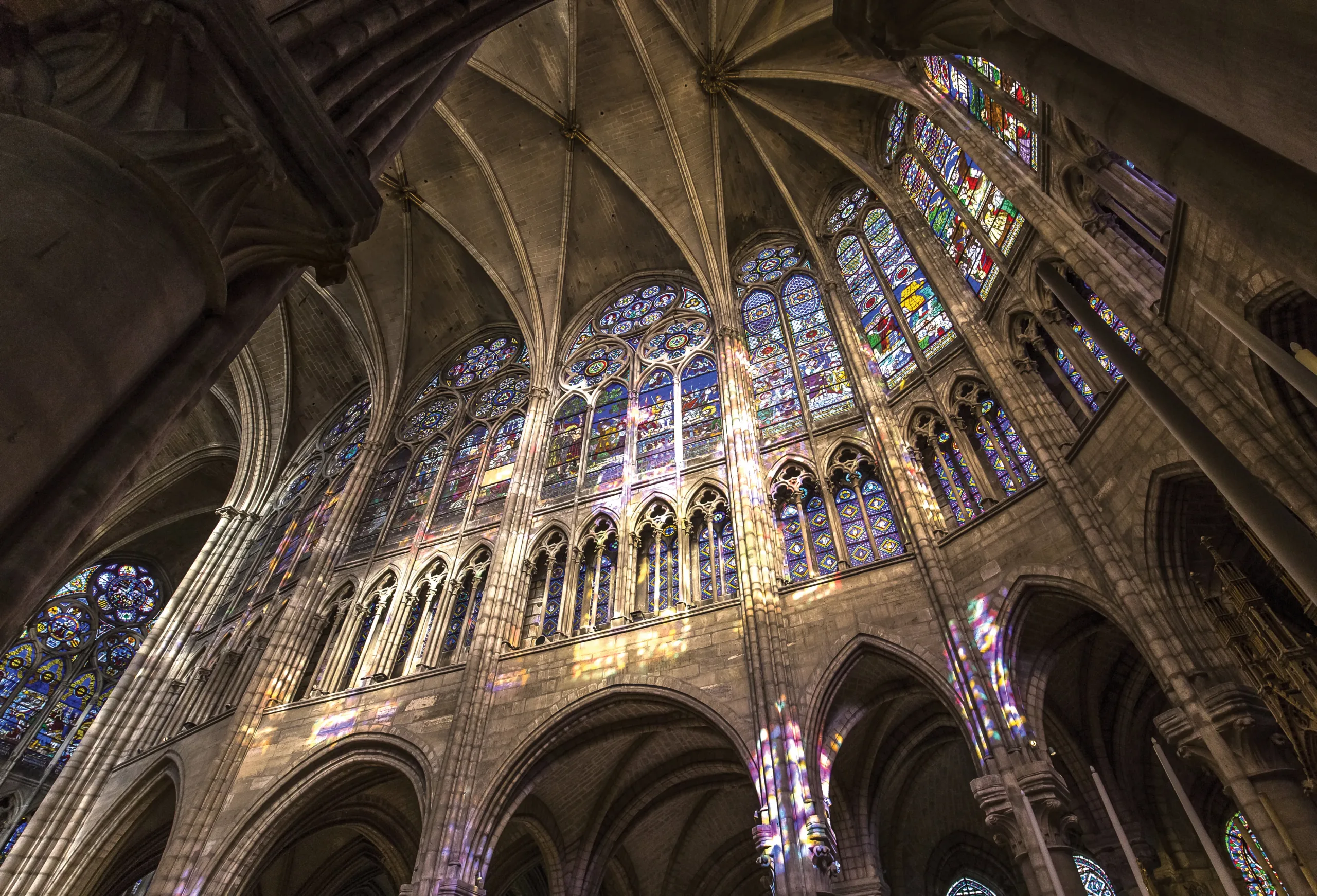
For Otto, aesthetic experience—particularly the philosophical category of The Sublime (analyzed from somatic perspectives in Edmund Burke-The Physiological Sublime and transcendental faculties in Immanuel Kant-The Transcendental Sublime)—functions as a vital schema or analogy for the numinous. In artistic and architectural forms, the numinous is evoked indirectly through grandeur, darkness, silence, and emptiness (such as the soaring vaults of Gothic cathedrals that transform architectural space, contrasting with the estrangement explored in Anthony Vidler-The Architectural Uncanny, or the negative space of East Asian landscape painting), which overwhelm ordinary rational comprehension and awaken an intuitive "creature-consciousness."[4:1]

Theological Aesthetics: Seeing the Form
Within Christian dogmatics, Swiss theologian Hans Urs von Balthasar spearheaded the recovery of beauty (pulchrum) as one of the three classical transcendentals alongside truth (verum) and goodness (bonum).[5] In his seven-volume work The Glory of the Lord, Balthasar argued that modern theology had impoverished itself by abandoning beauty to secularism, resulting in moralistic or purely rationalistic faith that no longer captivates the human heart.[5:1]
Balthasar's theological aesthetics rests on two interconnected movements:
- Form (Gestalt): The concrete, visible figure in the material world (culminating, for Christians, in the Incarnation of Christ), perceived as an integrated, indissoluble perceptual whole (a dynamic central to Gestalt Psychology-The Mechanics of the Whole).
- Splendor (Glanz or Herrlichkeit): The inner divine light and glory that breaks forth from within the form, grasping the beholder and drawing them into participation with the divine mystery.[6]
Core Functions of Aesthetics in Religious Life
Across diverse global traditions, aesthetics performs several structural roles that sustain both individual devotion and collective identity.
1. Spatial and Temporal Demarcation (Hierophany)
Historian of religion Mircea Eliade demonstrated that religious consciousness divides experience into two distinct modes of being: the sacred and the profane, a duality rooted in the foundational sociology of David Émile Durkheim (1858–1917) and Durkheimian Sociology.[7] The sacred manifests within the ordinary world through an act called a hierophany (literally, "something sacred shows itself").[7:1] Aesthetics is the primary mechanism that constructs and signals this threshold:
- Sacred Space: Through monumental scale, geometric precision, directional orientation (such as the qibla in mosques or the eastern axis of churches), and lighting, architecture interrupts homogeneous profane space to establish an axis mundi—a cosmic center connecting heaven, earth, and the underworld, creating the spatial thresholds of separation and incorporation analyzed in Arnold van Gennep's rites of passage.[7:2]
- Sacred Time: Liturgical calendars, seasonal festivals, and rhythmic ritual performances use music, vestments, and choreography to lift participants out of linear, chronological time and immerse them in eternal, mythic time (in illo tempore)—a sacred temporality that stands in stark opposition to the commodified, post-industrial rhythms analyzed in The Secularization of Religious Holidays.[7:3]
2. Multi-Sensory Embodiment and Affective Attunement
Religious aesthetics rarely operates through vision alone; it orchestrates a synesthetic environment that engages the entire sensorium to mold emotional states, bodily dispositions, and somatic memory.[8]
- Olfactory: Incense (frankincense, myrrh, sandalwood, sage) immediately alters the atmosphere of a space, signaling purification, marking ritual transitions, and symbolizing prayers ascending to the divine.
- Auditory: Sacred soundscapes—ranging from Vedic chanting, Quranic recitation (tajwid), and Gregorian chant to Sufi qawwali and Pentecostal gospel music—utilize pitch, rhythm, resonance, and deliberate silence to induce states of tranquility, ecstatic trance, or the powerful collective effervescence that binds communities together.
- Tactile and Gustatory: Kissing icons, circumambulating shrines, handling prayer beads (mala, misbaha, rosary), immersing in sacred waters (the Ganges, mikveh, baptismal fonts), and consuming consecrated food (prasada, the Eucharist, langar) internalize theological truths at a visceral, pre-reflective level, anchoring belief in the phenomenological lifeworld analyzed by Alfred Schütz (1899–1959).[2:1]
3. Pedagogical Transmission and Narrative Memory
Before widespread literacy, visual and performative arts served as the primary vehicles for transmitting cosmological narratives, ethical exemplars, and doctrinal orthodoxy, establishing the institutional plausibility structures described in The Social Construction of Reality - A Treatise in the Sociology of Knowledge. Known in medieval Christianity as the Biblia pauperum ("Bible of the poor"), stained-glass windows (whose luminous properties Aldous Huxley examined in Aldous Huxley's Heaven and Hell (1956)), frescoes, and tympanum sculptures translated complex scriptural typologies into an accessible visual language.
Similarly, Hindu temple carvings, Buddhist narrative reliefs (such as those at Borobudur or Sanchi), and theatrical traditions like the Ramlila encode sacred history and archetypal initiation into the collective memory of the community, dramatizing universal mythic patterns identified by Joseph Campbell and the Hero's Journey and the liturgical archetypes outlined in Northrop Frye's - Anatomy of Criticism.[8:1]
Comparative Perspectives Across Traditions
Different religious traditions resolve the paradox of representing the unrepresentable transcendent in distinct ways, ranging from radical iconicity (embracing material images as vessels of divine presence) to strict aniconism (rejecting figurative representation in favor of calligraphy, geometry, or sacred sound).
Hindu Traditions: Darshan and Rasa Theory
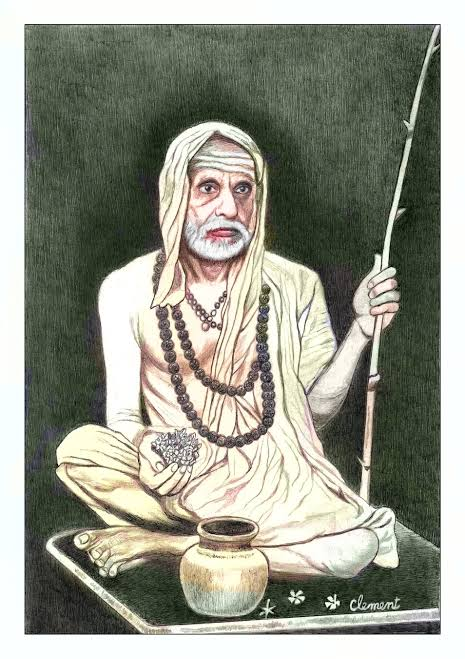
In Hindu devotional traditions (bhakti), aesthetics and theology are deeply intertwined. Central to worship is darshan—the auspicious, reciprocal exchange of sight between the devotee and the deity embodied in a consecrated image (murti). Seeing is not a passive act; it is a form of tactile contact in which the worshipper receives the deity's grace through the eyes.
Furthermore, classical Indian aesthetic theory, originally formulated by Bharata Muni in the Natya Shastra and expanded by Kashmiri Shaiva philosopher Abhinavagupta, centers on rasa (literally "juice," "essence," or "taste").[9] In the 16th century, the Gaudiya Vaishnava theologian Rupa Goswami adapted rasa theory into a comprehensive devotional phenomenology in his Bhakti-rasamrta-sindhu.[10] Through poetry, music, dance, and ritual drama, the devotee's foundational love (sthayi-bhava) for Krishna is cultivated and transformed into bhakti-rasa—an eternal, transcendent aesthetic rapture experienced in specific relational moods. This sophisticated affective discipline contrasts with the unexamined aesthetic attachments deconstructed in Epistemology of Preference-Avijjā, Māna, and the Emptiness of Aesthetic Taste in Buddhist Philosophy.[10:1]
Islamic Aesthetics: Tawhid, Calligraphy, and Sacred Geometry
Because Islam emphasizes the absolute unity and transcendence of God (tawhid) and strictly guards against idolatry (shirk), its sacred art is predominantly aniconic, avoiding figurative depictions of God and, in most liturgical contexts, sentient beings.[11] As scholar Seyyed Hossein Nasr explains, Islamic art does not seek to imitate the external, transient forms of nature, but rather to crystallize the inner spiritual realities (batin) of the Islamic revelation.[11:1]
This spiritual vision manifests through three primary aesthetic pillars:
- Calligraphy: Because the Quran is the direct, uncreated Word of God revealed in Arabic, calligraphy represents the visible body of the divine word, serving as the highest visual art form in Islam.[11:2]
- Arabesque and Geometric Patterns: Interlacing biomorphic vines and mathematically complex geometric tessellations reflect cosmic order and the infinite nature of the Creator, reminding the viewer of unity within multiplicity.
- Acoustic Art: The cantillation of the Quran and the call to prayer (adhan) form the sonic core of Islamic daily life, enveloping urban and domestic spaces in sacred sound.
Christian Traditions: Icons, Cathedrals, and the Reformation Divide
Christianity exhibits an internal tension regarding visual and material aesthetics, rooted in its dual heritage of Hebrew aniconism and Greco-Roman visual culture, alongside the central doctrine of the Incarnation.
- Eastern Orthodoxy: Following the 8th- and 9th-century Iconoclastic Controversies, the Seventh Ecumenical Council (787 CE) affirmed that because God became visible in the flesh of Jesus Christ, matter is redeemed and can serve as a vehicle of grace. Orthodox icons are written according to strict canonical conventions—using inverse perspective, gold leaf, and stylized proportions—not as naturalistic portraits, but as "windows into heaven" that facilitate communion with the divine prototype. In this sense, icons retain what Walter Benjamin (1892–1940) characterized in The Work of Art in the Age of Mechanical Reproduction as an authentic, cultic aura—a sacred presence embedded within ritual worship.
- Roman Catholicism: Embracing a sacramental imagination, Catholic aesthetics historically utilized monumental architecture—from Abbot Suger's theology of lux nova in Gothic cathedrals to the humanist perspective of The Renaissance and the dramatic theatricality of the Counter-Reformation Baroque—to overwhelm the senses and elevate the mind toward God.
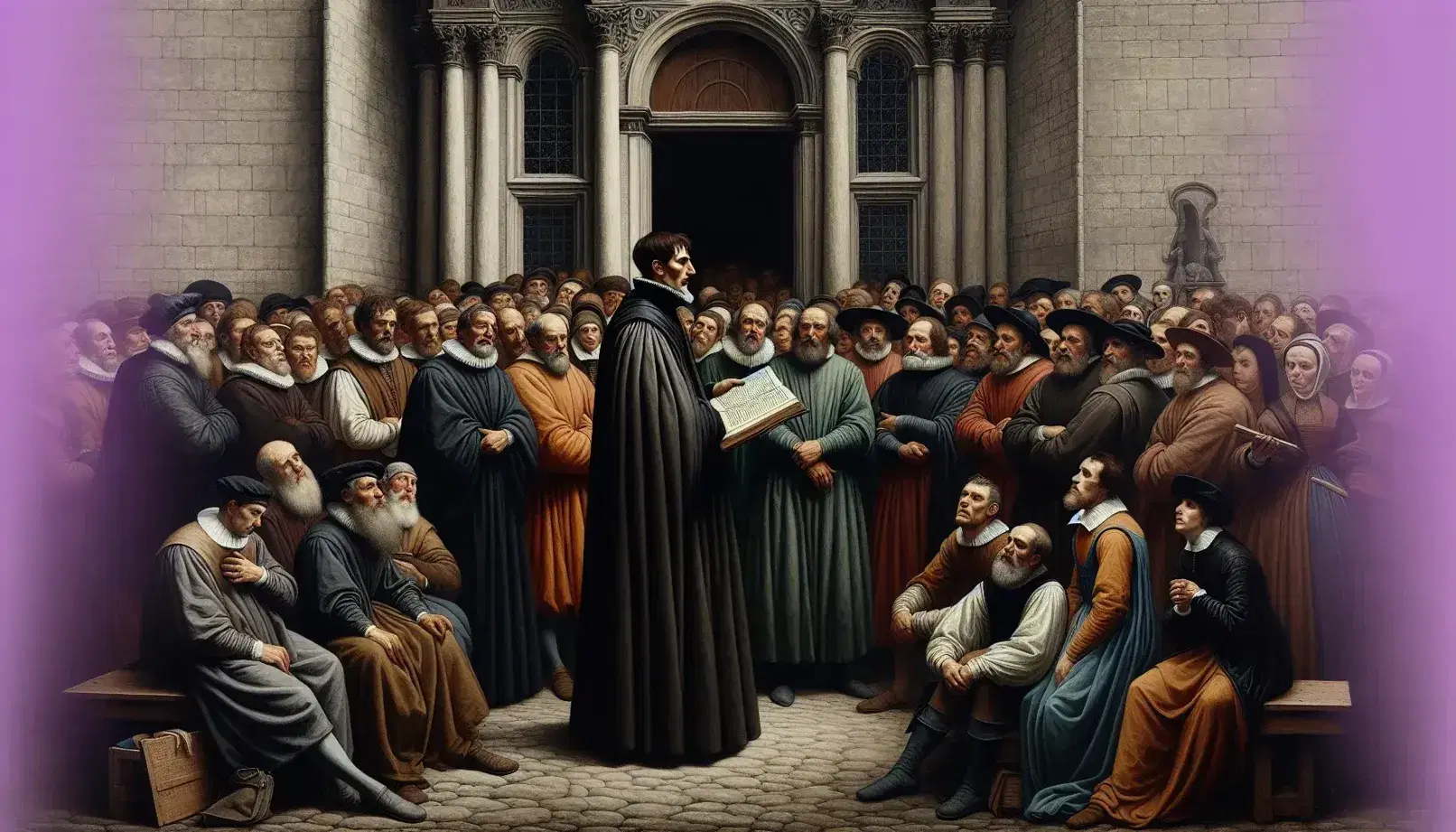
- Protestantism: During the 16th-century Reformation, figures like Huldrych Zwingli and John Calvin critiqued exuberant visual imagery and relic veneration as distractions or idolatry, prioritizing the spoken and written Word (sola scriptura). However, this did not eliminate aesthetics; rather, it redirected the sensorium toward acoustic and literary aesthetics (such as Martin Luther's chorales, Johann Sebastian Bach's sacred cantatas, and the cadences of vernacular scripture) and cultivated an aesthetic of architectural simplicity, clarity, and light.
Buddhist Aesthetics: Emptiness, Mandalas, and Zen Wabi-Sabi
Buddhist aesthetics serves primarily as a contemplative technology designed to cultivate mindfulness, insight into impermanence (anicca), and awakening.
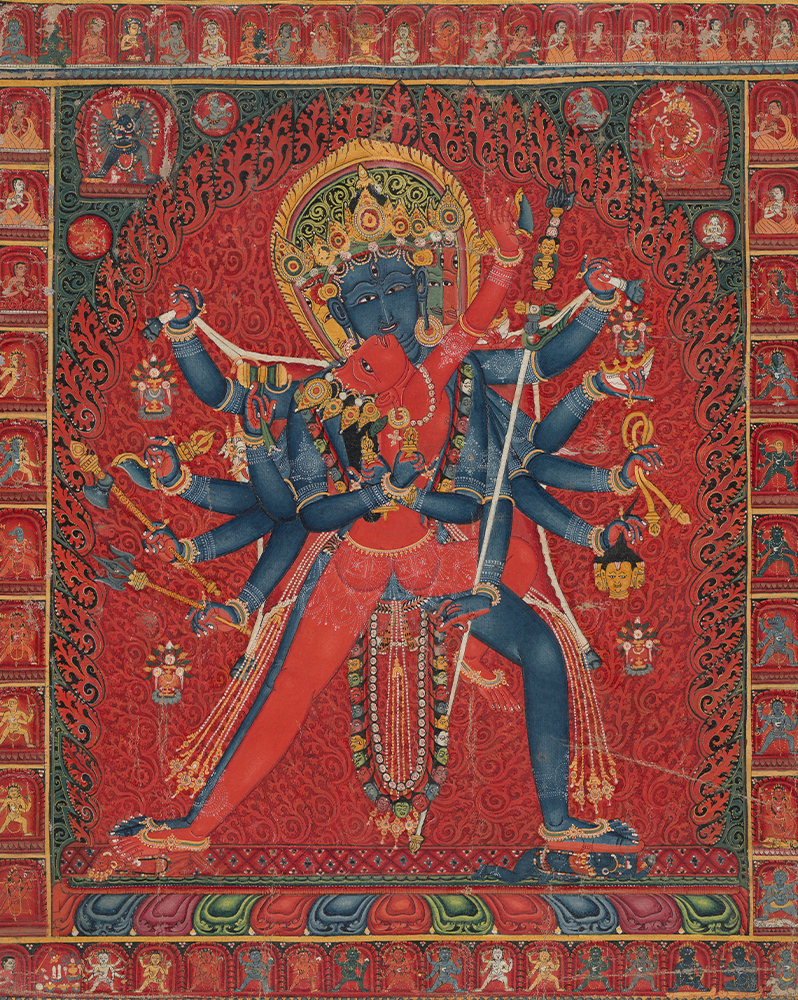
- Vajrayana (Tantric) Buddhism: Employs vibrant, complex mandalas (cosmograms) and thangka paintings populated by peaceful and wrathful deities. These serve as visual blueprints for internal visualization practices (sadhana), helping the practitioner recognize that all phenomena are manifestations of awakened mind—a ritual technology visually epitomized by the Tibetan Wheel of Life and identified by Carl Gustav Jung as an archetypal projection of psychic wholeness.
- Zen Buddhism: Rooted in the Mahāyāna philosophy of emptiness (śūnyatā), systematized dialectically by Nāgārjuna and explored in Two Kinds of Nothingness-Astrophysics and Buddhist Philosophy, Zen aesthetics developed principles such as wabi-sabi (finding beauty in imperfection, austerity, and transience), ma (negative space or pregnant interval), and yugen (subtle, profound grace). Contemplative disciplines like dry landscape gardening (karesansui), ink wash painting (sumi-e), calligraphy (shodo), and the tea ceremony (chanoyu) transform everyday actions into meditative arts where the boundary between aesthetic perception and spiritual liberation dissolves, pointing directly toward the unconditioned awareness cultivated in Dzogchen and The Core Instruction - Turning the Gaze Inward.

The Tension: Iconoclasm and the Fear of Aesthetic Seduction
The history of religious aesthetics is inseparable from the history of iconoclasm and ascetic critique. The very power of sensory forms to move the human heart makes them a perpetual source of theological anxiety.
Across almost all major traditions, reformers, mystics, and ascetics have periodically warned against the dangers of aesthetic attachment:
- Idolatry and Reification: The risk of mistaking the finite material vehicle (the statue, image, or ritual performance) for the infinite reality it points toward—a reification of symbol over truth that mirrors the degeneration of living practice into static dogma explored in Dogma vs. Dharma.
- Sensory Distraction: In his Confessions, St. Augustine expressed deep ambivalence about the beauty of liturgical chant, fearing that his ears were more moved by the sweetness of the melody than by the spiritual truth of the words being sung.
- Ethical Hypocrisy and Commodification: Prophetic traditions frequently critique lavish temple ornamentation, golden vessels, and elaborate ceremonies when they coexist with social injustice or substitute for genuine moral transformation.
- Apophatic Mysticism: Traditions emphasizing the via negativa (such as Meister Eckhart, St. John of the Cross, or Advaita Vedanta, explored across Perennial Philosophy and Aldous Huxley's The Perennial Philosophy) argue that ultimate union with the divine requires stripping away all sensory images, concepts, and aesthetic consolations to enter the "cloud of unknowing."
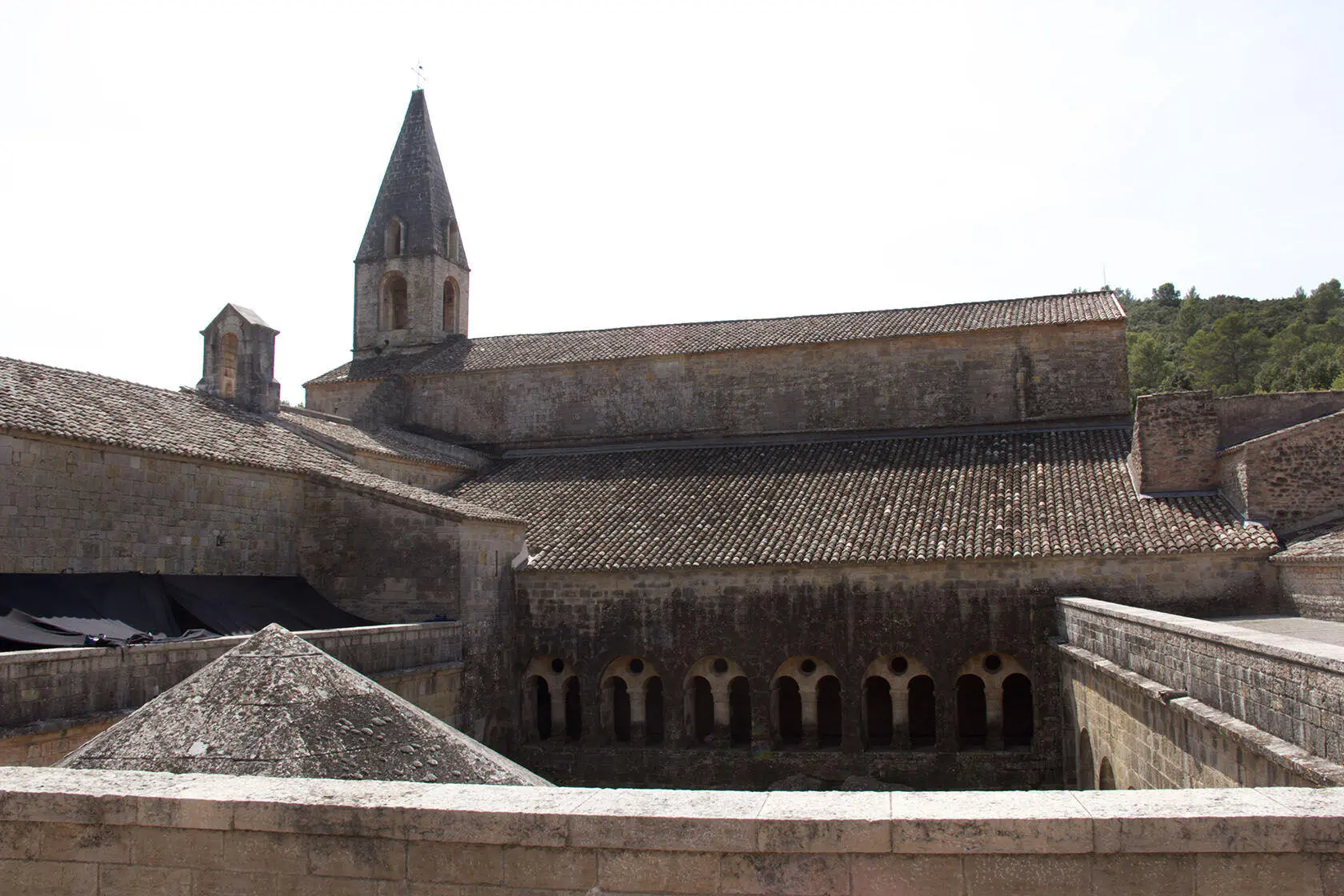
Yet even the rejection of ornament produces its own distinct aesthetic. The bare whitewashed walls of a Puritan meetinghouse, the silent circle of a Quaker meeting, the unadorned robes of a Theravada monk, and the austere geometry of a Cistercian abbey are all carefully curated sensory environments designed to embody purity, humility, and focus. Ultimately, religion cannot escape aesthetics; it can only choose which sensory forms best mediate its vision of the ultimate.
Resonant Notes
The following notes in the vault share direct thematic, sociological, and philosophical connections with Aesthetics in Religion:
🔴 Sensory Mediation, The Sublime & Aesthetic Theory
- Hans Urs von Balthasar (1905–1988) — Direct theological counterpart; spearheads theological aesthetics in The Glory of the Lord, insisting that divine glory (Herrlichkeit) must be perceived through concrete material form (Gestalt) and splendor (Glanz), recovering beauty (pulchrum) as a primary transcendental.
- Aisthesis — Explores the Greek epistemological root of embodied sense perception; provides the direct conceptual anchor for retrieving sensory habituation, bodily awareness, and the material sensorium from post-Enlightenment mentalist biases.
- The Numinous — Formulates Rudolf Otto's phenomenological core of the sacred as mysterium tremendum et fascinans, providing the non-rational, experiential ground that religious architecture, darkness, and sacred sound seek to evoke.
- Aesthetics — Establishes the foundational philosophical discipline of sensory perception (aisthesis), beauty, and value theory, tracing the shift from classical cosmic harmony to Enlightenment subjectivity and modern everyday aesthetics.
- The Sublime — Details the aesthetic encounter with vastness, overwhelming power, and awe, serving as Rudolf Otto's primary philosophical and aesthetic schema for the religious numinous.
- Immanuel Kant-The Transcendental Sublime — Examines Kant's critique of judgment, where the breakdown of sensible imagination in the face of the infinite triggers the realization of reason's transcendent faculty.
- Edmund Burke-The Physiological Sublime — Formulates the visceral, bodily origins of sublime terror, darkness, and magnificent scale, grounding religious awe in somatic nervous stimulation.
- The Work of Art in the Age of Mechanical Reproduction & Walter Benjamin (1892–1940) — Demonstrates how art originated in the service of sacred ritual and magical cults, defining the sacred "aura" and its subsequent decay under modern industrial reproduction.
- Aldous Huxley's Heaven and Hell (1956) — Explores the physiological and perceptual psychology of visionary art, showing why stained glass, gems, luminous color, and sacred architecture evoke deep resonances with mystical states of consciousness.
- Anthony Vidler-The Architectural Uncanny — Explores spatial alienation and uncanny estrangement within modern built environments, offering an architectural counterpoint to the sacred, integrating axis mundi of traditional sanctuaries.
- The Renaissance — Charts the historical epoch where sacred Christian iconography merged with classical perspective, proportional humanism, and monumental architectural engineering.
- The Dehumanization of Art — Ortega y Gasset's critique of modern art purging human sentimentality, paralleling the austerity of aniconic religious traditions that strip away anthropomorphic representation.
🟡 Sociology of the Sacred, Ritual Demarcation & Secularization
- Religion vs. Spirituality — Primary direct companion note; contrasts institutional, liturgical, and sensory mediation (the traditional domain of religious aesthetics) with privatized, unmediated, and individualized spiritual experience.
- David Émile Durkheim (1858–1917) & Durkheimian Sociology — Establishes the foundational sociological division between the sacred and the profane, demonstrating how collective rituals generate collective effervescence through shared acoustic, visual, and bodily synchronization.
- Durkheimian Sociology and Reified Gestalt — Details how living communal rituals and sensory practices crystallize into external, coercive institutional structures (reified gestalts) that endure across generations.
- The Secularization of Religious Holidays — Traces the historical migration of liturgical rites, sacred calendars, and religious sensory pageantry into secular civic rituals and consumer commercial environments.
- Arnold van Gennep (1873–1957) — Analyzes the spatial, temporal, and symbolic demarcation of thresholds in rites of passage (Separation, Liminality, Incorporation), illuminating how architecture and vestments construct ritual transitions.
- The Social Construction of Reality - A Treatise in the Sociology of Knowledge — Berger and Luckmann's analysis of institutionalization and symbolic universes, illustrating how sacred material artifacts and architecture legitimize cosmological worldviews.
- William James and the Landscape of Eastern Thought & William James — Highlights James's analysis in The Varieties of Religious Experience, validating personal mystical feelings and sensory impressions as the generative wellspring of institutional ceremony.
🟢 Contemplative Traditions, Emptiness & Sacred Iconography
- Dogma vs. Dharma — Direct epistemological companion; contrasts rigid propositional dogma (which breeds theological anxiety and iconoclasm) with dynamic, experiential orthopraxy (dharma).
- Epistemology of Preference-Avijjā, Māna, and the Emptiness of Aesthetic Taste in Buddhist Philosophy — Analyzes how sensory contact (phassa), feeling tone (vedanā), and egoic conceit (māna) construct aesthetic value judgments, providing an epistemological critique of sensory attachment.
- Tibetan Wheel of Life — Analyzes the classical Vajrayāna visual teaching cosmogram, illustrating how complex philosophical doctrines (the 12 links of Dependent Origination) are translated into pedagogical iconographic art.
- Nāgārjuna & Two Kinds of Nothingness-Astrophysics and Buddhist Philosophy — Establishes the Madhyamaka philosophy of emptiness (śūnyatā), the foundational metaphysical ground for Zen aesthetic minimalism, negative space (ma), and wabi-sabi.\n- Dzogchen & The Core Instruction - Turning the Gaze Inward — Contemplative methods that move beyond reliance on external liturgical images to rest in pristine, non-dual awareness (rigpa), reflecting the apophatic spiritual horizon.
- Carl Gustav Jung — Formulates the psychological function of religious symbols and mandalas, demonstrating that sacred art projects universal archetypes from the collective unconscious to foster psychic integration.
- Perennial Philosophy & Aldous Huxley's The Perennial Philosophy — Formulates the shared metaphysical reality underlying diverse world religions, demonstrating how different cultures clothe the identical transcendent Ground in unique aesthetic forms.
- Animism — Explores the relational cosmology where stones, rivers, drums, and carving are experienced as living, communicative agents, anchoring the material culture of sacred things.
- Joseph Campbell and the Hero's Journey & Northrop Frye's - Anatomy of Criticism — Detail how mythic narrative structures, seasonal typologies, and symbolic archetypes form the structural syntax of religious drama and sacred literature.
Backlinks
- Hans Urs von Balthasar (1905–1988) — Dogmatic and theological anchor; recovers the transcendent beauty (pulchrum) and objective divine glory (Herrlichkeit) of God's self-revelation through form (Gestalt) and splendor (Glanz).
- Aisthesis — Foundational epistemological root; traces the classical and materialist retrieval of embodied sensory experience (aisthesis) as distinct from detached Enlightenment judgments of artistic taste.
- The Numinous — Phenomenological anchor; explores Rudolf Otto's foundational concept of the mysterium tremendum et fascinans, providing the experiential core of the sacred that religious art, ritual thresholds, and architecture seek to mediate.
- Religion vs. Spirituality — Direct analytical counterpart; examines how institutional religion relies on physical architecture, sensory liturgy, and communal aesthetics to mediate the sacred, whereas individualized spirituality frequently seeks unmediated, interior transcendence.
- The Sublime — Foundational aesthetic anchor; provides the formal philosophical category of overwhelming scale, awe, and terror that Rudolf Otto identified as the secular analogue and experiential schema for the numinous.
- The Work of Art in the Age of Mechanical Reproduction — Historical and aesthetic mirror; Walter Benjamin traces the origin of all art to sacred cult ritual, showing how mechanical reproduction strips artworks of the unique, ritual-embedded aura once central to religious icons.
- Durkheimian Sociology and Reified Gestalt — Sociological anchor; demonstrates how synchronized sensory rituals—chanting, lighting, physical gestures—generate collective effervescence, which then crystallizes into sacred institutional symbols and moral boundaries.
- The Secularization of Religious Holidays — Historical mirror; traces how liturgical aesthetics, sacred time (in illo tempore), and church architecture have been secularized and co-opted by commercial department stores and civic consumer culture.
- Dogma vs. Dharma — Epistemological counterpart; illuminates the recurring theological tension between authoritative propositional creed (dogma)—which fuels iconoclastic anxiety and fears of idolatrous distraction—and living, experiential praxis (dharma).
- Epistemology of Preference-Avijjā, Māna, and the Emptiness of Aesthetic Taste in Buddhist Philosophy — Contemplative aesthetic counterpart; provides the Buddhist psychological deconstruction of sensory taste and aesthetic preference, revealing how subjective attraction to sensory forms reinforces egoic clinging.
- Aldous Huxley's Heaven and Hell (1956) — Visionary aesthetic anchor; details why stained glass, polished gems, and sacred architecture historically captivated mass consciousness by triggering neurochemical affinities with visionary, transcendent realms.
- Tibetan Wheel of Life — Applied pedagogical case study; demonstrates how Tantric Buddhism utilizes elaborate visual cosmograms and narrative art to teach complex metaphysics and cyclic rebirth to monastic initiates and lay devotees alike.
- Perennial Philosophy — Metaphysical foundation; articulates the single, unitive Divine Ground that diverse global religious traditions symbolize and mediate through localized aesthetic vocabularies, liturgical rites, and artistic forms.
References
Birgit Meyer / Material Mediations and Religious Practices of World-Making / researchgate.net ↩︎ ↩︎ ↩︎ ↩︎
S. Brent Plate / A History of Religion in 5½ Objects: Bringing the Spiritual to Its Senses / goodreads.com ↩︎ ↩︎
Thomas Metcalf / Rudolf Otto on "Numinous" Religious Experience / 1000wordphilosophy.com ↩︎ ↩︎
Rudolf Otto / The Idea of the Holy / britannica.com ↩︎ ↩︎
Hans Urs von Balthasar / The Glory of the Lord: A Theological Aesthetics, Vol. 1: Seeing the Form / narnianfrodo.com ↩︎ ↩︎
Michael Waldstein / Hans Urs von Balthasar's theological aesthetics / researchgate.net ↩︎
Mircea Eliade / The Sacred and the Profane: The Nature of Religion / brieflane.com ↩︎ ↩︎ ↩︎ ↩︎
David Morgan / The Material Culture of Lived Religions: Visuality and Embodiment / thejugaadproject.pub ↩︎ ↩︎
Bhumi Online / Aesthetics and Spirituality Part I: The Rasa-Bhava theory / squarespace.com ↩︎
Rupa Goswami / The Elements of Bhakti Rasa in Bhakti-rasamrta-sindhu / bhaktitattva.com ↩︎ ↩︎
Seyyed Hossein Nasr / Islamic Art and Spirituality / traditionalhikma.com ↩︎ ↩︎ ↩︎