Walter Benjamin (1892–1940)
Walter Benjamin was a German-Jewish philosopher, cultural critic, aesthetician, and literary essayist whose kaleidoscopic intellectual production occupies a singular, irreducible position in twentieth-century thought. Operating at the turbulent intersection of German Romanticism, Jewish messianism, Western Marxism, and French avant-garde modernism, Benjamin forged an idiosyncratic critical method centered on fragmentation, micrological observation, and the philosophy of history. Refusing orthodox academic systems, he developed foundational theories of the artwork's "aura" in the era of industrial reproduction, the commodity phantasmagoria of the nineteenth-century metropolis, the linguistic metaphysics of naming and translation, and a messianic materialism designed to blast the continuum of historical progress.
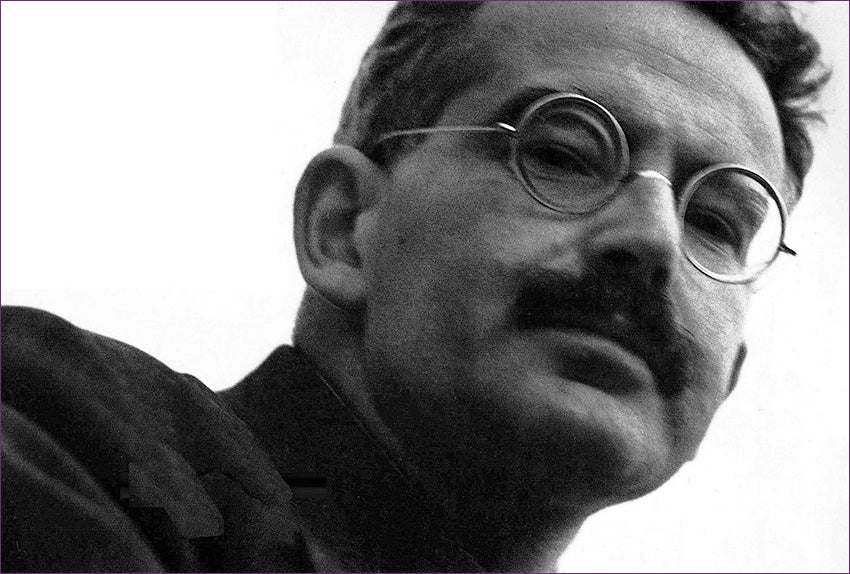
Biographical Trajectory: Between Mysticism and Historical Materialism
Walter Bendix Schönflies Benjamin was born on July 15, 1892, into an affluent, assimilated Jewish family in Berlin-Charlottenburg. His childhood—later immortalized in his nostalgic, phenomenological memoir Berlin Childhood around 1900 (Berliner Kindheit um neunzehnhundert)—was steeped in the suffocating bourgeois comfort of Imperial Germany, an environment against which Benjamin would rebel for the rest of his intellectual life.[1]
Youth Movement and the Great War
During his student years at the universities of Freiburg, Munich, and Berlin, Benjamin was drawn to the German Youth Movement (Jugendbewegung), falling under the charismatic spell of educational reformer Gustav Wyneken. Benjamin served as president of the Freie Studentenschaft (Free Students' Association) and published articles calling for a spiritual and cultural renewal of youth.
However, the outbreak of World War I in August 1914 shattered this early idealism. When Wyneken enthusiastically endorsed Germany's imperial war effort, Benjamin severed ties with him in disgust. Deeply traumatized by the suicide of his close friend, the poet Fritz Heinle, who killed himself in protest against the war, Benjamin avoided military conscription by feigning severe sciatica and withdrew into philosophical isolation in Switzerland.[2] In Bern, he completed his doctoral dissertation in 1919 under the supervision of Richard Herbertz, published as The Concept of Art Criticism in German Romanticism (Der Begriff der Kunstkritik in der deutschen Romantik).
The Habilitation Catastrophe: Expulsion from the Academy
Benjamin's dream of securing a conventional university career collapsed decisively in 1925. He submitted his monumental, notoriously dense treatise The Origin of German Tragic Drama (Ursprung des deutschen Trauerspiels) as his Habilitation thesis to the University of Frankfurt.
The evaluators, including the neo-Kantian philosopher Hans Cornelius and aesthetician Franz Schultz, were utterly baffled by Benjamin's dense, non-linear methodology, which fused Platonic theory of Ideas with baroque allegorical ruin. Warned that he faced a humiliating public rejection, Benjamin withdrew his application. This defeat permanently severed him from the German academic establishment, casting him into precarious, peripatetic existence as a freelance feuilletonist, translator, literary critic, and radio essayist.[3]
Competing Gravitational Poles: Scholem, Brecht, and Adorno
Throughout the Weimar Republic, Benjamin’s thought developed within an extraordinary intellectual magnetic field pulled in three conflicting directions:
                          ┌─────────────────────────────────────┐
                          │         GERSHOM SCHOLEM             │
                          │   Kabbalah, Jewish Mysticism,       │
                          │   Theological Anarchism, Zionism    │
                          └──────────────────┬──────────────────┘
                                             │
                                             │ (Theological Pull)
                                             ▼
┌─────────────────────────────────┐   WALTER BENJAMIN   ┌─────────────────────────────────┐
│         BERTOLT BRECHT          │ ◀─────────────────▶ │     THEODOR W. ADORNO & ISR     │
│   Epic Theatre, Dialectics,     │  (Materialist Pull) │  Critical Theory, Modernism,    │
│   Crude/Vulgar Marxism, Action  │                     │  Negative Dialectics, Aesthetics│
└─────────────────────────────────┘                     └─────────────────────────────────┘
                                             ▲
                                             │ (Romantic & Urban Catalyst)
                                             │
                          ┌──────────────────┴──────────────────┐
                          │            ASJA LĀCIS               │
                          │   Capri / Bolshevik Avant-Garde,    │
                          │   Proletarian Children's Theatre    │
                          └─────────────────────────────────────┘
- Gershom Scholem and Jewish Mysticism: Benjamin met Scholem in Berlin in 1915. Scholem—who would become the foremost twentieth-century scholar of the Kabbalah—remained Benjamin's most demanding metaphysical interlocutor. Scholem urged Benjamin to abandon European politics, emigrate to Jerusalem, and devote himself to Hebrew philology and Jewish mysticism. Benjamin absorbed Scholem's Kabbalistic categories (such as Tikkun / redemption and the broken vessels), but secularized them into cultural criticism.[4]
- Bertolt Brecht and Revolutionary Marxism: In 1924, while convalescing on the Italian island of Capri, Benjamin fell in love with Latvian Bolshevik theatre director Asja Lācis, who introduced him to Marxist political theory. Through Lācis, Benjamin met dramatist Bertolt Brecht in 1929. Brecht exerted a powerful materialist pull on Benjamin, encouraging him to abandon metaphysical obscurantism in favor of "crude thinking" (plumpes Denken) and direct functional intervention in mass media.[5]
- Theodor W. Adorno and the Frankfurt School: Beginning in the late 1920s, Theodor W. Adorno and Max Horkheimer recognized Benjamin's genius and brought him into the periphery of the Institute for Social Research (the Frankfurt School). Adorno viewed Benjamin as his primary intellectual mentor, yet frequently criticized Benjamin's essays for oscillating recklessly between esoteric mysticism and uncritical, vulgar Marxist materialism, urging him toward a rigorous negative dialectic.[6]
Parisian Exile and the Final Flight at Portbou
The rise of Adolf Hitler and the National Socialist seizure of power in early 1933 forced Benjamin into permanent exile. Stripped of his German citizenship by the Nazi regime in 1939, Benjamin lived in impoverishment in Paris, spending his days in the reading room of the Bibliothèque Nationale laboring over his unfinished magnum opus, the Passagenwerk (The Arcades Project).
Following the outbreak of World War II and the Nazi invasion of France in May 1940, Benjamin was interned as an enemy alien in a camp at Nevers for three months. Released through the intervention of French intellectual friends, he fled to Marseille, obtaining an emergency transit visa to the United States provided by Max Horkheimer and the Institute for Social Research.[1:1]
In September 1940, guided across the Pyrenees along an arduous smuggling route led by Lisa Fittko, Benjamin reached the Spanish border town of Portbou. When Spanish border officials abruptly announced that they would cancel transit visas and return the group of stateless Jewish refugees to occupied France and the waiting Gestapo, Benjamin succumbed to despair. On the night of September 26, 1940, he ingested a fatal overdose of morphine. Paradoxically, shocked by his suicide, the Spanish authorities allowed the remainder of his refugee party to cross the border safely into Spain the following morning.[2:1]
Epistemology, Language, and the Theory of Allegory
Benjamin's philosophical system rejects the systematic, deductive epistemologies of Enlightenment Cartesianism and Kantianism. For Benjamin, truth is not an intentional, cognitive conquest of an object by a subject; it is an objective, linguistic configuration that reveals itself through immersion in the concrete particulars of reality.
The Metaphysics of Language: Naming and Translation
In his early foundational essay On Language as Such and on the Language of Man (Über Sprache überhaupt und über die Sprache des Menschen, 1916), Benjamin articulated a theological philosophy of language grounded in the Book of Genesis:[7]
- Edenic Language and the Act of Naming: In Paradise, human language was not an arbitrary semiotic sign system or a utilitarian tool for communicating mundane information. Instead, Adam's God-given task was to give names to creation (Namegeben). In the Edenic state, language was purely immanent, an expressive medium wherein the silent language of nature was translated into the human word without communicative distortion.[7:1]
- The Fall into Chatter (Geschwätz): The Fall of Man was simultaneously a catastrophe of language. Language fell from the divine, participatory act of naming into utilitarian instrumentality, judgment, and abstraction—what Benjamin terms "mere signs" and bourgeois communication (Mitteilung / chatter). Language was degraded into a device about things rather than the divine essence in things.[7:2]
- The Task of the Translator (1923): In his celebrated preface to his translation of Baudelaire's Tableaux parisiens, Benjamin argued that translation is an autonomous art form that does not aim to convey information or mimic the original. Rather, by releasing the "pure language" (reine Sprache) imprisoned within foreign idioms, translation harmonizes disparate tongues, pointing toward the messianic reconciliation of all fragmented human speech.[8]
[ Divine Logos / Creation ]
         │
         ▼
[ Edenic Language: Pure Naming of Nature ]
         │
         ▼ (The Fall / Human Hubris)
[ Degraded Instrumentality: Abstraction, Utilitarian Communication & "Chatter" ]
         │
         ▲ (Messianic Task of the Critic & Translator)
[ *Reine Sprache* (Pure Language): Reassembling the Broken Mosaic of Meaning ]
The Trauerspiel and Allegory vs. Symbol
In The Origin of German Tragic Drama (1928), Benjamin conducted a radical re-evaluation of seventeenth-century German baroque drama (Trauerspiel, mourning play), contrasting it sharply with classical Greek tragedy:[9]
| Aesthetic / Philosophical Dimension | Classical Greek Tragedy | Baroque Trauerspiel (Mourning Play) |
|---|---|---|
| Cosmic Horizon | Mythic destiny, heroic sacrifice, reconciliation with the Olympian gods | Secular, fallen historical time (Naturgeschichte), immanent despair |
| Central Figure | The tragic hero defying hubris | The tyrant and the martyr; the monarch paralyzed by court intrigue |
| Governing Dominant | Transcendent myth and heroic redemption | Melancholia (acedia), bodily decay, grief, and the historical catastrophe |
| Dominant Rhetorical Mode | The Organic Symbol (Symbol) | The Destructive Allegory (Allegorie) |
| Ontological Status of the Object | Wholeness, eternal presence, luminous totality | The Ruin (Ruine), the fragment, the corpse, mortified nature |
Benjamin launched a blistering critique of the Goethean and Romantic exaltation of the Symbol. The Romantic tradition claimed that the symbol represents the seamless, organic fusion of the infinite and the finite, the concept and the sensory object. For Benjamin, this harmonious synthesis is an ideological illusion—a premature, deceptive reconciliation with a broken world.[9:1]
In contrast, Benjamin rehabilitated the Allegory:
- Allegory as Mortification: While the symbol masquerades as a living organism, allegory deliberately exposes the transient, corpse-like nature of reality. In allegory, any person, object, or relationship can mean absolutely anything else; things are violently wrenched from their natural context and made to signify a conceptual truth.
- The Realm of the Ruin: "Allegories are, in the realm of thoughts, what ruins are in the realm of things." The baroque allegorist gazes upon the world through the lens of profound melancholy (acedia), seeing human history not as organic progress, but as a continuous landscape of decay, skull-piles, and petrified ruins.[9:2]
Aesthetic Theory, the Aura, and Technological Reproduction
Benjamin’s contribution to media theory, visual culture, and aesthetics culminated in his 1935 essay The Work of Art in the Age of Mechanical Reproduction (Das Kunstwerk im Zeitalter seiner technischen Reproduzierbarkeit). Composed in Parisian exile, the essay serves as a pioneering Marxist analysis of how twentieth-century technologies—specifically photography and cinema—fundamentally transform human sensory perception (sensorium) and destroy the traditional autonomy of art.[10]
The Concept of the Aura and Its Liquidation
Historically, the traditional artwork possessed what Benjamin defined as an aura:
"What is aura, actually? A strange weave of space and time: the unique apparition of a distance, however near it may be."
— Walter Benjamin, Little History of Photography (1931) / The Work of Art in the Age of Mechanical Reproduction (1935)[10:1]
The aura rests on three interdependent pillars:
- Uniqueness and Authenticity (Einmaligkeit und Echtheit): The artwork's singular existence at a specific physical site across historical time.
- Cult Value (Kultwert): Art originated in the service of magic, religious ritual, and sacred contemplation. The aura is the secularized afterglow of the sacred icon.
- Inviolable Distance: Even when the viewer stands immediately before an auratic object (such as an ancient cult statue or a classical painting), it remains emotionally, spiritually, and temporally ungraspable.
┌───────────────────────────────────────┐
│         THE AURATIC ARTWORK           │
│   Unique Existence in Space & Time    │
│   Subordinated to Cult Value & Ritual │
│   Unapproachable Distance / Contempl. │
└──────────────────┬────────────────────┘
                   │
                   ▼ (Mechanical Reproduction: Photography / Film)
┌───────────────────────────────────────┐
│        THE REPRODUCED ARTIFACT        │
│   Infinite Multiplicity / Detached    │
│   Exhibition Value / Mass Consumption │
│   Tactile Closeness / Distraction     │
└──────────────────┬────────────────────┘
                   │
         ┌─────────┴─────────┐
         ▼                   ▼
[ FASCIST RESPONSE ]      [ REVOLUTIONARY RESPONSE ]
The Aestheticization      The Politicization
    of Politics              of Aesthetics
 (Imperial War/Spectacle)  (Proletarian Emancipation)
Mechanical reproduction liquidates the aura by replacing the unique artifact with an infinite multiplicity of copies. By bringing the reproduction directly into the domestic or public space of the spectator (e.g., viewing a photograph in an illustrated magazine or screening a film in a public cinema), technology shatters the traditional distance, fulfilling the modern masses' deep urge to "bring things closer" spatial-temporally.[10:2]
The Shift from Cult Value to Exhibition Value
With the decay of the aura, art is emancipated from its parasitic dependence on sacred ritual. Its social foundation shifts dramatically:
- Cult Value (Kultwert) gives way to Exhibition Value (Ausstellungswert): While religious icons were often hidden away in dark cathedrals, accessible only to priests, mass-produced photographs and film reels exist purely for maximum public display and rapid circulation.
- The Emancipatory Turn: Once authenticity and ritual value cease to be applicable to artistic production, the entire social function of art is inverted: rather than being based on ritual, it begins to be based on politics.[10:3]
The Optical Unconscious (Das optische Unbewusste)
Benjamin argued that the camera does not merely duplicate human vision; it revolutionizes it. Just as Sigmund Freud's psychoanalysis uncovered the drives and slips of the instinctual unconscious, cinematic techniques—such as extreme close-ups, slow motion, stop-action, and montage—reveal the optical unconscious:[11]
- The zoom exposes structural textures invisible to the naked human eye.
- Slow motion isolates muscle contractions and kinetic dynamics never previously registered by consciousness.
- Montage tears disparate spaces and moments apart and reconstructs them into new dialectical constellations, shattering the bourgeois illusion of a coherent, stable reality.[10:4]
Distraction vs. Contemplation (Zerstreuung vs. Sammlung)
Mechanical media alter the psychic reception of art. The bourgeois connoisseur stood before a painting in absorbed, quasi-religious contemplation (Sammlung), losing themselves in the singular object.
In sharp contrast, the cinema audience consumes imagery in a state of collective distraction (Zerstreuung). Cinema operates through a barrage of physical and perceptual shocks: the rapid succession of cut shots prevents the viewer from engaging in sustained, contemplative daydreaming. This distracted reception is fundamentally tactile, resembling the way human beings perceive architecture: not through focused scholarly gaze, but through habit, physical use, and collective navigation.[10:5]
Fascism vs. Communism: Aestheticizing Politics vs. Politicizing Art
Benjamin concluded his reproduction essay with an urgent political diagnosis of the European crisis:
- The Fascist Aestheticization of Politics: National Socialism preserves existing capitalist property relations while allowing the newly mobilized masses an aesthetic outlet for self-expression. Fascism culminates in the glorification of imperialist war and mass spectacle (exemplified by Leni Riefenstahl's propaganda films and the Italian Futurism of F.T. Marinetti), turning human annihilation into an aesthetic pleasure of the first order.[10:6]
- The Communist Politicization of Aesthetics: Revolutionary socialism must respond to this fatal aestheticization by openly politicizing art—transforming the technological apparatus of cinema, photography, and radio into instruments of critical consciousness, dismantling bourgeois illusionism, and organizing the working class for collective emancipation.[10:7]
Modernity, the Flâneur, and The Arcades Project
Between 1927 and his death in 1940, Benjamin dedicated himself to his colossal, unfinished masterwork: The Arcades Project (Das Passagen-Werk). Conceived as an archaeological and philosophical history of nineteenth-century Paris—the "capital of the nineteenth century"—the project spans thousands of pages of categorized archival fragments, citations, and reflections organized into alphabetical Convolutes (Konvolute).[12]
The Paris Arcades as Dialectical Primeval Landscape
The Parisian shopping arcades (passages)—covered walkways flanked by luxury shops, roofed with industrial iron and glass—represented the architectural threshold of modern commodity capitalism:
- Transitional Monuments: Built between 1800 and 1840, the arcades merged new industrial building materials (cast iron and glass) with archaic decorative motifs. They functioned as interior-exterior spaces: outdoor streets transformed into enclosed bourgeois living rooms.[12:1]
- The Phantasmagoria: Drawing on Karl Marx's concept of commodity fetishism, Benjamin theorized the arcades as the material incarnation of phantasmagoria—a technological dream-world wherein mass-produced commodities are presented as magical, spellbinding spectacles, masking the brutal exploitation of industrial labor.[13]
                  ┌────────────────────────────────────────┐
                  │    19th-Century Paris Arcades          │
                  │  Iron & Glass Interior Streets         │
                  └──────────────────┬─────────────────────┘
                                     │
         ┌───────────────────────────┴───────────────────────────┐
         ▼                                                       ▼
┌─────────────────────────────────┐             ┌─────────────────────────────────┐
│   THE COMMODITY PHANTASMAGORIA  │             │          THE FLÂNEUR            │
│   Fetishized Goods, Advertising,│             │   Urban Stroller, Botanizing    │
│   Department Stores, World Fairs│             │   on the Asphalt, Commodity     │
│   Collective Bourgeois Dreaming │             │   Incarnate in Search of a Buyer│
└────────────────┬────────────────┘             └────────────────┬────────────────┘
                 │                                               │
                 └───────────────────────┬───────────────────────┘
                                         ▼
                        ┌─────────────────────────────────┐
                        │   DIALECTICAL IMAGES / AWAKENING│
                        │   *Dialektik im Stillstand*     │
                        │   Rupture of the Dream-Sleep    │
                        └─────────────────────────────────┘
The Figure of the Flâneur
Central to Benjamin's urban archaeology is the flâneur—the leisurely stroller who drifts aimlessly through the metropolitan crowd, first conceptualized in literature by Charles Baudelaire:[14]
- Botanizing on the Asphalt: The flâneur treats the paved streets of Paris as an expansive botanical garden or an interior salon, observing the fleeting sensations of modernity with aristocratic detachment.
- The Flâneur's Dialectical Tragedy: While the flâneur imagines himself to be an autonomous, detached observer protesting the frantic tempo of industrial rationalization (symbolized by strollers who famously walked pet turtles through the arcades to dictate their slow pace), he is ultimately an illusion. In reality, the flâneur is the intellectual transformed into a commodity, parading himself through the marketplace in search of a purchaser.[14:1] With the rise of the modern department store, the flâneur's subversive idling was tamed, domesticating the solitary stroller into a passive consumer.
Dialectical Images and Awakening (Erwachen)
Benjamin rejected the conventional Marxist view that cultural forms are merely passive "reflections" of the economic base. Instead, economic substructures find expression in the collective unconscious as dream-images:
- Dialectical Images (Dialektische Bilder): Moments where the past and present collide into a sudden, explosive flash of insight—"dialectics at a standstill" (Dialektik im Stillstand).
- Awakening (Erwachen): The political objective of The Arcades Project was to induce historical awakening from the nineteenth-century dream-sleep of capitalism. By collecting the discarded refuse, outmoded fashions, and forgotten architectural ruins of the recent past, the historical materialist unmasks the commodity's promise of eternal progress as an unceasing nightmare of cyclic recurrence.[12:2]
Historical Materialism and Messianic Temporality
Composed in early 1940 under the shadow of the Hitler-Stalin Pact and the fascist conquest of Western Europe, Benjamin’s final masterwork, Walter Benjamin’s Theses on the Philosophy of History (Über den Begriff der Geschichte), represents one of the most radical reformulations of political philosophy and temporality in modern history.[15]
The Mechanical Turk and the Dwarf of Theology (Thesis I)
Benjamin opens the Theses with an allegorical dissection of Wolfgang von Kempelen's famous eighteenth-century chess-playing automaton:
"The puppet called 'historical materialism' is to win all the time. It can easily be a match for anyone if it enlists the services of theology, which today, as we know, is wizened and has to keep out of sight."
— Walter Benjamin, Theses on the Philosophy of History (1940)[15:1]
- The Puppet (Historical Materialism): Marxist theory, which in its dogmatic Second International guise had degraded into an arrogant, deterministic machine convinced that technological and economic progress guaranteed inevitable victory.[16]
- The Dwarf (Theology): Jewish messianism, remembrance (anamnesis), and the spiritual claim of redemption (Tikkun). Without this hidden metaphysical impulse to avenge the oppressed, historical materialism becomes an inert, technocratic calculation.[16:1]
The Angel of History (Thesis IX)
Benjamin's most celebrated allegory emerged from his contemplative engagement with Paul Klee (1879–1940)'s 1920 oil-transfer watercolor Angelus Novus, which hung in Benjamin's study for two decades:[17]
"A Klee painting named Angelus Novus shows an angel looking as though he is about to move away from something he is fixedly contemplating. His eyes are staring, his mouth is open, his wings are spread. This is how one pictures the angel of history. His face is turned toward the past. Where we perceive a chain of events, he sees one single catastrophe which keeps piling wreckage upon wreckage and hurls it in front of his feet. The angel would like to stay, awaken the dead, and make whole what has been smashed. But a storm is blowing from Paradise; it has got caught in his wings with such violence that the angel can no longer close them. The storm irresistibly propels him into the future to which his back is turned, while the pile of debris before him grows skyward. This storm is what we call progress."
— Walter Benjamin, Theses on the Philosophy of History (1940)[15:2]
The Angel of History stands as the definitive refutation of bourgeois optimism:
- Human historicism perceives a coherent, evolutionary "chain of events." The Angel sees the horrifying truth: one single catastrophe that incessantly accumulates corpses and ruins.[17:1]
- The Angel longs to pause, heal the fractured cosmos, and awaken the dead, but is rendered paralyzed by the tempest blowing from Paradise. This destructive tempest, which traps humanity in violence, is what modern civilization euphemistically celebrates as progress.[17:2]
Jetztzeit (Now-Time) and the Emergency Brake
Benjamin directly attacked the temporal foundation of capitalism: homogeneous, empty time (homogene und leere Zeit)—the mechanical, quantitative clock-time of bourgeois progress wherein moments are identical containers ticking toward an indefinite future.[18]
In opposition, Benjamin championed Jetztzeit (Now-Time):
- A messianic temporal rupture that blasts open the continuum of history.
- The revolutionary moment does not construct an unmapped future; rather, it forms a constellation with past moments of oppression, drawing on a weak messianic power (eine schwache messianische Kraft) bequeathed by our defeated ancestors.[15:3]
- As Benjamin famously recorded in his preparatory notes for the Theses:
"Marx says that revolutions are the locomotive of world history. But perhaps it is quite otherwise. Perhaps revolutions are an attempt by the passengers on this train—namely, the human race—to pull the emergency brake."
— Walter Benjamin, Selected Writings, Vol. 4[19]
Landmark Works: Comparative Theoretical Matrix
The table below outlines Benjamin's principal texts, synthesizing their historical dates, methodological modalities, and core conceptual contributions:
| Work | Year | Core Modality & Context | Key Conceptual Formulations |
|---|---|---|---|
| On Language as Such and on the Language of Man | 1916 | Metaphysical Theology & Linguistic Epistemology | Edenic naming (Namegeben) vs. fallen bourgeois communication (Mitteilung); language as immanent divine essence rather than arbitrary semiotic signs.[7:3] |
| The Task of the Translator | 1923 | Translation Theory & Hermeneutics | Translation as an autonomous art form; liberation of "pure language" (reine Sprache) to redeem fractured historical speech.[8:1] |
| The Origin of German Tragic Drama | 1928 | Aesthetic Philosophy & Historiography (Habilitationsschrift) | Rejection of the romantic symbol; allegory as the mortification of nature; the baroque Trauerspiel as a landscape of melancholia (acedia) and ruins.[9:3] |
| One-Way Street (Einbahnstraße) | 1928 | Avant-Garde Aphorisms & Urban Montage | Dedicated to Asja Lācis; radical typographic design; micrological analyses of modern consumer artifacts, gas stations, and street placards.[5:1] |
| The Author as Producer | 1934 | Marxist Cultural Theory & Political Intervention | Delivered at the Institute for the Study of Fascism in Paris; artists must transform the technological relations of production rather than merely supplying bourgeois apparatuses.[20] |
| The Work of Art in the Age of Mechanical Reproduction | 1935 | Media Theory, Aesthetics & Political Diagnosis | Decay of the "aura"; shift from cult value to exhibition value; the optical unconscious; distraction vs. contemplation; politicization of aesthetics vs. aestheticization of politics.[10:8] |
| The Arcades Project (Das Passagen-Werk) | 1927–1940 (Unfinished) | Urban Archaeology, Historical Materialism & Montage | 19th-century Paris as the capital of modernity; the flâneur; commodity phantasmagoria; dialectical images (Dialektik im Stillstand); collective dream-sleep and historic awakening.[12:3] |
| Theses on the Philosophy of History | 1940 | Messianic Historiography & Critique of Progress | The Mechanical Turk and theology; Paul Klee's Angelus Novus (Angel of History); critique of homogeneous empty time; Jetztzeit; the revolution as an emergency brake.[15:4] |
🎴 Interactive Web Practice (Comprehension Check)
Question 1 (Aesthetic Theory & The Aura): What constitutes the "aura" of a traditional work of art according to Walter Benjamin, and why does mechanical reproduction cause it to decay?
Answer: Benjamin defines the aura as a "strange weave of space and time: the unique apparition of a distance, however near it may be." In traditional art, the aura is rooted in the artwork's absolute uniqueness, physical authenticity, and historical situatedness. Crucially, the aura is the secularized descendant of the artwork's original cult value—its embedment in sacred magical or religious rituals that maintained an unapproachable distance between the holy object and the worshiper.
Mechanical reproduction (such as photography and cinema) destroys the aura by severing the artifact from the domain of tradition and ritual. By producing an infinite multiplicity of copies and placing them directly within the domestic or everyday environment of the spectator, technological reproduction fulfills the modern masses' intense desire to overcome distance and bring objects closer. Detached from a unique site and ritual context, the artwork's cult value collapses, and its function shifts fundamentally toward exhibition value and political utility.
Question 2 (Historiography & Temporality): How does Benjamin's concept of Jetztzeit (Now-Time) and his allegorical "Angel of History" dismantle the Social Democratic and Enlightenment doctrine of linear progress?
Answer: Both the Enlightenment and nineteenth-century Social Democracy viewed history through the lens of bourgeois historicism—a continuous, gradual, and inevitable march of moral and technological advancement occurring within "homogeneous, empty time" (uniform, mechanical clock-time).
Benjamin's allegory of the Angel of History (derived from Paul Klee's Angelus Novus in Thesis IX) completely upends this narrative. Where humans construct a comforting, evolutionary chain of events, the Angel looks back and perceives "one single catastrophe" that unceasingly piles ruins and corpses at his feet. The storm propelling the Angel helplessly backward into the future is what modern civilization misnames "progress."
To counter this catastrophe, Benjamin introduces Jetztzeit (Now-Time): a messianic, revolutionary rupture that blasts open the continuous flow of empty time. Instead of relying on future promises, Jetztzeit establishes a sudden, dialectical constellation between the present crisis and past struggles, drawing on the "weak messianic power" to avenge and redeem defeated ancestors. Revolution is therefore not the engine of progress, but the pulling of the emergency brake on a runaway train.
Question 3 (Urban Modernity & The Flâneur): How does Benjamin dialectically reinterpret Charles Baudelaire's figure of the flâneur within The Arcades Project, and what role do the Paris arcades play in his theory of the commodity phantasmagoria?
Answer: In nineteenth-century Paris, Charles Baudelaire celebrated the flâneur as an aristocratic, detached observer who strolled through the metropolitan crowds, "botanizing on the asphalt" and converting the transient sensations of the street into modern poetry.
In The Arcades Project, Benjamin dialectically unmasks this figure. While the flâneur imagines himself to be an autonomous, subversive rebel who resists the regimented time and frantic pace of industrial life, he is in reality an alienated intellectual who has been thoroughly commodified. Seeking refuge in the glass-and-iron arcades—spaces that blurred the boundary between street and interior living room—the flâneur parades through the marketplace looking for a buyer.
The arcades themselves served as the architectural womb of the commodity phantasmagoria: a hypnotic dream-world where mass-produced commodities are endowed with fetishistic, magical illusions that conceal the exploitation of industrial labor. The flâneur's stroll represents the ultimate embodiment of this bourgeois dream-sleep, which was eventually absorbed and domesticated by the modern department store. Benjamin's archaeological method aims to collect the ruins of these arcades to trigger an historical awakening from the collective capitalist trance.
Resonant Notes
The following notes in the vault share direct thematic, sociological, and literary connections with Walter Benjamin:
🔴 Critical Theory, Marxism & The Frankfurt School
- Walter Benjamin’s Theses on the Philosophy of History — The dedicated monograph analyzing Benjamin's 1940 eighteen theses, detailing his critique of historicism, the Mechanical Turk allegory, and the Angel of History.
- Karl Marx - Economic and Philosophic Manuscripts of 1844 — Marx's early foundational theory of alienated labor (Entfremdung) and commodity fetishism, which Benjamin synthesized with theology and urban sociology in the Arcades Project.
- Continental Philosophy — Locates Benjamin within the Continental philosophical lineage, tracing how he revolutionized Western Marxism and phenomenology through the dialectical critique of modernity.
- George Orwell (1903-1950) — Orwell's depiction of totalitarian historical erasure and continuous warfare in Nineteen Eighty-Four parallels Benjamin's warning in Thesis VI that even the dead will not be safe if the enemy triumphs.
- Michel Foucault — Foucault's archaeological and genealogical methods directly inherit Benjamin's mandate to "brush history against the grain" by exhuming marginalized, subjugated discourses obscured by official institutional histories.
- Postscript on the Societies of Control — Gilles Deleuze's formulation of continuous modulation and digital surveillance deepens Benjamin's thesis that the "state of emergency" under capitalism is the structural rule rather than the exception.
🟡 Media Ecology, Mechanical Reproduction & Modern Spectacle
- The Work of Art in the Age of Mechanical Reproduction — Benjamin's seminal 1935 aesthetic treatise exploring the decay of the aura, cult versus exhibition value, and the politicization of mass media.
- Paul Klee (1879–1940) — The modernist Bauhaus master whose 1920 watercolor Angelus Novus was purchased by Benjamin and immortalized in Thesis IX as the Angel of History.
- Marshall McLuhan (1911-1980) — McLuhan's media ecological insights regarding technological extensions of human senses and the psychic shocks of electric media directly build upon Benjamin's analysis of the optical unconscious and sensory alteration.
- McLuhan's The Medium is the Message — Reinforces Benjamin's core argument that the formal properties of reproduction media (film montage, photographic framing) transform human cognition far more decisively than their narrative content.
- Don DeLillo Major Themes Analysis — DeLillo's postmodern anatomy of televised disaster spectacle, the hyperreal image ("The Most Photographed Barn in America"), and crowds in White Noise and Mao II directly extends Benjamin's aura theory into late-stage consumer capitalism.
- Defining a Simulacrum — Jean Baudrillard's hyperreality—where copies exist without an authentic original—marks the final historical phase of Benjamin's liquidation of the artistic aura.
- The Bauhaus School — Weimar and Dessau design institute that mediated between mechanical mass production and artistic form, providing the immediate German cultural context for Benjamin's debates on art and industrial technique.
🟢 Modernity, Urban Alienation & Aesthetic Phenomenology
- The flâneur — The sociological profile of the metropolitan stroller, examining how modern capitalism transformed Baudelaire's poetic observer into a commodified consumer.
- The Painter of Modern Life, a seminal 1863 essay by French poet and art critic Charles Baudelaire — Baudelaire's foundational 1863 essay defining modernity (modernité) as the ephemeral, fleeting, and contingent, which Benjamin made the central literary axis of The Arcades Project .
- Georg Simmel (1858-1918) & The Philosophy of Money (Philosophie des Geldes) — Simmel's sociological diagnosis of metropolitan sensory overload, money abstraction, and the blase attitude provided the empirical foundation for Benjamin's theory of urban shock and the flâneur.
- Simmel and the Attention Economy — Abstraction, Alienation, and Cognitive Capture — Explores how money and urban stimuli fragment human attention, directly prefiguring Benjamin's contrast between contemplative absorption (Sammlung) and distracted reception (Zerstreuung).
- Franz Kafka (1883-1924) — Benjamin's major literary essays on Kafka decode the Prague author's bureaucratic night terrors as allegories of fallen tradition, opaque law, and the pre-mythic world awaiting messianic redemption.
- Anthony Vidler-The Architectural Uncanny — Vidler draws extensively on Benjamin's Arcades Project to conceptualize how 19th- and 20th-century metropolitan architecture produces spatial estrangement, psychic haunting, and the urban uncanny.
- Freud's The Uncanny (Das Unheimliche) — Freud's concept of the uncanny as something familiar that has undergone repression illuminates Benjamin's analysis of historical dialectical images flashing up in moments of emergency.
- Henri Bergson — Bergson's distinction between clock-time and subjective duration (durée) served as a critical foil for Benjamin's assault on the "homogeneous, empty time" of bourgeois industrial progress.
- The Dehumanization of Art — José Ortega y Gasset's 1925 diagnosis of the avant-garde's rejection of 19th-century realism provides an aristocratic, conservative mirror to Benjamin's revolutionary politicization of modernist aesthetics.
- Edgar Allan Poe (1809-1849) — Author of "The Man of the Crowd" (which Benjamin analyzed as the first depiction of the flâneur confronting the anonymous crowd) and "Maelzel's Chess-Player," which exposed the hidden chess dwarf that Benjamin allegorized in Thesis I.
- Entropy — The thermodynamic and cosmological drift toward disorder and dissipation, mirroring the Angel of History's vision of linear progress as a mounting, irreversible heap of wreckage.
- Johann Wolfgang von Goethe (1749-1832) — Benjamin's early breakthrough essay on Goethe's Elective Affinities (Goethes Wahlverwandtschaften, 1922) established his foundational distinction between the material content (Sachgehalt) and truth content (Wahrheitsgehalt) of art.
References
Howard Eiland and Michael W. Jennings / Walter Benjamin: A Critical Life / Harvard University Press ↩︎ ↩︎
Hannah Arendt / "Walter Benjamin: 1892–1940" (Introduction to Illuminations) / Schocken Books ↩︎ ↩︎
Fredric Jameson / Marxism and Form: Twentieth-Century Dialectical Theories of Literature / Princeton University Press ↩︎
Gershom Scholem / Walter Benjamin: The Story of a Friendship (trans. Harry Zohn) / New York Review Books ↩︎
Walter Benjamin / Selected Writings, Volume 2: Part 1, 1927–1930 (eds. Michael W. Jennings, Howard Eiland, and Gary Smith) / Harvard University Press ↩︎ ↩︎
Theodor W. Adorno and Walter Benjamin / The Complete Correspondence 1928–1940 (ed. Henri Lonitz, trans. Nicholas Walker) / Harvard University Press ↩︎
Walter Benjamin / "On Language as Such and on the Language of Man" in Selected Writings, Volume 1: 1913–1926 (eds. Marcus Bullock and Michael W. Jennings) / Harvard University Press ↩︎ ↩︎ ↩︎ ↩︎
Walter Benjamin / "The Task of the Translator" in Illuminations: Essays and Reflections (ed. Hannah Arendt, trans. Harry Zohn) / Schocken Books ↩︎ ↩︎
Walter Benjamin / The Origin of German Tragic Drama (trans. John Osborne) / Verso Books ↩︎ ↩︎ ↩︎ ↩︎
Walter Benjamin / The Work of Art in the Age of Mechanical Reproduction in Illuminations (ed. Hannah Arendt, trans. Harry Zohn) / Schocken Books ↩︎ ↩︎ ↩︎ ↩︎ ↩︎ ↩︎ ↩︎ ↩︎ ↩︎
Walter Benjamin / "Little History of Photography" in Selected Writings, Volume 2: Part 2, 1931–1934 (eds. Michael W. Jennings, Howard Eiland, and Gary Smith) / Harvard University Press ↩︎
Walter Benjamin / The Arcades Project (trans. Howard Eiland and Kevin McLaughlin) / Harvard University Press ↩︎ ↩︎ ↩︎ ↩︎
Susan Buck-Morss / The Dialectics of Seeing: Walter Benjamin and the Arcades Project / MIT Press ↩︎
Walter Benjamin / Charles Baudelaire: A Lyric Poet in the Era of High Capitalism (trans. Harry Zohn) / Verso Books ↩︎ ↩︎
Walter Benjamin / "On the Concept of History" (Theses on the Philosophy of History) in Illuminations (ed. Hannah Arendt, trans. Harry Zohn) / Schocken Books ↩︎ ↩︎ ↩︎ ↩︎ ↩︎
Michael Löwy / Fire Alarm: Reading Walter Benjamin's 'On the Concept of History' / Verso Books ↩︎ ↩︎
O.K. Werkmeister / "Walter Benjamin's Angel of History, or the Transfiguration of the Revolutionary into the Historian" / Critical Inquiry, Vol. 22, No. 3 (1996), pp. 456–483. ↩︎ ↩︎ ↩︎
Peter Osborne / A Philosophy of History: Walter Benjamin and the Arcades / Palgrave Macmillan ↩︎
Walter Benjamin / Selected Writings, Volume 4: 1938–1940 (eds. Howard Eiland and Michael W. Jennings) / Harvard University Press ↩︎
Walter Benjamin / "The Author as Producer" in Selected Writings, Volume 2: Part 2, 1931–1934 / Harvard University Press ↩︎