The Cuckoo in the Stroller — Evolutionary Co-optation, Neuroendocrine Hijacking, and the Demographic Economics of Modern Companion Animals
🗂️ Interactive Notebook: Open Study Companion (Video Summary, Flashcards, Mind Map) ↗
Evolutionary & Sociological Thesis: The thesis advanced in The Cuckoo in the Stroller—that Canis lupus familiaris and Felis catus operate as evolutionary brood parasites that have co-opted the human neuroendocrine caretaking apparatus—is strongly corroborated by contemporary ethology, comparative neuroanatomy, and demographic economics.[1][2] Through neotenous morphological adaptations (Kindchenschema), novel facial musculature, acoustic mimicry of infant distress vocalizations, and bidirectional oxytocin loops, companion animals trigger ancient mammalian parenting pathways.[3][4][5] In post-industrial urban environments marked by social atomization, sub-replacement fertility, and the commodification of intimacy, this redirected alloparental investment drives a multi-billion-dollar pet care economy that increasingly substitutes for human reproductive investment.[6][7] This biological and economic convergence operates in plain sight, yet exposes a profound cultural blind spot regarding the long-term reproduction of the fabric of society.
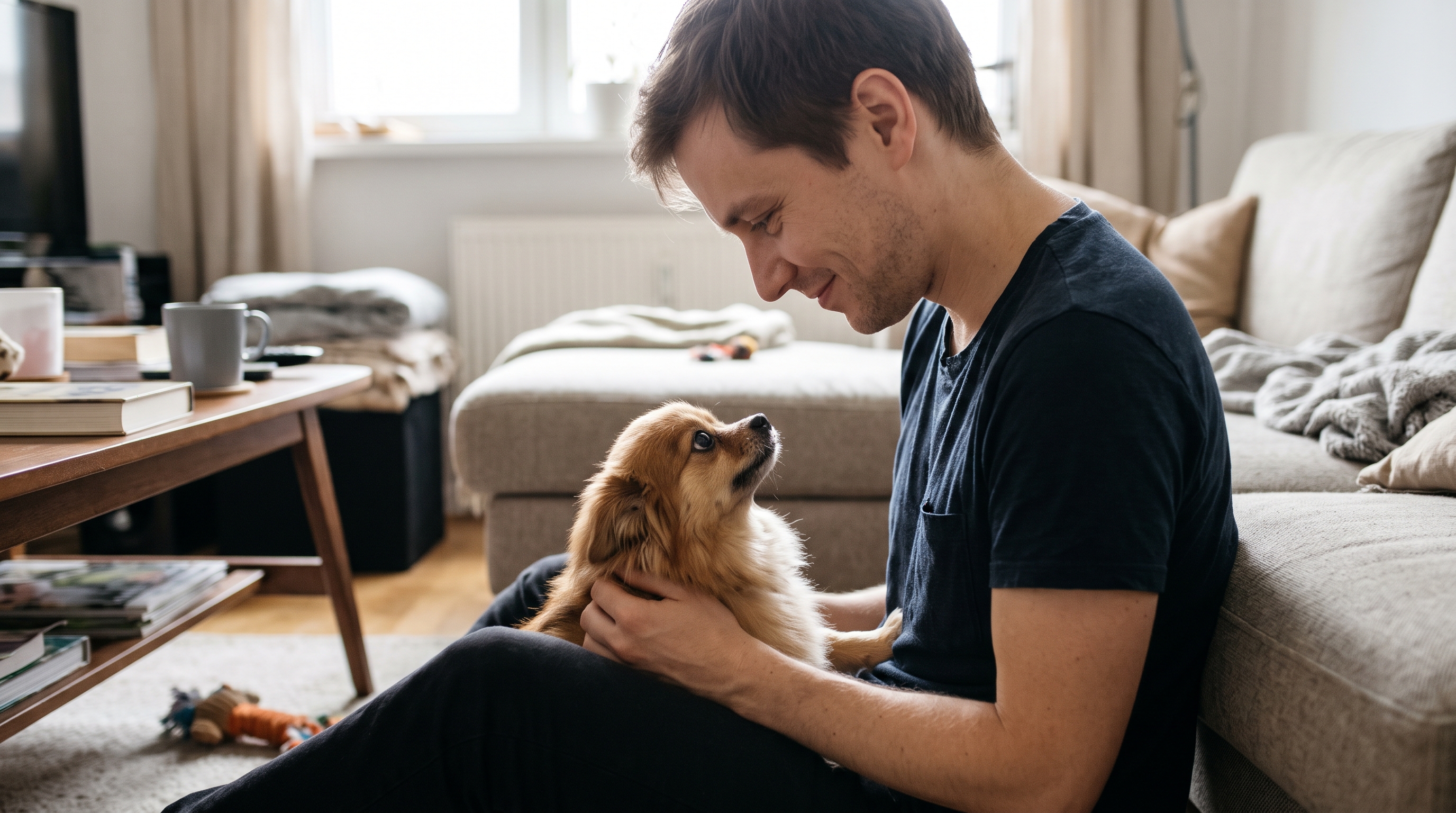
1. The Ethology of Brood Parasitism and Sensory Exploitation
In evolutionary biology, brood parasitism describes an interspecific reproductive strategy wherein a parasite organism manipulates a foster host into raising its offspring at the expense of the host's own Darwinian fitness.[1:1] The classic paradigm is exemplified by the common cuckoo (Cuculus canorus), which deposits eggs into the nests of reed warblers (Acrocephalus scirpaceus).[1:2] Upon hatching, the cuckoo chick instinctively ejects the host's biological eggs or hatchlings from the nest, monopolizing parental feeding efforts by deploying supernormal visual displays (an ultra-wide, vibrant orange gape) and rapid, high-intensity begging calls that simulate the acoustic footprint of an entire clutch.[1:3]
Applied to human-companion animal dynamics, this ethological framework categorizes domestic pets as hyper-adapted commensals that execute an evolutionary sleight of hand: they exploit the perceptual, cognitive, and hormonal mechanisms naturally selected to ensure the survival of human infants.[2:1]
Comparative Matrix: Brood Parasitism vs. Companion Animal Co-optation
| Dimension | Classical Avian Brood Parasitism (Cuculus canorus) | Mammalian Companion Animal Co-optation (Canis lupus familiaris / Felis catus) | Theoretical & Evolutionary Resonance |
|---|---|---|---|
| Target Host Mechanism | Parental nest-provisioning instincts, feeding releasers, and egg incubation behaviors. | Innate releasing mechanisms for human altricial care (Kindchenschema), maternal vocal tuning, and neuroendocrine bonding. | Theory of Mind - The Cognitive Architecture of Social Intelligence / Sensory Exploitation |
| Morphological Mimicry | Egg coloration/maculation matching host eggs; enlarged, vivid orange gape. | Paedomorphic craniomandibular proportions, rounded cheeks, large low-set eyes, and juvenile coat patterns. | Konrad Lorenz (Kindchenschema) / Gestalt Psychology-The Mechanics of the Whole |
| Acoustic Manipulation | Supernormal begging chirp simulating the acoustic frequency and rate of a multi-chick clutch. | Feline soliciting purr embedding a 380 Hz high-frequency infant cry component within low-frequency purring. | Auditory cortical capture / The Auditory Uncanny Valley (Voice & AI Assistants) |
| Host Fitness Cost | Total reproductive failure: host's biological offspring are physically ejected and destroyed. | Indirect reproductive displacement: redirection of finite economic, emotional, and temporal capital away from biological reproduction in sub-replacement urban settings. | Richard Dawkins's The Selfish Gene / Demographic Transition Theory |
| Parasite Evolutionary Payoff | Propagation of parasitic alleles into subsequent generations without parental investment. | Species-level biomass explosion and somatic luxury, sustained through human husbandry despite individual surgical sterilization. | The Paradox of Sterile Fitness / Charles Darwin (1809–1882) |
Secondary Altriciality and the Kindchenschema
The vulnerability of Homo sapiens to interspecific caretaking exploitation originates in our unique evolutionary trajectory.[2:2] Because humans exhibit secondary altriciality—giving birth to neurologically undeveloped, physically helpless infants due to the evolutionary compromise between bipedal pelvic narrowing and encephalization (the obstetric dilemma)—natural selection engineered an exquisitely sensitive, hardwired innate releasing mechanism in adult caretakers.[2:3]
In 1943, Austrian ethologist Konrad Lorenz formalized this mechanism as the Kindchenschema (baby schema), identifying a precise configuration of juvenile physical traits that automatically disarm adult aggression and elicit nurturing caretaking behaviors:[3:1]
- Craniomandibular Proportions: A disproportionately large cranium relative to overall body mass, marked by a high, bulbous forehead, reduced facial projection (brachycephaly), and a recessed chin.[3:2]
- Orbital Geometry: Large, circular, forward-facing eyes positioned well below the horizontal midline of the facial skull, visually emphasizing the cranial dome.[3:3]
- Soft Tissue Morphology: Prominent buccal fat pads (rounded cheeks), a soft, pliable body surface, and short, thick limbs accompanied by clumsy, uncoordinated locomotion.[3:4]
Neuroimaging investigations confirm that visual exposure to high-Kindchenschema facial geometry activates the nucleus accumbens, the ventral tegmental area, and the medial orbitofrontal cortex.[8] These structures comprise the core dopaminergic reward pathway responsible for appetitive approach motivation, parental empathy, and hedonic pleasure.[8:1] Companion animals possessing these infantile cues effectively deploy sensory exploitation, bypassing conscious cognitive gating and triggering ancient mammalian caregiving circuits.
Directed artificial selection has accelerated Kindchenschema traits beyond natural adaptive boundaries. In popular canine breeds such as French Bulldogs, Pugs, and Boston Terriers, and feline breeds such as Persians and Scottish Folds, breeders have aggressively amplified extreme craniofacial foreshortening to mimic human neonate facial ratios.[9]
This hyper-stimulation secures intense human alloparental devotion despite causing catastrophic congenital pathologies, most notably Brachycephalic Obstructive Airway Syndrome (BOAS), corneal ulceration, and spinal malformations.[9:1] Human hosts willingly accept exorbitant economic burdens to sustain these compromised phenotypes, demonstrating the irresistible biological pull of artificial supernormal releasers.
2. Neuroendocrine Hijacking: The Interspecific Oxytocin Circuit
The proximate physiological engine governing the human-companion animal bond is the nonapeptide oxytocin.[10] Synthesized in the magnocellular neurosecretory cells of the paraventricular and supraoptic nuclei of the hypothalamus, oxytocin is stored in and secreted from the posterior pituitary gland.[10:1] Throughout mammalian evolution, oxytocin has served as the master biochemical regulator of maternal-infant attachment, parturition, uterine contractions, lactation, and parasympathetic social buffering.[10:2]
In 2015, research led by Takefumi Kikusui and Miho Nagasawa at Azabu University proved that domesticated dogs have integrated themselves into this conserved mother-infant neuroendocrine feedback loop, establishing an interspecific physiological communion unknown elsewhere in the animal kingdom.[4:1]
                     ┌────────────────────────────────────────┐
                     │         HUMAN CAREGIVER                │
                     │                                        │
                     │   Sustained Eye Gaze / Affectionate    │
                     │   Touch / Infant-Directed Talk         │
                     └───────────────────┬────────────────────┘
                                         │
                        Visual & Tactile Stimulus
                                         │
                                         ▼
                     ┌────────────────────────────────────────┐
                     │       CANINE / FELINE COHORTS          │
                     │                                        │
                     │   Hypothalamic Oxytocin Activation     │
                     │   (Paraventricular Nucleus)            │
                     └───────────────────┬────────────────────┘
                                         │
                        Elevated Endogenous Oxytocin
                                         │
                                         ▼
                     ┌────────────────────────────────────────┐
                     │          REINFORCED BEHAVIOR           │
                     │                                        │
                     │   Prolonged Mutual Gaze (Canine) /     │
                     │   Soliciting Vocalizations (Feline)    │
                     └───────────────────┬────────────────────┘
                                         │
                        Reciprocal Caretaker Stimulation
                                         │
                                         ▼
                     ┌────────────────────────────────────────┐
                     │      HUMAN BIOCHEMICAL REWARD          │
                     │                                        │
                     │   Endogenous Oxytocin Surge            │
                     │   Dopaminergic Mesolimbic Discharge    │
                     │   Anxiolytic Parasympathetic Buffering │
                     └────────────────────────────────────────┘
The Dynamics of Mutual Eye Gaze
Across primate and carnivore taxa, direct, prolonged eye contact operates as an agonistic threat display that signals impending physical conflict.[4:2] Domestic canines, however, underwent a profound evolutionary rewiring of their social signaling apparatus during domestication:[4:3]
- Gaze Inversion: Unlike gray wolves (Canis lupus), which interpret human eye gaze as an aggressive challenge, domestic dogs actively initiate and maintain prolonged mutual eye contact with human handlers.[4:4]
- Endogenous Surge: Nagasawa et al. demonstrated that thirty minutes of interaction involving sustained mutual eye contact triggered a statistically significant surge in urinary oxytocin concentrations in both the human owner and the dog.[4:5] Crucially, this reciprocal neuroendocrine response was completely absent in hand-raised, human-socialized wolves, demonstrating that the trait is an evolved adaptation specific to canine domestication.[4:6]
- Pharmacological Causality: When researchers administered exogenous intranasal oxytocin to dogs, the animals exhibited marked increases in the duration of mutual gaze directed at their owners.[4:7] This prolonged canine gaze subsequently induced a secondary surge in endogenous oxytocin within the untreated human host, empirically confirming a closed-loop, bidirectional biochemical circuit.[4:8]
By hijacking this neuroendocrine feedback mechanism, companion animals elicit the identical hormonal signature associated with human infant bonding. The human brain interprets the animal's gaze not as the ambiguous monitoring of an interspecific predator, but as the trusting eye contact of biological progeny.
3. Anatomical and Acoustic Mimicry: The Engineering of Compliance
Beyond neotenous craniometrics and biochemical feedback loops, companion animals possess specialized muscular and acoustic adaptations engineered to target human perceptual vulnerabilities.
Canine Facial Myology: The Evolution of AU101
In 2019, comparative anatomist Juliane Kaminski and her research team published seminal findings analyzing the facial musculature of domestic dogs (Canis lupus familiaris) compared to their ancestral wild progenitor, the gray wolf (Canis lupus).[11]
Their dissections identified an anatomical development unique to domestic canines: the levator anguli oculi medialis (LAOM), a well-formed facial muscle that is almost universally absent in gray wolves.[11:1]
- Biomechanical Operation: Contraction of the LAOM draws the medial inner brow upward and caudally.[11:2] In the Facial Action Coding System (FACS), this movement is designated Action Unit 101 (AU101).[12]
- Perceptual Illusion: AU101 enlarges the visible aperture of the eye, exposing the sclera and producing a rounded, vulnerable, infant-like gaze colloquially known as "puppy dog eyes." Crucially, this specific brow movement mimics the human facial expression of sadness and vulnerability (Action Units 1 + 4), directly targeting the human observer's empathetic distress detectors.[11:3][12:1]
- Artificial Selection Pressure: Behavioral tracking in rescue shelters demonstrated that domestic dogs exhibiting higher baseline frequencies of AU101 brow raises were adopted significantly faster than individuals with lower movement rates.[12:2] Human adopters unconsciously selected and propagated a specific muscular innovation that exploited their own caregiving instincts.
Feline Acoustic Exploitation: The Interspecific Cry
While dogs co-opted the human visual and oculomotor channel, domestic cats (Felis catus) evolved a sophisticated acoustic strategy to bypass human sensory filters.[5:1]
Bioacoustician Karen McComb and colleagues discovered that domestic cats exhibit dual purring registers: an unvoiced, pleasant purr utilized during relaxed somatic contact, and a soliciting purr deployed specifically when demanding food from human caretakers.[5:2]
- Spectral Bimodalism: Standard feline resting purrs are low-frequency vibrations ranging from 25 to 30 Hz.[5:3] In the soliciting purr, however, felines embed an anomalous, high-frequency voiced peak within the low-frequency rumble.[5:4]
- The 380 Hz Harmonic Window: Acoustic analysis confirmed that this embedded cry peak clusters tightly around 300 to 600 Hz, with a mean frequency around 380 Hz.[5:5] This frequency corresponds precisely to the acoustic fundamental frequency of a hungry or distressed human neonate's vocal cry.[5:6]
- Subconscious Urgency: Because the human auditory cortex and primary caregiving architecture are evolutionarily calibrated to experience sound within the 300–600 Hz window as demanding, aversive, and impossible to ignore, human listeners rate soliciting purrs as urgent and unpleasant, feeling an uncontrollable compulsion to attend to the animal's needs.[5:7] By cloaking an urgent infant cry inside an otherwise soothing vibration, felines secure immediate caretaking compliance without provoking human host irritation.
Neurobiological & Morphological Signaling Pathways
| Mechanism / Trait | Anatomical or Acoustic Locus | Evolutionary Target in Human Host | Behavioral & Physiological Consequence |
|---|---|---|---|
| Kindchenschema | Foreshortened cranium, protruding forehead, low-set circular eyes. | Mesocorticolimbic dopaminergic reward pathway (nucleus accumbens, orbitofrontal cortex). | Elicits automatic protective affection, disarms aggressive responses, motivates nurturing. |
| LAOM Muscle (AU101) | Medial brow musculature (levator anguli oculi medialis). | Human facial affect recognition; empathy circuits responding to sadness/distress (AU 1 + 4). | Triggers caregiving intervention, rapid adoption, and protective forgiveness. |
| Soliciting Purr (380 Hz) | Vocal folds and pharyngeal vibration during active begging. | Primary auditory cortex and mammalian cry-response pathways (300–600 Hz). | Induces immediate urgency and feeding compliance while suppressing annoyance. |
| Oxytocin Gaze Loop | Oculomotor sustained mutual gaze; hypothalamic-pituitary axis. | Maternal-infant attachment circuit; paraventricular hypothalamic nucleus. | Elevates reciprocal oxytocin, lowers cortisol, reinforces chronic alloparental bonding. |
4. The Demographic Economics of Post-Industrial Alloparenting
The transition of companion animals from utilitarian working cohorts into surrogate human progeny represents a structural consequence of post-industrial modernization and the Second Demographic Transition.[6:1]
The Historical Transformation: From Working Animal to Surrogate Progeny
| Dimension | The Pre-Industrial Working Cohort (Pre-1900) | The Post-Industrial Surrogate Progeny (Late 20th–21st C.) | Core Sociological & Vault Resonance |
|---|---|---|---|
| Primary Economic Function | Pest eradication (barn cats, ratters), livestock guarding, draft work, game hunting. | Affective labor, emotional regulation, biological companionship, surrogate parenthood. | Durkheimian Sociology / Utilitarian division of labor vs. affective commodification |
| Spatial Habitat | Agricultural periphery, barn, yard, threshold, municipal streets; excluded from bedchamber. | Domestic core, bedchamber, furniture, dedicated pet strollers, specialized daycares. | Anthony Vidler-The Architectural Uncanny / Domestic spatial invasion |
| Linguistic & Symbolic Category | Working livestock, utilitarian domesticate, personal property (chattel). | Family member, child substitute, kin status ("fur baby," "dog mom," "pet parent"). | The Social Construction of Reality - A Treatise in the Sociology of Knowledge |
| Healthcare & Capital Deployment | Minimal veterinary expenditure; culling upon infirmity or obsolescence; dietary scraps. | Tertiary medicalization (chemotherapy, MRIs, psychopharmacology), premium organic diets. | The Philosophy of Money (Philosophie des Geldes) / Max Weber (1864-1920) |
| Demographic Relationship | High human birth rates (TFR > 4.0); large multi-generational households; shared child-rearing. | Sub-replacement fertility (TFR < 1.5); hyper-individualization; atomized single-person homes. | Zygmunt Bauman's sociological framework of Liquid Modernity |
Demographic Substitution and the East Asian Vanguard
Throughout developed post-industrial nations, Total Fertility Rates (TFR) have plummeted far below the demographic replacement threshold of 2.1 births per woman.[6:2] This decline is driven by astronomical urban housing costs, hyper-competitive labor markets, educational lengthening, and the collapse of traditional communal care networks.[6:3]
Nowhere is this demographic inversion more starkly demonstrated than in East Asian metropolises:
- South Korean Demographic Inversion: South Korea's national TFR declined to 0.72 in 2023, with metropolitan Seoul registering approximately 0.55—the lowest peacetime fertility rate recorded in modern demographic history.[13]
- The Stroller Crossover: In 2023, major South Korean e-commerce retailers, including Gmarket, reported that sales of pet strollers (gae-mo-cha) officially surpassed sales of human baby strollers for the first time in commercial history.[14] Pet strollers accounted for 57% of total stroller sales, compared to 43% for human infants, physically manifesting the substitution of canine companions for biological progeny.[14:1]
- Urban Western Ratios: Similar demographic patterns dominate Western urban centers. In San Francisco and Seattle, municipal demographic censuses consistently reveal that domestic dogs outnumber human children under the age of 18, reflecting the demographic realities of dense urban cores populated by single-person and dual-income-no-kids (DINK) households.[15]
Human Infant Stroller Sales vs. Pet Stroller Sales (South Korea, Gmarket 2021–2023)

100% ┌───────────────────────────────────────────────────────────┐
     │                                     Pet Strollers (57%)   │
 75% │                     ╭─────────────────────────────────────┤
     │                    ╱                                      │
 50% │───────────────────X───────────────────────────────────────│
     │                  ╱ ╲                                      │
 25% │                 ╱   ╰─────────────────────────────────────┤
     │                                   Baby Strollers (43%)    │
  0% └───────────────────────────────────────────────────────────┘
               2021                 2022                 2023
The Capitalization of Redirected Alloparenting
As human reproductive investment recedes, surplus capital and unspent caregiving instincts are channeled into the pet care industrial complex.[7:1]
- Macroeconomic Expansion: According to the American Pet Products Association (APPA), annual consumer expenditure on companion animals in the United States exceeded 147 billion USD by 2023, with global sector valuations projected to exceed 400 billion USD by the early 2030s.[7:2]
- Tertiary Medicalization: Veterinary medicine has mirrored advanced human pediatric and geriatric care. Companion animals routinely receive advanced interventions including magnetic resonance imaging, laparoscopic oncology, organ transplantation, and behavioral psychopharmacology (e.g., fluoxetine and trazodone for separation anxiety).[16] Pet owners frequently spend tens of thousands of dollars to prolong the life of geriatric animals—interventions that cost an arm and a leg—creating an economic dynamic where capital that once funded generational inheritance is redirected toward extending non-reproductive animal lifespans.[16:1]
- The Kinship Reclassification: Survey research from the Pew Research Center indicates that 97% of American pet owners view their companion animals as integral family members, with 51% stating their pets are as much a part of their family as a human child.[17] This semantic inflation ("pet parent," "adopting" a pet, celebrating "gotcha days") represents an institutionalized social construction that rationalizes the redirection of reproductive capital toward interspecific commensals.
5. Sociological Synthesis: Modernity, Atomization, and the Simulation of Kinship
The rise of the companion animal as a child surrogate cannot be understood solely as an evolutionary curiosity; it is a profound symptom of the sociological mutations characterizing late modernity.
Simmel: The Metropolitan Shield and the Search for Uncomplicated Intimacy
In his classic 1903 treatise The Metropolis and Mental Life, Georg Simmel (1858-1918) demonstrated that modern urban existence bombards the individual with an unprecedented intensification of nervous stimulation (Steigerung des Nervenlebens).[18] To survive the chaotic sensory overstimulation of the city, the metropolitan subject constructs a psychological protective organ: the blasé attitude (die Blasiertheit), an emotional numbness and indifferent reserve that buffers the ego against the demands of anonymous strangers.[18:1]
In the hyper-rationalized, competitive metropolis, genuine interpersonal relationships are precarious, intellectually demanding, and fraught with social friction.[18:2] As Simmel articulated in The Philosophy of Money (Philosophie des Geldes), the money economy reduces qualitative human warmth to calculable, transactional exchange value.[18:3]
Within this urban desert of instrumental calculations, the companion animal provides an emotional sanctuary:
- Frictionless Affection: Unlike human romantic partners or biological children—who demand reciprocal compromise, social obligation, and economic vulnerability—the companion animal offers unconditional, uncomplicated affirmation.[19]
- The Path of Least Resistance: Love for an animal follows the path of least resistance. The dog or cat cannot judge, criticize, reject, or abandon its handler. It accepts the owner's projection unconditionally, providing a therapeutic buffer against corporate alienation where the worker is reduced to an interchangeable cog in the machine.
- The Unflinching Poker Face: While the urban professional must maintain an unyielding, professional poker face in the office, the home pet allows the dropped mask, offering an unthreatening recipient for genuine affective expression.
Bauman: Liquid Love and Risk-Averse Parenting
In Zygmunt Bauman's sociological framework of Liquid Modernity, human relationships have lost their durable, structural permanence, dissolving into fragile, transient consumer transactions.[20] In his study Liquid Love: On the Frailty of Human Bonds, Bauman argued that modern citizens suffer from chronic ontological insecurity (Unsicherheit). They desperately crave romantic and communal intimacy, yet intensely fear the long-term commitments, legal entanglements, and financial liabilities that accompany authentic marriage and human child-rearing.[20:1]
The modern domestic pet resolves this liquid existential dilemma:
- The Bounded Commitment: A companion animal lives for ten to fifteen years, presenting a predictable, temporally bounded commitment that avoids the terrifying, open-ended multi-decade obligations of human parenthood.[20:2]
- The Subcontracted Child: A dog or cat can be crated, left with commercial pet-sitters, boarded at boutique daycares, or, in extreme circumstances, surrendered or rehomed without encountering severe social opprobrium or legal sanction.[16:2][20:3] It offers the affective rewards of parenting without the terrifying existential risks of raising an autonomous human subject who will eventually develop their own moral judgment and independence.
- Consumer Identity Substitution: As Bauman documented, liquid modern citizens substitute structural identity with consumer shopping. Modern pet ownership transforms into a continuous performative consumption ritual: designer accessories, ergonomic harnesses, gourmet specialized kibble, and pet strollers serve as status markers displayed across public boulevards and digital networks, constructing a facade of familial wholeness that masks the profound atomization of contemporary life.
"Pets are not always a positive addition to a person's life; in many cases, they function as 'supernormal stimuli'—artificial exaggerations of natural releasers that hijack our evolutionary machinery at the expense of genuine conspecific social bonds." — Hal Herzog, Some We Love, Some We Hate, Some We Eat[19:1]
Sociological Paradigms of Redirected Alloparenting
| Sociologist / Framework | Core Theoretical Concept | Diagnostic Application to Companion Animals | Vault Resonance |
|---|---|---|---|
| Georg Simmel (1858-1918) | The Metropolis and Mental Life / The Blasé Attitude | Pets serve as low-friction affective refuges, soothing metropolitan nervous exhaustion without requiring complex social vulnerability. | The Metropolis and Mental Life / Georg Simmel's Tragedy of Culture |
| Zygmunt Bauman's sociological framework of Liquid Modernity | Liquid Love / Fragility of Human Bonds | Pets function as risk-managed, commodified child surrogates that satisfy caretaking drives without permanent legal or generational risks. | Zygmunt Bauman's sociological framework of Liquid Modernity |
| Georg Lukács's formulation of reification (Verdinglichung) in History and Class Consciousness (1923) | Reification (Verdinglichung) / Commodity Fetishism | Caretaking instincts and parental affection are transformed into specialized consumer markets, reifying biological nurturing into market transactions. | Georg Lukács's formulation of reification (Verdinglichung) in History and Class Consciousness (1923) |
| Durkheimian Sociology | Anomie / Disintegration of Social Solidarity | The breakdown of traditional church, guild, and extended kin networks forces isolated individuals to seek somatic solidarity in domestic animals. | Durkheimian Sociology / Durkheimian Sociology and Reified Gestalt |
| The Social Construction of Reality - A Treatise in the Sociology of Knowledge | Institutionalization & Symbolic Universes | The construction of the "pet parent" identity establishes cognitive schemas that legitimize the substitution of animals for human infants. | The Social Construction of Reality - A Treatise in the Sociology of Knowledge |
| Consumer Behavior and the Architecture of Influence | Compensatory Consumption | Premium pet expenditures operate as compensatory mechanisms for delayed life milestones (homeownership, marriage, childbearing). | Consumer Behavior and the Architecture of Influence |
6. The Evolutionary Paradox: Biomass Imperialism vs. Genetic Extinction
Under the strict lens of neo-Darwinian evolutionary theory formalized by Charles Darwin (1809–1882) and expanded in Richard Dawkins's The Selfish Gene, the phenomenon of modern companion animals presents an evolutionary paradox.[21]
The Dilemma of the Sterile Brood
In standard natural selection, an organism's evolutionary fitness is defined exclusively by the proportional contribution of its alleles to subsequent generations' gene pools.[21:1]
In modern developed societies, however, the overwhelming majority of companion animals are subjected to prepubertal gonadectomy (spaying and neutering) as a mandatory prerequisite for domestic cohabitation and lease agreements.[16:3] An individual spayed Siamese cat or castrated Golden Retriever possess a direct reproductive fitness of exactly zero.[21:2]
From the perspective of the individual organism's selfish genes, modern domesticity is a biological dead end:
- The Human Sterilization Bargain: The animal exchanges its evolutionary birthright—the transmission of its genetic lineage—for somatic longevity, veterinary life extension, and material luxury.[21:3] It is fed nutrient-dense food, sheltered from environmental adversity, and pampered within climate-controlled homes, yet remains biologically sterile.[21:4]
- Species Biomass Expansion: Concurrently, at the macro-taxonomic level, Canis lupus familiaris and Felis catus represent some of the most ecologically dominant carnivores on planet Earth, boasting global populations exceeding 900 million dogs and 600 million cats.[16:4] By successfully outsourcing their reproductive management, sustenance, and spatial protection to human hosts, their species biomass has expanded by orders of magnitude while wild mammalian biomass has plummeted.[16:5]
Societal Fragility and Structural Reproduction
For the human host population, this evolutionary bargain carries existential demographic consequences.[6:4]
Human societies require sustained demographic renewal to maintain economic stability, support intergenerational welfare pacts, and reproduce the institutions that compose the fabric of society.[6:5] When the neuroendocrine and psychological mechanisms evolved to ensure the continuation of the human lineage are diverted into interspecific dead ends, the societal infrastructure becomes built on sand:
- The Macroeconomic Demographic Cliff: While companion animals consume substantial economic resources, they contribute zero labor productivity, intellectual output, or tax revenue to the host society.[6:6] When total fertility rates crater to 0.7 or 0.8, pension systems, healthcare networks, and infrastructural grids face catastrophic insolvency.
- The Evolutionary Reversal: In hyper-developed urban centers, humans spend their most fertile years working grueling hours on corporate spreadsheets—living on autopilot to pay for expensive apartments—while wheeling neutered companion animals in luxury strollers through depopulated city parks.[14:2]
- The Ultimate Brood Parasitism: Just as the reed warbler exhausts its somatic reserves stuffing insects into the yawning beak of a cuckoo chick while its own biological nest sits barren, modern post-industrial societies divert finite reproductive, emotional, and financial energy into companion animals that cannot carry the civilizational mantle forward.[1:4]
The cuckoo in the stroller is not a mere metaphor; it is the physical manifestation of an evolutionary hijacking that has intersected with the economic pathologies of late-capitalist modernity.
🎴 Interactive Web Practice (Comprehension Check)
Question 1 (Ethology & Morphological Co-optation): How does the evolutionary mechanism of sensory exploitation explain why humans invest caretaking resources into domestic dogs displaying the levator anguli oculi medialis (LAOM) and brachycephalic facial traits?
Answer: Sensory exploitation describes an evolutionary process wherein one organism evolves traits that trigger pre-existing, adaptive perceptual preferences in another organism. In Homo sapiens, secondary altriciality necessitated the evolution of an innate releasing mechanism—formalized by Konrad Lorenz as the Kindchenschema (baby schema)—that automatically activates parental caregiving and suppresses aggression when encountering infant traits (large eyes, high forehead, rounded facial contours).
Domestic dogs co-opted this circuit through morphological adaptation. The development of the levator anguli oculi medialis (LAOM) muscle allows dogs to raise their inner eyebrow (AU101), exposing the white sclera and replicating the facial geometry of human infant sadness (Action Units 1 + 4). Similarly, artificial selection for brachycephalic traits (foreshortened snouts and wide-set eyes in breeds like French Bulldogs) exaggerates these neonate proportions. When humans observe these cues, the dopaminergic mesocorticolimbic reward system (nucleus accumbens and orbitofrontal cortex) is triggered automatically, compelling the human host to direct nurturing, time, and financial capital toward the animal as if it were biological progeny.
Question 2 (The Interspecific Neuroendocrine Circuit): Contrast the physiological effects of sustained eye contact between humans and domestic dogs with those between humans and wolves, and explain how this sustains a self-reinforcing oxytocin loop.
Answer: Across wild mammalian carnivores and non-human primates, prolonged mutual eye contact is interpreted as an agonistic threat display that triggers stress and aggression. In wild gray wolves (Canis lupus), even when raised from infancy by humans, direct eye contact does not elevate oxytocin and is avoided.
Conversely, domestic dogs (Canis lupus familiaris) evolved an inverted behavioral response during domestication, using sustained mutual gaze as an affiliative signaling mechanism. As demonstrated by Nagasawa et al. (2015), when dogs engage in sustained eye contact with their human handlers, it triggers hypothalamic activation and an endogenous surge of oxytocin in the human host, accompanied by a reciprocal oxytocin surge in the dog. Exogenous administration of oxytocin to dogs increases their gaze duration, which in turn induces a secondary oxytocin surge in the owner. Domestic canines have successfully inserted themselves into the conserved mammalian mother-infant neuroendocrine circuit, establishing a bidirectional biochemical feedback loop that reinforces human alloparental investment.
Question 3 (Sociology of Liquid Modernity & Demographic Substitution): How do Zygmunt Bauman's concept of "liquid love" and Georg Simmel's metropolitan sociology illuminate the economic transition from human child-rearing to the global pet care economy?
Answer: Georg Simmel demonstrated in The Metropolis and Mental Life that dense urban environments generate sensory overstimulation that compels urbanites to adopt a defensive "blasé attitude" and reduce qualitative relationships to calculable, transactional exchanges. In this atomized setting, authentic human relationships are fraught with social friction, judgment, and emotional vulnerability. Companion animals provide an emotional sanctuary of "frictionless affection," where unconditional affirmation can be received without social risk.
Building on this, Zygmunt Bauman's framework of Liquid Modernity diagnoses "liquid love"—a condition wherein atomized individuals crave intimacy but dread the permanent, irrevocable obligations of traditional marriage and biological child-rearing. Human children represent a 20+ year, multi-hundred-thousand-dollar existential risk that cannot be easily commodified, paused, or terminated.
The companion animal functions as a risk-managed child surrogate: it provides the immediate affective and neuroendocrine rewards of parenthood within a predictable, bounded lifespan (10–15 years) and can be managed through commercial services (daycares, pet strollers, boarding). Unspent parental motivation and surplus disposable capital are redirected into the multi-hundred-billion-dollar pet care market, where premium products and tertiary medical interventions allow liquid modern consumers to perform familial identity while avoiding the structural risks of biological generational renewal.
Resonant Notes
The following notes in the vault share direct thematic, sociological, and evolutionary connections with The Cuckoo in the Stroller:
🔴 Evolutionary Biology, Ethology & Cognitive Architecture
- Charles Darwin (1809–1882) — Darwin's principles of natural and artificial selection provide the foundational architecture for understanding how human selective breeding shaped canine morphology, while highlighting the modern paradox of sterile domestic fitness.
- Theory of Mind - The Cognitive Architecture of Social Intelligence — Explores the cognitive mechanisms of mental state attribution, revealing how humans anthropomorphize companion animals by reading complex mental intentions and infant emotional vulnerability into evolved facial micro-movements.
- Gestalt Psychology-The Mechanics of the Whole — Lorenz's Kindchenschema functions as a classic perceptual Gestalt, where the holistic spatial configuration of infantile facial features triggers automated affective recognition independent of the underlying species.
- The Interface Theory of Perception (ITP) — Donald Hoffman's model demonstrates that perception evolved for fitness payoff rather than veridical reality, explaining how human perceptual interfaces can be systematically hijacked by supernormal biological stimuli.
- The Auditory Uncanny Valley (Voice & AI Assistants) — Parallels feline acoustic exploitation (the 380 Hz infant cry embedded in the purr) with synthesized vocal cues designed to bypass human skepticism and elicit compliance.
- The Uncanny Valley (不気味の谷現象) — Analyzes the cognitive boundary where artificial or exaggerated biological representations transition from endearing familiarity into eerie ontological dissonance.
🟡 Modernity, Demographic Decline & The Sociology of Alienation
- Zygmunt Bauman's sociological framework of Liquid Modernity — Bauman's analysis of "liquid love," precarious freedom, and the fear of durable long-term commitments directly explains the cultural retreat from human parenting to risk-managed companion animal guardianship.
- The Metropolis and Mental Life & Georg Simmel (1858-1918) — Simmel's diagnosis of metropolitan sensory overstimulation, the defensive blasé attitude, and the hunger for unthreatening affective intimacy in an anonymous urban crowd accounts for the rise of pets as therapeutic buffers.
- Durkheimian Sociology & Durkheimian Sociology and Reified Gestalt — Émile Durkheim's concepts of anomie and the breakdown of traditional communal solidarity illuminate how isolated urban subjects construct substitute kin bonds with companion animals to restore social cohesion.
- The Social Construction of Reality - A Treatise in the Sociology of Knowledge — Berger and Luckmann's framework explains how the institutionalized vocabulary of the "pet parent" and "fur baby" legitimizes the cognitive and economic substitution of animals for children.
- Nocturnalization - The Industrialization of Light — Companion historical study detailing the industrial reorganization of urban space, domestic privacy, and 24-hour work rhythms that dismantled traditional multi-generational family structures.
- The Specular Revolution - Optics, Interiority, and the Modern Self — Examines how the historical emergence of the privatized, introspective ego and self-surveillance created the modern psychological isolation that companion animals are recruited to soothe.
- Travis Bickle — Scorsese's portrait of acute urban alienation and emotional starvation represents the extreme psychological vacuum produced by post-industrial atomization.
🟢 Consumer Capitalism, Reification & The Pet Care Economy
- Georg Simmel's Tragedy of Culture & The Philosophy of Money (Philosophie des Geldes) — Simmel's critique of monetary abstraction reveals how the pet care economy translates qualitative maternal and caregiving impulses into specialized, commodified consumer goods.
- Georg Lukács's formulation of reification (Verdinglichung) in History and Class Consciousness (1923) — Lukács's analysis of reification diagnoses how natural mammalian nurturing drives are co-opted and reconstituted as commercial market transactions.
- Consumer Behavior and the Architecture of Influence — Explores the psychological mechanisms of compensatory consumption, where spending on pet wellness and luxury accessories compensates for unattainable generational milestones like affordable housing and child-rearing.
- Postscript on the Societies of Control & Dividual — Gilles Deleuze's formulation of modulatory control systems and dividual tracking maps onto the micro-targeted consumer algorithms driving the modern pet wellness and surveillance apparatus.
- William H. Whyte's The Organization Man — Whyte's analysis of the mid-century suburban white-collar worker provides the historical baseline before atomized post-industrial labor transformed domestic life into a childless consumer enclave.
- in-plain-sight — Metaphoric expression capturing how the economic and biological substitution of companion animals for children occurs in plain sight within post-industrial urban centers.
- blind-spot — Metaphoric expression diagnosing the profound societal blind spot regarding demographic collapse and the long-term reproduction of society.
- the-fabric-of-society — Metaphoric expression illustrating the fragile intergenerational and civic networks that unravel when reproductive and caretaking capital is diverted into non-reproductive dead ends.
- sleight-of-hand — Metaphoric expression framing the sensory and acoustic mimicry deployed by domestic pets to co-opt human infant-care algorithms.
- cost-an-arm-and-a-leg — Metaphoric expression depicting the exorbitant economic costs of tertiary pet medicalization and luxury companion consumption.
- path-of-least-resistance — Metaphoric expression articulating the low-friction emotional appeal of animal companionship compared to the complex vulnerabilities of human relationships.
- cog-in-the-machine — Metaphoric expression portraying the alienated corporate worker who seeks an affective sanctuary in domestic pets.
- poker-face — Metaphoric expression characterizing the defensive emotional detachment required in the modern workplace that is dropped only in the presence of companion animals.
- a-facade — Metaphoric expression exposing how consumer pet accessories and stroller rituals erect a facade of familial completeness masking urban atomization.
- built-on-sand — Metaphoric expression diagnosing an economic and demographic infrastructure built on sand when human generational renewal collapses.
- on-autopilot — Metaphoric expression capturing how urban professionals navigate relentless corporate routines on autopilot while redirecting parental devotion toward sterile pets.
References
Nick Davies / Cuckoo: Cheating by Nature / bloomsbury.com ↩︎ ↩︎ ↩︎ ↩︎ ↩︎
Wenda R. Trevathan / Human Birth: An Evolutionary Perspective / routledge.com ↩︎ ↩︎ ↩︎ ↩︎
Konrad Lorenz / Die angeborenen Formen möglicher Erfahrung / doi.org ↩︎ ↩︎ ↩︎ ↩︎ ↩︎
Miho Nagasawa et al. / Oxytocin-gaze positive loop and the coevolution of human-dog bonds / science.org ↩︎ ↩︎ ↩︎ ↩︎ ↩︎ ↩︎ ↩︎ ↩︎ ↩︎
Karen McComb et al. / The cry embedded within the purr / cell.com ↩︎ ↩︎ ↩︎ ↩︎ ↩︎ ↩︎ ↩︎ ↩︎
Ron Lesthaeghe / The Unfolding Story of the Second Demographic Transition / wiley.com ↩︎ ↩︎ ↩︎ ↩︎ ↩︎ ↩︎ ↩︎
American Pet Products Association / APPA National Pet Owners Survey & Industry Market Size / americanpetproducts.org ↩︎ ↩︎ ↩︎
Melanie L. Glocker et al. / Baby schema modulates the brain reward system in nulliparous women / pnas.org ↩︎ ↩︎
Rowena M. A. Packer et al. / Impact of Facial Conformation on Canine Health: Brachycephalic Obstructive Airway Syndrome / plos.org ↩︎ ↩︎
C. Sue Carter / Neuroendocrine Perspectives on Social Attachment and Love / sciencedirect.com ↩︎ ↩︎ ↩︎
Juliane Kaminski et al. / Evolution of facial muscle anatomy in dogs / pnas.org ↩︎ ↩︎ ↩︎ ↩︎
Bridget M. Waller et al. / Paedomorphic Facial Expressions Give Dogs a Selective Advantage / plos.org ↩︎ ↩︎ ↩︎
Statistics Korea (KOSTAT) / Birth Statistics in 2023 / kostat.go.kr ↩︎
Wall Street Journal / In South Korea, Pet Strollers Outsell Baby Strollers / wsj.com ↩︎ ↩︎ ↩︎
U.S. Census Bureau & American Veterinary Medical Association / U.S. Pet Ownership and Demographics Sourcebook / avma.org ↩︎
Jessica Pierce / Run, Spot, Run: The Ethics of Keeping Pets / uchicago.edu ↩︎ ↩︎ ↩︎ ↩︎ ↩︎ ↩︎
Pew Research Center / About half of U.S. pet owners say their pets are as much a part of their family as a human member / pewresearch.org ↩︎
Georg Simmel / The Metropolis and Mental Life (1903) & The Philosophy of Money (1900) / uchicago.edu ↩︎ ↩︎ ↩︎ ↩︎
Hal Herzog / Some We Love, Some We Hate, Some We Eat: Why It's So Hard to Think Straight About Animals / harpercollins.com ↩︎ ↩︎
Zygmunt Bauman / Liquid Love: On the Frailty of Human Bonds (2003) / politybooks.com ↩︎ ↩︎ ↩︎ ↩︎